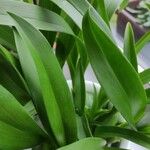
Brassia caudata
Cricket Orchid · Spider Orchid · Tailed Spider Orchid
Description
Source: leafsnapBrassia caudata is a species of orchid. It is found widespread across the warmer parts of the Western Hemisphere, reported from southern Mexico (Chiapas, Campeche, Quintana Roo, Tabasco, Veracruz), Central America, southern Florida, Greater Antilles, Trinidad, northern South America. It is also known by the common names tailed Brassia, spider orchid and cricket orchid.
Care Guide
💧 Water Once a week
The cricket orchid flourishes in humid, tropical environments, where it benefits from consistent humidity and weekly watering. As an epiphyte, it takes in moisture from the air instead of the soil. This characteristic makes indoor cultivation ideal, as it allows for optimal control of both humidity and temperature.
How should I water my Cricket orchid?
The way you water your Cricket orchid depends on whether it's in an active growth phase or not. If it is, you should water the soil and occasionally spray water over the plant if it's warm. In winter or cool, wet weather, stick to watering the soil directly instead. To know if your Cricket orchid needs more water, look out for thin and dry roots and leaves, or discoloration. Overwatered orchids will look mushy and limp. Grow your Cricket orchid in a pot with good drainage. During the growing season, water it multiple times per week, ensuring each watering drains quickly to avoid standing water. The amount of water depends on the pot size, with larger pots needing less frequent watering. Use rainwater or distilled water at a similar temperature to the air.
What should I do if I give my Cricket orchid too much or too little water?
One of the most common ways to kill a Cricket orchid is by allowing it to sit in overly moist soil for too long. While these plants need frequent watering during active growth, they also require well-draining soil. If the plant becomes overwatered, it will become mushy and develop root rot. In such cases, you should use sterilized pruning shears to remove any roots showing signs of rot and repot the orchid in a container with proper drainage and fast-draining potting mix. However, excessive repotting may not be beneficial for a Cricket orchid, so it is important to find the right balance of watering. An underwatered Cricket orchid will start to shrivel and feel dry to the touch. If this happens, it is likely because the soil is drying out faster than expected, indicating a need to increase watering frequency.
How frequently should I give water to my Cricket orchid?
To ensure the healthy growth of your Cricket orchid, you should water it once or twice a week during the spring and summer. However, if the weather is hot and dry for a long time, you may need to water it three times a week or even more. In the winter, watering is still necessary, but not as often. About two to three times a month should be sufficient to keep your orchid alive during the coldest months. It's important to note that if you keep your orchid indoors during winter, the soil might dry out faster than usual due to indoor conditions. In that case, you may need to increase the frequency of watering. During the fall, you can gradually decrease your watering schedule from the high frequency of summer to the reduced frequency of winter.
What do I need to think about when watering my Cricket orchid during different seasons and growth stages?
When planning the watering schedule for your Cricket orchid, it is important to consider two growth phases. The first phase is the active growth period, which occurs in spring and summer. During this time, the orchid needs to be watered multiple times per week. The second phase is the rest period, which occurs in winter and lasts for about two to three months. During this period, the orchid requires much less water and fertilization. Watering once or twice per month is sufficient. To prepare for the rest period, gradually reduce the watering frequency starting in the fall. This will help transition the plant from being watered multiple times per week to the appropriate once or twice per month rate for winter.
If I grow my Cricket orchid indoors, how should I water it differently?
The Cricket orchid thrives in a humid environment, but indoor locations often lack the necessary air moisture. This causes the plant and soil to dry out faster compared to outdoor growth. To address this, it is recommended to use a humidifier in the room where you grow your Cricket orchid. You may also need to water it more frequently. However, it's important to note that while humidity is beneficial, the orchid also needs proper air circulation to prevent excessive moisture and potential diseases. Therefore, consider adding a fan to maintain proper airflow in the room where you keep the plant.
☀️ Light Partial sun
The Cricket orchid originates in habitats like forest understories or rocky sites, where it grows under natural shade. It favors partial sun but can adjust to both full sun and full shade, reflecting its adaptable and hardy nature.
How much sunlight does a Cricket orchid need to grow?
To ensure the thriving of Cricket orchids, they require 3-6 hours of direct sunlight daily. However, they also need protection from the strongest sun during the hottest parts of the day to avoid getting damaged. Ideally, morning sunlight suits the Cricket orchid best, but it can also handle some afternoon sun as long as the temperature is not excessively high. For the ideal amount of sunlight, consider planting Cricket orchids in a location that receives partial sun, like under a tree or on the east side of a building.
What will happen if the Cricket orchid doesn't receive enough sunlight?
To avoid sun damage, provide shade for the Cricket orchid during the hottest parts of the day. Excessive direct sunlight can cause the leaves to turn yellow, dry out, or even burn. Additionally, the plant may wilt or become stunted. To achieve this, you can use a shade cloth or plant the Cricket orchid near taller plants that offer some natural shade.
What will happen if the Cricket orchid gets too much sunlight?
When Cricket orchid doesn't receive sufficient sunlight, its growth becomes tall and lanky, with limited foliage. Additionally, the leaves may turn yellow or pale green, which is a sign that the plant lacks enough sunlight to produce chlorophyll. To fix this issue, you can either relocate the Cricket orchid to a sunnier area or trim nearby foliage to provide more light for the plant.
🌡️ Temperature 20–37.8°C
The cricket orchid prefers warm conditions. It performs best in moderately high temperatures that are not overly hot or humid. Sunlight helps warm the plant and encourages flowering. However, prolonged direct sun in summer can cause sunburn, so it's important to limit the amount of light it receives during that season. The plant typically does not tolerate cold well, so it needs adequate protection and warmer conditions in winter to avoid freezing.
💨 Humidity high (>60%)
This plant needs special care because it loves high humidity levels of 60-80% or more. The best way to achieve this is by placing a humidifier near the plant. Daily misting is also essential! Make sure the room has good ventilation.
🪴 Soil 6-7
🌱 Fertilizer Every 30 days
Appropriate fertilization is essential for Cricket orchid's health and appearance. Fertilize the Cricket orchid during summer, doing so once a month throughout the season. Nutrients provide the energy for growth and support the plant's parts. Fertilizing boosts the Cricket orchid's flower display, helping it achieve the best blooms.
🪴 Pot & Repot Every 2 years
When repotting a Cricket orchid, select a pot a little larger than the current one with good drainage, preferably a clear orchid pot. Use an orchid-specific, well-draining potting mix that contains bark or moss. Carefully clean the roots and cut away any that are dead or rotting. Repot after the plant has finished flowering, typically in spring or fall, water well, and place it in bright, indirect light. Once repotted, do not disturb the roots.
✂️ Pruning
The cricket orchid showcases distinctive spider-like flowers and requires minimal pruning. In the spring, remove dead leaves and spent stems, but avoid heavy pruning as it can hinder growth. Regular maintenance enhances air circulation and helps prevent pests. To maintain the plant's health and appearance, always use sterilized tools.
🌿 Propagating
🐛 Diseases & pets
☠️ Toxicity
It is not known to be toxic to ingest human or pet food. It may result in nausea, vomiting, and appetite loss if ingested in big quantities. We have some thrilling news for orchid lovers: The ASPCA informs us that, despite the possibility that eating orchids can upset your curious cat's stomach and cause it to vomit, much as what happens when grass is ingested, orchids are not dangerous to cats.
Characteristics
- Plant Type
- Herb
- Life Cycle
- Perennial
- Genus
- Brassia
- Family
- Orchidaceae
- Hardiness Zone
- 10-12
- Mature Height
- 30 cm to 61 cm
- Mature Spread
- 30 cm to 46 cm
- Leaf Color
- Green
- Leaf Type
- Evergreen
- Flower Color
- Yellow
- Flower Size
- 10.16 cm to 15.24 cm
- Bloom Time
- Summer, Early fall
- Planting Time
- Spring, Summer, Autumn
- Harvest Time
- Late summer, Fall
- Native Area
- Colombia, Belize, Honduras, Mexico, Guatemala, Bolivia, Venezuela, Peru, Guyana, Brazil, Nicaragua, Ecuador, Costa Rica, Panama