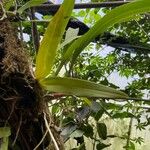
Brassia verrucosa
Orchid · Warty Brassia · Spider-orchid
Description
Source: leafsnapBrassia verrucosa, also known as warty brassia, is a species of plant in the family Orchidaceae native to Mexico, Central America (Costa Rica, El Salvador, Guatemala, Honduras, Nicaragua), Venezuela, and Brazil.
Care Guide
💧 Water
The warty brassia is native to humid tropical regions, where it thrives in consistently moist conditions. For optimal growth, it requires a balanced watering schedule of once a week. While it is usually grown indoors, it flourishes best in well-draining soil that retains moisture evenly without becoming waterlogged.
☀️ Light Partial sun
The warty brassia prefers moderate sunlight, meaning it does best with a mix of sun and shade. In the wild it is found in areas with filtered light. Either too much or too little light can hinder its healthy growth and cause harm, such as reduced photosynthesis or scorched leaves.
What are the sunlight requirements for Warty brassia?
Warty brassia cherishes moderate levels of sun exposure and thrives under a mix of sun and shade conditions, ideally in environments with filtered sunlight. It requires about 3-6 hours of sunlight daily. Too much or too little sunlight can harm the plant, leading to issues like impaired photosynthesis or scorched foliage. A balance of light and shade is essential for the plant's happiness, so it's important to observe how sunlight moves through your garden to choose the best spots for your plants.
How should artificial lighting be used for indoor Warty brassia plants?
Indoor Warty brassia plants require adequate lighting for optimal growth, especially when natural sunlight is insufficient. Artificial lights, such as LEDs that can provide specific wavelengths, are vital for promoting healthy growth. For indoor plants, the required artificial light intensity varies: full sun plants need 30-50W/sq ft, partial sun plants need 20-30W/sq ft, and full shade plants need 10-20W/sq ft. The artificial light source should be placed 12-36 inches above the plant, mimicking natural sunlight as closely as possible, with durations mimicking natural daylight hours, typically 8-12 hours per day.
What are the symptoms of improper lighting for Warty brassia?
Improper lighting can cause several symptoms in Warty brassia, including small or lighter-colored new leaves, leggy or sparse growth, faster leaf drop, slower or no new growth, and symptoms of stress from too much sunlight such as chlorosis, sunscald, leaf curling, wilting, and leaf scorching. These symptoms indicate that the plant is either receiving too much or too little light, impacting its growth and overall health.
What solutions can help improve light conditions for Warty brassia?
To improve light conditions for Warty brassia, gradually acclimate plants to changing light conditions by shifting them to sunnier spots each week until they receive the recommended 3-6 hours of direct sunlight daily. For large or immovable indoor plants, consider using artificial light, keeping a lamp on for at least 8 hours daily or investing in professional grow lights. Outdoors, move plants gradually to avoid sunburn, and indoors, use suitable artificial lighting. Additionally, for plants grounded outdoors, reduce obstructions by pruning and consider transplanting smaller plants to sunnier locations with good drainage during their dormant period.
🌡️ Temperature 20–41.1°C
Warty brassia originates from areas where temperatures typically range from 68 to 105.8 °F (20 to 41 ℃). It prefers distinctly warm conditions, so during colder seasons careful indoor adjustments might be required to maintain its health.
What is the native climate for Warty brassia?
Warty brassia, or Brassia verrucosa, is native to regions with temperatures typically ranging between 68 to 105.8 °F (20 to 41 °C). It thrives in warm environments. Given its preference for noticeably warm conditions, adjustments might be necessary during colder seasons to maintain its health indoors. Specifically, if the temperature drops below 5°C during winter, it is advised to bring the Warty brassia indoors and ensure the temperature stays above 20°C. Placing it near a south-facing window can provide ample sunlight, and it's important to regularly mist the plant or use a humidifier to keep the humidity levels up. For those instances where the plant needs to overwinter outside, it should be placed in a sheltered area that still receives sunlight. Protecting it with a temporary greenhouse or using materials like plastic film or fabric for wrapping can help shield it from colder temperatures.
How should you care for Warty brassia in low temperatures?
When faced with low temperatures, Warty brassia requires special care since it thrives in warmth and is not tolerant of cold. It's vital to keep it above 5°C during winter, as temperatures below 1°C can cause the leaves to exhibit water-soaked necrosis, wilting, and drooping. If frostbite occurs, you should trim off the affected areas and move the plant to a warm indoor environment promptly. Choosing a spot near a south-facing window will ensure the plant gets enough sunlight. It's also important to avoid placing the plant too close to heaters or air conditioning vents, as this could lead to excessive dryness in the air around the plant.
What is the best way to manage high temperatures for Warty brassia?
During the summer, it's crucial to keep Warty brassia in conditions below 41°C, as exceeding 45°C can halt its growth and lead to wilting leaves. The plant becomes more prone to issues like root rot and can suffer sunburn if exposed to direct sunlight in such high temperatures. To manage high temperatures effectively, trim away any sunburned or dried-up parts of the plant. Move the plant to a shaded area, particularly to avoid the midday and afternoon sun. Additionally, watering the plant during the cooler times of the day, such as in the morning and evening, can help maintain moisture for both the plant and its surrounding environment.
💨 Humidity
🪴 Soil 6-7
🌱 Fertilizer
Proper fertilization is essential for Warty brassia's health and appearance. Feed Warty brassia in summer, repeating the application monthly throughout the season. Nutrients supply the energy for growth and help maintain the plant's parts. Fertilizing improves Warty brassia's floral display, ensuring the best blooms.
🪴 Pot & Repot
When repotting Warty brassia, pick a pot slightly larger than the current one with good drainage, ideally a clear orchid pot. Use an orchid-specific, well-draining mix that includes bark or moss. Gently clean the roots and cut away any that are dead or rotting. Repot after flowering, typically in spring or fall, water thoroughly, and place the plant in bright, indirect light. After repotting, avoid disturbing the roots.
✂️ Pruning
Warty brassia benefits from pruning between early spring and late winter to boost growth and flowering. To maintain the plant's health, remove any dead parts, trim spent blooms, and ensure good air circulation to minimize the risk of disease. Always use clean, sharp tools for pruning, and avoid cutting back too much to reduce stress and promote the plant's vigor.
🌿 Propagating
🐛 Diseases & pets
☠️ Toxicity
Characteristics
- Plant Type
- Herb
- Life Cycle
- Perennial
- Genus
- Brassia
- Family
- Orchidaceae
- Hardiness Zone
- 10-13
- Mature Height
- 4 cm to 6 cm
- Mature Spread
- 2 cm to 3 cm
- Leaf Color
- Green
- Leaf Type
- Evergreen
- Flower Color
- White, Yellow, Green
- Flower Size
- 0.25 cm to 0.51 cm
- Bloom Time
- Mid spring, Late spring, Summer, Early fall, Mid fall
- Planting Time
- Spring, Summer
- Harvest Time
- Mid summer, Late summer, Fall, Early winter
- Native Area
- Honduras, Mexico, Guatemala, El Salvador, Nicaragua, Costa Rica