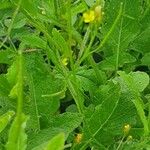
Brassica juncea
Mustard greens · Brown mustard · India mustard · Oriental mustard · Leaf mustard
Description
Source: leafsnapBrassica juncea, commonly known as Indian mustard or brown mustard, is a species of plant in the Brassicaceae family. This fast-growing annual can reach heights of up to 1.5 meters and produces yellow flowers that bloom from June to August. The deeply lobed leaves of the plant are edible and can also be used for medicinal purposes. Indian mustard is widely cultivated for its seeds, which are essential for producing mustard oil and condiments like Dijon mustard. Additionally, the seeds are valued in traditional medicine for their anti-inflammatory properties. Originally native to Asia, Indian mustard has been introduced worldwide due to its economic significance. It thrives in temperate climates with well-drained soil and requires moderate watering. The plant is also being studied for its potential as a biofuel crop because of its high oil content. In summary, Brassica juncea is a versatile and important crop with uses ranging from culinary and medicinal applications to potential biofuel production.
🎭 Fertility, Protection, Mental powers
Care Guide
💧 Water
☀️ Light Full sun
🌡️ Temperature 5–37.8°C
💨 Humidity
🪴 Soil 6-7
🌱 Fertilizer
🪴 Pot & Repot
✂️ Pruning
🌿 Propagating
🐛 Diseases & pets
☠️ Toxicity
Characteristics
- Plant Type
- Herb
- Life Cycle
- Annual, Biennial, Perennial
- Genus
- Brassica
- Family
- Brassicaceae
- Hardiness Zone
- 4-11
- Mature Height
- 0.3 m to 1.52 m
- Mature Spread
- 30 cm to 91 cm
- Leaf Color
- Green
- Leaf Type
- Deciduous
- Flower Color
- Yellow
- Flower Size
- 0.76 cm to 1.02 cm
- Bloom Time
- Mid spring, Late spring, Early summer
- Planting Time
- Spring, Summer, Autumn
- Harvest Time
- Early summer, Mid summer
- Native Area
- Uzbekistan, Russia, Tajikistan, India, Kyrgyzstan, Kazakhstan, Mongolia, Armenia, Azerbaijan, Turkmenistan