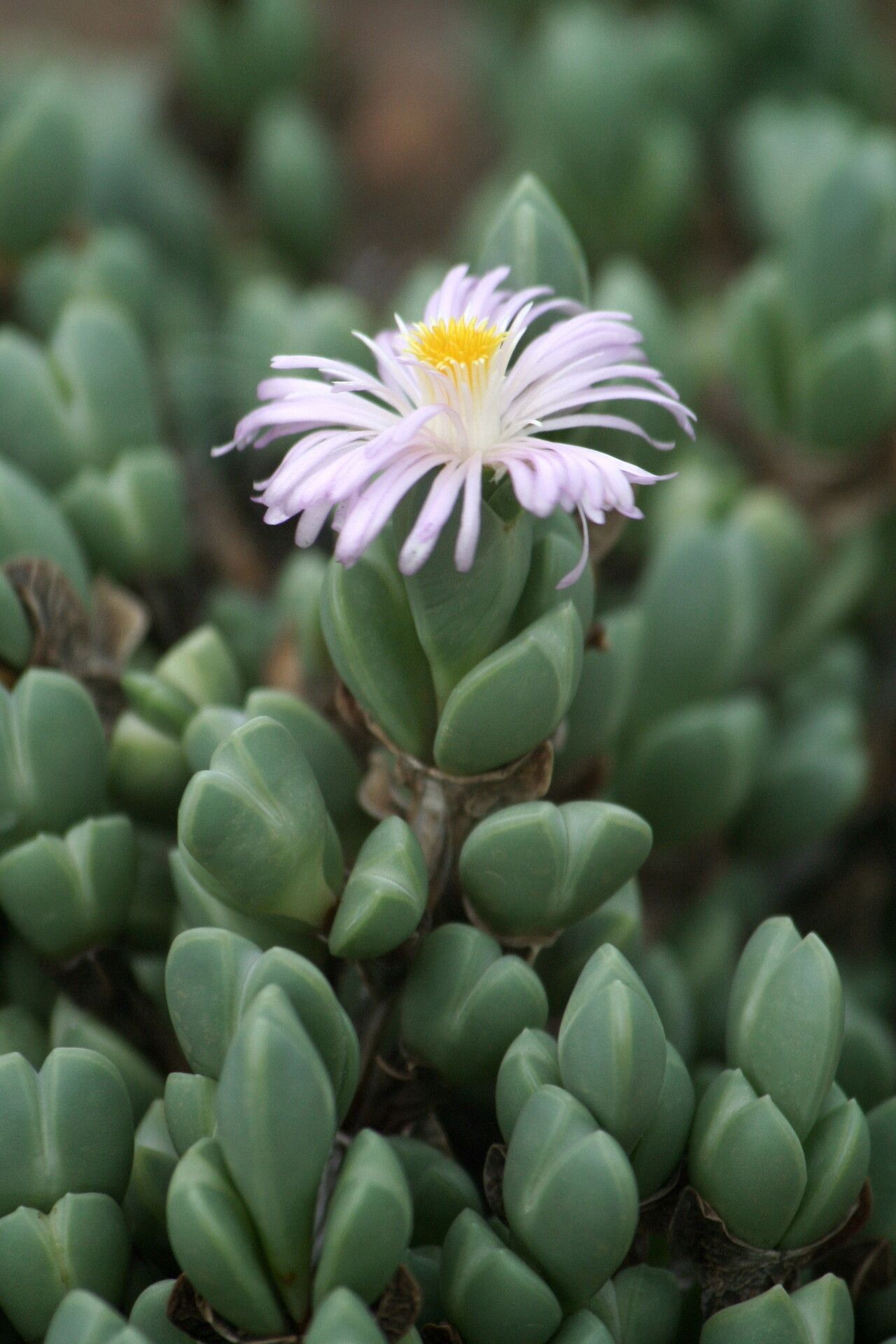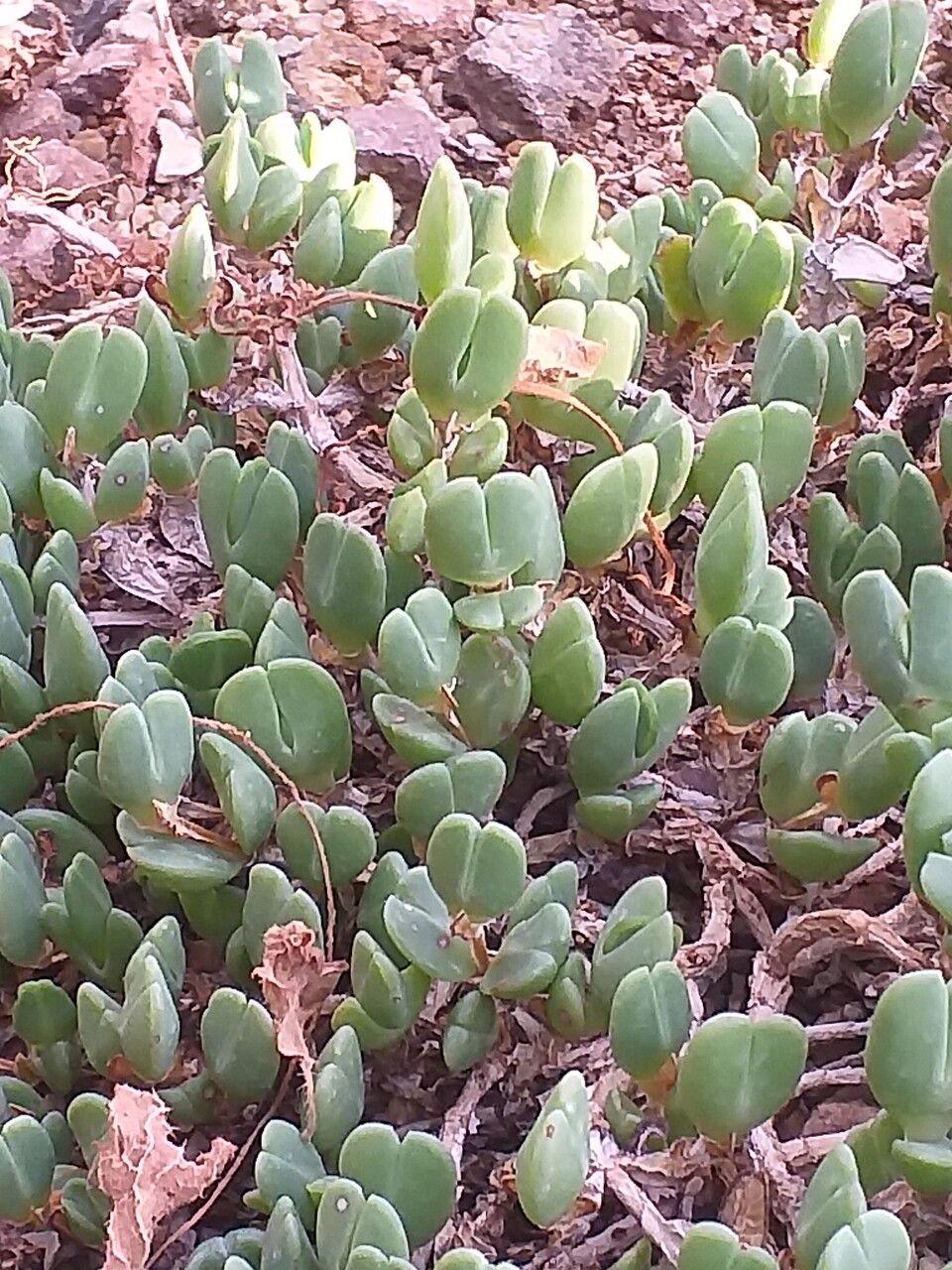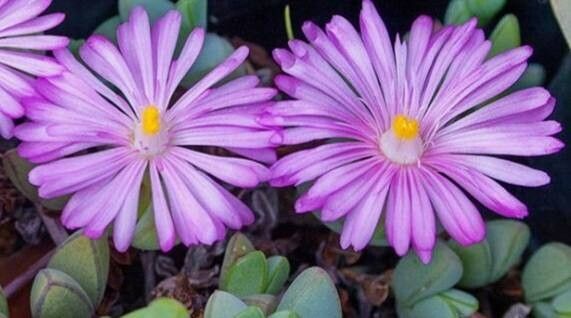
Beads lampranthus has moderate resistance to disease but is relatively sensitive to humidity. It can develop illnesses when humidity is high and is liable to root rot during its dormancy. Regarding care, Beads lampranthus tolerates drought yet requires increased watering in the growing season. Watering should be greatly reduced or stopped entirely while it is dormant. Beads lampranthus is best suited to growers with some experience, as it can be challenging to maintain, especially during dormancy. It is particularly appropriate for those who can dedicate time to its care in the winter months.
How to keep Braunsia Maximiliani.
Light
Beads lampranthus naturally thrives in strong sunlight and can tolerate periods of reduced light. In its native habitat, plentiful light promotes healthy growth. However, insufficient light can diminish growth or vigor, while too much light may cause harm. Its preference for sunlight remains consistent across all stages of growth.
Water
Beads lampranthus is a plant that originates from arid regions and has adapted to withstand drought by storing water efficiently in its succulent leaves. It thrives in full sunlight, making it an excellent choice for outdoor cultivation. This evergreen plant keeps its foliage vibrant year-round and requires watering every two weeks to remain healthy.
Humidity
This plant prefers dry conditions, so don't mist it. However, watering it less often can also thrive in higher humidity.
Temperature
Originating from temperate regions, beads lampranthus prefers a warm setting of 68 to 100 ℉ (20 - 38 ℃). Its preference for heat means you should raise room temperatures in cold periods to better replicate its natural habitat.
Fertilizer
Beads lampranthus needs light applications of fertilizer once or twice a year during the growing season. Do not fertilize in winter or in summer while it is dormant. Reduce fertilizer for plants that have been repotted and wait a couple of months after repotting before applying fertilizer. Fertilizing helps maintain healthy growth and promotes flowering.
Pruning
To keep your Lampranthus plants well-shaped, prune them in both spring and autumn by removing any dense or redundant branches. Use a knife for cutting and apply sulfur powder to treat the wounds. For propagation, cut sturdy stems with 5-6 leaves, let the wounds heal, and slightly moisten the soil before planting the cuttings.
Pot & Repot
Repot Lampranthus, a low-growing succulent, every two years in the spring. Use a larger pot with proper drainage to prevent root rot. After repotting, place the plant in a sunny location and water sparingly until you see new growth, which indicates recovery.
Botanical profile.
- Plant Type
- Succulent
- Life Cycle
- Perennial
- Genus
- Braunsia
- Family
- Aizoaceae
- Hardiness Zone
- 9-11
- Mature Height
- 18 cm
- Mature Spread
- 10 cm to 49 cm
- Leaf Color
- Green, Blue
- Leaf Type
- Evergreen
- Flower Color
- Pink, Purple
- Flower Size
- 2.03 cm to 2.29 cm
- Bloom Time
- Mid spring, Late spring, Early summer, Mid summer
- Planting Time
- Spring, Summer, Autumn
- Harvest Time
- Summer, Early fall
- Native Area
- South Africa