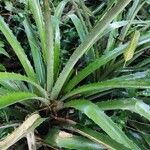
Bromelia pinguin
Pinguin · Wild pine · Ping wing · Thatch · Wild pineaple
Description
Source: leafsnapBromelia pinguin, commonly known as the pinguin plant or pineapple bromeliad, is a bromeliad species native to South America. This tropical plant thrives in humid forests and can grow up to 1.5 meters tall. Its long, narrow leaves with sharp edges form a rosette shape at the base. The pinguin plant produces stunning pink or red flowers on long stalks that rise from the center of its rosette-shaped leaves. These flowers are followed by small, edible fruits that resemble pineapples but are not as sweet. Bromelia pinguin is an epiphytic species, meaning it grows on other plants without causing them harm. It absorbs nutrients and moisture from its surroundings through its leaves rather than from roots embedded in soil. Indigenous people have utilized the pinguin plant for centuries for its medicinal properties, using it to treat wounds and infections because of its antibacterial traits. In cultivation, Bromelia pinguin makes an excellent ornamental houseplant due to its unique appearance and low maintenance requirements. It prefers bright, indirect light but can tolerate some shade. Watering should be done sparingly, as the plant can store water in its rosette-shaped base for extended periods without drying out completely. Overall, Bromelia pinguin is an intriguing tropical houseplant with distinctive features that make it stand out among other plants. Its long history of medicinal use by indigenous people adds to its charm, making it more than just another attractive addition to your home!
Care Guide
💧 Water Every 7 days
Thriving in tropical rainforests, the pinguin plant prefers consistent moisture but can withstand brief periods of dryness. To keep it lush, water it weekly. As an evergreen, the pinguin efficiently retains water, which helps it stay vibrant despite changes in seasonal rainfall.
What should I do if I give my Pinguin too much or too little water?
Both overwatering and underwatering can happen to your Pinguin plant, but overwatering is more common. Although Pinguins prefer consistently moist soil conditions, they can withstand short-lived droughts. If you underwater your Pinguin, the leaves will turn brown and brittle at the tips and may curl. This issue typically occurs with in-ground plants when relying on rainfall that is insufficient. Container-grown plants are more prone to underwatering because the soil in containers dries out faster and lacks natural rainfall. To resolve underwatering, provide more water. On the other hand, if you overwater your Pinguin, it may wilt, and the leaves can turn yellow and show signs of rot. Overwatering can also lead to mold and fungus. In-ground plants can be overwatered when watering despite sufficient rainfall, while container-grown Pinguins often face this issue due to heavy soils and inadequate drainage. If your container-grown plant is overwatered, it's best to transfer it to a new container with looser soil and better drainage. Adjust your watering schedule to reduce overwatering, whether your plant is in the ground or in a pot.
How often do I need to water my Pinguin?
To maintain the proper moisture level for your Pinguin plant, water it regularly but be careful not to overwater. If you have planted it in a container, watering it once a week with about one inch of water is usually sufficient. On the other hand, if you have planted it in the ground, you may not need to water it if it has rained about one inch during the week. In this case, you can go without watering for longer periods of time as long as there has been consistent rainfall. Remember that the frequency of watering should be adjusted based on the season. During winter, your Pinguin will require less water compared to spring, summer, and fall. Additionally, the watering needs may increase during its growth phases, particularly during flowering and fruiting stages.
If I grow my Pinguin indoors, how should I water it differently?
If you want to grow your Pinguin plant indoors, it is definitely possible. This is especially important if you live in a cold region with winters, as the Pinguin cannot survive freezing temperatures. When growing it indoors, it's worth noting that the plant won't have access to rainwater like it would if it were outside. Therefore, you will need to supply all the water it needs. Indoor locations tend to be drier overall, due to things like air conditioners, which means you'll need to water your Pinguin more often compared to if it were outdoors. Additionally, it's a good idea to mist the plant along with watering it, as this helps create the humid environment that the Pinguin thrives in.
What are the things I need to think about when giving water to my Pinguin in different seasons and when it is growing?
To help your plants thrive, it's important to adjust your watering based on the seasons. In the spring, start by watering your Pinguin with about one inch of water per week. During the hot summer, you may need to water more frequently to prevent the soil from drying out too quickly. In the fall, you can continue with the same watering rate as in the spring. In winter, you can reduce the amount of water, but make sure to keep the soil slightly moist. Additionally, pay attention to your plant's growth stage. When it's flowering or fruiting, it may need more water. Always monitor the soil to ensure it's not too dry or overly saturated.
☀️ Light Full sun
Pinguin prefers locations that get plenty of sunlight throughout the day. Still, it can do reasonably well in areas with moderate daily sun exposure. This preference is shaped by its native environment, which is rich in sunlight. Both too much and too little sunlight can adversely affect its growth and health.
What are the sunlight requirements for Pinguin plants?
Pinguin plants thrive in areas with generous sunlight, preferring full sun exposure of above 6 hours of sunlight a day, but they can also tolerate partial sun, which is about 3-6 hours of sunlight. It's crucial to monitor the movement of sunlight through your garden to find the optimal spots that offer the right balance of light and shade, ensuring the plants' well-being. Additionally, if natural sunlight is insufficient, especially during winter or in darker spaces, employing artificial lighting can support their growth. For artificial lighting, it's recommended to use LED lights that provide the necessary wavelengths, with full sun plants requiring 30-50W/sq ft, partial sun plants 20-30W/sq ft, and full shade plants 10-20W/sq ft of artificial light. The distance between the light source and the plant should be 12-36 inches to mimic natural sunlight, and the duration should match the plant's natural daylight hours, typically 8-12 hours a day.
What are the signs of improper lighting for Pinguin plants?
Pinguin plants can exhibit several symptoms if exposed to improper lighting conditions. Signs of light deficiency include smaller new leaves, leggy or sparse growth, faster leaf drop, slowed or ceased growth, and lighter-colored new leaves, indicating a lack of chlorophyll. On the other hand, excessive sunlight can cause chlorosis (yellowing of leaves), sunscald (pale, bleached areas on leaves or stems), leaf curling (to minimize water loss and damage), wilting (due to loss of water), and leaf scorching (brown, dry edges on leaves). It's essential to monitor these symptoms to ensure your Pinguin plants are receiving the appropriate amount of light.
How can I address lighting issues for my Pinguin plants?
To address lighting issues for Pinguin plants, start by gradually moving them to a location that receives at least 6 hours of direct sunlight daily, if they're lacking sunlight. For indoor plants that are large or hard to move, consider using artificial light, keeping a lamp on for at least 8 hours a day or using professional plant grow lights. For outdoor plants, ensure a gradual adjustment to prevent sunburn by progressively moving them to sunnier spots each week. If sunlight is obstructed, for smaller outdoor plants or in-ground plants, you might need to prune obstructive tree branches or even transplant the plants during their dormant period to a location with ample sunlight and good drainage. It's crucial to remember that parts of the plant that suffered from insufficient sunlight might not recover, but new growth should be healthy following these adjustments.
🌡️ Temperature 20–37.8°C
Pinguin originates from environments with temperatures ranging from 68 to 100 °F (20 to 38 ℃). Pinguin does well within that temperature range. Seasonal temperature changes should be kept minimal to maintain optimal health.
What is the ideal temperature range for Pinguin plants?
Pinguin plants are native to environments that require temperatures ranging from 68 to 100°F (20 to 38°C). They thrive best within this temperature range. To maintain optimum health, seasonal temperature adjustments should be minimal. During winter, if temperatures drop below 5°C, it's advised to move the plant indoors. It's beneficial to maintain indoor temperatures above 20°C and to choose a location near a south-facing window for sufficient sunlight. If indoor temperatures fall below 20°C, watering should be reduced, and plants should only be watered again once the soil surface is dry to prevent root rot. For outdoor overwintering, ensure a sheltered, sunlit position and consider using a temporary greenhouse or wrapping the plant with protective materials like plastic film or fabric while keeping the soil slightly moist.
How does low temperature affect Pinguin plants and what are the solutions?
Pinguin plants prefer warm environments and do not tolerate low temperatures well, thriving best above 20°C. During winter, temperatures should be kept above 5°C. Exposure to temperatures below 1°C may not initially show obvious symptoms on the leaves, but after three to five days, the leaves may start to wither and droop, and in severe cases, the entire plant may dry up. To counter low temperature effects, trim the frostbitten areas and move the plant indoors to a warm environment immediately. Positioning the plants near a south-facing window will ensure ample sunlight. Additionally, avoid placing plants near heaters or air conditioning vents to prevent the air from becoming excessively dry.
How should you care for a Pinguin plant during high temperatures?
During the summer, Pinguin plants should be kept below 38°C to prevent heat stress. When temperatures exceed 43°C, the leaves might become dry and wither at the tips, growth may cease, and the plant becomes prone to root rot. Excessive sunlight can also lead to sunburn. To alleviate these problems, remove the withered parts and move the plant to a location that is shaded from the midday and afternoon sun. Watering the plant in the morning and evening helps keep both the plant and the surrounding environment moist, aiding in reducing heat stress.
💨 Humidity
🪴 Soil 5-6
🌱 Fertilizer
Proper fertilization is essential for Pinguin's health and appearance. Fertilize Pinguin during the summer, repeating the treatment monthly throughout the season. Nutrients fuel growth and help maintain the plant's parts. Fertilization improves Pinguin's flower display, ensuring the best blooms.
Why should I put fertilizer on my plant named Pinguin?
Fertilizer and soil nutrients are like fuel for your Pinguin to grow and stay healthy. Plants use these nutrients to make new plant material and keep their existing parts in good condition. For your Pinguin, fertilization is especially important for getting the best flowers. Since the flowers are what make this plant attractive, most gardeners want to do everything they can to ensure the flowers are at their best. Fertilization is one of the most effective ways to help your Pinguin produce beautiful blooms.
When should I fertilize my Pinguin?
The Pinguin plant goes through two main phases each year. The first phase is the dormant phase during winter, when minimal new growth occurs. The second phase is the active growth phase, which happens in spring and fall. This is the time when your Pinguin plant needs fertilization the most. It is recommended to start fertilizing your Pinguin plant in the spring and continue feeding it once a month throughout spring and most of summer. As fall approaches, you can gradually decrease the frequency of fertilization.
When is the best time to not fertilize my Pinguin?
In order to support Pinguin growth without causing root burn, it's important to consider the plant's growth cycles. During the spring and summer, when the plant is actively growing, extra nutrients are needed. However, during the fall and winter, when the plant enters its dormant stage, it is best to stop fertilizing.
What kind of fertilizer does my Pinguin need?
The Pinguin's ideal fertilizer should have a balanced mix of the three main plant nutrients, with slightly higher amounts of phosphorus. Alternatively, improving the Pinguin's soil can be done by adding organic materials like compost, worm castings, and manure. Fertilizers can come in various forms, and most of them will work well for your Pinguin. However, the best fertilizers for Pinguin are usually in liquid or powdered form. Regardless of the form you choose, it is important to dilute the fertilizer and apply it while watering your Pinguin.
How do I feed my Pinguin?
To ensure successful fertilization for your Pinguin, first find a suitable fertilizer and determine the ideal fertilization schedule. Once this is done, learning how to apply the fertilizer is the next step. A reliable method is to mix the liquid fertilizer with water before applying it to the soil. Follow the instructions provided by the manufacturer of the fertilizer, as each type may have different feeding guidelines. These instructions should also include how to dilute the fertilizer properly to avoid overfertilization. Once the fertilizer is mixed with water, simply pour the mixture into the soil where your Pinguin resides.
🪴 Pot & Repot
✂️ Pruning
Pinguin flourishes with vibrant foliage and robust growth. To promote new growth, prune in early summer by removing dead leaves and older foliage. Trim back spent flower stalks to conserve the plant's energy. Regular pruning improves air circulation, prevents overcrowding, and keeps the plant healthy and attractive.
🌿 Propagating
🐛 Diseases & pets
☠️ Toxicity
Characteristics
- Plant Type
- Herb
- Life Cycle
- Perennial
- Genus
- Bromelia
- Family
- Bromeliaceae
- Hardiness Zone
- 10-11
- Mature Height
- 2.13 m
- Mature Spread
- 91 cm
- Leaf Color
- Green
- Leaf Type
- Evergreen
- Flower Color
- Pink
- Flower Size
- 3.05 cm
- Bloom Time
- Late spring, Early summer, Mid summer
- Planting Time
- Summer
- Harvest Time
- Late summer, Early fall, Mid fall
- Native Area
- Colombia, Belize, Honduras, Mexico, Haiti, Guatemala, Venezuela, El Salvador, Nicaragua, Ecuador, Dominican Republic, Suriname, Costa Rica, Panama, Jamaica