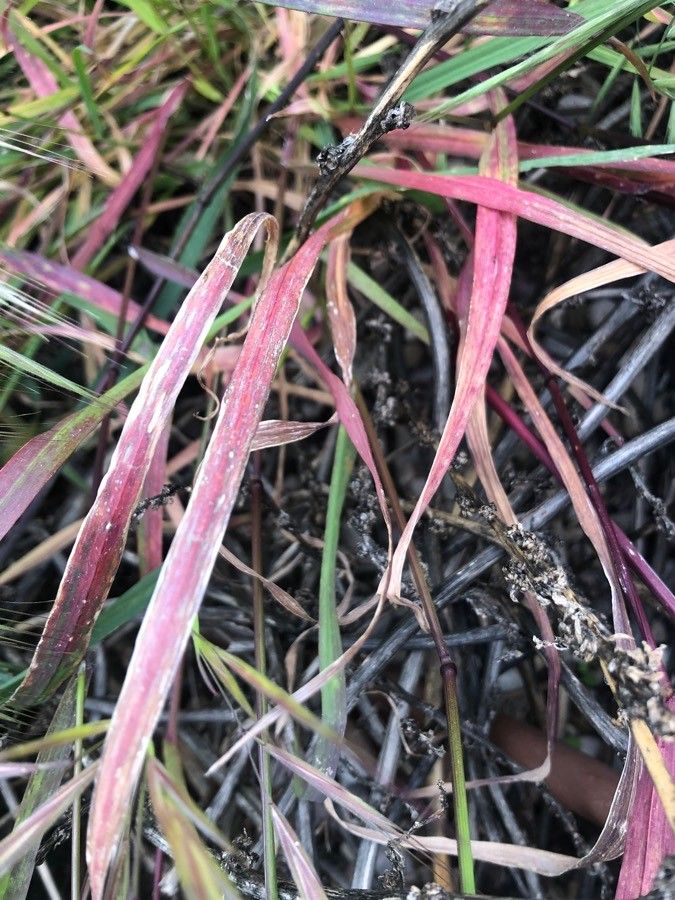
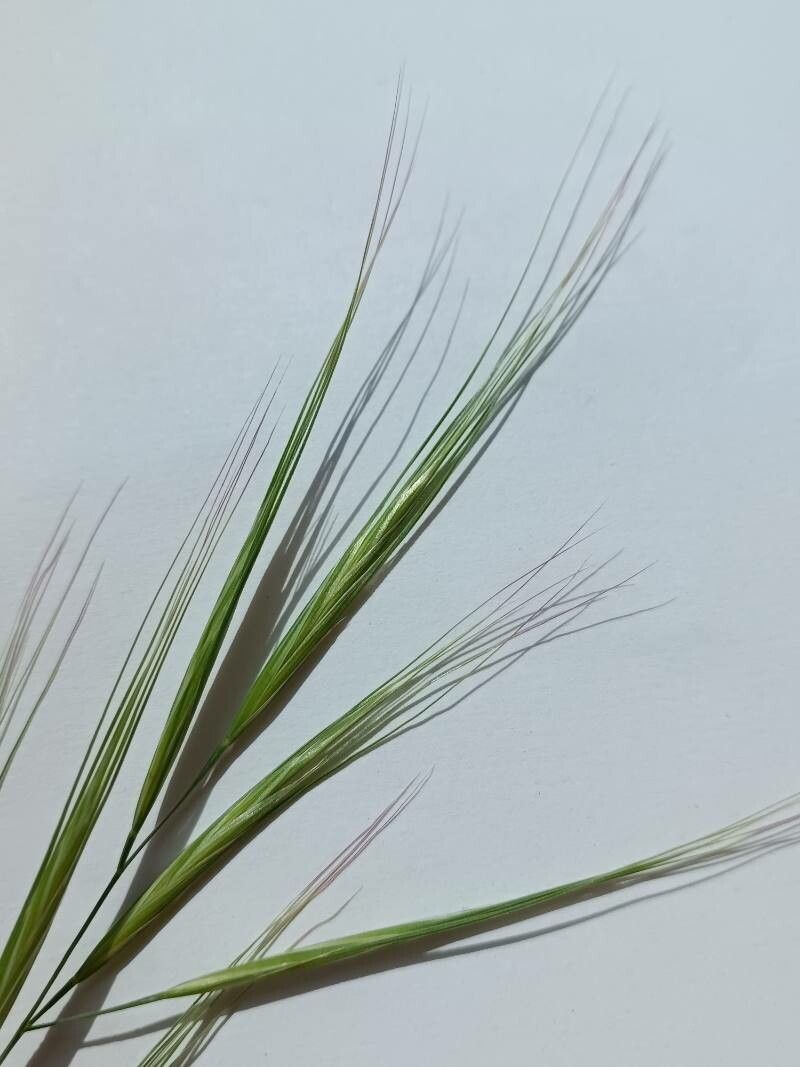
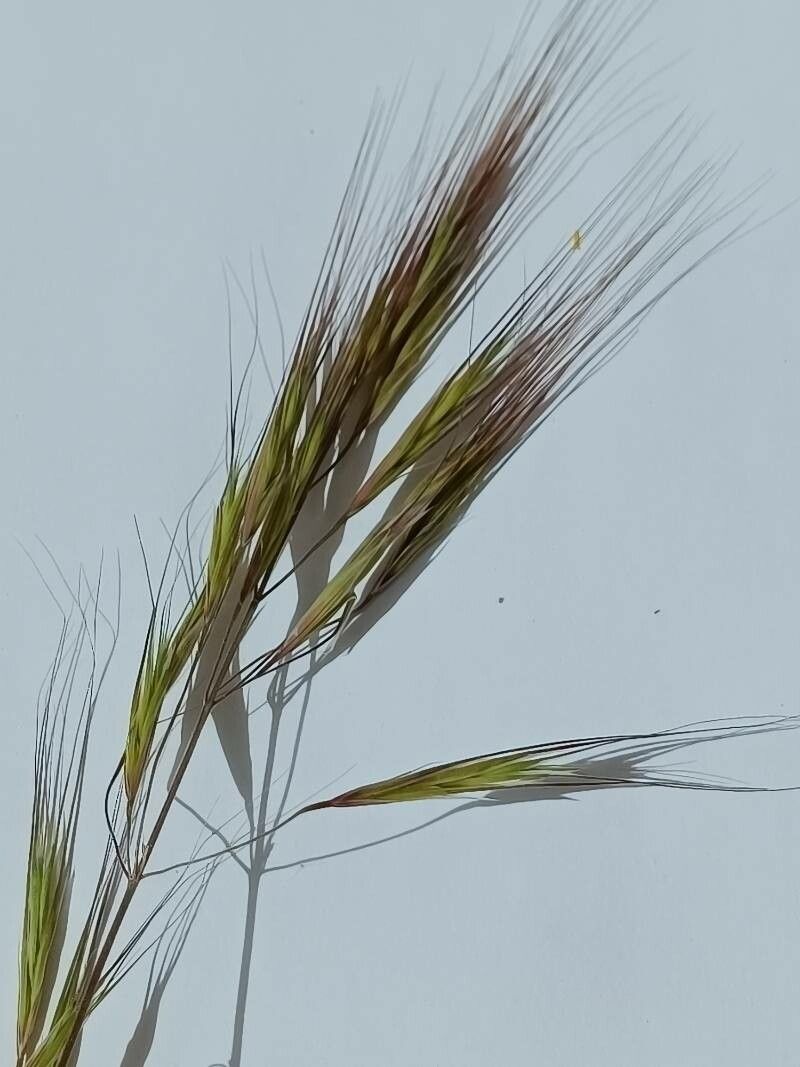
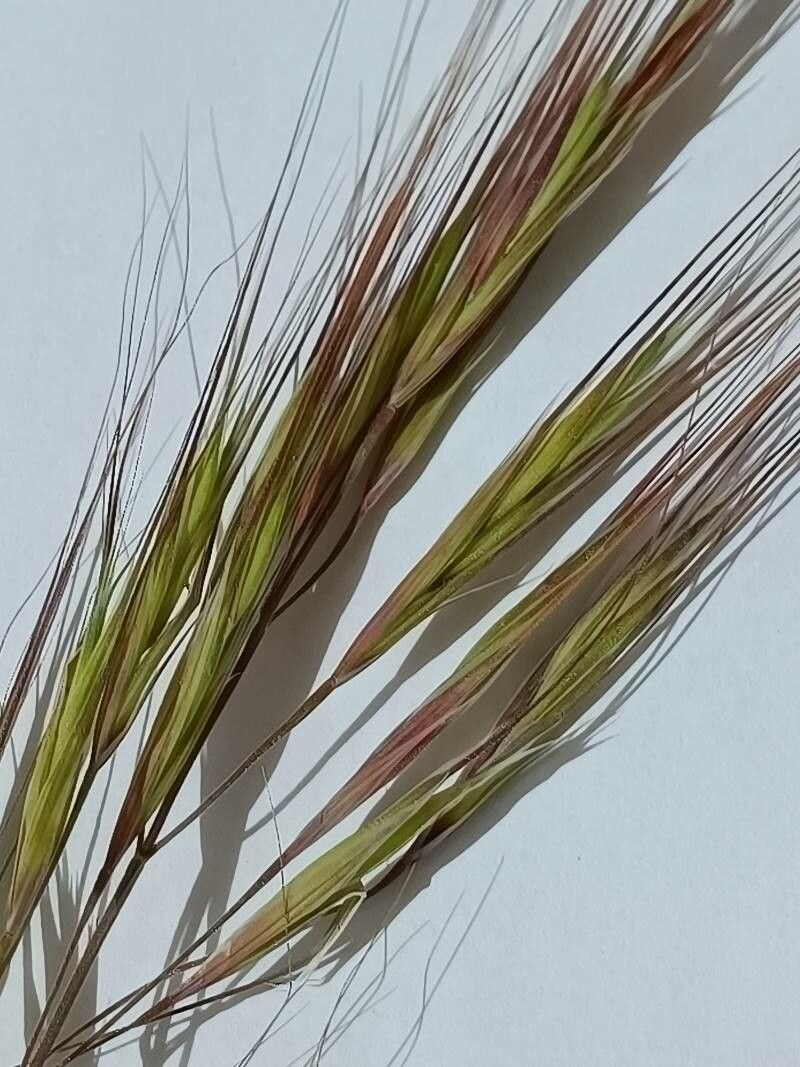
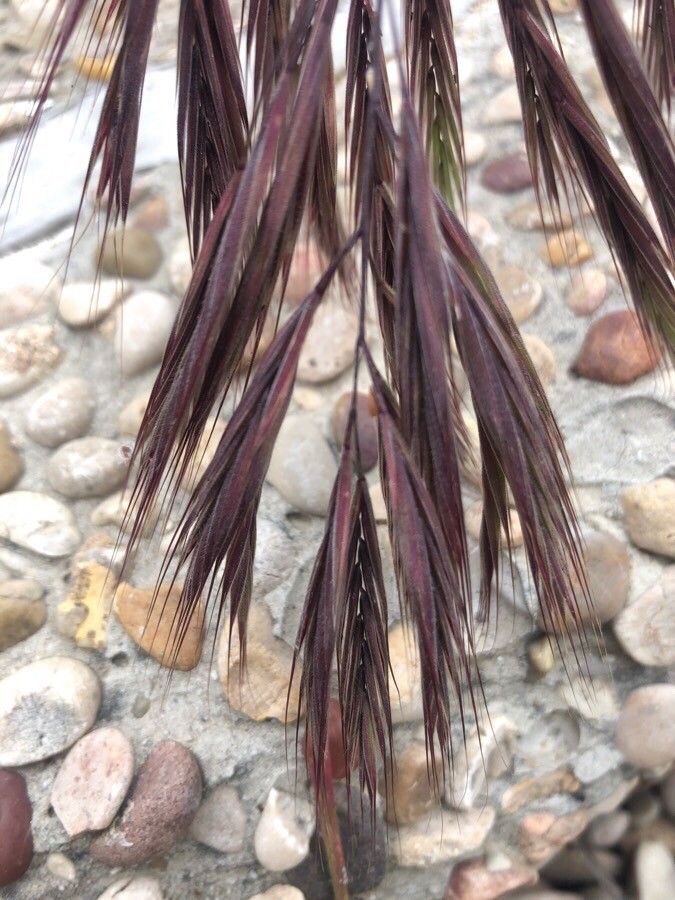
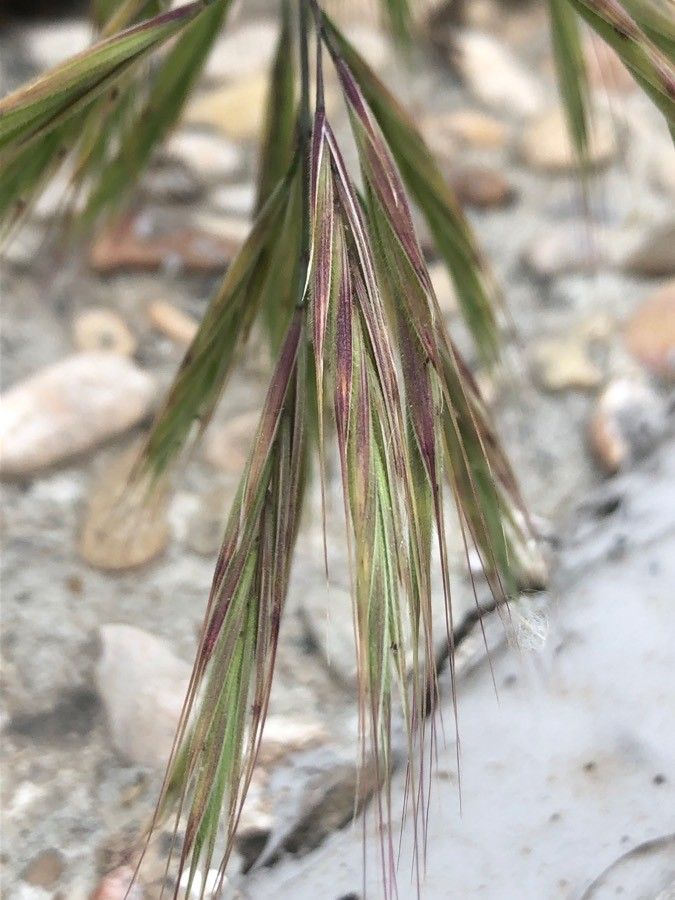
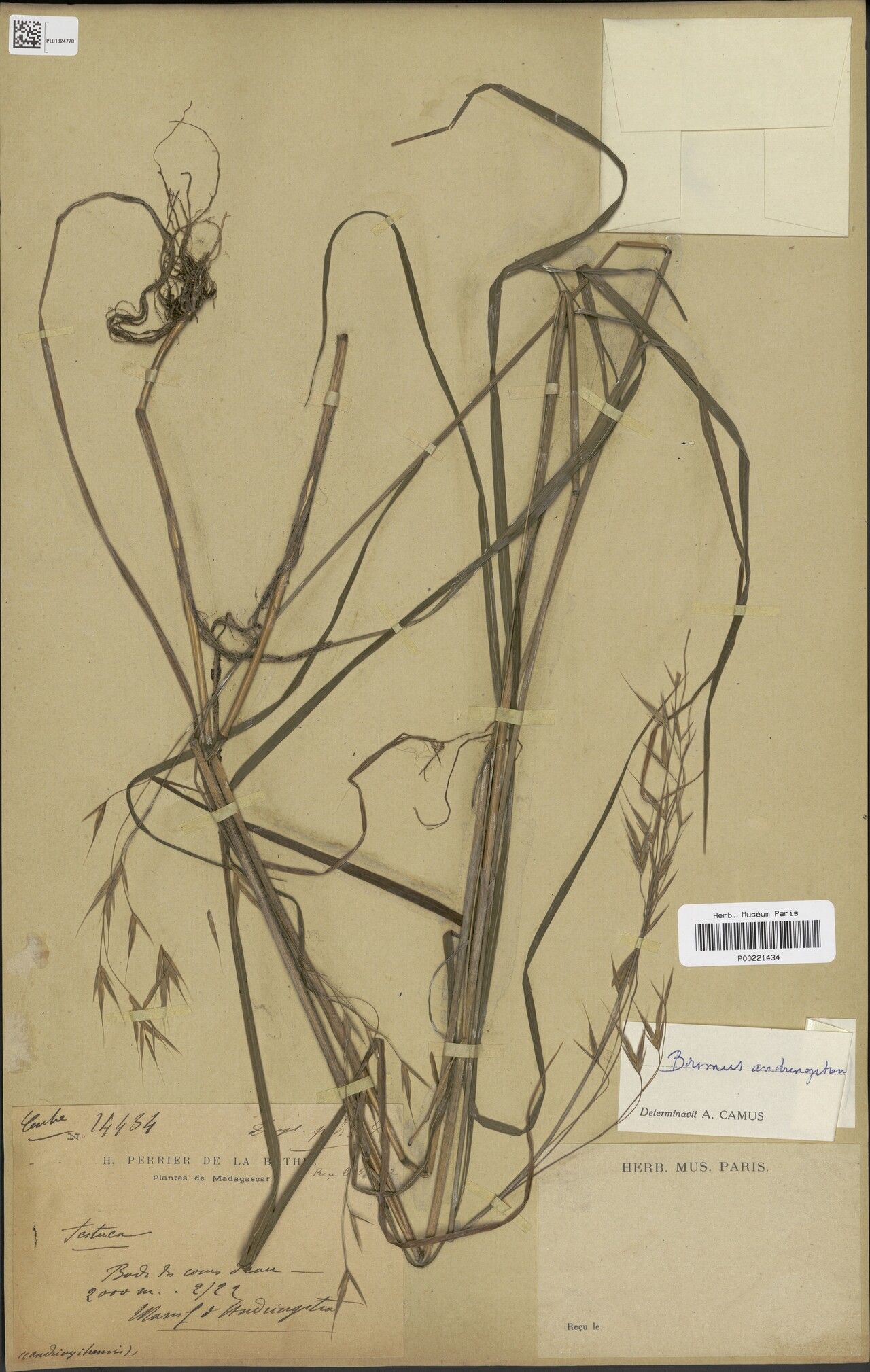
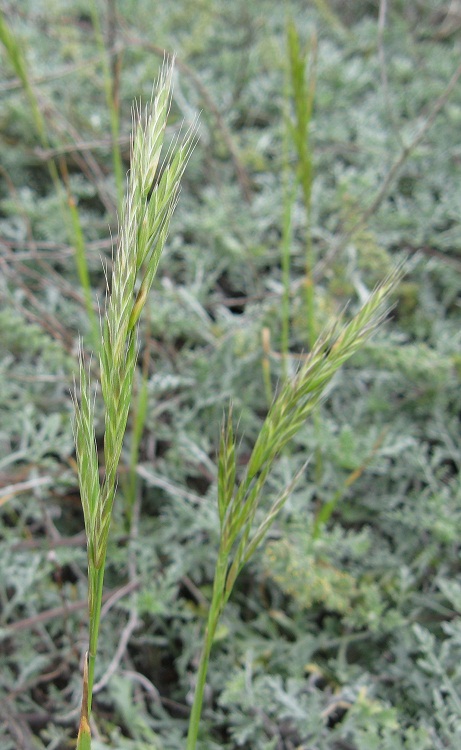
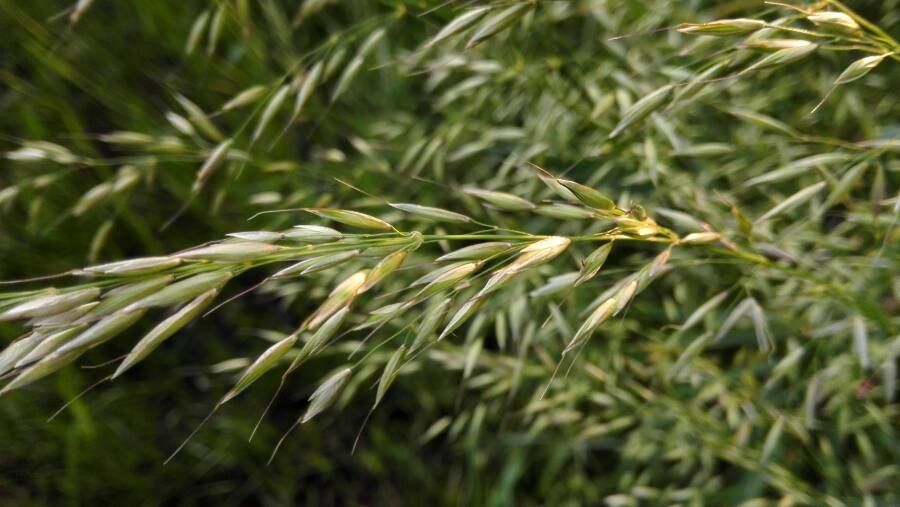
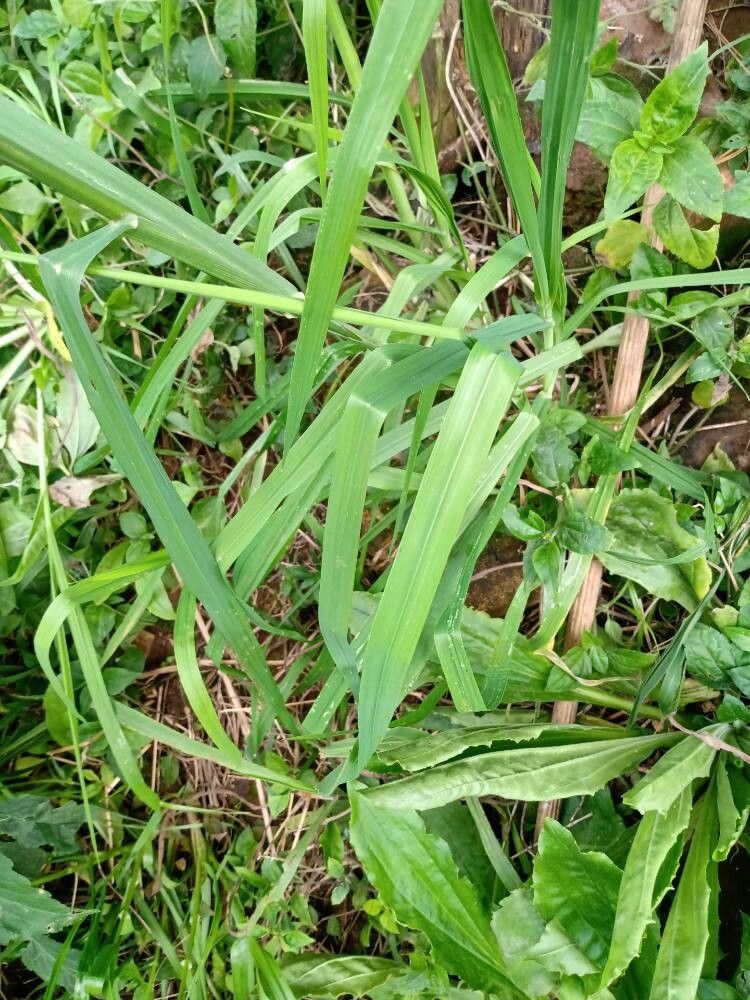
Bromus diandrus, commonly known as ripgut brome or great brome, is a species of grass native to Europe and North Africa, but it has spread to many other regions worldwide. This annual or biennial plant can grow up to 1.5 meters tall and is characterized by its distinctive spike-like inflorescence with long awns (bristles), which can injure grazing animals.
Ripgut brome thrives in dry, open habitats such as grasslands, roadsides, and disturbed areas. It is considered an invasive species in many of the regions where it has been introduced, as it can outcompete native vegetation and reduce biodiversity.
Despite its negative ecological impact, ripgut brome does have some benefits for humans. It can help with erosion control on steep slopes or disturbed areas, and its seeds are occasionally used as bird feed.
In summary, Bromus diandrus illustrates how non-native plant species can both negatively impact ecosystems and offer certain benefits to humans.
Great brome has good disease resistance and is generally not prone to diseases. However, it can be vulnerable to pests and diseases present in its environment. These outbreaks are usually not severe. In terms of care, this plant needs medium maintenance. It should be pruned regularly to preserve a neat appearance and support healthy growth. Fertilizing can also encourage flowering. Great brome is suitable for anyone with outdoor space, such as a garden or patio, and does not demand extensive care experience. It may need more attention when kept indoors.
How to keep Bromus Diandrus.
Light
Great brome performs best in intense sunlight that mirrors its native environment. It can also tolerate partly sunlit (semi-shaded) conditions. Appropriate sunlight encourages healthier growth and better seed production, while too much or too little light can hinder development and elicit stress responses.
Water
Great brome thrives in conditions similar to its Mediterranean origins, enjoying wet winters and dry summers. It can tolerate moderate drought but requires weekly watering to stay healthy. As an annual grass, it benefits from natural rainfall during its growing season, which reduces the need for extra watering.
Temperature
Great brome is native to moderately warm habitats and does well in temperatures from 68 to 95 °F (20 to 35 ℃). Optimize growth by keeping temperatures within this range throughout the seasons.
Fertilizer
Great brome responds well to regular, light applications of fertilizer to encourage healthy leaf development. You should feed Great brome about once a month during the summer. Nitrogen is essential for foliage, and adding nitrogen-rich sources helps Great brome thrive.
Botanical profile.
- Plant Type
- Herb
- Life Cycle
- Annual, Perennial, Biennial
- Genus
- Bromus
- Family
- Poaceae
- Hardiness Zone
- 9
- Mature Height
- 30 cm to 91 cm
- Mature Spread
- 20 cm to 40 cm
- Leaf Color
- Green
- Leaf Type
- Semi-evergreen
- Flower Size
- 20.32 cm
- Bloom Time
- Late spring, Early summer
- Planting Time
- Spring, Summer
- Harvest Time
- Early summer, Mid summer
- Native Area
- Saudi Arabia, Libya, Egypt, Turkey, India, Tunisia, Sudan, Montenegro, Cyprus, Greece, Croatia, Slovenia, Morocco, Lebanon, Uzbekistan, Iraq, Syria, Jordan, Italy, Spain, Israel, France, Azerbaijan, Algeria, Turkmenistan, Portugal
Other names.
Reader questions.
How should I water my Great brome plant?
To water Great brome, you have several options. You can use a garden hose with a spray nozzle, a watering can, or any other common watering tool. Great brome is not picky about the type of water it receives. It can survive with rainwater, tap water, or filtered water. Avoid watering this plant from overhead as it can harm the leaves and flowers and possibly cause disease. For the best watering method, consider setting up a drip irrigation system, which provides even and direct watering to the soil. If you have a container-grown Great brome, the watering approach is similar but you can use a cup, watering can, or tap to directly apply water to the soil.
What are the sunlight requirements for Great Brome?
Great Brome, also known scientifically as Bromus diandrus, flourishes in areas that receive strong sunlight, reflective of its natural habitat. It requires full sun, which means it needs above 6 hours of sunlight daily, but it can also survive in partial sun conditions, receiving about 3-6 hours of sunlight. Appropriate exposure to sunlight is crucial for its growth and seed production, with insufficient or excessive light potentially hindering its development and causing stress.
What is the ideal temperature range for Great brome?
Great brome thrives in environments with moderate warmth, ideally within a temperature range of 68 to 95 °F (20 to 35 °C). It is native to these conditions and experiences optimal growth when the temperature is controlled within this range throughout the different seasons.
What should I do if I give my Great brome too much or too little water?
To prevent underwatering Great brome, it's important to water the plant regularly when you notice it lacks moisture. On the other hand, overwatering can be more dangerous, leading to diseases and even death if not addressed promptly. To avoid overwatering, choose a sunny spot with good soil drainage to allow excess water to drain away. If you overwater a potted Great brome, consider changing it to a new pot with better drainage. When repotting, use loose soils and an efficiently draining pot.
How does sunlight affect the health of Great Brome plants?
Sunlight plays a significant role in the health and growth of Great Brome plants. Adequate sunlight exposure ensures healthier growth and robust seed production. The essence of observing how sunlight moves through your garden cannot be overstated, as finding the right balance of light and shade will support the overall happiness and well-being of your plants. Insufficient sunlight may trigger stress responses in the plant, affecting its growth and health.
Does Great brome require any special care in cold temperatures?
Great brome possesses some degree of cold tolerance, generally requiring no special care when temperatures remain above 0°C. However, if the temperature is expected to drop below 0°C, it's essential to undertake temporary measures for cold protection. This can involve wrapping the plant with materials like plastic film, fabric, or similar substances. Once temperatures rise, these protective coverings should be removed promptly to avoid any potential damage.
How often am I supposed to water my Great brome?
Great brome, a type of plant, requires regular watering throughout its growing season. In the spring, it is recommended to water the plant once a week. As the season progresses and becomes warmer, you may need to increase watering to two or three times per week. However, overwatering can harm the plant, so it's important to find the right balance. Regardless of the watering frequency, make sure the soil remains moist but not soaked. If you have a potted Great brome, you'll need to water it more frequently compared to one planted in the ground. Potted soil tends to dry out faster, so water a few times per week instead of just once.
What kind of artificial lighting can be used for indoor Great Brome plants?
For indoor Great Brome plants, where natural sunlight is inadequate, especially during winter or in less sunny spaces, artificial lighting serves as a crucial alternative. LED lights are recommended due to their efficiency and the ability to customize specific wavelengths needed by plants. The requirements vary depending on the plant's sunlight needs: full sun plants necessitate 30-50W/sq ft, partial sun plants require 20-30W/sq ft, and full shade plants need 10-20W/sq ft. The light source should be placed 12-36 inches above the plant to simulate natural sunlight, ensuring the plants receive 8-12 hours of light per day.
How does low temperature affect Great brome and what are the solutions?
Great brome has a moderate tolerance to low temperatures, thriving best when above 20°C but needing protection when winter temperatures drop below 0°C. If temperatures fall below -5°C, the leaves may droop, and in severe cases, wilt and fall off. The solution involves trimming the frost-damaged parts and, before facing low temperatures again, wrapping the plant with non-woven fabric or cloth and constructing a wind barrier to shield it from cold winds.
How much water does my Great brome plant need?
There are a few different ways you can determine how much water to give to your Great brome. Some gardeners feel the soil to judge moisture and water until the first six inches of soil are moist. Another option is to use a set measurement of two gallons of water per week, considering factors like temperature and soil dryness. However, following strict guidelines can result in overwatering if your plant needs less water. For container-grown Great bromes, you need to ensure that all layers of dry soil are moistened. You can test moisture by inserting your finger into the soil or allowing a slight trickle of excess water to exit the drainage holes.
What are the symptoms of inadequate light exposure in Great Brome?
Inadequate light exposure can cause a variety of symptoms in Great Brome, including smaller new leaves, leggy or sparse growth, faster leaf drop, slower or no new growth, lighter-colored new leaves, chlorosis, sunscald, leaf curling, wilting, and leaf scorching. These symptoms indicate stress due to insufficient sunlight, affecting the plant's ability to photosynthesize and maintain its overall health.
How does high temperature affect Great brome and what are the solutions?
During summer, it's crucial to keep Great brome's temperature below 35°C. Temperatures exceeding 38°C can cause the leaves' color to lighten, tips to dry and wither, leaves to curl, and the plant to become more susceptible to sunburn. The remedy includes trimming away sunburned and dried parts, relocating the plant to a shaded area during midday and afternoon sun, or using a shade cloth. Morning and evening watering is advised to maintain soil moisture.