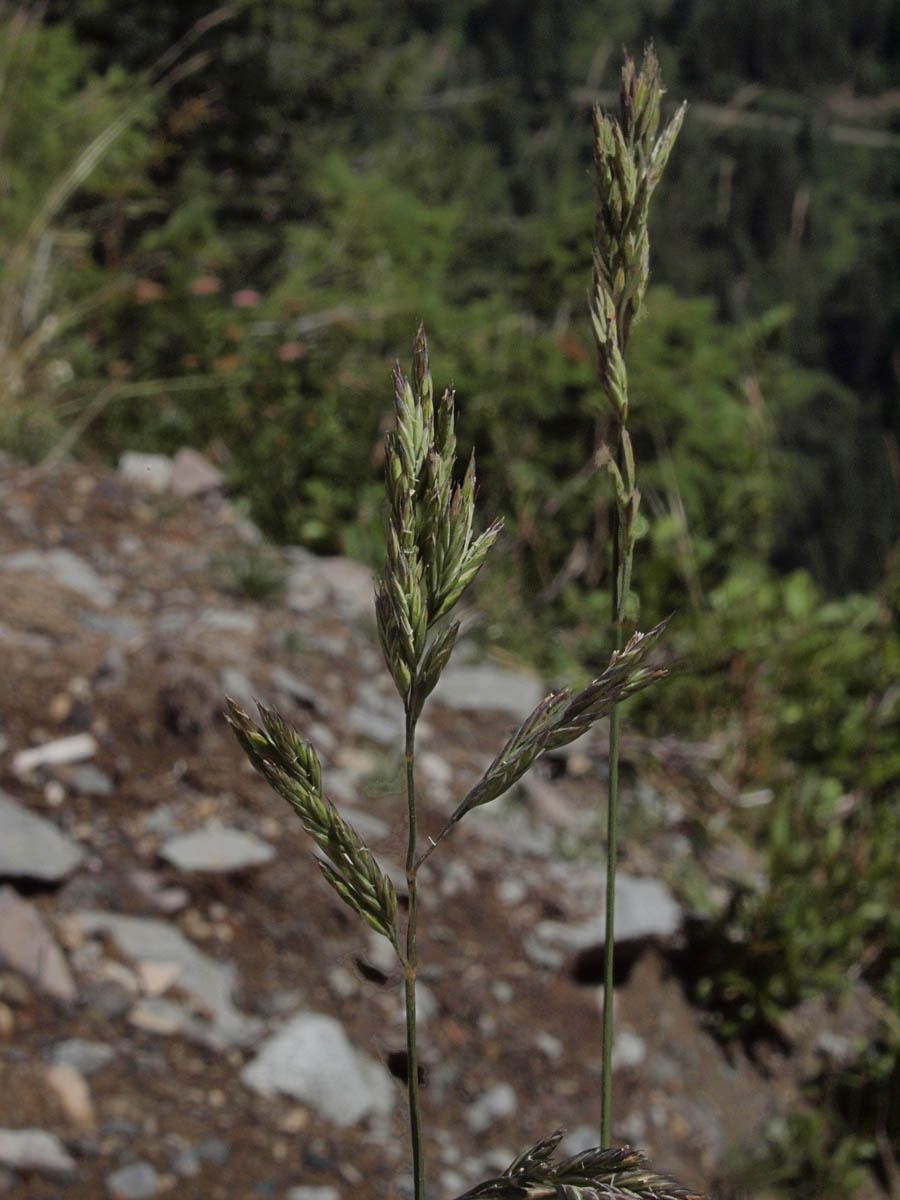
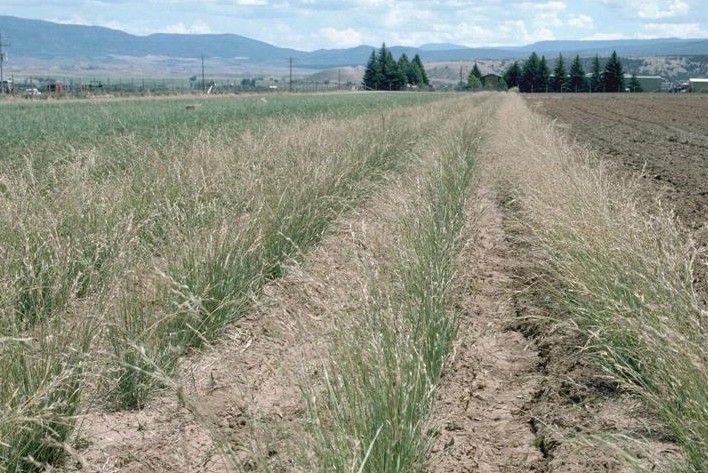
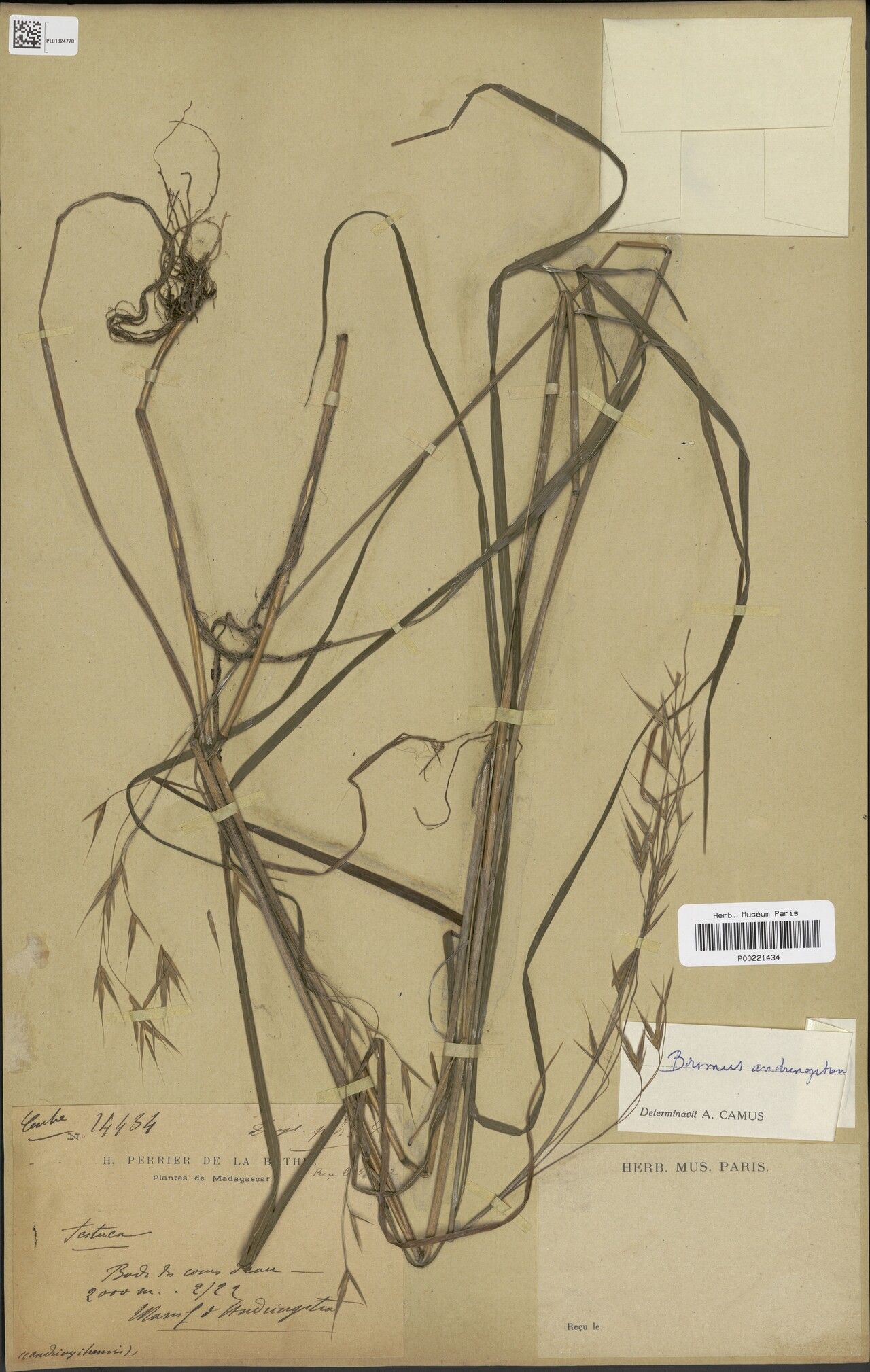
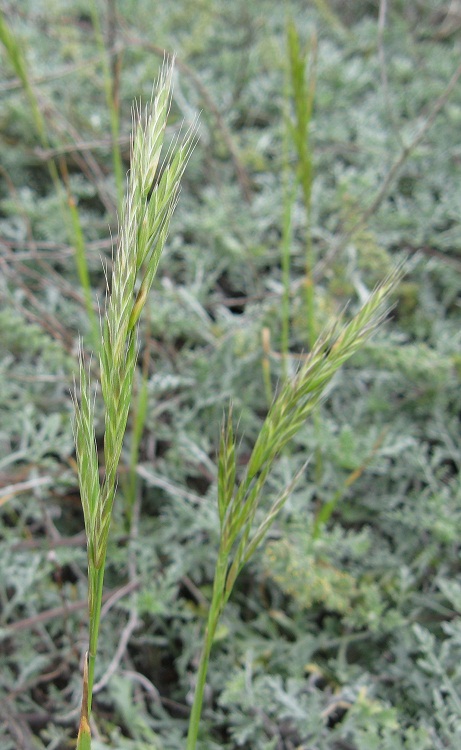
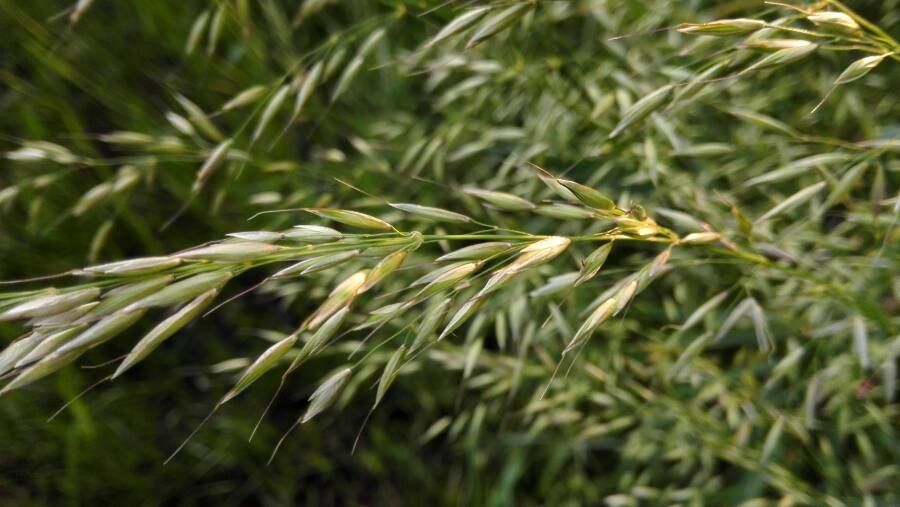
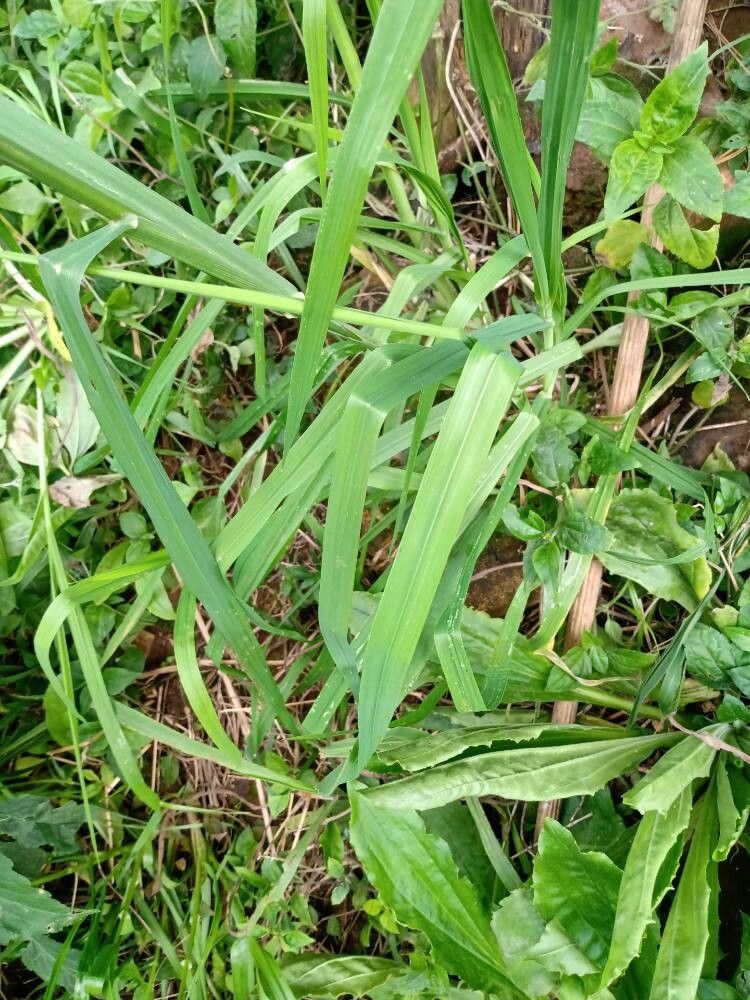
Bromus marginatus is a species of grass known by the common name mountain brome. It is native to western North America, and it is used widely for grazing animals and revegetating landscapes.This short-lived perennial grass forms a large, shallow root network. The roots give it drought-tolerance, and they persist in the soil long after the plant has died, making it valuable for erosion control. The stems can usually reach one meter in height but are known to reach 1.5 meters. The hairy leaves are up to a centimeter wide. The inflorescence is a nodding panicle of spikelets, each with up to 10 flowers.In the wild in its native range this grass grows in moister areas in mountain sagebrush, scrub, and meadows into the subalpine climate. It can tolerate thin, dry soils and some shade. It establishes easily and can become weedy. It can be planted on slopes and uneven terrain using a broadcast seeding method.There are several cultivars of this grass, including 'Garnet', 'Bromar', and 'Tacit'. The latter has been known to produce 15 tons per hectare with 3 to 4 harvests per year.
Mountain brome resists disease well and is generally unlikely to develop illness. In terms of care, this plant is fairly low-maintenance. When grown outdoors it needs little watering, and larger specimens typically do not require pruning. Smaller plants, however, should be trimmed after they finish blooming. Mountain bromet is suitable for anyone with an outdoor area, such as a garden or deck, and does not need extensive plant-care experience.
How to keep Bromus Marginatus.
Light
Mountain brome is a perennial herb that enjoys the sun and is native to open environments, frequently flourishing in meadows and grasslands. While it prefers full sunlight, it is also capable of withstanding conditions of partial sun.
Temperature
Mountain brome possesses the capability to acclimate to diverse temperature scenarios, yet its spread may still be constrained by varying sequences of hydration and thermal conditions. It flourishes optimally in hot environments during summer if sufficient rainfall or irrigation is provided. Extended durations of overcast and wet weather, in addition to sustained high temperatures, can heighten the chances of Mountain brome perishing. During winter, the right safeguard against cold can boost the plant's ability to survive.
Fertilizer
Mountain brome necessitates extra nutrients to encourage robust new development. During spring, the distribution of compost around the plant's base can efficiently supply the essential nourishment. The process of fertilization assists in stimulating strong growth and enables the plant to fend off diseases and pests.
Botanical profile.
- Plant Type
- Grass
- Life Cycle
- Perennial
- Genus
- Bromus
- Family
- Poaceae
- Hardiness Zone
- 4-8
- Mature Height
- 0.61 m to 1.52 m
- Mature Spread
- 30 cm to 61 cm
- Leaf Color
- Green
- Leaf Type
- Deciduous
- Flower Size
- 1.02 cm to 2.03 cm
- Bloom Time
- Late spring, Early summer
- Planting Time
- Spring, Autumn
- Harvest Time
- Mid summer, Late summer
- Native Area
- El Salvador, Mexico
Other names.