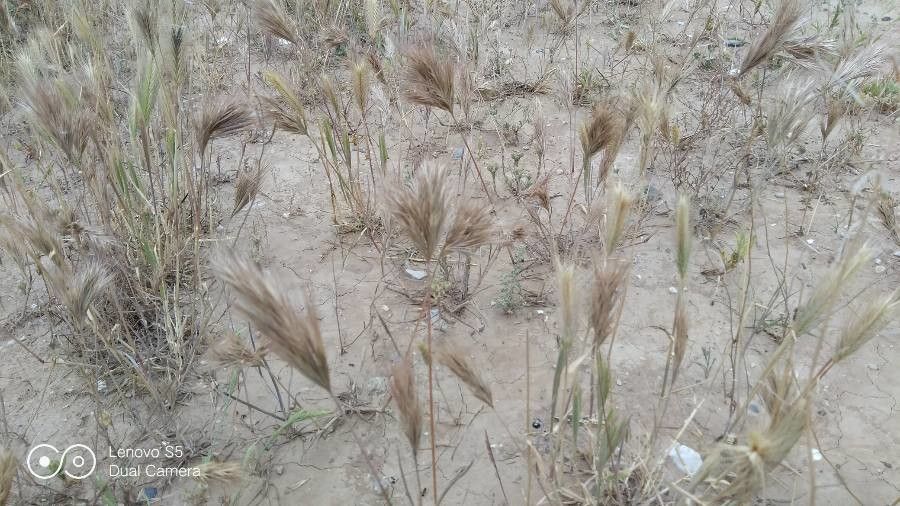
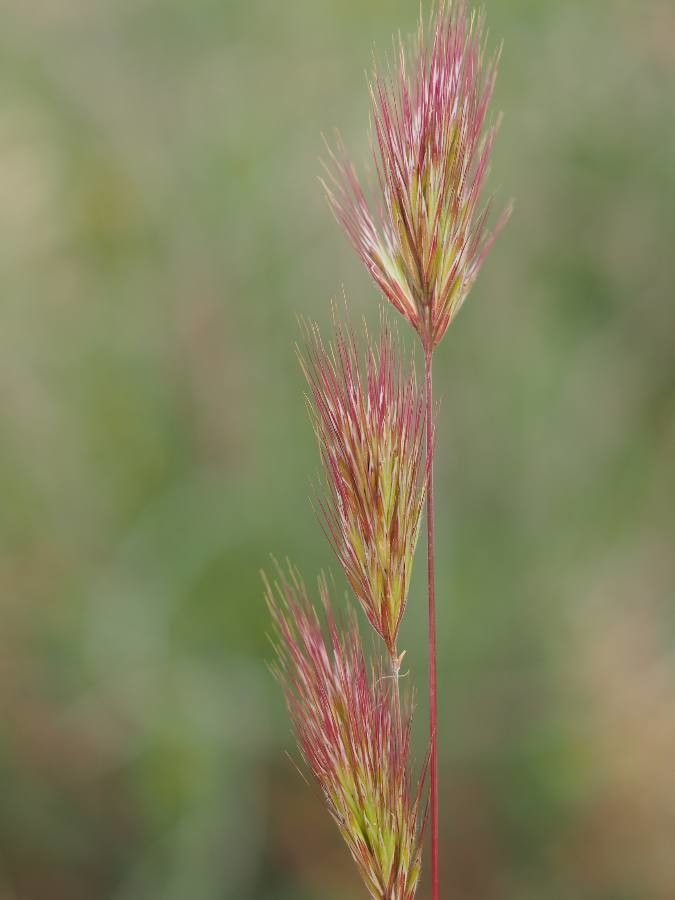
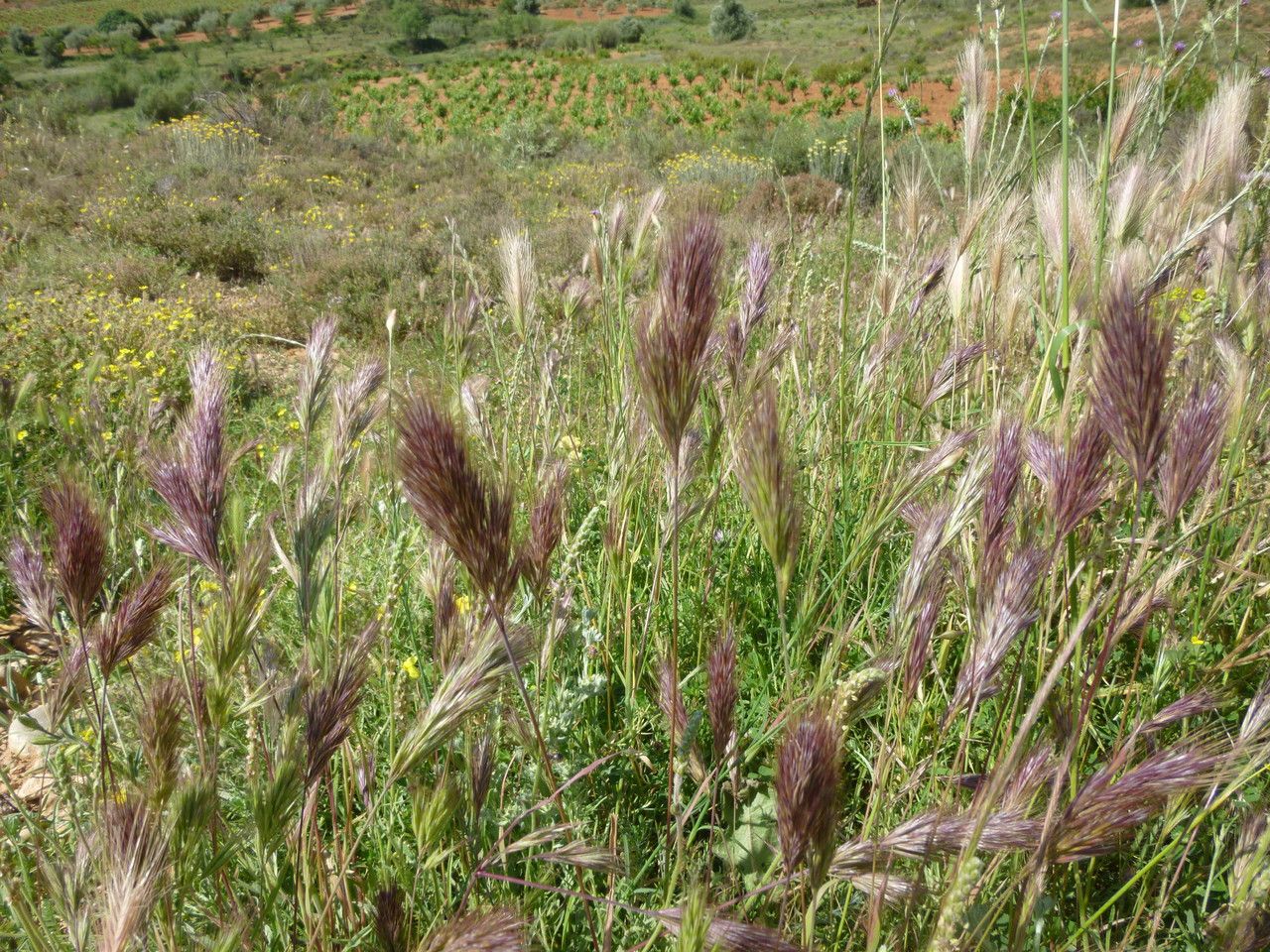
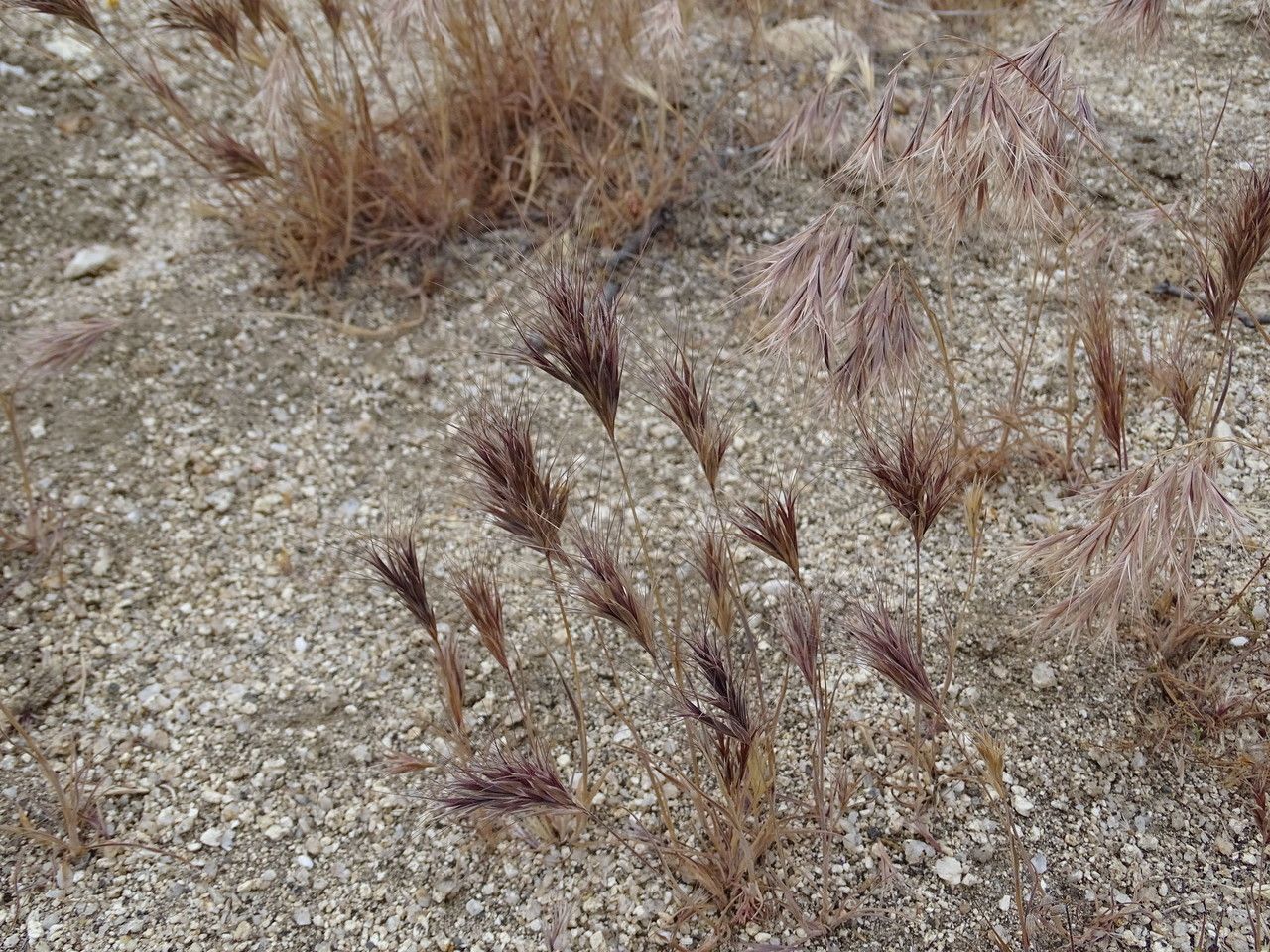
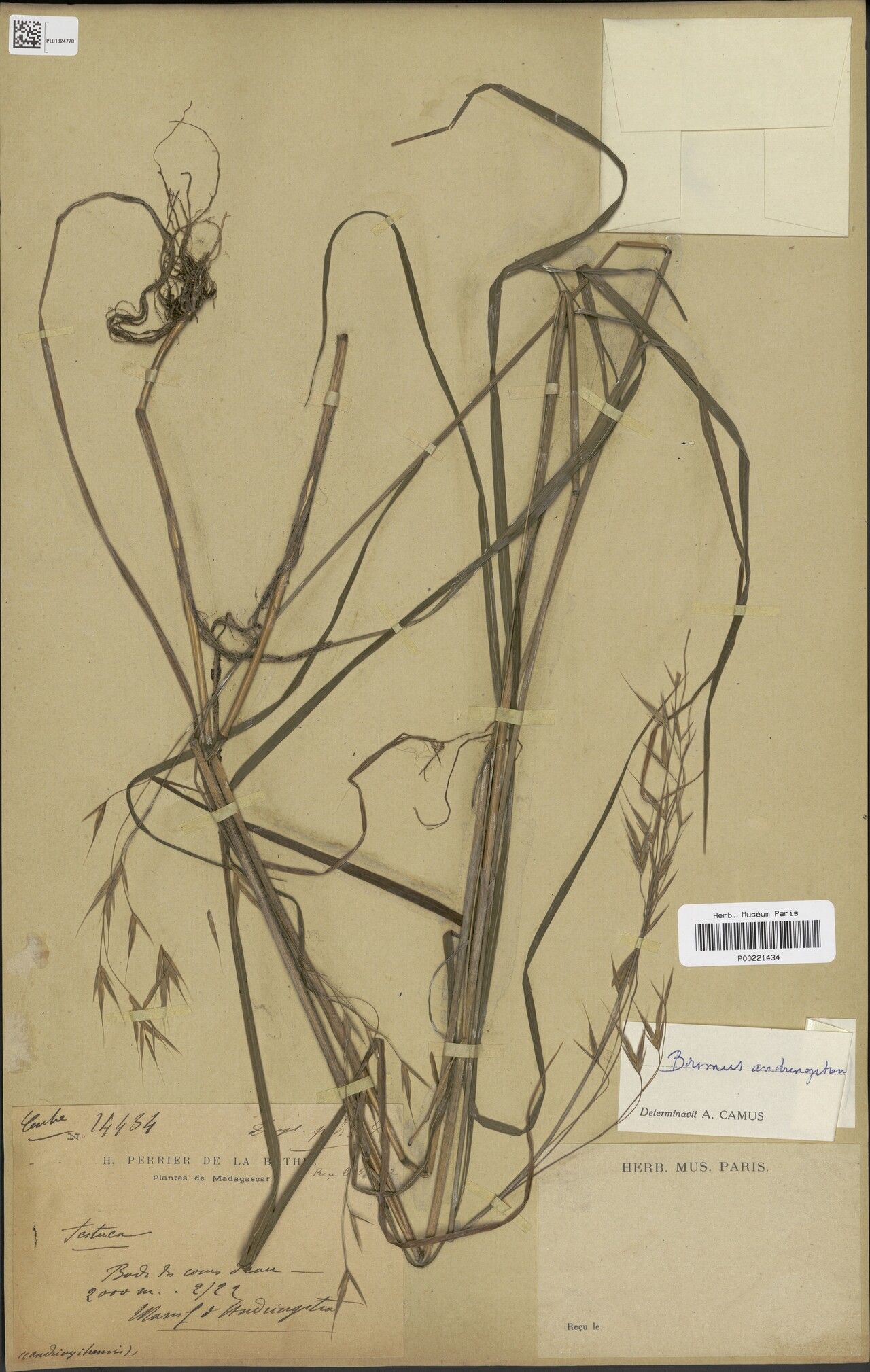
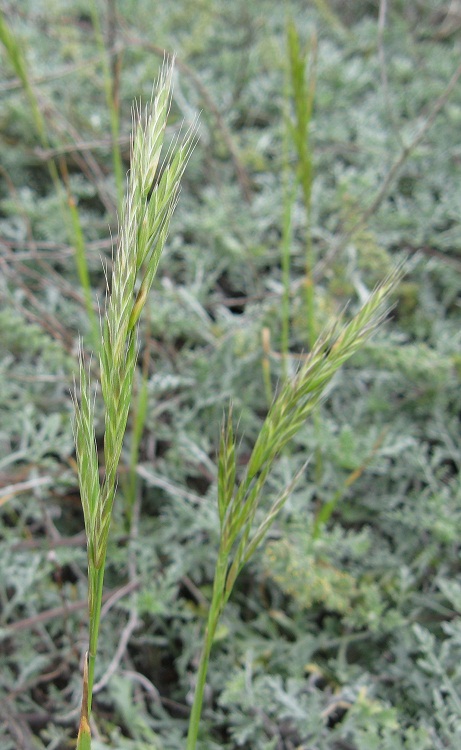
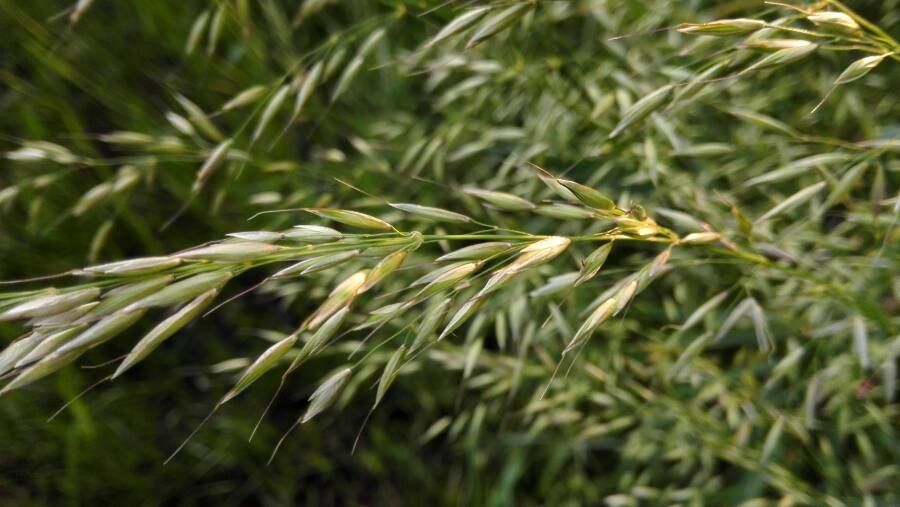
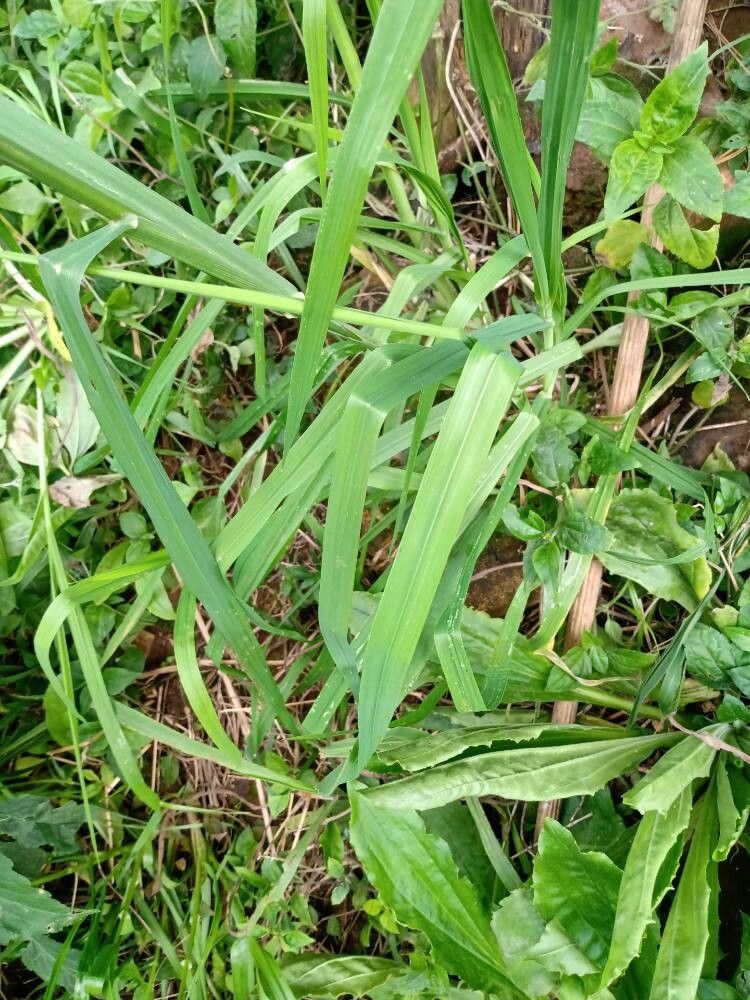
Bromus madritensis is a species of brome grass known by the common name compact brome. The specific epithet madritensis refers to Madrid, Spain. It has a diploid number of 28. There are two subspecies:
Bromus madritensis subsp. madritensis: panicles less dense, stem and leaf sheath less hairy Bromus madritensis subsp. rubens (syn. Bromus rubens) – foxtail brome, foxtail chess, red brome: dense panicles and slightly hairy stems
Red brome is fairly disease-resistant and generally not prone to illnesses. Nonetheless, it can be affected by pests and diseases found in its surroundings. These infections are typically not severe. For care, this plant requires a moderate level of maintenance. It should be pruned regularly to keep a good appearance and promote healthy growth. Fertilizing can also help encourage flowering. Red brome is suitable for anyone with outdoor space, such as a garden or patio, and does not demand extensive care experience. It may need more attention when grown indoors.
How to keep Bromus Rubens.
Light
Red brome comes from bright, open habitats and grows best in full sunlight. It can tolerate some shade but favors direct sun for optimal growth. This plant, which may be annual or biennial, is noted for its sun-loving habits.
Water
Red brome flourishes in dry conditions due to its excellent drought tolerance. To keep it healthy and resilient, a weekly watering schedule is recommended to provide adequate moisture. Often found in outdoor environments, red brome needs careful water management to maintain soil stability and prevent erosion during dry seasons.
Temperature
Red brome originates from climates where temperatures range from 68 to 100 °F (20 to 38 ℃). It nevertheless has a fairly flexible temperature tolerance and readily adjusts to seasonal changes. Recommended temperature management is to maintain warmth during growth cycles.
Fertilizer
Red brome does well with regular, dilute fertilizer applications to encourage healthy leaf development. You should apply fertilizer to Red brome roughly once a month during the summer. Nitrogen is essential for foliage, and providing nitrogen-rich sources helps Red brome prosper.
Pruning
Red brome, an annual grass, thrives in dry and disturbed environments. To manage its invasive nature, prune the plant from early to late spring. This helps remove dead growth and prevents seed dispersal. For healthier growth, cut the plant back to its base. Additionally, consult local horticultural experts or resources for specific care guidelines in your region.
Botanical profile.
- Plant Type
- Herb
- Life Cycle
- Annual
- Genus
- Bromus
- Family
- Poaceae
- Hardiness Zone
- 11
- Mature Height
- 10 cm to 52 cm
- Mature Spread
- 30 cm to 46 cm
- Leaf Color
- Green
- Leaf Type
- Deciduous
- Flower Color
- Yellow, Purple, Brown
- Flower Size
- 2.03 cm
- Bloom Time
- Mid spring, Late spring
- Planting Time
- Spring, Summer, Autumn
- Harvest Time
- Late spring, Early summer, Mid summer
- Native Area
- Libya, Turkey, Portugal, Italy, Jordan, Spain, Israel, Cyprus, Algeria, Greece, Morocco, France
Other names.
Reader questions.
How should I water my Red brome plant?
There are several ways to water Red brome. You can use a garden hose with a spray nozzle, a watering can, or any other common watering tool. Red brome is not too particular about how it receives water and can survive on rainwater, tap water, or filtered water. However, it's recommended to avoid watering this plant from overhead to prevent damage to its leaves and flowers and reduce the risk of disease. Using a drip irrigation system is often the best method as it provides even and direct watering to the soil. If you have a container-grown Red brome, you can use a cup, watering can, or tap water to water it directly in the soil.
What are the sunlight requirements for Red brome?
Red brome is a plant that flourishes in bright, open environments, benefiting significantly from full sun exposure. It thrives best when it receives more than 6 hours of sunlight a day but can also tolerate partial sun, requiring about 3 to 6 hours of sunlight. For optimal growth and health, ensuring it is placed in locations that match these sunlight needs is crucial. Indoor plants, in particular, may need artificial lighting support to meet their light requirements, especially in scenarios where natural sunlight is insufficient. Artificial lights, such as LED, can be adjusted to provide 30-50W/sq ft for full sun plants, 20-30W/sq ft for partial sun plants, and 10-20W/sq ft for full shade plants, mimicking natural sunlight conditions for various plant needs.
What is the native climate of Red brome?
Red brome, botanically known as Bromus rubens, thrives in native climates with temperatures ranging from 68 to 100°F (20 to 38°C). Despite its preference for warmth, Red brome has a flexible temperature tolerance, allowing it to adjust to various seasonal changes. This heat-loving plant requires warmth during its growth cycles and can be adversely affected by cold temperatures. Therefore, for outdoor-grown Red brome, it is advisable to bring the plant indoors in the autumn and place it near a bright window, while also ensuring it is not too close to heaters. To support its growth, maintaining temperatures above 20°C during the winter months is beneficial, as temperatures nearing 10°C can be harmful to the plant.
What do I do if I give my Red brome grass too much or too little water?
Underwatering Red brome is easy to fix - just start watering it more regularly when you notice it lacks moisture. Overwatering, on the other hand, can be much more serious if not caught early. It can lead to diseases and the eventual decline and death of the plant. To prevent this, choose a sunny location with good drainage so excess water doesn't accumulate. If your potted Red brome is overwatered, consider changing it to a new pot with better drainage. Use loose soil and a pot that drains well when repotting it.
What are the symptoms of insufficient light for Red brome, and how can they be addressed?
Red brome exhibits several symptoms when exposed to inadequate light conditions, including smaller new leaves, leggy or sparse growth, faster leaf drop, slower or no new growth, lighter-colored new leaves, chlorosis, sunscald, leaf curling, wilting, and leaf scorching. To address these symptoms indoors, gradually increase the plant's exposure to sunlight or use artificial light, ensuring the plant receives at least 6 hours of direct sunlight daily. Outdoor plants should be gradually moved to sunnier spots to avoid sunburn, taking care to introduce changes in light exposure slowly. Additionally, minimizing obstructions like branches that block sunlight can help, and for smaller plants, consider transplanting to a location with better light conditions during their dormant period. It's important to note that while parts of the plant that have suffered might not recover, new growth should be healthy following these adjustments.
How does low temperature affect Red brome and what are the solutions?
Red brome prefers warm environments and does not tolerate low temperatures well. It thrives best when the temperature remains above 20°C and should be kept above 10°C during the winter. Exposure to temperatures below 5°C may cause the plant's leaves to lighten in color. After experiencing frost damage, the affected parts of the plant may turn brown or black, and symptoms such as wilting and drooping can occur. To manage frost damage, it is recommended to trim off the frost-damaged parts and immediately move the plant to a warm indoor environment to protect it from the cold. Placing the plant near a south-facing window ensures it receives ample sunlight. It is also important to avoid positioning the plant near heaters or air conditioning vents to prevent air dryness.
How frequently do I need to water my Red brome plant?
To ensure the healthy growth of red brome, it is important to water it consistently throughout the growing season. In the spring, watering once a week should be sufficient. However, as the weather gets warmer, the frequency of watering may need to increase to two or three times a week. It is essential not to exceed this watering rate as it can harm the plant. It is also crucial to maintain relatively moist soil for red brome, avoiding excessive wetness. For red brome in pots, watering needs are slightly different. Due to the faster drying of pot soil, watering frequency should be increased to a few times per week. In contrast, in-ground red brome only requires watering once a week.
How can artificial lighting be optimized for Red brome indoors?
For Red brome growing indoors, where natural sunlight is insufficient, artificial lighting provides a critical solution to ensure healthy growth. The right type of artificial light, such as LED lights, should be chosen for its capability to offer tailored wavelengths needed by plants. For full sun requiring plants, 30-50W/sq ft is recommended, while partial sun plants should have 20-30W/sq ft, and full shade plants need 10-20W/sq ft of artificial light. The light source should be placed 12-36 inches above the plant to emulate natural sunlight conditions and turned on for 8-12 hours per day to mimic the natural daylight duration. These steps help in promoting faster, healthier growth of Red brome indoors.
What should be done when high temperatures affect Red brome?
In summer, it is essential to keep Red brome's temperature below 38°C to prevent stress from high temperatures. When the temperature exceeds 43°C, the leaves may start to lighten in color and the plant becomes more susceptible to sunburn. To address sunburn and heat stress, trim away the sunburned and dried parts of the plant. Then, move it to a location where it can be shaded from the intense midday and afternoon sun. Watering the plant in the morning and evening can help keep the soil moist, which is crucial for the plant's health during high temperature periods.
How much water does my Red brome plant need?
Determining the appropriate amount of water for your Red brome can be approached in a few different ways. Some gardeners prefer to rely on the soil's moisture level, watering until the top six inches are adequately moist. Alternatively, using a set amount of water is an option. Generally, providing around two gallons per week is recommended, taking into account temperature and soil dryness. However, it's important to be cautious not to overwater if your plant needs less than two gallons. If growing Red brome in a container, a different method is necessary. Moistening all layers of dry soil is ideal, which can be determined by checking for moisture with your fingers or by observing water draining from the pot's holes.
How do I know if I'm watering my Red brome plant enough?
To prevent overwatering your Red brome, you need to balance the watering needs of its deep roots. While weekly watering is necessary for the roots, be cautious because Red brome is prone to root rot and browning if overwatered. It's not as common for Red brome to be underwatered as they can tolerate periods without additional watering. Nevertheless, if you neglect to water it for too long, the plant may wilt and develop dry leaves.
How do I water my Red brome at different times of the year?
As the season progresses, you can expect your Red brome's water needs to increase. In the spring, you should water it once a week. However, as summer arrives and the heat intensifies, you may need to water it more frequently, potentially up to three times per week. This is especially important if your Red brome is growing in a container, as the soil in containers tends to dry out faster in warm weather. In autumn, when your Red brome is still blooming, it may require slightly less water as the temperature drops and the sun becomes less intense compared to summer.