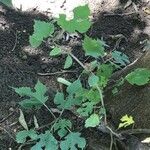
Broussonetia kazinoki
Broussonetia × kazinoki
Care Guide
💧 Water
Paper mulberry thrives when it receives balanced moisture, similar to its natural habitat, which includes both rainy and dry periods. Although it is drought-tolerant, the plant prefers consistent humidity and should be watered every three weeks. This resilient deciduous plant efficiently uses water to support leaf growth during its active growing season.
☀️ Light Full sun
Paper mulberry thrives and grows vigorously with an ample amount of daily sunlight, as suggested by its native habitat conditions that indicate a preference for high sunlight absorption. However, excessive solar exposure can lead to leaf scorching, and inadequate sunlight can cause the growth to slow down and the foliage to become pale.
What are the sunlight requirements for Paper Mulberry?
Paper Mulberry thrives in full sun, requiring more than 6 hours of sunlight daily to maintain its health and vigorous growth. It is essential to watch how sunlight moves through your garden to select the ideal spots that offer a balance of light and shade, ensuring the plants' wellness. In environments where natural sunlight is insufficient, especially during winter or in less sunny areas, artificial lighting can be an effective solution. LED lights, for instance, can be customized to provide specific wavelengths needed for optimal growth, with varying wattage requirements depending on whether the plants are full sun, partial sun, or full shade species.
What are the signs of insufficient or excessive sunlight in Paper Mulberry?
When Paper Mulberry is exposed to less than optimal sunlight, it may exhibit symptoms such as small or pale leaves, leggy growth, quicker leaf drop, and a pause in new growth. Conversely, too much sunlight can cause chlorosis, sunscald, leaf curling, wilting, or leaf scorching. These symptoms indicate either a deficiency or excess of light, affecting the plant's ability to photosynthesize and overall health. Monitoring your plant for these signs can help in adjusting its exposure to sunlight accordingly.
How can I address sunlight-related issues in Paper Mulberry?
To resolve sunlight-related issues in Paper Mulberry, gradually adjust the plant's exposure to light. For indoor plants, moving them to a location with at least 6 hours of direct sunlight daily or using artificial light can ensure adequate light exposure. Outdoor plants benefit from a gradual relocation to sunnier spots to prevent sunburn. Additionally, consider pruning or relocating plants to reduce obstructions and improve sunlight access. Remember, while parts of the plant that suffered from insufficient light may not recover, new growth should be healthy with proper light adjustment.
🌡️ Temperature 10–35°C
The paper mulberry tree is indigenous to temperate climate areas, favoring temperatures ranging from 50 to 95°F (10 to 35°C). When subjected to chillier conditions, it's suggested to supply extra heat to emulate its original habitat.
What is the native climate of the Paper Mulberry and how does it handle cold temperatures?
Paper Mulberry is native to temperate climate regions and thrives in temperatures ranging from 50 to 95°F (10 to 35°C). It has a strong cold resistance, so it usually doesn't require special frost protection measures during winter. However, if temperatures are expected to drop below -25°C, providing cold protection by wrapping the trunk and branches with materials like non-woven fabric or cloth is important. To prepare for winter, it's recommended to water the plant abundantly before the first freeze in autumn, keeping the soil moist to prevent drought and water scarcity during winter and early spring.
What should be done if the Paper Mulberry experiences temperatures below its tolerance level?
If the Paper Mulberry experiences low temperatures below its tolerance level (below -15°C and especially under -25°C), the branches may become brittle and dry by spring, failing to produce new shoots. The solution is to prune away any dead branches that have not produced new leaves come springtime. For episodes of high temperatures above its tolerance (above 35°C, especially over 38°C), the leaves may lighten in color, tips may become dry and withered, and the plant may suffer from sunburn. The affected parts should be trimmed away, and the plant should be moved to a shadier location or protected with a shade cloth. Additionally, keeping the soil moist with morning and evening watering can help address and prevent these symptoms.
💨 Humidity
🪴 Soil 5-6
🌱 Fertilizer
For the promotion of robust development, give your Paper mulberry a dose of fertilizer at the onset of spring. Uniform fertilization boosts the overall vitality, leading to hearty growth, robust resistance to harsh conditions, and heightened defence against diseases and pests. Adhere to a set fertilization timetable for your Paper mulberry to guarantee lively leaves with intense colour and a rich look.
🪴 Pot & Repot
✂️ Pruning
Paper mulberry is a fast-growing shrub that benefits from winter pruning to reduce sap loss and encourage growth in the spring. During pruning, focus on removing dead wood and thinning crowded areas to improve airflow. Regular pruning boosts the plant's health and resilience, and using sanitized tools helps prevent infections.
🌿 Propagating
🐛 Diseases & pets
☠️ Toxicity
Characteristics
- Plant Type
- Shrub
- Life Cycle
- Perennial
- Genus
- Broussonetia
- Family
- Moraceae
- Hardiness Zone
- 6-9
- Mature Height
- 2.13 m to 3.96 m
- Mature Spread
- 2.13 m to 3.05 m
- Leaf Color
- Green, Dark Green
- Leaf Type
- Deciduous
- Flower Color
- Green
- Flower Size
- 0.76 cm to 1.02 cm
- Bloom Time
- Early spring, Mid spring
- Planting Time
- Spring, Summer, Autumn
- Harvest Time
- Early summer, Mid summer
- Native Area
- Vietnam, Japan, Laos, South Korea, China