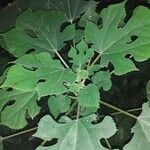
Broussonetia papyrifera
برگ انجیر · Paper mulberry · Wauke · Tapa-cloth-tree · Tapa Cloth Tree
Description
Source: leafsnapBroussonetia papyrifera, commonly known as the paper mulberry, is a deciduous tree native to East Asia. Widely cultivated for its bark, this tree is employed in the production of paper and cloth. It can reach heights of up to 20 meters and features a broad crown adorned with large, deeply lobed leaves. Its smooth, grayish-brown bark develops irregular fissures with age. Historically, the paper mulberry has been valued in traditional medicine for its various health benefits. The tree contains compounds with anti-inflammatory properties that help reduce pain and swelling. Beyond medicinal uses, the paper mulberry is also popular in landscaping as an ornamental plant thanks to its attractive foliage and unique bark texture. However, it’s important to note that the plant can become invasive in regions outside its native habitat. In summary, Broussonetia papyrifera is a versatile plant with numerous practical applications, from traditional medicine to industrial uses like producing high-quality paper and textiles.
💡 From ancient times to the present, the tapa cloth tree has often been seen as neglected and overlooked, much like a solitary tree growing quietly by itself. Though it may seem ordinary and is not often celebrated, its bark holds significant value. It can be used not only for making medicine but also for papermaking. Indeed, its bark has been an essential raw material for papermaking since ancient times.
🌳 Although primarily recognized for traditional papermaking, the leaves and bark of the paper mulberry also contain fibers that are highly valued in the textile and craft industries. Beyond paper, these fibers are used to manufacture strong, durable fabrics, addressing a rising interest in sustainable materials. The plant’s versatility goes further: emerging applications include producing composite materials for construction, indicating a reservoir of untapped potential beyond its conventional uses.
🎭 Motherly love
Care Guide
💧 Water Every 7 days
The tapa cloth tree, which comes from areas with distinct wet and dry seasons, becomes drought-tolerant once it is established. It requires watering every 1 to 2 weeks. When grown indoors, it needs consistent moisture, but be careful not to overwater, as this can lead to root rot. During the cooler months, the plant enters a period of dormancy, and its water requirements decrease in line with these seasonal changes.
How should I water my Tapa cloth tree?
To help promote root development, consider placing a garden hose at the base of the plant. Avoid spraying water directly on the leaves. If the plant is outdoors and exposed to direct sunlight, the leaves may need more water. You can use bubblers or soaker hoses to keep the roots moist. When adding or removing plants, use soaker hoses that cover the whole garden or bed to ensure deep root irrigation. Make sure to drain any excess water and wait for the soil to dry before watering again. Watering at ground level can help prevent diseases. On a sunny day, it may be beneficial to spray water on the entire bush. Whether the plant is in a pot or planted in the ground, keep in mind that the Tapa cloth tree prefers deep watering instead of light sprinkling.
What should I do if I give the Tapa cloth tree too much or too little water?
A Tapa cloth tree can show signs of overwatering through yellowing, dropping, and wilting leaves, as well as a dull and unhealthy appearance with mushy stems. It's important to adjust your watering schedule when these signs appear. Conversely, wilting can also be a sign of under watering, with leaves turning crispy and dry. In this case, check the soil for dryness and give the plant a thorough watering. However, even with sufficient water, the Tapa cloth tree may still have yellow, dry leaves due to a damaged root system. Once the plant recovers, the yellowing will stop. When keeping the Tapa cloth tree indoors, check the moisture levels in the pot and avoid overwatering. If black spots are present, allow the soil to dry out for a few days. Overwatering can lead to root rot, so if discolored and slimy roots are observed, consider transferring the plant to a different pot and preventing excessive soil moisture. Outdoors, ensure adequate watering by checking the soil moisture with your fingers. If it feels too dry, the plant may be underwatered and requires proper watering for recovery.
How frequently should I give water to my Tapa cloth tree?
The Tapa cloth tree prefers deep but infrequent watering. When planted in pots, they should be soaked in a gallon of water each time to account for the limited water storage and faster soil drying. In cold regions, water every 3 to 5 days, preferably in the morning when the soil is dry. Check the soil moisture by feeling the top 2-3 inches - if it's dry, water the plant fully. During hot days, monitor the soil moisture daily as heat can quickly dry out potted soil. In gardens, water once a week if you live in a hot climate. Only water if about 2 to 3 inches of soil is too dry. Avoid watering if there has been sufficient rainfall to prevent root rot. Mulch about 3 to 4 inches deep when the Tapa cloth tree is outdoors to conserve water. Sandy soil requires more frequent watering while clay soil needs less frequent watering to avoid root rot. Keep track of watering by marking the calendar and be vigilant for drooping leaves as a sign of potential delay in watering.
How much water should I give my Tapa cloth tree?
The Tapa cloth tree generally needs about a gallon of water on a regular schedule. For potted plants, it's best to water them deeply until water drips out of the bottom of the pot and then wait for the soil to dry before watering again. You can use a water calculator or moisture meter to determine how much water you've given your plant throughout the week. During the flowering period, give your plants plenty of water but allow the moisture to evaporate afterwards to prevent root rot. If the Tapa cloth tree is planted outdoors with enough rainfall, it may not need additional watering. When the tree is young or newly planted, make sure it receives 1-2 inches of rain per week. As the tree grows, it can survive solely on rainfall. Only when the weather is excessively hot or there has been no rainfall for 2-3 weeks should you consider giving the tree a full watering during the cooler parts of the day to prevent heat damage. Additional watering will be necessary during extended dry spells.
Should I change how often I water my Tapa cloth tree based on the time of year or the weather?
The Tapa cloth tree needs outdoor conditions, preferably with rain, but only needs to be watered if the weather is persistently dry. In the spring and fall, the soil should be kept moist but not soggy, and alternating between dry and moist soil will help the Tapa cloth tree grow well. In the summer, hot weather and lack of rainfall may require more frequent watering to keep the tree moist. During winter, the tree needs less water as it drops its leaves and goes dormant. A well-draining soil mixture like terracotta can help water evaporate quicker. Once the tree starts to leaf out and go dormant, watering can be skipped and it can rely on fall and winter rains. Cultivation should start after spring when temperatures are warmer. Good drainage is important for the Tapa cloth tree, especially during winter. If planted in pots, the limited root growth means they need to be well-watered, especially in summer. It's best to water the entire root system deeply once or twice a week, avoiding shallow sprinkles that reach the leaves. Even during dormancy, the tree should not be allowed to completely dry out in the fall or winter. Avoid drowning the plants and make sure the soil drains well to prevent winter damage. Applying mulch can help reduce stress, conserve water, and encourage healthy blooms.
☀️ Light Full sun
The paper mulberry thrives when exposed to full daylight intensity for extended periods. Although it is adaptable in terms of light, it can tolerate less sunny or even entirely shaded locations. Its native environment has given it a need for continuous sunlight exposure. Insufficient light can impede its growth, while excessive light may cause damage.
What are the sunlight requirements for the Tapa Cloth Tree?
The Tapa Cloth Tree, or Broussonetia papyrifera, thrives in full sun, requiring more than 6 hours of sunlight daily for optimal growth. It can also adapt to conditions of partial sun or full shade, which means about 3-6 hours of sunlight. It's essential to observe how sunlight moves through your garden to ensure you're providing the right balance of light and shade for your plants, which plays a crucial role in their health and development.
How do I accommodate my indoor Tapa Cloth Tree's lighting needs?
For indoor Tapa Cloth Trees, artificial lighting can serve as an excellent supplement when natural sunlight is insufficient, especially during winter or in less sunny spaces. LED lights are recommended because they can be customized to provide specific wavelengths needed for plant growth. Full sun plants require 30-50W/sq ft, partial sun plants need 20-30W/sq ft, and full shade plants should get 10-20W/sq ft of artificial light. The light source should be placed 12-36 inches above the plant, mimicking natural sunlight, and kept on for 8-12 hours per day to ensure healthy growth.
What are the common symptoms of insufficient or excessive sunlight in Tapa Cloth Trees?
Tapa Cloth Trees may display various symptoms due to insufficient or excessive sunlight. Insufficient light can lead to small leaves, leggy growth, faster leaf drop, slower or no new growth, and lighter-colored new leaves. Excessive sunlight can cause chlorosis, sunscald, leaf curling, wilting, and leaf scorching. These conditions signify the plant's struggle to adapt to its lighting environment, affecting its health and appearance.
What solutions can I use for Tapa Cloth Trees with insufficient sunlight?
For Tapa Cloth Trees suffering from insufficient sunlight, gradually moving them to sunnier locations can help. Indoors, place them near a south-facing window, keeping curtains open for maximal light, or use artificial lighting like desk lamps or plant grow lights for at least 8 hours a day. Outdoors, find the best spot with ample sunlight and move the plants gradually to avoid shock. Reducing obstructions, such as pruning trees that block sunlight, or transplanting to a brighter location, can also significantly improve light exposure for ground-planted trees.
🌡️ Temperature 10–35°C
Paper mulberry's natural growing habitat is generally temperate areas with average temperatures of about 50 to 95 °F (10 to 35 °C). The species favors conditions within that range and can encounter growth problems if temperatures fall outside it. It is recommended to change watering and fertilizing schedules with the seasons, since temperature shifts can influence the plant's growth.
What is the native growth environment for Tapa Cloth Tree?
The Tapa Cloth Tree, scientifically known as Broussonetia papyrifera, thrives in temperate regions where average temperatures range between 50 to 95 °F (10 to 35 °C). It prefers consistent temperatures within this range for optimal growth. Seasonal changes in temperature should be accounted for in the tree's care routine, adjusting watering and fertilizing schedules accordingly. Despite its strong cold resistance, in regions where winter temperatures might plunge below -25°C, protective measures are recommended to ensure the tree's survival and health.
How to protect Tapa Cloth Tree in winter?
For Tapa Cloth Trees, special frost protection measures are usually not needed thanks to their substantial cold resistance. However, in conditions where temperatures are anticipated to drop below -25°C, it is advisable to undertake precautionary steps to shield the tree from cold damage. This can include wrapping the trunk and branches with insulating materials like non-woven fabric or other suitable cloth. Additionally, watering the plant plentifully before the first freeze of autumn to ensure the soil is moist and enters winter in a frozen state can help prevent drought and water scarcity issues during the colder months and early spring.
What are the symptoms of Tapa Cloth Tree in low temperature?
The Tapa Cloth Tree is recognized for its cold tolerance, favoring temperatures above 10°C for optimal health. In winters, it is advised to keep temperatures above -15°C. A noticeable symptom of temperature distress occurs when temperatures fall below -25°C; while immediate effects might not be evident in winter, the branches could become brittle, dry out by spring, and fail to produce new shoots. A solution for this condition involves pruning away the dead branches to encourage new growth in the spring.
How does high temperature affect Tapa Cloth Tree?
During the summer season, it is best to ensure that the Tapa Cloth Tree's surrounding temperature remains below 35°C. Exposure to temperatures above 38°C can lead to visible stress on the plant; leaves may appear lighter in color, tips might dry out and wither, and the tree becomes more prone to sunburn. To mitigate these issues, trimming the sunburned and dried portions, relocating the plant to a shadier spot or employing a shade cloth to protect it from intense midday and afternoon sun, and ensuring the soil remains moist by watering in the cooler parts of the day are effective strategies.
💨 Humidity normal (40-60%)
This plant will thrive in moderate humidity, which is probably the level in your home. However, misting it a few times a week can be very beneficial. Make sure the room has good ventilation.
🪴 Soil 6-7
🌱 Fertilizer
For the promotion of robust development, give your Paper mulberry a dose of fertilizer at the onset of spring. Uniform fertilization boosts the overall vitality, leading to hearty growth, robust resistance to harsh conditions, and heightened defence against diseases and pests. Adhere to a set fertilization timetable for your Paper mulberry to guarantee lively leaves with intense colour and a rich look.
🪴 Pot & Repot Every 12 months
✂️ Pruning
🌿 Propagating
🐛 Diseases & pets
☠️ Toxicity
Usually not toxic to people, pets and livestock .
Characteristics
- Plant Type
- Tree
- Life Cycle
- Perennial
- Genus
- Broussonetia
- Family
- Moraceae
- Hardiness Zone
- 6-9
- Mature Height
- 10.06 m to 20.12 m
- Mature Spread
- 9.14 m to 11.89 m
- Leaf Color
- Green, Gray, Silver
- Leaf Type
- Deciduous
- Flower Color
- Green, Yellow, Cream, Red, Orange
- Flower Size
- 2.03 cm
- Bloom Time
- Mid spring, Late spring, Early summer
- Planting Time
- Autumn
- Harvest Time
- Mid summer
- Native Area
- India, Malaysia, Cambodia, Vietnam, Myanmar, Japan, Koppen, Bangladesh, Laos, South Korea, Thailand, China