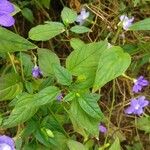
Browallia speciosa
Sapphire-flower · Bush-violet · Amethyst-flower
Description
Source: leafsnapBrowallia speciosa is a blue-violet tender perennial usually grown as an annual flowering plant also called the amethyst flower or bush violet. It is much used as a garden ornamental.
Care Guide
💧 Water
The Amethyst flower flourishes in tropical environments, where it prefers consistently moist soil and high humidity. It requires weekly watering, particularly during the growing season when its blooming needs are greater. To cultivate it indoors successfully, it is important to replicate its natural rainforest habitat by maintaining high ambient humidity for optimal growth.
☀️ Light Full sun
The amethyst flower grows best in full sun but can tolerate lower light levels. In its native habitat it usually receives abundant sunlight. Too little light can hinder flowering, while too much can be stressful and may scorch the leaves.
What are the sunlight requirements for Amethyst Flowers?
Amethyst Flowers require different amounts of sunlight based on their specific needs. For full sun exposure, they need above 6 hours of sunlight daily, while for partial sun, about 3-6 hours of sunlight is sufficient. It's important to observe the movement of sunlight through your garden to find the optimal spots that offer a good balance of light and shade, ensuring your plants grow happily.
What are the essentials for growing Amethyst Flowers?
The Amethyst Flower, or Browallia speciosa, thrives best in abundant sunlight, similar to its native environment, yet it can also grow in lesser light conditions. Proper sunlight is crucial as insufficient light may prevent blooming, and excessive sunlight could lead to leaf scorching. For indoor plants lacking in natural light, artificial lighting is a solution. LED lights are recommended as they can provide the right wavelengths needed for growth. The intensity should be 30-50W/sq ft for full sun plants, 20-30W/sq ft for partial sun plants, and 10-20W/sq ft for full shade plants. Placing the light source 12-36 inches from the plant and ensuring it receives 8-12 hours of light per day helps mimic natural conditions.
What are the symptoms of incorrect lighting for Amethyst Flowers?
When Amethyst Flowers do not receive adequate light, they may develop several symptoms. These include smaller new leaves, leggy or sparse growth, faster leaf drop, slower or no new growth, and lighter-colored new leaves. Excessive sunlight can cause chlorosis, sunscald, leaf curling, wilting, and leaf scorching. These symptoms indicate that the plant is either receiving too much or too little light, affecting its health and growth.
How can I remedy light-related issues for indoor, outdoor, and ground-planted Amethyst Flowers?
To address lighting issues for Amethyst Flowers, gradually increase their exposure to sunlight by moving them weekly until they receive at least 6 hours of direct sunlight daily. Indoor plants can benefit from artificial light, such as desk or ceiling lamps left on for 8 hours daily or professional plant grow lights. For outdoor plants, avoid sudden changes in light to prevent sunburn. If sunlight is obstructed, consider pruning or relocating smaller plants to sunnier spots. Remember, parts that suffered from insufficient light might not recover, but new growth will be healthy with improved light conditions.
🌡️ Temperature 20–35°C
Amethyst flower does best in warm settings, favoring temperatures from 68 to 95 °F (20 to 35 °C). Native to the tropics, it can tolerate seasonal temperature changes if given proper care and temperature management.
What temperature conditions are ideal for the Amethyst Flower?
The Amethyst Flower, also known by its botanical name Browallia speciosa, thrives in warmer environments, endorsing a temperature range ideally between 68 to 95 °F (20 to 35 °C). It originates from the tropics, where it has adapted to endure seasonal temperature fluctuations with appropriate care. Though the Amethyst Flower possesses some degree of cold tolerance, it does not necessitate special measures for cold protection when temperatures stay above 0°C. However, if temperatures are anticipated to plunge below freezing, temporary protective steps should be undertaken. These include wrapping the plant in plastic film, fabric, or using other suitable materials for insulation. It's crucial to remove these protections as soon as temperatures stabilize to avoid negatively impacting the plant.
How should the Amethyst Flower be cared for in low temperatures?
In colder climates, the Amethyst Flower exhibits moderate cold tolerance but flourishes optimally when the mercury stays above 20°C. It is essential to keep it above freezing during the colder months. Exposure to temperatures below -5°C may cause the leaves to droop, signaling distress. While minimal damage might allow for recovery, severe cold stress can lead to the wilting and eventual loss of leaves. To mitigate frost damage, affected foliage should be trimmed away. Preparation for future cold spells involves wrapping the plant with insulating materials like non-woven fabric or cloth and erecting wind barriers to shield against chilly gusts, thereby ensuring the plant's resilience against low temperatures.
What care does the Amethyst Flower need during high temperatures?
The Amethyst Flower requires particular attention during the peak heat of summer, with the ideal temperature cap being 35°C to prevent heat stress. Should temperatures soar above 41°C, the plant is likely to exhibit stress indicators including leaf color lightening, dry and withered leaf tips, curling leaves, and increased susceptibility to sunburn. To alleviate these symptoms, it's advisable to trim away sunburned or dried portions of the plant. Relocating it to a shadier spot or utilizing shade cloth can offer relief from direct sunlight during the hottest parts of the day. Additionally, maintaining soil moisture with morning and evening waterings can further assist in keeping the Amethyst Flower healthy under high temperature conditions.
💨 Humidity
🪴 Soil 5-6
🌱 Fertilizer
The best time to fertilize an Amethyst flower is in early spring, when it is coming out of dormancy and beginning active growth. Fertilization supplies essential nutrients for healthy development. Although the Amethyst flower has relatively low fertilizer needs, applying fertilizer annually can improve its survival and encourage better, longer-lasting blooms.
🪴 Pot & Repot 2-3 years
When repotting an Amethyst flower, select a pot 1–2 inches (2.5–5.1 cm) larger that provides ample drainage. Use a well-draining potting mix. Repot in spring or fall, making sure the root ball sits slightly below the rim of the flower pot. Water thoroughly after repotting and place the plant in a warm spot with indirect sunlight.
✂️ Pruning
The Amethyst flower showcases striking blue to violet blooms and benefits greatly from pruning in early to late spring. This practice encourages bushier growth and prolongs the flowering period. To ensure a healthy and thriving plant, regularly pinch back new growth and remove any damaged stems. This will improve air circulation, which is essential for a vibrant garden.
🌿 Propagating
🐛 Diseases & pets
☠️ Toxicity
Characteristics
- Plant Type
- Herb
- Life Cycle
- Perennial, Annual
- Genus
- Browallia
- Family
- Solanaceae
- Hardiness Zone
- 9-10
- Mature Height
- 30 cm to 61 cm
- Mature Spread
- 23 cm to 30 cm
- Leaf Color
- Green
- Leaf Type
- Semi-evergreen
- Flower Color
- Blue, Purple
- Flower Size
- 2.54 cm to 5.08 cm
- Bloom Time
- All year round
- Planting Time
- Summer
- Harvest Time
- All year round
- Native Area
- Colombia, Peru, Ecuador, Costa Rica, Panama