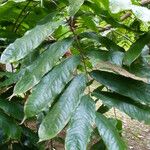
Brownea grandiceps
Rose-of-Venezuela · Rose of Venezuela · Scarlet Flame Bean
Description
Source: leafsnapBrownea grandiceps is a species of tree in the family Fabaceae. Its common names include the rose of Venezuela and the scarlet flame bean. It originated in South America but is now widely grown as a decorative tree in tropical gardens.
Care Guide
💧 Water Every 1-2 weeks
The scarlet flame bean, native to tropical regions, thrives in high humidity with consistent moisture, but it is important to avoid waterlogging. It generally requires watering every 1 to 2 weeks. To maintain the necessary humidity for its lush foliage and vibrant flowers during the active growing season, you can mist the plant or place it on a pebble tray filled with water.
How should I water my Scarlet flame bean plant?
Your Scarlet flame bean is not very particular about how you water it. You can use any common watering tool, such as watering cans, hoses, or even cups, to moisten the soil. It is important to water the plant directly on the soil and make sure all areas of the soil are equally moistened to provide water for the entire root system. Using filtered water is recommended, as tap water may contain harmful particles. It is also beneficial to use water that is at or slightly above room temperature, as extremely hot or cold water can be a shock to the Scarlet flame bean. However, the plant generally responds well to any type of water you give it.
What do I do if I give my Scarlet flame bean plant too much or too little water?
When it comes to outdoor plants, especially newly planted ones or seedlings, they are often at risk of not getting enough water. To prevent this, make sure to water them adequately for the first few months when they are still small or newly planted. Once the roots are established, the Scarlet flame bean can rely mostly on rainwater. When growing Scarlet flame bean in pots, overwatering is more likely to happen. If you accidentally overwater your plant, take immediate action to fix the situation. First, stop watering the plant right away to minimize the effect of overwatering. Then, remove the plant from its pot to check the condition of its roots. If the roots are not affected by root rot, you can return the plant to its container. However, if you find any signs of root rot, trim away the affected roots and consider applying a fungicide to prevent further damage. Finally, repot the Scarlet flame bean in well-draining soil. On the other hand, underwatering is a problem that can be easily corrected. If you notice that the plant's leaves are drooping, drying out, or falling off, it is a sign that the plant needs more water. Water the plant more frequently to keep it healthy. Remember to adjust your watering frequency promptly when underwatering occurs. The plant's leaves will quickly regain their fullness after sufficient watering.
How often do I need to water my Scarlet flame bean?
To ensure healthy plant growth, outdoor plants usually rely on rainfall. However, if your area experiences a lack of rainfall, you'll need to provide adequate watering. During the spring and fall, watering every two weeks should suffice. In the summer, more frequent watering is necessary. In the winter, when growth slows down and plants require less water, it's best to water sparingly or not at all. If your Scarlet flame bean is young or newly planted, it needs more frequent watering to establish and grow into adaptable, drought-tolerant plants. For potted plants like the Scarlet flame bean, there are two main methods to determine watering frequency. The first approach is to follow a fixed watering schedule, such as once a week or once every other week. However, this method may not consider the specific conditions of your Scarlet flame bean's growing environment. Additionally, it may not be sufficient during the summer when the plant's water needs are highest. An alternative method is to base your watering frequency on soil moisture. It's generally recommended to wait until the top two to four inches of soil, about one-third to half the depth of the pot, have completely dried out before giving more water. Adjusting the watering frequency based on the season and the plant's needs will help ensure optimal growth.
How much water does my Scarlet flame bean plant need?
When watering your Scarlet flame bean, remember that it doesn't always require a large amount of water. If only a few inches of soil have dried since the last watering, giving it about five to ten ounces of water will promote healthy growth. You can also gauge the water volume based on the soil moisture. To ensure your plant gets enough moisture, provide enough water to moisten all the dry soil layers since the last watering. If more than half of the soil is dry, consider giving more water until it drains from the pot's drainage holes. If the bean is planted outside and receives sufficient rain, additional watering may not be necessary. When the bean is young or establishing, aim for 1-2 inches of rain per week. As it grows, it can rely solely on rainwater, unless there is hot weather and no rainfall for 2-3 weeks, in which case a full watering is recommended to prevent stress.
How can I know if I'm giving my Scarlet flame bean plant enough water?
Overwatering is a common problem for the Scarlet flame bean, and there are clear signs to look for. If your Scarlet flame bean is overwatered, its leaves will turn yellow and it may even lose some of them. Additionally, overwatering can cause the plant to shrink and can lead to root rot. On the other hand, an underwatered Scarlet flame bean will start to wilt and its leaves may become brown and brittle. In either case, it is important to take action and restore the health of your Scarlet flame bean.
☀️ Light Full sun
The scarlet flame bean prospers in strong sunlight and can tolerate moderate shade. Native to regions with abundant sun, the plant's health benefits from ample light. Excessive or insufficient sunlight can hinder its growth, and its different growth stages may have varying sunlight requirements.
What are the sunlight requirements for Scarlet flame bean?
The Scarlet flame bean (Brownea grandiceps) thrives best in full sun conditions, which means it requires above 6 hours of sunlight daily. It can also tolerate partial sun, getting around 3-6 hours of sunlight. It's crucial to watch how sunlight moves through your garden and choose spots that provide the right balance of light and shade, ensuring the plant's health and happiness.
Can Scarlet flame bean grow in artificial lighting?
Yes, the Scarlet flame bean can grow under artificial lighting, especially when natural sunlight is insufficient, such as in winter or less sunny spaces. For optimal growth, choose the right type of artificial light like LED lights, which can be customized to provide specific wavelengths needed by the plant. Full sun plants require 30-50W/sq ft, partial sun plants 20-30W/sq ft, and full shade plants 10-20W/sq ft of artificial light. Ensure to place the light 12-36 inches above the plant and mimic natural daylight hours, generally providing 8-12 hours of light per day.
What are the symptoms of insufficient light for Scarlet flame bean?
Symptoms of insufficient light for Scarlet flame bean include small or lighter-colored new leaves, leggy or sparse growth, faster leaf drop, slower or no new growth, and chlorosis (leaves turning yellow). Excessive sunlight can also harm the plant, leading to symptoms like sunscald, leaf curling, wilting, and leaf scorching. These indicate that the plant needs a better balance of light to thrive.
How can I address lighting issues for Scarlet flame bean indoors and outdoors?
To address lighting issues for Scarlet flame bean, gradually move your plants to a sunnier location each week, aiming for at least 6 hours of direct sunlight daily. For indoor plants that are large or not easily movable, consider using artificial light, keeping a desk or ceiling lamp on for at least 8 hours a day or invest in professional plant grow lights. For outdoor plants, it's crucial to adapt them to sunlight gradually and avoid sudden changes in light intensity to prevent sunburn. Reducing obstructions like pruning trees can also increase sunlight exposure. If necessary, transplant smaller plants during their dormant period to a location with ample sunlight and good drainage.
🌡️ Temperature 20–37.8°C
Scarlet flame bean comes from regions with temperatures ranging from 68 to 100 °F (20 to 38 ℃). The plant prefers warm conditions. When cultivated in other seasons, it may need temperature adjustments to replicate its native environment.
What is the ideal temperature range for Scarlet flame bean cultivation?
The Scarlet flame bean, also known by its botanical name Brownea grandiceps, thrives in warm climates, with its ideal temperature range being between 68 to 100 °F (20 to 38 °C). To ensure optimal growth, it's important to mimic these temperature conditions, especially when cultivating the plant in different seasons. Since it's extremely heat-loving, care should be taken to protect it from cold temperatures, which can be detrimental to its health.
How should I care for a Scarlet flame bean plant during winter?
During the colder months, especially in autumn and winter, it's recommended to bring outdoor-grown Scarlet flame bean plants indoors. Placing them near a bright window can provide them with much-needed light, but it's important to keep them at a safe distance from heaters to avoid damage. Maintaining a room temperature above 20°C is key to their growth during winter, as any temperature approaching 5°C or lower can be harmful to the plant.
What are the symptoms of low temperature damage in Scarlet flame bean, and how can I address them?
Scarlet flame bean plants show clear signs of distress when exposed to low temperatures. Symptoms include leaves lightening in color when the temperature falls below 1°C, eventually turning brown or black after frost damage, accompanied by wilting and drooping. To manage cold damage, trim off frost-damaged parts and move the plant to a warm environment indoors. Placing it near a south-facing window ensures ample sunlight while avoiding the placement near heaters or air conditioners to prevent air dryness.
How does high temperature affect Scarlet flame bean, and what are the corrective actions?
In high temperatures, particularly above 38°C leading up to 43°C, the Scarlet flame bean's leaves may lighten, indicating stress and increased susceptibility to sunburn. To alleviate the negative effects of high temperature, it's necessary to trim away sunburned and dried parts of the plant. Relocating the plant to an area with shade during the peak midday and afternoon sun, coupled with watering in the morning and evening to retain soil moisture, can help the plant recover and continue healthy growth.
💨 Humidity
🪴 Soil 6-7
🌱 Fertilizer
The best time to fertilize a Scarlet flame bean is in early spring, as it breaks dormancy. This supports overall growth and the development of flowers. Fertilization improves the foliage, stems, and branches, while encouraging flowers that are large, bright, and long-lasting. It helps move nutrients from the roots to the blooms and enhances the plant's health and resistance to disease.
Why should I put fertilizer on my Scarlet flame bean plant?
Fertilization plays a crucial role in maintaining the overall health and well-being of a Scarlet flame bean plant. By providing the necessary energy and nutrients, it promotes the growth of lush foliage, sturdy stems, and branches. The flowers of the Scarlet flame bean plant are highly valued by gardeners, and fertilization helps in producing large, vibrant, and long-lasting blooms. This is due to the fact that the right type of fertilizer facilitates the efficient transfer of nutrients from the roots to the flowers, fueling their growth. Additionally, proper fertilization enhances the plant's overall health, making it more resistant to diseases.
When should I fertilize my Scarlet flame bean plant?
To ensure optimal growth and flower development for your Scarlet flame bean plant, it is recommended to fertilize it primarily during early spring when it is coming out of its dormant phase and preparing to open its buds. This initial feeding provides the plant with enough energy for overall growth. However, it is also beneficial to feed the plant again in the fall, although a smaller amount of fertilizer is sufficient. Some gardeners opt to fertilize the Scarlet flame bean during planting, but this may not always be necessary.
When is the best time to not fertilize my Scarlet flame bean plant?
During the winter, Scarlet flame beans are in a dormant phase and do not require fertilizing, just like many other plants. They don't need much energy from the soil to grow during this time. It's best to avoid fertilizing in winter to prevent negative effects from overfertilization. The main feeding times for Scarlet flame beans are in early spring and fall. This means that fertilizer is not needed for most of the spring and summer. If the plant is experiencing extremely hot or dry conditions, it is also recommended to delay feedings.
What fertilizer does my Scarlet flame bean require?
Scarlet flame bean plants tend to thrive when given a specific type of fertilizer. While a general-purpose fertilizer with equal amounts of nitrogen, phosphorus, and potassium is generally acceptable, Scarlet flame beans benefit from higher levels of nitrogen and phosphorus. It is recommended to use a fertilizer with an N-P-K ratio of 10-10-8 or something similar. Additionally, applying organic materials like compost during one of your annual feedings can be beneficial. When using fertilizer, granular fertilizer is commonly used for Scarlet flame beans.
How can I nourish my Scarlet flame bean?
Applying fertilizer to your Scarlet flame beans is a straightforward task that any gardener can do, even with minimal experience. To feed your beans with granular fertilizer, simply sprinkle it on the soil after moistening it with water. You can also enhance the soil for your Scarlet flame bean plants by adding organic materials like compost or manure. Place some of the material on top of the soil and gently work it into the first few inches using a hand rake, being careful not to disturb the roots.
🪴 Pot & Repot
✂️ Pruning
The scarlet flame bean is known for its vibrant scarlet flowers and thick foliage. To promote growth and enhance flowering, prune the plant from early to late winter. Remove any diseased branches, thin out crowded areas, and shape the plant to improve its structure. This will help maintain good airflow and light penetration. Always use clean tools to prevent the spread of disease.
🌿 Propagating
🐛 Diseases & pets
☠️ Toxicity
Characteristics
- Plant Type
- Tree
- Life Cycle
- Perennial
- Genus
- Brownea
- Family
- Fabaceae
- Hardiness Zone
- 10-11
- Mature Height
- 7.62 m
- Mature Spread
- 4.57 m
- Leaf Color
- Green, Brown
- Leaf Type
- Evergreen
- Flower Color
- Red, Orange
- Flower Size
- 15.24 cm to 30.48 cm
- Bloom Time
- Late winter, Spring
- Planting Time
- Spring, Summer
- Harvest Time
- Late spring, Summer
- Native Area
- Colombia, Venezuela, Peru, Brazil, Ecuador