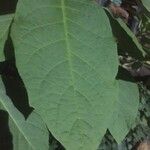
Brugmansia suaveolens
Angel's tears · Angel's trumpet · White angel's trumpet · Mexican trumpet flower
Description
Source: leafsnapBrugmansia suaveolens, Brazil's white angel trumpet, also known as angel's tears and snowy angel's trumpet, is a species of flowering plant in the nightshade family Solanaceae, native to south eastern Brazil, but thought to be extinct in the wild. Like several other species of Brugmansia, it exists as an introduced species in areas outside its native range. It is a tender shrub or small tree with large semi-evergreen leaves and fragrant yellow or white trumpet-shaped flowers.
💡 These beautiful plants, characterized by their large, pendulous, trumpet-shaped flowers, were once used by shamans in religious rituals and for medicinal purposes. The alkaloids found in these plants can induce hallucinations, paralysis, and even death. In ancient rituals, the visions brought on by the plants were believed to provide insight into the underlying causes of a patient's illness or problems.
🌳 Angel's trumpet, noted for its powerful psychoactive effects, has long played a role in various cultural rituals, particularly in the spiritual practices of South American shamans. However, it contains toxins such as scopolamine and atropine that can be fatal, and for these reasons its use is banned worldwide.
🎭 Reflections on the Dearly Departed, vitality, well-being, peril
Care Guide
💧 Water
Angel's Trumpet, native to the warm climates of South America, thrives in consistently moist, well-drained soil and high humidity. Water the plant every 1-2 weeks, making sure the soil is hydrated but not waterlogged. Adding mulch can help retain moisture, reduce the frequency of watering, and enhance the outdoor aesthetics with its striking flowers.
☀️ Light Full sun
Angel's trumpet grows best in spots that receive ample sunlight all day. It can also tolerate locations with occasional sun. In its native range, it develops under direct sunlight. However, too much or too little light can restrict its growth and cause leaves to become discolored.
What are the sunlight requirements for Angel's trumpet?
Angel's trumpet thrives in conditions that provide abundant sunshine throughout the day, requiring above 6 hours of sunlight for full sun conditions, and about 3-6 hours of sunlight for partial sun conditions. In its native environment, Angel's trumpet grows under unobstructed solar radiation. It's important to observe the movement of sunlight through your garden to select the optimal spots that offer a balance of light and shade, ensuring the plant's wellbeing. Excessive or insufficient sunlight could impede its growth and cause leaf discoloration.
How do you use artificial lighting for indoor Angel's trumpet plants?
When natural sunlight is limited, especially during winter or in less sunny areas, artificial light is essential for the growth of indoor Angel's trumpet plants. Select the appropriate type of artificial lighting, such as LED lights, which can be adjusted to provide specific wavelengths necessary for the plant. For full sun plants, 30-50W/sq ft of artificial light is required, for partial sun plants 20-30W/sq ft, and for full shade plants 10-20W/sq ft. The light source should be placed 12-36 inches above the plant, mimicking natural sunlight as closely as possible. Most plants will thrive with 8-12 hours of artificial light daily.
What are the symptoms of light deficiency in Angel's trumpet?
Symptoms of light deficiency in Angel's trumpet when grown indoors, especially during winter, include smaller new leaves, leggy or sparse growth, faster leaf drop, delayed or halted growth, lighter-colored or irregularly patterned new leaves, and conditions such as chlorosis, sunscald, leaf curling, wilting, and leaf scorching. These issues arise from insufficient lighting and indicate the need for improved light exposure or artificial lighting solutions.
How can you mitigate light deficiency symptoms in Angel's trumpet?
To address light deficiency in Angel's trumpet, gradually increase sun exposure or utilize artificial lighting. For indoor plants, move them weekly to sunnier spots until they receive at least 6 hours of direct sunlight daily, using a south-facing window and keeping curtains open during the day. Artificial lighting, such as desk lamps or professional grow lights, can supplement natural light for at least 8 hours daily. For outdoor plants, gently acclimate them to brighter conditions by shifting them gradually to sunnier locations each week, avoiding sudden changes to prevent sunburn. If obstructions block sunlight, consider pruning or transplanting smaller plants during their dormant period to locations with ample sunlight and good drainage. Note that parts of the plant already affected may not recover, but new growth will be healthy with improved light exposure.
🌡️ Temperature 20–37.8°C
Native to South America, the angel's trumpet experiences temperatures ranging from 20 to 38 ℃ (68 to 100.4 ℉). The plant favors warm conditions and can endure heat, but it is prone to frost damage and requires protection in winter. In colder regions, it is advisable to cultivate it in containers so it can be moved indoors during the winter months.
What is the native temperature range for Angel's trumpet?
Angel's trumpet, or Brugmansia suaveolens, thrives in its native environment of South America, where the temperature ranges from 20 to 38 °C (68 to 100.4 °F). This plant loves warm temperatures and can endure high heat but is vulnerable to frost. To safeguard them from cold weather, they should be grown in containers in colder regions so that they can be moved indoors during winter. It's crucial to avoid cold temperatures as they can significantly harm the plant.
How should Angel's trumpet be cared for during winter?
In the colder months, it is advisable to bring Angel's trumpet indoors. Placing it near a bright window while ensuring it is not too close to heaters is recommended to maintain an optimal growth environment. To promote healthy growth, keeping temperatures above the minimum suitable growth temperature during winter is beneficial, and it is essential to avoid temperatures approaching the minimum tolerable growing temperature, as this can be detrimental.
How does low temperature affect Angel's trumpet and what are the solutions?
Angel's trumpet thrives in warm temperatures and struggles with cold. When temperatures drop below the minimum suitable growth temperature, the leaves may lighten in color, and frost damage can cause the leaves to turn brown or black. Symptoms like wilting and drooping are common after the plant is exposed to frost. To mitigate this, trim off the frost-damaged parts and move the plant to a warm, indoor environment. It's best to place it near a south-facing window for adequate sunlight while avoiding proximity to heaters or air conditioning vents to prevent air dryness.
How does high temperature affect Angel's trumpet and what are the solutions?
During the hotter months, it is crucial to keep the Angel's trumpet's temperature below the maximum suitable growth temperature. Exceeding the maximum tolerable growing temperature can lead to lighter leaf color and increased susceptibility to sunburn. To address this, trim away sunburned or dried parts and relocate the plant to a shaded area to protect it from intense midday and afternoon sun. Additionally, watering the plant in the morning and evening helps maintain soil moisture, further enhancing its resilience against high temperatures.
💨 Humidity normal (40-60%)
This plant will thrive in moderate humidity, which is probably the level in your home. However, misting it a few times a week can be very beneficial. Make sure the room has good ventilation.
🪴 Soil 5-7
🌱 Fertilizer
The best time to fertilize an Angel's trumpet is in early spring, as it breaks dormancy. This supports overall growth and the development of flowers. Feeding enhances the foliage, stems, and branches, while encouraging flowers that are large, vivid, and longer-lasting. It helps transport nutrients from the roots to the blooms and improves the plant’s health and resistance to disease.
🪴 Pot & Repot 2-3 years
When repotting Angel's trumpet, choose a pot 1–2 inches (2.5–5.1 cm) larger with ample drainage. Use a well-draining potting mix. Repot in spring or fall, ensuring the root ball sits slightly lower than the rim of the flower pot. Water thoroughly after repotting and place it in a warm spot with indirect sunlight.
✂️ Pruning
Angel's trumpet is a fragrant shrub famous for its trumpet-shaped flowers. To keep it healthy and full of blooms, follow these care tips: - Prune in early spring to remove dead branches and encourage bushier growth. - Regularly trim spent flowers and thin crowded areas to improve air circulation. - Always use clean tools for maintenance to prevent disease. Following these steps will help ensure your Angel's trumpet remains healthy and vibrant.
🌿 Propagating
🐛 Diseases & pets
☠️ Toxicity
Characteristics
- Plant Type
- Shrub
- Life Cycle
- Perennial
- Genus
- Brugmansia
- Family
- Solanaceae
- Hardiness Zone
- 9-11
- Mature Height
- 3.05 m to 4.88 m
- Mature Spread
- 1.83 m to 3.05 m
- Leaf Color
- Green
- Leaf Type
- Evergreen
- Flower Color
- White
- Flower Size
- 15.24 cm
- Bloom Time
- All year round
- Planting Time
- Spring, Autumn
- Harvest Time
- All year round
- Native Area
- Paraguay, Argentina, Bolivia, Venezuela, Peru, Brazil, Ecuador