Bruguiera gymnorhiza
Oriental mangrove · Kankra · Burmese mangrove · Black mangrove · Large-fruit orange mangrove
Description
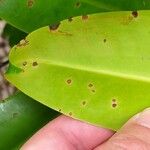
Source: leafsnapBruguiera gymnorhiza, commonly known as the Large-leafed Orange Mangrove, is a species of mangrove tree belonging to the family Rhizophoraceae. Native to Southeast Asia, it thrives in the coastal areas of countries like Indonesia, Malaysia, and Thailand. This tree can reach heights of up to 30 meters and features a unique root system that enables it to endure its challenging coastal environment. These roots, known as pneumatophores or breathing roots, allow the plant to absorb oxygen from the air when submerged during high tide. The leaves of Bruguiera gymnorhiza are large, oval-shaped, and exhibit a glossy green hue on the upper surface, while the underside is a pale green. The flowers are small with white petals and typically bloom in the springtime. Bruguiera gymnorhiza plays a vital role in its ecosystem. It provides habitat for various marine animals such as crabs, fish, and birds, and helps protect coastlines from erosion caused by waves or storms. In addition to its ecological significance, this plant is also valued for its medicinal properties. Local communities use it to treat a range of ailments including fever and diarrhea.
Care Guide
💧 Water Every 7 days
Oriental mangroves flourish in tropical mangrove ecosystems, where they adapt to changing levels of salinity and moisture. These plants need moderate watering once a week to maintain the right balance of hydration and drainage. Primarily found outdoors, oriental mangroves synchronize their growth with tidal rhythms and take advantage of occasional rainfalls for nourishment.
☀️ Light Full sun
Oriental mangrove comes from open habitats, such as sunny meadows and forest edges, which provide abundant light. It does best in Full Sun but can also tolerate Partial Sun, adjusting well to various sunlight conditions.
What are the sunlight requirements for Oriental Mangrove?
Oriental Mangrove (Bruguiera gymnorhiza) thrives in full sun, requiring more than 6 hours of sunlight, but can also adapt well to partial sun, which is about 3-6 hours of sunlight. It's important to observe the sunlight in your garden to ensure your plants are placed in locations that provide a balanced environment for their growth, adapting both in open environments similar to sunny meadows and forest edges.
Can Oriental Mangrove be grown with artificial lighting?
Yes, Oriental Mangrove can grow under artificial lighting, especially when natural sunlight is insufficient. It's beneficial during winter or in less sunny spaces. Using LED lights is advised as they can be customized to provide specific wavelengths needed by the plants. Full sun plants require 30-50W/sq ft, partial sun plants 20-30W/sq ft, and full shade plants 10-20W/sq ft of artificial light. The light source should be placed 12-36 inches above the plant, for 8-12 hours per day to mimic natural daylight hours.
What are the common symptoms of light deficiency in Oriental Mangrove?
Oriental Mangrove may show signs of light deficiency including smaller new leaves, leggy or sparse growth, faster leaf drop, and slower or no new growth. These symptoms indicate the plant is not receiving adequate sunlight. Insufficient light can also cause leaves to develop irregular color patterns or appear pale, indicating a lack of chlorophyll and essential nutrients. Excessive sunlight exposure can lead to chlorosis, sunscald, leaf curling, wilting, and leaf scorching.
How can you improve light conditions for indoor and outdoor Oriental Mangrove plants?
To improve light conditions for Oriental Mangrove, gradually move indoor plants to a sunnier location until they receive at least 6 hours of direct sunlight daily, preferably near a south-facing window. If moving the plant is not feasible, use artificial light such as desk or ceiling lamps, or invest in professional plant grow lights for at least 8 hours daily. For outdoor plants, ensure they are moved gradually to avoid sunburn. Minimize obstructions like overhanging branches and consider transplanting smaller plants during their dormant period to a location with ample sunlight and good drainage.
🌡️ Temperature 20–37.8°C
Oriental mangrove comes from tropical areas, where the weather is usually warm and humid. Consequently, it is well suited to high temperatures and humidity. It does not tolerate sudden temperature shifts and prefers a constant temperature, so avoiding indoor temperature variations is important. It typically cannot withstand cold and needs warmer conditions to develop. If the ambient temperature falls too far, the plant may stop growing or even perish.
💨 Humidity
🪴 Soil 6-7
🌱 Fertilizer
The best time to fertilize an Oriental mangrove is in early spring, as it comes out of dormancy. This encourages overall growth and flower development. Fertilization improves the foliage, stems, and branches, while promoting large, vivid, and long-lasting flowers. It helps move nutrients from the roots to the flowers and enhances the plant's health and resistance to disease.
🪴 Pot & Repot
✂️ Pruning
The Oriental mangrove flourishes in coastal and swampy environments. To promote better growth and air circulation, it's best to prune it from early to late winter, concentrating on removing dead branches. Making clean cuts helps minimize stress, supports recovery, boosts vitality, and reduces the risk of diseases and pests. Consistent pruning ensures that the Oriental mangrove remains healthy.
🌿 Propagating
🐛 Diseases & pets
☠️ Toxicity
Characteristics
- Plant Type
- Tree, Shrub
- Life Cycle
- Perennial
- Genus
- Bruguiera
- Family
- Rhizophoraceae
- Hardiness Zone
- 10-12
- Mature Height
- 7.01 m to 35.05 m
- Mature Spread
- 4.88 m to 10.06 m
- Leaf Color
- Dark Green
- Leaf Type
- Evergreen
- Flower Color
- Red
- Flower Size
- 3.05 cm to 5.08 cm
- Bloom Time
- All year round
- Planting Time
- Spring, Summer
- Harvest Time
- All year round
- Native Area
- Sri Lanka, Somalia, India, Malaysia, South Africa, Philippines, Madagascar, Bangladesh, Fiji, Kenya, Tanzania, Brunei, China, Indonesia, Cambodia, Vietnam, Mozambique, Japan, Singapore, Ethiopia, Thailand