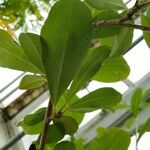
Brunfelsia americana
Lady-of-the-night · Franciscan raintree · Rain shrub · Trumpet Flower · Lady of the night
Description
Source: leafsnapBrunfelsia americana, commonly known as Lady of the Night or Yesterday-Today-and-Tomorrow, is a flowering shrub native to South America. Belonging to the Solanaceae family, it can grow up to 6 feet tall. This plant is particularly noted for its fragrant flowers that change color as they age, transforming from purple or blue to white over several days. Its leaves are dark green, glossy, and oval-shaped. Brunfelsia americana prefers well-draining soil and regular watering but can tolerate periods of drought. It flourishes in full sun but can also grow in partial shade. Due to its striking flowers and pleasant fragrance, the plant is popular for ornamental purposes. In traditional medicine, Brunfelsia americana has been used for its sedative properties and as a treatment for anxiety disorders, attributed to the alkaloids present in its leaves and stems. Overall, Brunfelsia americana is an attractive shrub with fragrant, color-changing flowers, making it a valuable addition to any garden or landscape design. Additionally, it has potential medicinal benefits when used appropriately under medical supervision.
Care Guide
💧 Water Every 7 days
American brunfelsia thrives in tropical regions where there is consistent moisture. It prefers to be watered regularly, ideally with deep watering once a week. While it can tolerate short dry spells, it thrives best when kept slightly moist. As an evergreen plant, it benefits from rainwater, which aligns with its natural requirement for high humidity.
☀️ Light Partial sun
The American brunfelsia naturally occurs in habitats such as forest understories and rocky areas, where it grows under natural shade. It prefers partial sun but can tolerate both full sun and full shade, showing its hardy and adaptable nature.
🌡️ Temperature 20–37.8°C
American brunfelsia comes from tropical areas, where the climate is generally warm and humid. As a result, it is well suited to high temperatures and humidity. It is sensitive to sudden temperature changes and prefers consistent temperatures, so it is important to avoid temperature fluctuations indoors. It typically cannot tolerate cold and needs relatively high temperatures to grow. If the surrounding temperature falls too low, the plant may stop growing or even die.
💨 Humidity
🪴 Soil 6-7
🌱 Fertilizer
The best time to fertilize an American brunfelsia is in early spring, as it breaks dormancy. This supports overall growth and the development of flowers. Fertilizing improves the foliage, stems, and branches, while encouraging flowers that are large, vivid, and long-lasting. It helps transport nutrients from the roots to the blooms and boosts the plant’s health and resistance to disease.
🪴 Pot & Repot 2-3 years
Repot your American Brunfelsia every 2-3 years in the spring to promote healthy growth. Choose a slightly larger pot with well-draining soil and drainage holes. After repotting, place the plant in indirect light and maintain consistent moisture levels. Be careful not to overwater, as this can help the plant recover and thrive. Keep in mind that the American Brunfelsia may be sensitive during this period.
✂️ Pruning
American Brunfelsia showcases fragrant flowers ranging from white to purple. For optimal growth and health, prune the plant between early and late winter. This helps shape the plant, invigorates new growth, and removes dead or overcrowded branches to improve air circulation. Pruning during dormancy reduces stress and encourages more abundant blooming. Consistent maintenance also helps with size control and overall plant health.
🌿 Propagating
🐛 Diseases & pets
☠️ Toxicity
Characteristics
- Plant Type
- Tree, Shrub
- Life Cycle
- Perennial
- Genus
- Brunfelsia
- Family
- Solanaceae
- Hardiness Zone
- 9-11
- Mature Height
- 61 cm
- Mature Spread
- 61 cm
- Leaf Color
- Dark Green, Forest Green
- Leaf Type
- Evergreen
- Flower Color
- White
- Flower Size
- 3.05 cm to 5.08 cm
- Bloom Time
- All year round
- Planting Time
- Spring, Summer, Autumn
- Harvest Time
- All year round
- Native Area
- Cuba, Venezuela