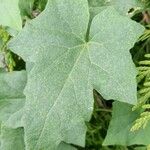
Bryonia alba
White bryony · European white bryony · Black-berried bryony
Description
Source: leafsnapBryonia alba, commonly known as white bryony, is a perennial vine belonging to the Cucurbitaceae family. Native to Europe and Western Asia, it has also been introduced and naturalized in North America. The plant has a long history of use in traditional medicine, treating various ailments such as respiratory problems, digestive disorders, and skin conditions. Bryonia alba can grow up to 3 meters long, using its tendrils to climb other plants or structures. Its leaves are heart-shaped with toothed edges, and its flowers are small and greenish-white. The plant produces bright red berries containing several seeds. Despite its medicinal properties, Bryonia alba can be toxic if ingested in large quantities due to its high content of cucurbitacins—bitter compounds found in some members of the Cucurbitaceae family. In addition to its medicinal uses, Bryonia alba is also employed for ornamental purposes because of its attractive foliage and fruit. However, it can become invasive if not properly managed, as it spreads quickly through seed dispersal. Overall, Bryonia alba is a fascinating plant with both beneficial properties for human health and potential risks if not used or managed correctly when grown for ornamental purposes.
Care Guide
💧 Water Every 7 days
White bryony is native to temperate regions and thrives in moderate moisture conditions, though it can tolerate short periods of dryness. To keep it healthy, water it once a week, making sure to avoid waterlogged soil as well as drought conditions. While usually grown outdoors, its growth cycle is influenced by the rainfall patterns typical of its natural habitat.
How should I water my White bryony plant?
To properly water the White bryony, it is recommended to use filtered water at room temperature or slightly warmer. This is because tap water may contain harmful particles. Since the White bryony originates from a warm environment, cold water can be too much of a shock for it. It is also best to avoid overhead watering to prevent issues with the foliage. Instead, apply the filtered room temperature water directly to the soil until it is completely soaked. This helps moisten the roots and enables them to spread and gather nutrients effectively.
What should I do if I give my White bryony plant too much water or too little water?
Overwatering is a common issue that can harm your White bryony. It causes wilting, yellowing of stems and leaves, and can lead to diseases like root rot, mold, and mildew which may kill your plant. Underwatering is less common but can still happen, causing brittle and brown leaves. It's important to notice signs of overwatering early to prevent irreversible damage. Reduce watering and improve soil drainage if overwatering is observed. If underwatering is occurring, simply increase the frequency of watering until symptoms improve.
How frequently should I water my White bryony plant?
If your White bryony plant is in a pot, the most precise way to determine if it needs water is by feeling the soil with your finger. If the top two to three inches of soil feel dry, then it's time to water the plant. If you have planted your White bryony outdoors in the ground, you can use the same method to test the soil. When the first few inches of soil have dried out, it is time to water. Typically, during spring and early fall, you can water this plant about once a week using this method. However, in extremely hot weather, you may need to water it twice or more per week. It's important to note that mature and well-established White bryony plants have a remarkable ability to withstand drought.
How much water should I give my White bryony?
When it's time to water your White bryony, don't be afraid to give it a good amount of water. Wait until the top two to three inches of soil are dry and then thoroughly water the plant, making sure the soil is completely soaked. Make sure to add enough water so that it drains out of the pot's bottom holes. If you don't see any excess water draining, then you likely haven't given enough water. However, be careful not to let water accumulate in the soil, as this can harm the plant. Additionally, if water doesn't drain properly through the pot, it could mean the soil doesn't drain well, which can be harmful to the plant's health. If the plant is outdoors, about 1 inch of rain per week should be sufficient.
How do I water my White bryony when it is growing at different stages?
The water needs of the White bryony can vary depending on its growth stages. For instance, when the plant is young or recently transplanted, it requires more water than usual. During these stages, the White bryony focuses its energy on developing new roots for future growth. To support this process, the roots need a bit more moisture compared to when the plant is more mature. As the White bryony ages, its water requirements decrease. Additionally, during the bloom period, the plant utilizes a significant amount of moisture for flower development. Hence, it may be necessary to provide the White bryony with more water at this time.
☀️ Light Full sun
White bryony needs abundant sunlight to fuel its growth, though occasional shade does not reduce its vigor or health. Native to areas with plentiful sun, it prospers most under those conditions. Both too much and too little light can hinder its ability to thrive, highlighting the importance of ample sun exposure.
What are the sunlight requirements for White Bryony?
White Bryony thrives best in environments that mimic its natural habitat, which is abundant in sunlight. It requires full sun exposure, defined as more than 6 hours of sunlight a day, to flourish. However, it can also tolerate partial sun, about 3-6 hours of sunlight daily. It's crucial to observe the movement of sunlight in your garden to ensure your plants get a balanced mix of light and shade for optimal growth.
How does artificial lighting benefit indoor White Bryony plants?
When natural sunlight is insufficient, especially during winter or in less exposed areas of a home, artificial lighting serves as an essential substitute for White Bryony plants, promoting healthier and faster growth. LED lights are recommended due to their ability to provide specific light wavelengths needed by plants. For full sun plants like White Bryony, 30-50W per square feet of artificial light is suitable. The light source should be placed 12-36 inches above the plant, ensuring it gets 8-12 hours of light daily to mimic natural sunlight conditions.
What are the signs of insufficient light in White Bryony?
White Bryony shows several symptoms when it does not receive enough light, including smaller new leaves, leggy or sparse growth, premature leaf drop, halted growth, and lighter-colored new leaves indicating a lack of chlorophyll. Excessive sunlight can also harm, leading to chlorosis, sunscald, leaf curling, wilting, and leaf scorching, where leaves may turn yellow, pale, or even crispy at the edges, reflecting the plant's struggle to maintain its health.
What measures can be taken to ensure White Bryony gets sufficient sunlight?
To maximize sunlight absorption for White Bryony, gradually transition plants to more sunlit locations, achieving at least 6 hours of direct sunlight when indoors and addressing lighting deficiencies with artificial lights or moving the plant to sunnier spots outdoors. Outdoor plants should be relocated carefully to prevent shock from sudden light changes. If sunlight is blocked by physical barriers, consider pruning or relocating plants to brighter areas. Remember, damaged parts may not recover, but new growth will be healthy with adequate light exposure.
🌡️ Temperature 5–35°C
White bryony is a hardy plant that does well in temperatures from 41 to 95 °F (5 to 35 ℃). Native to temperate regions, it can endure colder conditions but prefers milder climates. Adjust its exposure to heat and cold with the seasons to preserve optimal health.
What temperatures can white bryony tolerate, and how does it react to different climates?
White bryony, known botanically as Bryonia alba, exhibits notable resilience across a broad temperature spectrum, thriving in conditions ranging from 41 to 95 °F (5 to 35 °C). This plant is native to temperate regions and, while it can endure colder weather, it shows a preference for milder climates. It has a strong resistance to cold, with special frost protection generally not necessary. However, in anticipation of winter temperatures plummeting below -25°C, precautions such as covering the plant with soil or straw are recommended. To combat the potential for drought and water scarcity during winter and early spring, it's advised to water the plant abundantly before the first freeze in autumn, ensuring the soil remains moist.
How does low temperature affect white bryony, and what are the solutions?
White bryony is cold-tolerant, performing best in temperatures above 5°C and preferably kept above -20°C during winter. Exposure to temperatures below -25°C may not manifest noticeable changes immediately, but there could be a decline in or complete lack of sprouting in the following spring. To address these issues, any parts of the plant that have failed to sprout in spring should be removed.
How does high temperature affect white bryony, and what can be done?
In summer, it's crucial to ensure that white bryony's surroundings do not exceed 35°C. Temperatures surpassing 38°C can lead to the leaves becoming lighter in color, curling, and becoming more susceptible to sunburn, with severe cases resulting in the wilting and drying of the plant. Remedial measures include trimming away sunburned and dried parts, relocating the plant to a shaded area or employing a shade cloth to protect it during peak sun hours, and maintaining soil moisture by watering in the morning and evening.
💨 Humidity normal (40-60%)
This plant will thrive in moderate humidity, which is probably the level in your home. However, misting it a few times a week can be very beneficial. Make sure the room has good ventilation.
🪴 Soil 6-7
🌱 Fertilizer
Usually one fertilizer application in spring is enough for White bryony, though several feedings can boost growth. Apply fertilizer about every month to a month and a half. Feeding improves the leaves' appearance and function, encouraging even color and a healthy texture. It also promotes root development and nutrient uptake, supporting the plant's long-term health.
🪴 Pot & Repot
✂️ Pruning
White bryony is a fast-growing climber with dense foliage. To maintain its shape and promote health, it's important to prune it between early and late spring. Use clean tools to remove any damaged stems, which will also improve air circulation and help prevent disease. Regular pruning not only manages the plant's invasiveness but also supports its structured growth.
🌿 Propagating
🐛 Diseases & pets
☠️ Toxicity
Characteristics
- Plant Type
- Herb, Vine
- Life Cycle
- Perennial
- Genus
- Bryonia
- Family
- Cucurbitaceae
- Hardiness Zone
- 5-9
- Mature Height
- 2.13 m to 3.05 m
- Mature Spread
- 0.91 m to 2.13 m
- Leaf Color
- Green, Blue
- Leaf Type
- Deciduous
- Flower Color
- White
- Flower Size
- 2.54 cm
- Bloom Time
- Late spring, Early summer, Mid summer
- Planting Time
- Winter, Spring
- Harvest Time
- Late summer, Early fall, Mid fall
- Native Area
- Turkey, Austria, Czech Republic, Slovakia, Montenegro, Bulgaria, Poland, Greece, Croatia, Slovenia, Ukraine, Serbia, Russia, Hungary, Germany, Kyrgyzstan, Italy, Switzerland, Albania, Romania, Turkmenistan