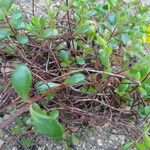
Bryophyllum manginii
Beach bells · Madagascar wax-bells · తలుపు గంటలు
Description
Source: leafsnapBryophyllum manginii, also known as the "Chandelier Plant," is a succulent species belonging to the Crassulaceae family. Native to Madagascar, this plant is characterized by its woody stem and can grow up to 1 meter in height. Its fleshy, green leaves are arranged in clusters along the stem, giving it a distinctive appearance. One of the most unique features of Bryophyllum manginii is its ability to reproduce vegetatively. Small plantlets grow along the edges of its leaves and can easily detach and root in the soil, facilitating rapid propagation. The Chandelier Plant thrives in well-draining soil and partial shade, making it an ideal houseplant or outdoor ornamental for tropical and subtropical climates. It requires minimal care but should be protected from frost during colder months. In traditional medicine, Bryophyllum manginii has been used to treat various ailments, such as respiratory infections, skin conditions, and digestive issues, due to its anti-inflammatory properties. However, it is important to note that further research is needed to fully validate these medicinal claims. Overall, Bryophyllum manginii's unique growth habit makes it an intriguing addition to any garden or indoor space, while its potential medicinal benefits warrant further exploration.
Care Guide
💧 Water Every 7 days
☀️ Light Full sun
Beach bells thrive with abundant sunlight and can also tolerate moderate sun, mirroring their native habitat where unobstructed rays are common. Excessive sun can scorch the leaves, while too little light may produce weak growth and pale foliage.
🌡️ Temperature 20–37.8°C
Beach bells naturally occurs in areas where temperatures usually fall between 68 and 100 °F (20 to 38 ℃). It does best under those temperature conditions. If temperatures change with the seasons, you may need to change the plant’s placement or care routine to keep it at its ideal warmth.
💨 Humidity
🪴 Soil 6-7
🌱 Fertilizer
For Beach bells, give light doses of fertilizer one to two times a year during the growing season. Do not fertilize in winter or in summer when the plant is dormant. Cut back on fertilizer for repotted plants and wait a couple of months after repotting before fertilizing. Fertilizing promotes healthy growth and encourages blooms.
🪴 Pot & Repot Every 2 years
When repotting Beach bells, choose a pot slightly larger than the current one that has good drainage. Use a gritty, well-draining succulent or cactus mix. Gently remove the plant from its old pot, brush off excess soil, and set it in at the same depth. Wait a few days before watering to let any root damage heal. Repot in spring or fall and place it in a brightly lit spot.
✂️ Pruning
🌿 Propagating
🐛 Diseases & pets
☠️ Toxicity
Characteristics
- Plant Type
- Succulent
- Life Cycle
- Perennial
- Genus
- Bryophyllum
- Family
- Crassulaceae
- Hardiness Zone
- 9-11
- Mature Height
- 30 cm
- Mature Spread
- 30 cm
- Leaf Color
- Green
- Leaf Type
- Evergreen
- Flower Color
- Red
- Flower Size
- 2.54 cm
- Bloom Time
- Late spring, Early summer, Mid summer
- Planting Time
- Spring, Autumn
- Harvest Time
- Mid summer
- Native Area
- Madagascar