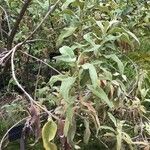
Buddleja salviifolia
Wild sagewood · Sagewood · South African buddleia
Description
Source: leafsnapBuddleja salviifolia, commonly known as South African Sagewood, is a small to medium-sized evergreen shrub belonging to the Buddlejaceae family. Native to South Africa, this plant thrives in diverse habitats such as rocky outcrops, forest edges, and along streams. The plant exhibits a dense growth habit with an upright form, reaching up to 3 meters in height. Its narrow, lance-shaped leaves feature a silvery-grey underside, lending it a striking appearance. From late winter to spring, Buddleja salviifolia produces small, tubular flowers in a pale lilac hue. Renowned for its medicinal properties, this plant has traditionally been used to treat a variety of ailments, including fever, coughs, colds, and headaches. Additionally, its flowers attract butterflies, making it a favorite among gardeners looking to draw pollinators into their gardens. In summary, Buddleja salviifolia is an appealing plant that enhances garden aesthetics while offering medicinal benefits. Its dual appeal makes it a popular choice for those who value both beauty and natural remedies in their gardens.
Care Guide
💧 Water Every 7 days
The South African sage wood thrives in semi-arid regions and prefers drier conditions, needing watering only every 2-3 weeks. It is best grown outdoors, where it excels in xeriscaping, minimizing the need for additional irrigation.
How should I water my South African sage plant?
To promote healthy root development, place a garden hose at the base of the plant rather than directly spraying the leaves. If the plant is outdoors and exposed to direct sunlight, the leaves will require more watering. You can use bubblers to moisten the roots of each plant, and soaker hoses to cover the entire garden when adding or removing plants. After watering, make sure to drain any excess water and allow the soil to dry before watering again. Water at ground level to prevent diseases. On sunny days, consider spraying the entire bush with water. Whether the plant is in a pot or in the ground, it's important to remember that South African sage wood prefers deep watering rather than light sprinkling.
What do I do if I give South African sage wood too much or too little water?
Overwatering can cause a South African sage wood to have yellow leaves that fall off and wilt. The plant may also look unhealthy with mushy stems. When these signs appear, it's best to adjust your watering schedule. Wilting can also indicate under watering, characterized by crispy and dry leaves. Check the soil for dryness and if necessary, give the plant a thorough watering. Although enough water will help the South African sage wood recover, the damaged root system may still result in dryness and yellowing of leaves after a few days. Once the plant returns to normal, the yellowing will stop. When keeping the South African sage wood indoors, always check the moisture levels and avoid overwatering. Look out for black spots, and if present, allow the soil to dry out for a few days without watering. Overwatering can lead to root rot, so transfer the plant to a different pot if you see discolored and slimy roots. It's essential to prevent root rot by not allowing the soil to become too soggy. When planting the South African sage wood outdoors, dig a little deeper and if the soil feels dry, it may indicate under watering. Adequate watering is necessary for the plant's recovery.
How often do I need to water my South African sage plant?
The South African sage wood prefers deep and infrequent watering. It is recommended to give them a gallon of water each time, especially when they are in pots. Potted plants have limited water storage and the soil dries out quickly, so they need to be watered every 3 to 5 days in cold regions. It's best to water them early in the morning when the soil is dry, whether they are outside or inside. You can also check the soil to determine if watering is needed. When the top 2-3 inches of soil are dry, it's time to water the plant fully. On hot days, you may need to check the moisture daily as the heat can dry out the pot's soil quickly. If you have a garden, you will also need to irrigate the soil. In hot climates, watering once a week is usually sufficient, but ensure that about 2 to 3 inches of soil are dry before watering. Be mindful of the amount of rainfall the plant receives and avoid overwatering to prevent root rot. South African sage wood typically grows in spring and fall. When planted outdoors, adding a layer of mulch 3 to 4 inches deep helps conserve water. Sandy soil requires more frequent watering as it drains faster, while clay soil needs less frequent watering to avoid root rot (about every 2-3 days). It could be helpful to mark the date on the calendar each time you water and pay attention to any drooping leaves, as they could indicate that the plant needs water.
How much water should I give my South African sage wood?
The South African sage wood typically requires one gallon of water on a regular basis. For potted plants, it is best to water them deeply until water is seen dripping from the bottom of the pot. Allow the soil to dry before watering again. To determine the amount of water given in a week, you can use a water calculator or moisture meter. During the flowering period, provide ample water but allow moisture to evaporate to avoid root rot. If South African sage wood is planted outdoors where there is adequate rainfall, additional watering may not be necessary. However, when the wood is young or newly planted, ensure it receives 1-2 inches of rain per week. As the South African sage wood matures, it can rely solely on rainfall. Only when the weather is exceptionally hot or there has been no rain for 2-3 weeks should full watering be considered during cooler times of the day to prevent damage from heat. Additional watering will be needed during prolonged dry spells.
Do I need to water my South African sage wood more or less during different seasons or climates?
Here are some tips for watering your South African sage wood: 1. During the spring and fall growing seasons, keep the soil moist but not soggy. Alternating between dry and moist soil conditions will promote healthy growth. 2. In the summer, hot weather can cause water to evaporate quickly. If there is a lack of rainfall, water more frequently to keep the soil moist. 3. Generally, the South African sage wood requires less water during the winter. Use a well-draining but moisture-retentive soil mixture, like terracotta, to help water evaporate faster. 4. Once the plant goes dormant and loses its leaves in winter, it can rely on fall and winter rains for hydration. You can skip watering at this time. 5. In spring, when the temperature becomes warmer, you can encourage growth and bloom by cultivating your plant. 6. Ensure good drainage at all times, especially during the winter, to prevent ponding or drought. This is important whether the plant is in the ground or in a pot. 7. If your South African sage wood is in a pot, water it more frequently, especially during the summer. Avoid cold and wet roots by providing adequate drainage. 8. Deeply water the entire root system once or twice a week, depending on the weather. Shallow sprinkles that reach the leaves should be avoided as they can promote the growth of fungi and do not reach the roots. 9. Even during dormancy in fall or winter, do not allow the plant to dry out completely. 10. Be cautious not to overwater, as the plant does not like sitting in water for too long. Poor drainage in winter can be fatal. 11. Applying mulch can help reduce stress, conserve water, and promote healthy blooms.
☀️ Light Full sun
South african sage wood comes from open habitats like sunny meadows and forest edges, which provide abundant light. It flourishes in Full Sun but can also tolerate Partial Sun, adapting well to various sunlight conditions.
What are the sunlight requirements for South African sage wood?
South African sage wood, known botanically as Buddleja salviifolia, thrives in environments with full sun exposure, requiring more than 6 hours of sunlight daily. However, it can also tolerate partial sun conditions, about 3-6 hours of sunlight per day. Originating from open environments such as sunny meadows and forest edges, this plant adapts well to various sunlight conditions. It is essential to observe how sunlight moves through your garden and choose spots that offer a balance of light and shade, ensuring the plant's health and happiness.
How can artificial lighting support plant growth indoors?
When natural sunlight is insufficient, especially during winter or in less sunny spaces, artificial lighting becomes crucial for optimal plant growth. LED lights are popular for indoor plant lighting, as they can be tailored to provide specific wavelengths needed by plants. The requirements for artificial light vary depending on the plant's needs: full sun plants need 30-50W/sq ft, partial sun plants require 20-30W/sq ft, and full shade plants should have 10-20W/sq ft. The light source should be placed 12-36 inches above the plant to mimic natural sunlight, and most plants need 8-12 hours of light per day.
What symptoms indicate insufficient light in South African sage wood?
When South African sage wood does not receive adequate sunlight, it may exhibit several symptoms: new leaves may grow smaller, the plant could show leggy or sparse growth, there might be faster leaf drop, and the plant could experience slower or no new growth. New leaves may also appear lighter-colored or develop chlorosis, turning yellow due to the breakdown of chlorophyll. Other symptoms include sunscald, leaf curling, wilting, and leaf scorching, indicating damage or stress from excessive sunlight or insufficient light exposure.
What solutions can help South African sage wood receive adequate light?
To ensure South African sage wood receives adequate sunlight, gradually relocate plants to sunnier spots to achieve at least 6 hours of direct sunlight for outdoor plants, or use a south-facing window for indoor plants. Consider artificial lighting for indoor or immovable plants, keeping lights on for at least 8 hours a day. If outdoor plants face sudden changes in light, they may suffer from sunburn, so it's important to adjust gradually. To enhance light exposure, reduce obstructions by pruning or relocating the plants to areas with ample sunlight and good drainage.
🌡️ Temperature 15–37.8°C
South African sagewood demonstrates good temperature adaptability, tolerating higher heat and wide temperature fluctuations. In hot conditions, attention to watering and provision of appropriate shade are necessary to prevent sunburn. Conversely, South African sagewood is relatively sensitive to low temperatures. Although it can endure some cold, very low temperatures may cause frost damage.
What is the botanical name of the South African sage wood?
The botanical name of the South African sage wood is Buddleja salviifolia.
💨 Humidity
🪴 Soil 6-7
🌱 Fertilizer
Timing is important for fertilizing South african sage wood. Apply fertilizer in early spring and continue monthly through early summer. The fertilizer promotes attractive blooms and supplies energy during both dormant and active growth phases.
🪴 Pot & Repot
✂️ Pruning
The South African sage wood is a resilient shrub known for its aromatic foliage and long flower spikes. To promote growth and maintain its shape, prune it in early spring. This involves removing dead wood, thinning the branches, and trimming the shoots by one-third. These practices enhance air circulation, improve bloom quality, and boost the plant's overall health.
🌿 Propagating
🐛 Diseases & pets
☠️ Toxicity
Characteristics
- Plant Type
- Tree, Shrub
- Life Cycle
- Perennial
- Genus
- Buddleja
- Family
- Scrophulariaceae
- Hardiness Zone
- 8-11
- Mature Height
- 4.57 m to 6.1 m
- Mature Spread
- 3.66 m to 6.1 m
- Leaf Color
- Green
- Leaf Type
- Deciduous
- Flower Color
- Lavender, White
- Flower Size
- 2.54 cm
- Bloom Time
- Spring
- Planting Time
- Spring, Summer, Autumn
- Harvest Time
- Summer
- Native Area
- Lesotho, Angola, Mozambique, South Africa, Zambia, Eswatini, Botswana, Zimbabwe