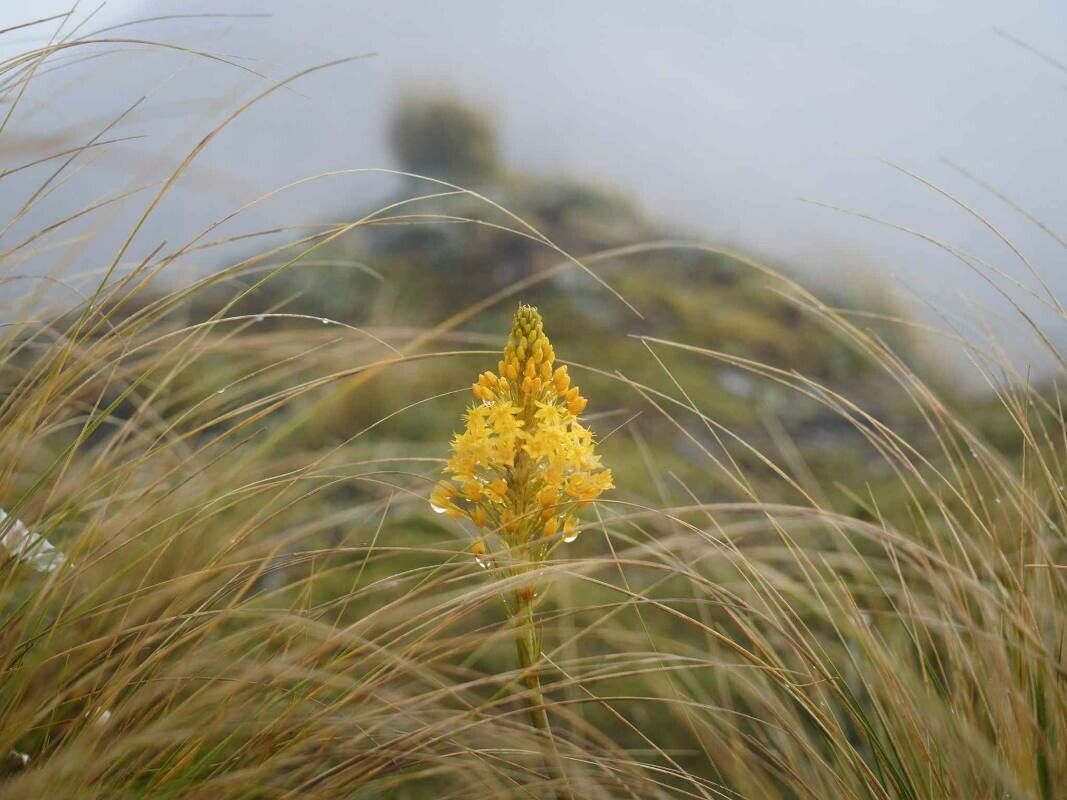
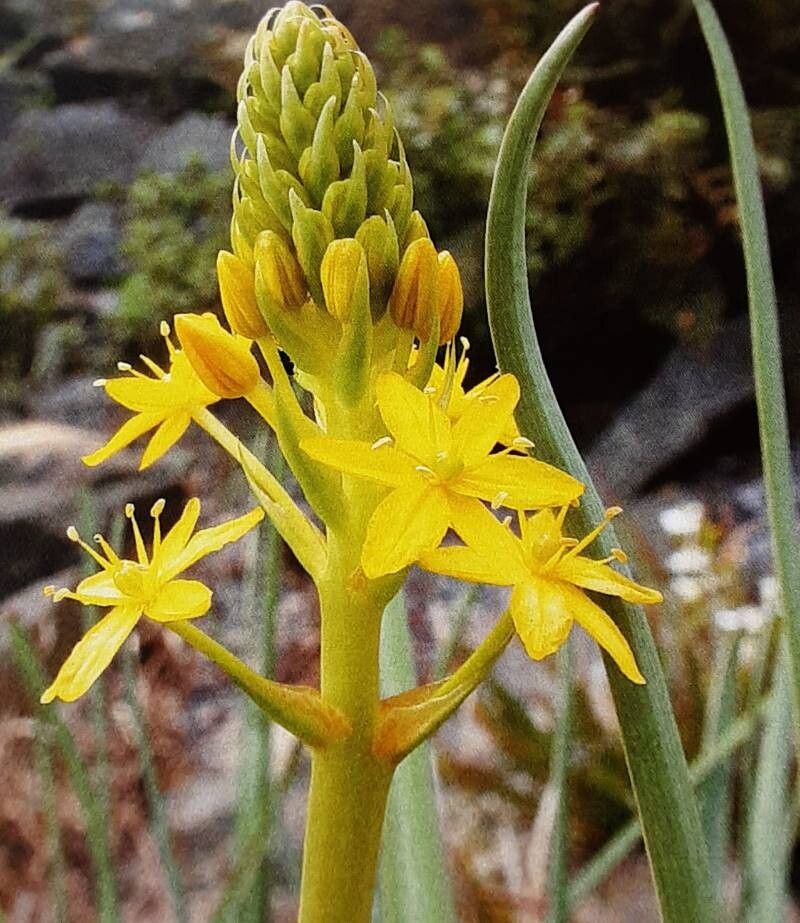
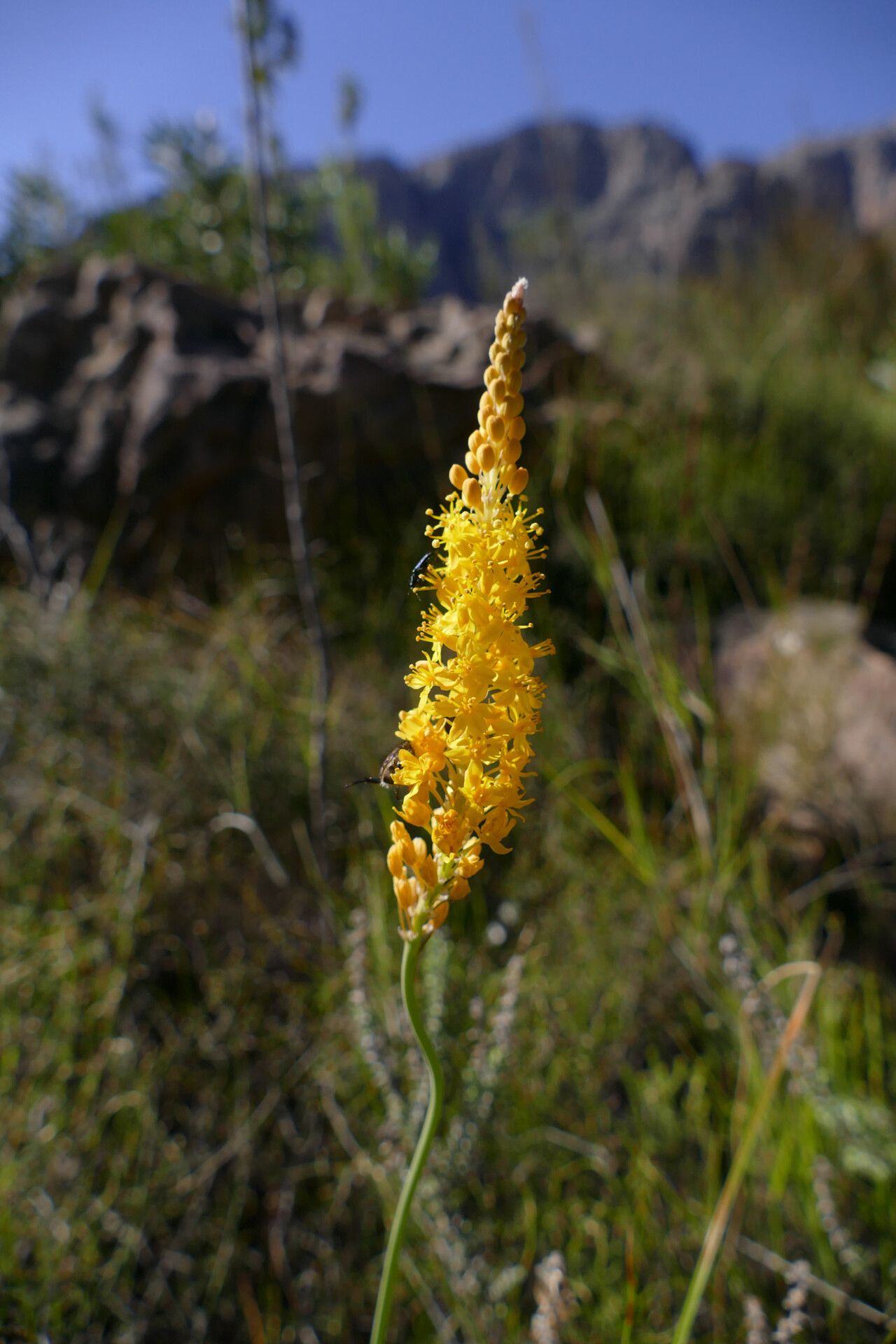
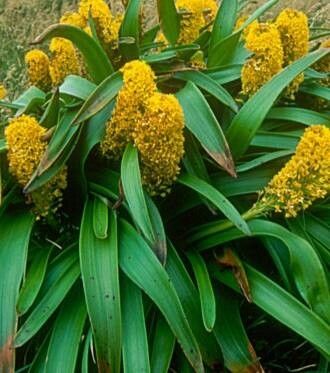
Bulbinella angustifolia, commonly known as the Māori onion, is a species of flowering plant in the family Asphodelaceae. It is endemic to the South Island of New Zealand, mostly found in Canterbury and Otago. It is commonly found in tussock grasslands in areas with moderate moisture contents. B. angustifolia reaches a height of up to 100 cm (40 in) tall. B. angustifolia was first described in 1911 by the New Zealand botanist Leonard Cockayne. It gets its specific epithet, angustifolia, derived from the Latin angustus and folius, meaning 'narrow-leaved'.
Maori onion has strong resistance to disease and is unlikely to become sick under normal care. It is also not highly susceptible to most pests and illnesses. Regarding care, Maori onion is drought-tolerant and can endure long stretches without watering. It needs little fertilizer and generally does not require pruning. These qualities make it suitable for people of all experience levels, especially those who prefer to spend less time tending their plants. It is a good option for people who are often away for extended periods and may forget to water regularly.
How to keep Bulbinella Angustifolia.
Light
The Maori onion, indigenous to dry areas, flourishes in direct sunlight, as its natural habitat is marked by intense sun exposure and scarce shade. It can also tolerate a bit of partial sunshine, demonstrating some flexibility in its development.
Temperature
The Maori onion flourishes in hot climates and demands elevated temperatures throughout its growth phase to boost its development and metabolism. It favors plenty of sun exposure, suitable hydration levels, and efficient air circulation. Nonetheless, the plant is vulnerable to harm from overly cold temperatures and too much watering. It's crucial to maintain a balance, steering clear of too hot temperatures and excessively arid conditions.
Fertilizer
For the Maori onion, administering low amounts of fertilizer 1-2 times annually during the growth period is adequate. Refrain from fertilizing in the winter and summer when the plant is in hibernation. Decrease the amount of fertilizer for plants that have been repotted and postpone fertilizing for a few months post-repotting. The act of fertilizing assists in robust development and promotes flowering.
Botanical profile.
- Plant Type
- Succulent, Herb
- Life Cycle
- Perennial
- Hardiness Zone
- 8-11
- Mature Height
- 30 cm to 61 cm
- Mature Spread
- 20 cm to 30 cm
- Leaf Color
- Light Green
- Leaf Type
- Evergreen
- Flower Color
- Yellow
- Flower Size
- 1.02 cm to 1.52 cm
- Bloom Time
- Early spring, Mid spring
- Planting Time
- Spring, Summer, Autumn
- Harvest Time
- Late spring, Early summer
- Native Area
- New Zealand
Other names.