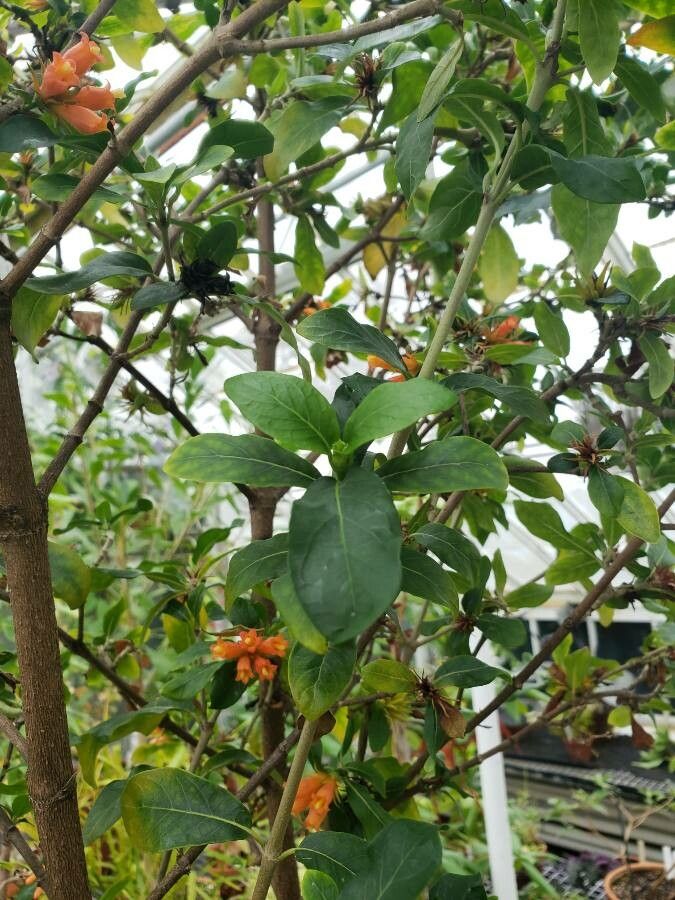
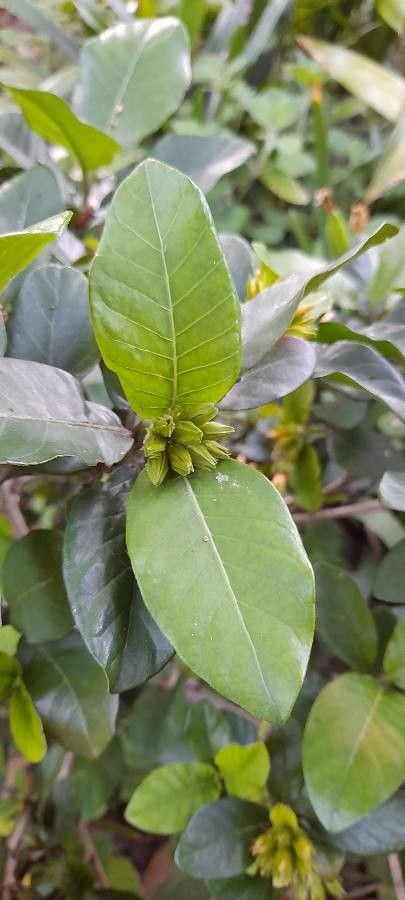
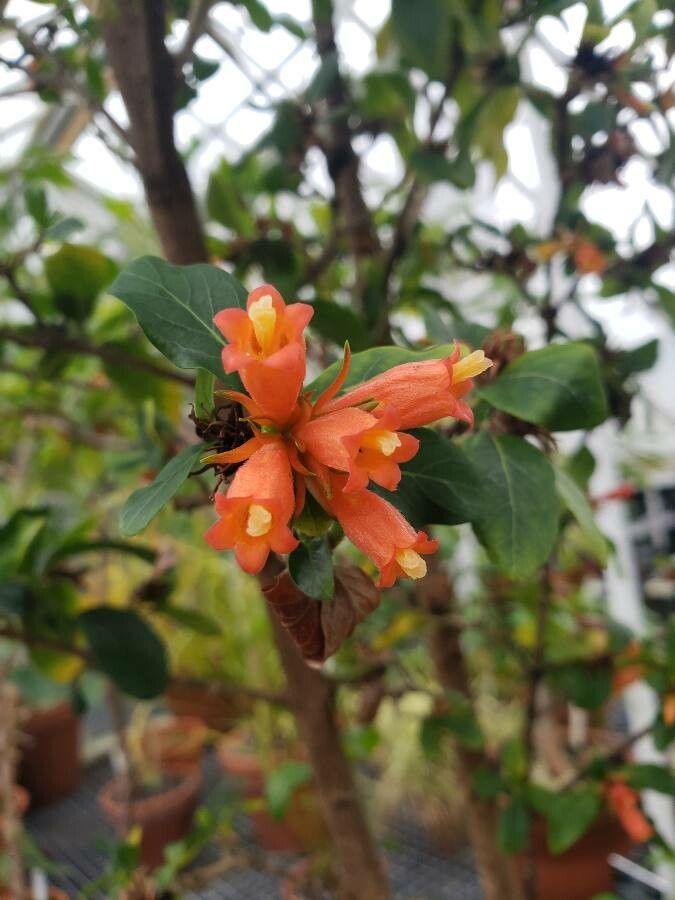
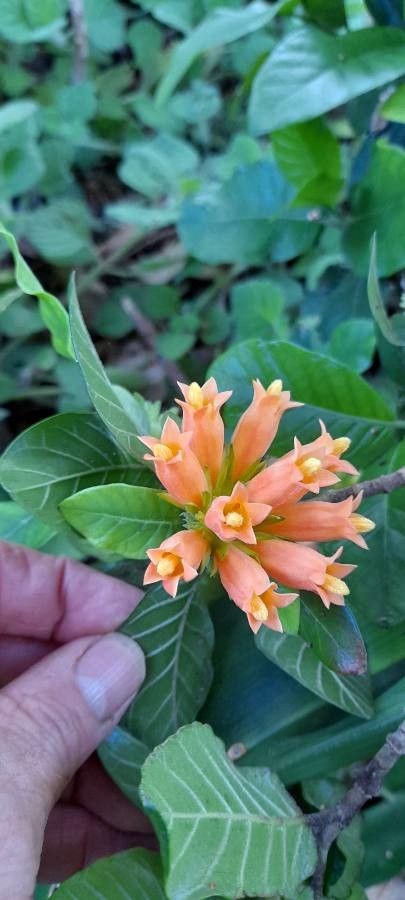
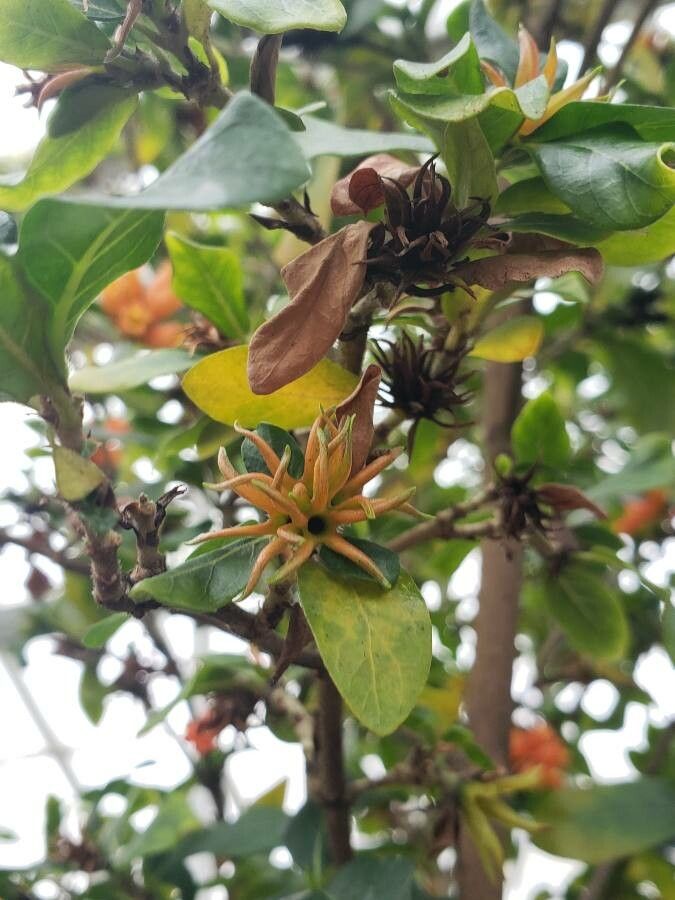
Burchellia is a monotypic genus of flowering plants in the family Rubiaceae. The genus contains only one species, viz. Burchellia bubalina, which is endemic to southern Africa: the Cape Provinces, KwaZulu-Natal and the Northern Provinces in South Africa, and Eswatini. It is commonly known as "wild pomegranate" (English) or "wildegranaat" (Afrikaans).
Wild pomegranate is fairly disease-resistant and is typically not susceptible to illnesses. In terms of care, this plant is relatively low-maintenance. When grown outdoors, it needs little watering and larger plants usually do not require pruning. However, smaller plants should be pruned after they finish blooming. Wild pomegranate is appropriate for anyone with an outdoor area, such as a garden or deck, and does not demand much care experience.
How to keep Burchellia Bubalina.
Light
Wild pomegranate grows best when it gets a generous amount of light throughout the day. While the plant can adapt to moderate light, continuous exposure to full daylight encourages healthy growth. Both too little light and excessive exposure can cause impaired development. Originating from habitats with abundant sunlight, these lighting conditions are ideal for its growth cycle.
Water
Wild pomegranate thrives in humid, forest understory environments, where it prefers consistent moisture but can tolerate short periods of dryness. To prevent overwatering, it is best to water it every 2-3 weeks. Typically grown outdoors, wild pomegranate benefits from mulching, which helps retain moisture and mimics the leaf litter found in its natural habitat.
Temperature
Wild pomegranate grows naturally in temperate climates and prefers temperatures of 59 to 100 °F (15 to 38 ℃). In hotter or cooler seasons, providing indirect sunlight and placing the plant in a well-ventilated spot can help it adjust to temperature changes.
Fertilizer
Timing is important when fertilizing Wild pomegranate. Apply fertilizer in early spring and then monthly through early summer. Fertilizer encourages lovely blooms and supplies energy during both dormant and active growth phases.
Pruning
The wild pomegranate is a lively shrub known for its bright red, tubular flowers. To maintain its health and appearance, prune the plant during its dormant period, which is from early to late winter. Focus on removing any dead or crossing branches to encourage a well-shaped shrub and new growth. Regular trimming can enhance its flowering, so use clean, sharp tools and be cautious not to prune too heavily, as this can stress the plant.
Botanical profile.
- Plant Type
- Tree, Shrub
- Life Cycle
- Perennial
- Genus
- Burchellia
- Family
- Rubiaceae
- Hardiness Zone
- 8-11
- Mature Height
- 7.92 m
- Mature Spread
- 2.13 m to 3.05 m
- Leaf Color
- Dark Green
- Leaf Type
- Evergreen
- Flower Color
- Orange, Red, Yellow, Pink
- Flower Size
- 1.52 cm to 2.54 cm
- Bloom Time
- Mid spring, Late spring, Early summer
- Planting Time
- Spring, Summer, Autumn
- Harvest Time
- Mid summer, Late summer, Early fall
- Native Area
- South Africa, Eswatini, Lesotho
Other names.
Reader questions.
What are the sun requirements for Wild pomegranate?
Wild pomegranate requires varying levels of sunlight depending on its specific needs. Full sun, meaning above 6 hours of sunlight, is ideal for this plant, allowing it to thrive and grow healthily. Partial sun, about 3-6 hours of sunlight, can also be suitable for the plant's growth. It's important to observe the way sunlight moves through your garden to select spots that offer a perfect balance of light and shade, ensuring the plant's happiness and health.
What are the ideal growing conditions for wild pomegranate?
Wild pomegranate thrives in temperate environments, with ideal temperatures ranging from 59 to 100 °F (15 to 38 °C). It benefits from indirect sunlight and should be placed in a well-ventilated area to adjust to temperature changes during the hotter and cooler seasons. The plant has some cold tolerance and generally doesn't require additional measures if the temperature stays above -5°C. However, temporary protective measures, such as wrapping the plant in plastic film or fabric, should be taken if temperatures are expected to drop below -5°C. These protective coverings should be removed once temperatures rise again.
What are the essential growing conditions for Wild pomegranate?
The Wild pomegranate thrives best with a generous amount of daily light exposure. Originating from environments rich in sunlight, full daylight conditions are optimal for its growth. However, it can adapt to moderate light. Ensuring adequate lighting, whether natural or artificial, is crucial for preventing impaired development. For indoor plants, artificial lighting can be an effective solution during less sunny seasons or in low-light areas. LED lights are recommended for their customizability, providing specific wavelengths needed by plants. Appropriate artificial light intensity, distance, and duration are key factors in promoting healthy growth indoors.
How does wild pomegranate react to low temperatures?
Wild pomegranate has a moderate tolerance to low temperatures, thriving best above 15°C. It should be kept above -5°C during winter. When temperatures fall below -10°C, the leaves may droop. In mild cases, they can recover, but in severe cases, the leaves will wilt and fall off. To protect the plant from low temperatures, any frost-damaged parts should be trimmed off. Before facing low temperatures again, wrap the plant with non-woven fabric or cloth, and consider constructing a wind barrier to shield it from cold winds.
What symptoms indicate that Wild pomegranate is receiving insufficient sunlight?
Wild pomegranate may show several symptoms when lacking adequate sunlight, including smaller new leaves indicating restricted growth. Leggy or sparse growth with longer spaces between leaves or stems could suggest the need for more light. Faster leaf drop, slower or halted growth, lighter-colored new leaves, chlorosis (yellowing), sunscald, leaf curling, wilting, and leaf scorching are other signs that the plant is not receiving enough sunlight. These symptoms highlight the importance of sufficient light exposure for the health and vitality of the Wild pomegranate.
What should you do if wild pomegranate is exposed to high temperatures?
During summer, it's important to keep wild pomegranate below 38°C to prevent heat stress. Exposure to temperatures above 43°C may cause the leaves to lighten in color, dry and wither at the tips, curl, and become more susceptible to sunburn. In such cases, trim away the sunburned and dried parts. Move the plant to a location that offers shade during the midday and afternoon sun, or use a shade cloth. Additionally, water the plant in the morning and evening to maintain soil moisture and help the plant cope with the heat.
How can I address light-related issues in Wild pomegranate?
To counteract light deficiency in Wild pomegranate, a gradual relocation to sunnier spots can significantly help. For indoor plants, gradually moving them to locations with at least 6 hours of direct sunlight daily or providing artificial light through desk or ceiling lamps for a minimum of 8 hours a day can be beneficial. Outdoors, carefully moving plants to locations with better sunlight exposure while avoiding abrupt changes that could cause sunburn is advised. Reducing obstructions that shade the plant, and for smaller plants, transplanting during the dormant period to sunnier locations, are effective strategies. It's important to note that areas of the plant that have suffered from light deficiency may not recover, but new growth should be healthy with improved light conditions.
What is the botanical name of wild pomegranate?
The botanical name of wild pomegranate is Burchellia bubalina.