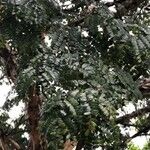
Caesalpinia ferrea
Brazilian ironwood · Leopard Tree · Pau Ferro
Description
Source: leafsnapCaesalpinia ferrea, commonly known as Brazilian ironwood or the leopard tree, is a species of flowering tree in the pea family. It is native to Brazil and other parts of South America, and it has been introduced to various regions around the world as an ornamental plant. This tree can grow up to 15 meters tall and features a dense canopy of dark green leaves that provide abundant shade. Its bark is smooth and grayish-brown, adorned with distinctive white spots that resemble leopard markings. During the summer months, Caesalpinia ferrea produces small yellow flowers that bloom in clusters, followed by long seed pods that contain several seeds each. Indigenous people use these seeds for their anti-inflammatory properties. The wood from the Brazilian ironwood is highly valued for its strength and durability, making it a popular choice for construction projects such as bridges and buildings. Traditionally in Brazil, it has also been used to create furniture, tools, and musical instruments like drums or maracas. Overall, Caesalpinia ferrea is a versatile plant with numerous uses. Its seeds have medicinal applications, while its wood is suitable for construction and furniture making. This makes it an economically and culturally significant species.
Care Guide
💧 Water Every 7 days
Brazilian ironwood thrives in tropical environments with high humidity and consistent moisture levels. Water the plant every two weeks to meet its moderate hydration needs, making sure the soil drains well to prevent root rot, as it is sensitive to overwatering. While usually grown outdoors, Brazilian ironwood can withstand short periods of drought.
☀️ Light Full sun
The growth and development of Brazilian ironwood is greatly affected by exposure to sunlight, confirming its preference for the radiating sun. The original habitats of this plant typically receive abundant daylight, highlighting its photophilic properties. Conversely, too much or too little exposure to sunlight can have adverse effects on the plant's growth and health.
What are the sunlight requirements for Brazilian Ironwood (Caesalpinia ferrea)?
Brazilian Ironwood requires full sun exposure, thriving best with more than 6 hours of sunlight daily, but it can also grow in partial sun, approximately 3-6 hours of sunlight. It's essential to monitor the plant's exposure to sunlight closely to ensure optimal growth and health. The plant's native environments are generally exposed to full daylight, highlighting its preference for abundant sunlight. However, both overexposure and underexposure to sunlight can adversely affect the plant’s well-being.
How can artificial lighting benefit indoor Brazilian Ironwood plants?
Indoor Brazilian Ironwood plants benefit significantly from artificial lighting, especially when natural sunlight is insufficient, such as in winter or less sunny areas. Artificial lights, such as LED lights, can be tailored to provide specific wavelengths needed for the plant's growth, offering a practical solution. For full sun plants like Brazilian Ironwood, 30-50W/sq ft of artificial light is recommended, with the light source placed 12-36 inches above the plant to mimic natural sunlight. The duration of artificial lighting should reflect natural daylight hours, typically 8-12 hours per day, to support healthier and faster growth.
What are the symptoms of insufficient light in Brazilian Ironwood?
Brazilian Ironwood shows several symptoms when exposed to inadequate lighting. These include smaller new leaves, leggy or sparse growth, premature leaf drop, slowed or ceased growth, irregular or pale-colored new leaves, and symptoms of overexposure like chlorosis, sunscald, leaf curling, wilting, and leaf scorching. These signs indicate the plant’s struggle with insufficient light or overexposure, impacting its ability to photosynthesize efficiently and maintain overall health.
What are effective solutions for addressing insufficient sunlight for Brazilian Ironwood?
To address insufficient sunlight, Brazilian Ironwood can be gradually moved to sunnier locations, ensuring at least 6 hours of direct sunlight daily, especially through south-facing windows. Artificial lighting, such as desk or professional grow lights, can also supplement light needs, particularly for large or immovable plants. For outdoor plants, relocating them to spots with better sunlight exposure gradually is crucial to prevent sunburn. Pruning nearby trees can reduce obstructions and allow more natural light to reach the plants. In some cases, transplanting smaller plants during their dormant period to locations with ample sunlight and good drainage is beneficial. It's important to note that parts of the plant already affected by low light might not recover, but new growth will be healthy with improved light conditions.
🌡️ Temperature 20–37.8°C
The Brazilian ironwood naturally occurs in areas where the temperature ranges from 68 to 100 °F (20 to 38 °C). It prefers a heated environment and tends to flourish best under these conditions. During cooler periods, it is crucial to maintain temperatures within this bracket to promote its ideal development.
What is the ideal climate range for Brazilian ironwood?
Brazilian ironwood thrives in regions with a climate range of 68 to 100 °F (20 to 38 °C). This plant prefers warm temperatures and performs best in such climates. During colder seasons, it's important to keep the ambient temperatures within this range to ensure the plant's optimal growth. In the autumn, if the Brazilian ironwood has been grown outdoors, it's recommended to bring it indoors and place it near a bright window, ensuring it is kept at a certain distance from heaters to maintain temperatures above 20°C during winter for beneficial plant growth.
How does low temperature affect Brazilian ironwood and what should be done?
Brazilian ironwood is not tolerant of low temperatures and thrives best when the temperature is above 20°C. It should be kept above 5°C during winter. Exposure to temperatures below 1°C may cause the leaves to lighten in color, and following frost damage, they gradually turn brown or black. Symptoms such as wilting and drooping might also occur. To mitigate these issues, trim off the frost-damaged parts and immediately move the plant indoors to a warm environment for cold protection. Place the plant near a south-facing window to ensure ample sunlight and avoid placing it near heaters or air conditioning vents to prevent excessive dryness.
What impact does high temperature have on Brazilian ironwood and how can it be addressed?
During the summer, it's crucial to keep Brazilian ironwood below 38°C. Temperatures exceeding 43°C may cause the leaves to lighten and increase the plant's susceptibility to sunburn. To address this, trim away the sunburned and dried-up parts of the plant. Relocate the plant to a spot that provides shade from the midday and afternoon sun. Ensuring to water the plant in the morning and evening will help keep the soil moist and support the health of the plant.
💨 Humidity
🪴 Soil 6-7
🌱 Fertilizer
Applying fertilizer to a Brazilian ironwood is best done in the early spring when it's coming out of its dormant period. This encourages growth and flowering. The fertilization process bolsters the leaves, stems, and branches of the plant while also stimulating the growth of bigger, vibrant, and durable flowers. It helps in nutrient transportation from its roots to the flowers, bolstering the overall well-being of the plant and enhancing its resistance against diseases.
🪴 Pot & Repot
✂️ Pruning
To maintain the shape and health of Brazilian ironwood, it's important to perform careful pruning during the winter. Begin by removing any dead branches and thinning out crowded ones to improve air circulation. Regularly trim suckers and low-hanging limbs as well. Pruning while the plant is dormant minimizes stress, reduces the risk of disease, and encourages vigorous growth for a vibrant plant in the spring.
🌿 Propagating
🐛 Diseases & pets
☠️ Toxicity
Characteristics
- Plant Type
- Tree
- Life Cycle
- Perennial
- Genus
- Caesalpinia
- Family
- Leguminosae
- Hardiness Zone
- 10-11
- Mature Height
- 15.24 m to 19.81 m
- Mature Spread
- 9.14 m to 11.89 m
- Leaf Color
- Dark Green, Forest Green
- Leaf Type
- Evergreen
- Flower Color
- Yellow
- Flower Size
- 1.02 cm to 2.03 cm
- Bloom Time
- Summer
- Planting Time
- Spring, Summer, Autumn
- Harvest Time
- Late summer, Fall