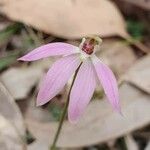
Caladenia catenata
White Fingers · White Caladenia
Description
Source: leafsnapCaladenia catenata, commonly known as white caladenia, white fingers and lady's fingers, is a plant in the orchid family Orchidaceae and is endemic to New South Wales, Queensland and Victoria. It is a ground orchid with a single hairy leaf and one or two white, sometimes pink flowers on a thin, sparsely-hairy stem. It is similar to Caladenia carnea but lacks the red and white bars on the labellum of that species.
Care Guide
💧 Water Every 7 days
Lady fingers, originally from moisture-rich environments, thrive with stable humidity and consistent watering, ideally once a week. Usually grown indoors for their ornamental value, they flourish when the soil moisture matches their seasonal needs, promoting optimal growth and blooming potential.
☀️ Light Full sun
Lady fingers is a sun-loving perennial herbaceous plant that comes from open habitats and is commonly found in meadows and grasslands. It prefers full sun but can also tolerate partial sun.
What are the sunlight requirements for Lady Fingers (Caladenia catenata)?
Lady Fingers (Caladenia catenata) requires full sun to thrive, meaning it should receive above 6 hours of sunlight daily. It can also tolerate partial sun conditions, which entail about 3-6 hours of sunlight. It's important to observe the way sunlight moves through your garden throughout the day. Choosing spots that offer a healthy balance of sunlight and shade will ensure the plants remain happy and healthy.
🌡️ Temperature 20–35°C
Lady fingers originates from areas where temperatures commonly range from 68 to 95 °F (20 to 35 ℃). It prefers warmer conditions and may require a warmer indoor environment during colder seasons.
What is the native environment of Lady Fingers?
Lady Fingers, with the botanical name Caladenia catenata, is native to environments where temperatures commonly range between 68 to 95 °F (20 to 35 °C). This indicates that the plant thrives in warmer conditions, thus suggesting a preference for such climates. During colder seasons, it may require maintenance in a warmer indoor setting to ensure its health and growth.
💨 Humidity
🪴 Soil 6-7
🌱 Fertilizer
The best time to fertilize Lady fingers is in early spring, as it emerges from dormancy and begins active growth. Fertilizer supplies essential nutrients for healthy development. While Lady fingers requires relatively little fertilization, applying fertilizer yearly can improve its survival and encourage better, longer-lasting blooms.
🪴 Pot & Repot
✂️ Pruning
Lady fingers have slender, finger-like leaves and delicate flowers. To encourage growth, prune the plant from late winter to early spring during its dormant period. Be sure to remove any dead foliage, but avoid heavy pruning to prevent stress. This approach improves air circulation and promotes healthy blooming in the following season.
🌿 Propagating
🐛 Diseases & pets
☠️ Toxicity
Characteristics
- Plant Type
- Herb
- Life Cycle
- Perennial
- Genus
- Caladenia
- Family
- Orchidaceae
- Hardiness Zone
- 9-10
- Mature Height
- 10 cm to 30 cm
- Mature Spread
- 5 cm to 10 cm
- Leaf Color
- Green
- Leaf Type
- Evergreen
- Flower Color
- Pink, White
- Flower Size
- 2.54 cm
- Bloom Time
- Early spring, Mid spring
- Planting Time
- Spring, Summer
- Harvest Time
- Late spring, Early summer
- Native Area
- Indonesia