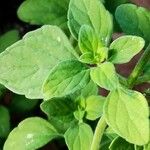
Calamintha nepeta
Lesser calamint · Mountain Balm · Mountain Mint · Calamint · Field balm
Description
Source: leafsnapCalamintha nepeta, commonly known as lesser calamint, is a perennial herbaceous plant belonging to the mint family. Native to Europe and Asia, this plant has been utilized for medicinal purposes for centuries. It can grow up to 60 cm tall, featuring small, fragrant, green-grey leaves. Its small flowers, which bloom from June to September, are either white or pale pink. Calamintha nepeta thrives in well-drained soil and can grow in full sun or partial shade. It is a hardy plant, capable of tolerating drought conditions once established, though it requires regular watering during the growing season. The leaves of Calamintha nepeta have a pleasant aroma reminiscent of mint with hints of oregano and thyme. These leaves can be used fresh or dried as a culinary herb in salads, soups, and stews, or brewed into an infusion for tea. Beyond its culinary applications, Calamintha nepeta has a history of medicinal use. It is known for its carminative properties, which help in treating digestive issues such as bloating and gas. Additionally, its anti-inflammatory properties make it beneficial for treating respiratory conditions like asthma. Overall, Calamintha nepeta is an attractive ornamental plant with a variety of uses, making it an excellent addition to both aesthetically pleasing garden beds and functional herb gardens.
Care Guide
💧 Water Every 7 days
☀️ Light Full sun
Lesser calamint thrives when given abundant light, similar to the conditions of its native habitat. Too little or too much light can harm its growth. Its sunlight needs remain the same throughout all stages of development.
🌡️ Temperature 5–35°C
Lesser calamint is native to temperate climates and favors temperatures from 41 to 95 °F (5 to 35 ℃). Seasonal adjustments may be required to keep conditions within this range, supplying warmth in winter and cooling in summer.
💨 Humidity
🪴 Soil 6-7
🌱 Fertilizer
The best time to fertilize a Lesser calamint is in early spring, as it comes out of dormancy and begins active growth. Fertilizing supplies essential nutrients needed for healthy development. Although Lesser calamint has relatively low fertilizer requirements, an annual application can improve its survival and encourage better, longer-lasting flowers.
🪴 Pot & Repot
✂️ Pruning
🌿 Propagating
🐛 Diseases & pets
☠️ Toxicity
Characteristics
- Plant Type
- Herb, Shrub
- Life Cycle
- Perennial
- Genus
- Calamintha
- Family
- Lamiaceae
- Hardiness Zone
- 5-9
- Mature Height
- 46 cm
- Mature Spread
- 30 cm to 61 cm
- Leaf Color
- Green, Gray, Silver
- Leaf Type
- Semi-evergreen
- Flower Color
- Lavender
- Flower Size
- 2.54 cm
- Bloom Time
- Early summer, Mid summer
- Planting Time
- Spring
- Harvest Time
- Mid summer, Late summer
- Native Area
- Turkey, Austria, Czech Republic, Cyprus, Bulgaria, Armenia, Greece, Croatia, Ukraine, Russia, Germany, Portugal, Syria, Italy, Spain, Switzerland, Iran, United Kingdom, Hungary, France