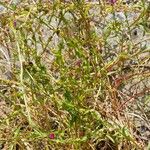
Calandrinia ciliata
Red-maids · Fringed redmaids · Desert rockpurslane · Desert rock purslane · Fringed red maids
Description
Source: leafsnapCalandrinia ciliata, commonly known as Redmaids or Rock Purslane, is a low-growing perennial plant that belongs to the Portulacaceae family. Native to South America, it has been introduced and naturalized in many regions worldwide. The plant features succulent leaves that are either green or reddish-purple and can grow up to 10 cm in length. Its bright pink or magenta flowers bloom from spring through summer. Redmaids thrive in well-drained soil with full sun exposure but can also tolerate partial shade. These drought-tolerant plants require minimal watering once established and can be propagated by seeds or cuttings. Redmaids have several medicinal applications, including treating skin conditions like eczema and psoriasis, reducing inflammation, improving digestion, and boosting the immune system. In landscaping, Redmaids are excellent ground covers for rock gardens and dry landscapes due to their low-growing nature and drought tolerance. Their vibrant flowers also attract pollinators such as bees. Overall, Calandrinia ciliata is a beautiful plant that offers many benefits. It's an attractive option for ground cover in gardening and serves as a natural remedy for various ailments.
Care Guide
💧 Water Every 3 days
Desert Rockpurslane, which originates from arid regions, is exceptionally drought-tolerant. It requires deep watering only once a week. To mimic its natural environment, it's important to ensure the plant is kept in dry conditions. Often seen in rock gardens or xeriscapes, this plant's succulent-like leaves help it retain moisture, making it highly efficient at conserving water.
☀️ Light Full sun
Desert Rockpurslane does best with plentiful sunlight, since its native habitat is characterized by such exposure. Adequate light is important for healthy growth, while insufficient light can stunt its development. Conversely, excessive exposure can potentially harm the plant.
What are the sunlight requirements for Desert Rockpurslane?
Desert Rockpurslane requires full sun, which means it thrives best when exposed to more than 6 hours of sunlight daily. It's essential to observe how sunlight moves through your garden to identify areas that provide a balance of light and shade, ensuring the plant's health. This plant naturally prefers abundant sunlight, as seen in its native habitat, making adequate light crucial for its growth. However, it is equally important to be mindful of overexposure, which can harm the plant.
How can artificial lighting benefit indoor Desert Rockpurslane plants?
Indoor Desert Rockpurslane plants benefit significantly from artificial lighting, especially when natural sunlight is insufficient. Artificial lights can promote faster and healthier growth by providing the necessary wavelengths of light. LED lights are preferred due to their efficiency and ability to be customized for specific plant needs. The optimal artificial light intensity varies with plant requirements; full sun plants need 30-50W/sq ft, partial sun require 20-30W/sq ft, and full shade plants need 10-20W/sq ft. Positioning the light source 12-36 inches from the plant and providing 8-12 hours of light daily can mimic natural sunlight conditions, aiding in the plant's growth.
What are the symptoms of light deficiency or overexposure in Desert Rockpurslane?
Desert Rockpurslane may show several symptoms when experiencing light deficiency or overexposure. Light deficiency can lead to smaller leaves, leggy growth, faster leaf drop, slower or halted growth, and pale or chlorotic leaves. Conversely, overexposure to sunlight might result in sunscald, leaf curling, wilting, leaf scorching, and chlorosis, indicating damage to the plant's leaves or stem and reducing its overall health. These symptoms serve as vital indicators of the plant's need for an adjustment in light exposure.
How can you address light-related issues in Desert Rockpurslane?
To address light-related issues in Desert Rockpurslane, a gradual adjustment to the desired sunlight exposure is recommended. For indoor plants, moving them to a sunnier spot each week or using artificial light, like a desk or ceiling lamp for at least 8 hours a day, can improve conditions. Outdoor plants should be relocated gradually to avoid sunburn, allowing them to receive at least 6 hours of direct sunlight a day. Reducing obstructions and possibly transplanting to ensure better sunlight exposure and drainage are effective strategies for ground plants. It's important to note that while damaged parts may not recover, new growth will be healthy with proper light adjustment.
🌡️ Temperature 15–35°C
Desert Rockpurslane originates from habitats where temperatures range from 68 to 95 °F (20 to 35 ℃). It performs best in those temperate conditions. To replicate its natural environment, keep a consistent temperature within that range year-round.
What are the ideal temperature conditions for growing Desert Rockpurslane?
Desert Rockpurslane is originally from environments where temperatures range between 68 to 95 °F (20 to 35 °C), and it thrives best within these temperate conditions. To ensure healthy growth, it's important to maintain a consistent temperature within this range throughout the year. Although Desert Rockpurslane has strong cold resistance, special frost protection measures are usually not necessary during winter. However, if winter temperatures are expected to drop below -15°C, it's crucial to provide cold protection by covering the plant with materials such as soil or straw. Additionally, watering the plant abundantly before the first freeze in autumn is recommended to ensure the soil remains moist and enters a frozen state, which helps prevent drought and water scarcity for the plant during winter and early spring.
How does low temperature affect Desert Rockpurslane, and what should I do?
Desert Rockpurslane is cold-tolerant and thrives best when the temperature is above 20°C. During winter, it's essential to keep the plant above 0°C. If the temperature falls below -15°C, you might not notice any changes during winter, but there may be a decrease in sprouting, or there may not be any sprouting at all during springtime. In spring, it's advisable to remove any parts of the plant that have failed to sprout as a solution to this issue.
How does high temperature affect Desert Rockpurslane, and what are the solutions?
During summer, it's important to keep Desert Rockpurslane below 35°C. If the temperature exceeds 41°C, the plant may show signs of stress, such as the leaves becoming lighter in color, prone to curling, susceptible to sunburn, and in severe cases, the entire plant may wilt and become dry. To address these issues, trim away the sunburned and dried-up parts of the plant. Moving the plant to a location that provides shade from the midday and afternoon sun, or using a shade cloth can offer protection. Also, watering the plant in the morning and evening to keep the soil moist will help alleviate stress from high temperatures.
💨 Humidity
🪴 Soil 6-7
🌱 Fertilizer
After most of Desert Rockpurslane’s blooms have fully opened, resume fertilizing. When the flowers are at peak production, feed every three to four weeks, as weather allows. Then, once Desert Rockpurslane begins producing fewer new blooms, stop fertilizing; there’s no need to apply fertilizer when the plant can’t produce additional blooms.
🪴 Pot & Repot Every 12 months
✂️ Pruning
To keep Desert Rockpurslane healthy and thriving, it's best to prune it from early to late spring. Focus on removing dead or damaged stems to improve airflow and promote growth. Trimming any long, leggy stems will help maintain a compact shape and stimulate more blooms, which boosts the plant's overall health. Always use clean, sharp tools and make cuts above leaf nodes to prevent infections.
🌿 Propagating
🐛 Diseases & pets
☠️ Toxicity
Characteristics
- Plant Type
- Herb
- Life Cycle
- Annual, Perennial
- Genus
- Calandrinia
- Family
- Montiaceae
- Hardiness Zone
- 7-10
- Mature Height
- 1 cm to 18 cm
- Mature Spread
- 10 cm to 40 cm
- Leaf Color
- Green, Dark Green
- Leaf Type
- Evergreen
- Flower Color
- Pink
- Flower Size
- 2.54 cm to 5.08 cm
- Bloom Time
- Mid spring, Late spring, Early summer, Mid summer
- Planting Time
- Spring
- Harvest Time
- Summer, Early fall
- Native Area
- Colombia, Mexico, Guatemala, Bolivia, Venezuela, Peru, El Salvador, Ecuador