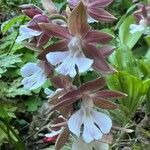
Calanthe discolor
Common calanthe
Description
Source: leafsnapCalanthe discolor is a species of orchid. It is native to Korea, Japan (including Nansei-shoto), and China (Anhui, Fujian, Guangdong, Guizhou, Hubei, Hunan, Jiangsu, Jiangxi, Zhejiang). It is a well-known species found in Japan, the southern part of Korea and China. Its vernacular name in Japanese, ebine, (海老根) means "shrimp-root" in reference to the shape of the plant's pseudobulbs and root system.
Care Guide
💧 Water Every week
The Calanthe orchid flourishes in high-humidity environments, similar to its natural tropical rainforest habitat. To support its optimal growth, it needs to be watered weekly to maintain consistent moisture levels. As an evergreen plant, it retains its leaves throughout the year.
☀️ Light Partial sun
The Calanthe orchid needs specific light conditions, similar to a spot with dappled sunlight. In its original habitat it flourished under filtered light. Too much or too little sun can impede the plant's growth and overall health.
What are the sunlight requirements for Calanthe orchid?
Calanthe orchid thrives in partial to full sunlight, requiring about 3-6 hours of sunlight daily. It's essential to observe the movement of sunlight through your garden to select the best spots providing a balance of light and shade. Its native habitat favors dappled sun, making it crucial to mimic such conditions by avoiding too much or too little sun, as it can impact the plant's growth and health adversely.
How important is artificial lighting for Calanthe orchid, and how should it be used?
Artificial lighting is vital for the Calanthe orchid's growth, especially when natural sunlight is insufficient, like in winter or less sunny spaces. Using artificial lights such as LED, which can be customized to provide specific light wavelengths, helps promote healthier growth. Full sun plants require 30-50W/sq ft, partial sun plants need 20-30W/sq ft, and full shade plants need 10-20W/sq ft of artificial light. The light source should be placed 12-36 inches above the plant, simulating natural sunlight as closely as possible for 8-12 hours per day.
What are the symptoms of inadequate light for Calanthe orchids, and how can one address them?
When Calanthe orchids receive insufficient light, they may display symptoms such as smaller new leaves, leggy or sparse growth, faster leaf drop, slower or halted growth, pale new leaves, chlorosis, sunscald, leaf curling, wilting, and leaf scorching. Optimizing growth involves shifting plants to sunnier spots gradually, using artificial light if needed, and adjusting outdoor plants' exposure to sunlight carefully to avoid sunburn. For plants affected by insufficient light, new growth post-adjustment should return to healthy.
🌡️ Temperature 15–37.8°C
The Calanthe orchid is native to areas with temperatures between 59 and 100.4 °F (15 and 38 °C). It grows well under comparable conditions in cultivation. Seasonal temperature changes may be necessary to mimic its natural habitat.
What are the ideal temperature conditions for a Calanthe orchid?
The Calanthe orchid is native to environments with temperatures ranging from 59 to 100.4°F (15 to 38°C), thriving in similar conditions when grown in captivity. It can adapt to seasonal temperature changes to mimic its natural habitat. The orchid has a notable cold resistance, meaning it generally does not require special frost protection measures during the winter. However, in cases where temperatures are forecasted to drop below -15°C, it is crucial to protect the plant from the cold using insulation materials such as soil or straw. Additionally, it is beneficial to water the plant abundantly before the first freeze of autumn to ensure the soil remains moist and frozen, aiding in the prevention of drought and water scarcity during the winter and early spring months.
How does low temperature affect Calanthe orchid, and what are the remedies?
Calanthe orchids are cold-tolerant and generally thrive when temperatures are above 15°C. During the winter, it's best to keep them above -10°C. Should temperatures fall below -15°C, though there may not be immediate noticeable effects during the winter, a decline in sprouting or a failure to sprout at all might be observed in the spring. The recommended remedy for such a scenario is to remove any parts of the plant that have failed to sprout in the spring, thereby promoting healthy growth and recovery.
What should be done if a Calanthe orchid experiences high temperatures?
During the summer, it's crucial to maintain the temperature below 38°C for Calanthe orchids. Exposure to temperatures above 43°C can lead to the leaves becoming lighter in color, curling, becoming susceptible to sunburn, and in extreme cases, the entire plant might wilt and dry out. To mitigate these issues, sunburned and dried parts of the plant should be trimmed away. Relocating the plant to an area that provides shade during the midday and afternoon sun or employing a shade cloth can offer necessary protection. Additionally, watering the plant in the morning and evening will help keep the soil sufficiently moist, further helping to combat the effects of high temperatures.
💨 Humidity
🪴 Soil 6-7
🌱 Fertilizer
The best time to fertilize a Calanthe orchid is in early spring, as it emerges from dormancy and starts active growth. Fertilization supplies essential nutrients needed for healthy development. Although the Calanthe orchid has relatively low fertilizer requirements, fertilizing annually can enhance its survival and encourage better, longer-lasting flowers.
🪴 Pot & Repot
✂️ Pruning
The Calanthe orchid is a vibrant plant that thrives when given proper care. In spring, pruning dead leaves and spent flower spikes can boost growth and flowering while also preventing disease. Timely pruning improves air circulation, which supports the plant's overall health and recovery.
🌿 Propagating
🐛 Diseases & pets
☠️ Toxicity
Characteristics
- Plant Type
- Herb
- Life Cycle
- Perennial
- Genus
- Calanthe
- Family
- Orchidaceae
- Hardiness Zone
- 7-11
- Mature Height
- 10 cm to 49 cm
- Mature Spread
- 10 cm to 49 cm
- Leaf Color
- Green
- Leaf Type
- Semi-evergreen
- Flower Color
- Pink, White
- Flower Size
- 0.25 cm to 0.51 cm
- Bloom Time
- Early spring, Mid spring
- Planting Time
- Spring
- Harvest Time
- Late spring, Early summer
- Native Area
- South Korea, Japan, China