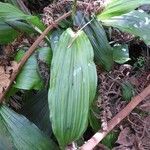
Calanthe sylvatica
Bhakti
Description
Source: leafsnapCalanthe sylvatica is a species of orchid. It is native to tropical and southern Africa from Sierra Leone to Tanzania to South Africa, as well as Madagascar, Comoros, Mauritius and Réunion.
Care Guide
💧 Water Every week
The forest-dwelling calanthe flourishes in humid tropical conditions and needs consistent moisture to maintain its lush foliage. It requires weekly watering, although it can tolerate brief dry spells. However, it's important to monitor soil moisture carefully to support its evergreen growth year-round.
What is the most effective way to water my calanthe that lives in the forest?
The watering needs for your Forest-dwelling calanthe depend on its growth phase and the weather conditions. During the active growth phase, you should water the soil and occasionally spray water over the leaves if it's warm outside. In winter or cool, wet weather, stick to watering the soil directly and avoid overhead watering. If the roots and leaves of your plant become dry, discolored, or thin, it's a sign that it needs more water. On the other hand, if your Forest-dwelling calanthe receives too much water, it will appear mushy and limp. To grow this plant successfully, use a well-draining potting mix and make sure the pot has good drainage. During the growing season, you'll need to water the plant multiple times per week, ensuring that each watering drains quickly. The size of the pot will determine the frequency of watering, with larger pots needing less frequent watering. For optimal results, use rainwater or distilled water that matches the temperature of the air.
What should I do if I give my Forest-dwelling calanthe plant too much or too little water?
To prevent killing your Forest-dwelling calanthe, avoid letting it sit in overly wet soil. These plants need regular watering during active growth, but they also require well-draining soil. If you overwater your plant, it will become mushy and develop root rot. In such cases, use sterilized pruning shears to remove any rotted roots before repotting in a container with good drainage and fast-draining potting mix. However, excessive repotting can harm this plant, so be careful. If your Forest-dwelling calanthe becomes underwatered, it will shrivel and feel dry. In this case, the soil is drying out faster than expected, so you should water more frequently.
How much should I water my Forest-dwelling calanthe?
During the spring and summer months (active growth stage), water your Forest-dwelling calanthe once or twice per week. If the weather is particularly hot and dry, increase the watering frequency to three times per week or more. In the winter, you still need to water your plant, but not as much. Watering two to three times per month should be sufficient during the coldest months. However, if you keep your calanthe indoors during winter, be aware that indoor locations can cause the soil to dry out faster. In this case, you may need to increase the number of monthly waterings. In the fall, gradually reduce the watering frequency from multiple times per week in the summer to your reduced winter watering schedule.
What things should I think about when watering my Forest-dwelling calanthe at different times of the year and when it's growing?
When planning the watering schedule for your Forest-dwelling calanthe, it is important to consider two growth phases. The first phase is the active growth period, which occurs in spring and summer. During this time, the plant needs to be watered multiple times per week. The second phase is the rest period, which lasts for about two to three months during winter. During this rest period, the plant requires significantly less water and fertilization. Watering once or twice per month is sufficient. In the fall, you should gradually decrease the frequency of watering from multiple times per week to once or twice per month, which is appropriate for the winter season.
How do I water my indoor Forest-dwelling calanthe plants?
The Forest-dwelling calanthe needs a humid environment to grow. But indoor growing areas usually lack enough moisture for this plant. As a result, the plant and its soil dry out faster than when grown outdoors. To counter this, it's helpful to have a humidifier in the room where you grow the Forest-dwelling calanthe. You may also need to water it more often. However, keep in mind that while the plant prefers humidity, it also needs good air circulation to prevent excessive moisture and diseases. Consider using a fan in the growing room to ensure proper airflow.
☀️ Light Partial sun
The forest-dwelling calanthe prefers locations with a mix of sun and shade, often thriving beneath the forest canopy. Although it can survive in full shade or full sun, either extreme can affect its health, potentially causing weakened growth or sparse flowering.
What are the sunlight requirements for a Forest-dwelling Calanthe?
The Forest-dwelling Calanthe requires about 3-6 hours of sunlight, which is considered partial sun, to thrive optimally. It can also survive in full sun conditions which is above 6 hours of sunlight, as well as in full shade. However, the plant appreciates a balance of sun and shade, often flourishing under the coverage of a forest canopy. Both full shading conditions and complete exposure to the sun can affect its health, possibly leading to weakened growth or sparse flowering. It's important to watch how sunlight moves through your garden, choosing spots that provide the perfect balance for your plants.
How can artificial lighting be used for indoor Calanthe plants?
Indoor Forest-dwelling Calanthe plants require adequate lighting for optimal growth, especially when natural sunlight is insufficient, like during winter or in less sunny spaces. Artificial lights can provide a vital solution, with LED lights being a popular choice. They can be customized to offer the specific wavelengths of light that plants need for photosynthesis. Full sun plants need 30-50W/sq ft, partial sun plants 20-30W/sq ft, and full shade plants 10-20W/sq ft of light. To mimic natural sunlight, place the artificial light source 12-36 inches above the plant and ensure it receives 8-12 hours of light per day.
What are the signs of insufficient light in a Forest-dwelling Calanthe?
Forest-dwelling Calanthe shows several symptoms when exposed to insufficient light, including the growth of new leaves that may be smaller in size, leggy or sparse growth, faster leaf drop, and either slowed or completely halted new growth. Additionally, insufficient sunlight can lead to lighter-colored new leaves, chlorosis (where leaves lose their green color and turn yellow), sunscald, leaf curling, wilting, and leaf scorching. These symptoms help identify when the plant is not receiving adequate light for its health and growth.
What can be done to adjust light conditions for a Forest-dwelling Calanthe?
To optimize light conditions for a Forest-dwelling Calanthe, gradually shift the plant to increasingly sunnier spots each week until it receives the adequate 3-6 hours of direct sunlight daily. This gradual adaptation helps the plant adjust to changing light conditions. If the plant is large or not easily movable, consider using artificial light. A desk or ceiling lamp can be left on for at least 8 hours daily, or professional grow lights can be invested in for ample light. For outdoor plants, gradually moving them to better sunlight spots and avoiding sudden changes in light intensity is crucial. If the plant has been affected by insufficient sunlight, parts that are damaged may not recover, but new growth will be healthy post-adjustment.
🌡️ Temperature 20–37.8°C
The forest-dwelling calanthe is native to habitats with temperatures from 68 to 100 °F (20 to 38 ℃). This range matches its preferred climate. Seasonal adjustments may be necessary if temperatures fall below or rise above this range.
What is the ideal temperature range for Forest-dwelling calanthe?
Forest-dwelling calanthe, or Calanthe sylvatica, thrives in environments where temperatures range from 68 to 100 °F (20 to 38 °C). This plant is native to forest environments where such temperatures align with its preferred climate. Both seasonal adjustments and careful monitoring are necessary to maintain temperatures within this range for optimal growth.
How should Forest-dwelling calanthe be cared for during winter?
During winter, special care is needed for Forest-dwelling calanthe, especially if the minimum temperature drops below 0°C. It is recommended to bring the plant indoors to ensure it stays within its ideal temperature range. Maintaining an indoor temperature above 20°C, placing the plant near a south-facing window for ample sunlight, and using methods to maintain humidity such as misting the plant or using a humidifier are beneficial practices. For plants that need to overwinter outdoors, ensuring they are in a sheltered position that receives sunlight and utilizing a temporary greenhouse or wrapping with materials like plastic film or fabric can provide necessary protection.
What are the symptoms of low temperature exposure in Forest-dwelling calanthe?
When Forest-dwelling calanthe is exposed to temperatures lower than its tolerance, it exhibits symptoms like extensive water-soaked necrosis, wilting, and drooping of the leaves, especially when temperatures fall below -5°C. This indicates the plant’s intolerance to cold and the necessity for warmer conditions to thrive.
What steps should be taken if Forest-dwelling calanthe suffers from low temperature exposure?
If Forest-dwelling calanthe suffers from exposure to low temperatures, the frostbitten areas should be trimmed off immediately. The plant should then be brought indoors to a warm environment to protect it from the cold. It's best to place it near a south-facing window for ample sunlight. Additionally, the plant should not be placed near heaters or air conditioning vents to avoid excessive dryness in the air, which could further stress the plant.
How does high temperature affect Forest-dwelling calanthe?
Forest-dwelling calanthe should be kept below 100°F (38°C) during summer. Exposure to temperatures above 109°F (43°C) can halt its growth, and the leaves may gradually wilt. The plant becomes more susceptible to issues like root rot and can be easily sunburned if exposed to direct sunlight for prolonged periods.
💨 Humidity
🪴 Soil 5-6
🌱 Fertilizer
Proper fertilization is essential for the health and appearance of Forest-dwelling calanthe. Fertilize the Forest-dwelling calanthe in summer, repeating the treatment once a month throughout the season. Nutrients supply energy for growth and support the plant’s tissues. Regular fertilizing improves the Forest-dwelling calanthe’s flower display, helping it achieve the best blooms.
Why should I add fertilizer to my Forest-dwelling calanthe plant?
Fertilizer and soil nutrients are like fuel for your Forest-dwelling calanthe, helping it grow healthy. Plants use nutrients from the soil to develop new plant material and maintain their existing components. Fertilization is especially important for this plant to achieve its best flower display. Since the flowers are the main attraction, it is important for gardeners to do their best to ensure the flowers look their finest. Fertilizing is a reliable method to help your Forest-dwelling calanthe produce the best blooms.
When should I fertilize my Forest-dwelling calanthe?
The Forest-dwelling calanthe has two main phases each year. The first phase is the dormant phase, which happens in winter and involves minimal new growth. The second phase is the active growth phase, occurring in spring and fall, when the plant requires the most fertilization. It is generally recommended to start fertilizing your Forest-dwelling calanthe in the spring, feeding it once a month until most of the summer. As fall approaches, you can reduce the rate of fertilization.
When should I not fertilize my Forest-dwelling calanthe plant?
To successfully support the growth of your Forest-dwelling calanthe, it's important to avoid root burn. During the active growth phase of spring and summer, the plant requires additional nutrients. However, in the fall and winter when the plant enters dormancy, it is necessary to cease fertilization.
What kind of fertilizer does my Forest-dwelling calanthe plant need?
Forest-dwelling calanthe plants benefit from a fertilizer that contains a balanced mix of the three main nutrients, with slightly more phosphorus. Another option is to improve the soil by adding organic materials like compost, worm castings, or manure. There are various types of fertilizers available, and most will work well for these plants. However, liquid or powdered forms are particularly effective. Whichever type you choose, make sure to dilute the fertilizer and apply it while watering your calanthe.
How can I give my Forest-dwelling calanthe plant the right kind of plant food?
Before learning how to apply fertilizer for your Forest-dwelling calanthe, make sure you have found the right fertilizer and know the ideal fertilization schedule. The most reliable method for feeding your plant is to mix the liquid fertilizer with water before applying it to the soil. Different fertilizers may have specific instructions on how to use them, so it's usually recommended to follow the manufacturer's guidance. These instructions will include details on how to properly dilute the fertilizer to avoid overfertilization. Mixing the fertilizer with water is a simple process, and once done, you can pour the mixture into the soil where your Forest-dwelling calanthe is located.
🪴 Pot & Repot
✂️ Pruning
Forest-dwelling calanthe flourish with the right amount of pruning, which is best done from early to late spring. To encourage new growth and improve air circulation, trim away spent flower spikes and dead leaves. This also helps minimize the risk of disease. Avoid heavy pruning to reduce stress on the plant and to promote better blooming. Refer to horticultural guides for detailed care strategies.
🌿 Propagating
🐛 Diseases & pets
☠️ Toxicity
Characteristics
- Plant Type
- Herb
- Life Cycle
- Perennial
- Genus
- Calanthe
- Family
- Orchidaceae
- Hardiness Zone
- 9-11
- Mature Height
- 76 cm
- Mature Spread
- 30 cm to 40 cm
- Leaf Color
- Green, Blue
- Leaf Type
- Deciduous
- Flower Color
- White, Yellow, Pink, Purple
- Flower Size
- 3.05 cm to 5.08 cm
- Bloom Time
- Mid spring, Late spring, Early summer
- Planting Time
- Spring, Summer
- Harvest Time
- Mid summer, Late summer, Early fall
- Native Area
- Malawi, Angola, South Africa, Zambia, Madagascar, Rwanda, Nigeria, Guinea, Gabon, Kenya, Uganda, Tanzania, Zimbabwe, Sierra Leone, Equatorial Guinea, Cameroon, Burundi, Mozambique, Eswatini, Congo (DRC), Congo