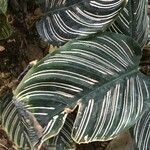
Calathea ornata
Pinstriped houseplant · Pinstriped Calathea · Philodendron Birkin · Pin-stripe Calathea · Zebras back
Description
Source: leafsnapCalathea ornata, also known as the Pinstripe Calathea, is a popular houseplant native to South America. It belongs to the Marantaceae family and is celebrated for its striking foliage. The leaves are dark green with pink stripes running parallel to the veins, while the undersides are a deep purple. This plant thrives in bright, indirect light and prefers consistently moist soil. It does not tolerate direct sunlight or dry soil well and may suffer from leaf burn or wilting if not properly cared for. Under ideal conditions, Calathea ornata can grow up to 2-3 feet in height and width. In the spring, it produces small white flowers, although these are generally considered insignificant compared to its stunning foliage. The plant has gained popularity not only for its unique appearance but also for being relatively easy to care for, especially when compared to other Calathea species that demand higher attention to light intensity and humidity levels. Overall, Calathea ornata is an excellent choice for those seeking an attractive houseplant that requires minimal maintenance, yet adds a touch of elegance and beauty to their living space!
🌳 Pin stripe plant is frequently overlooked for its non-culinary uses, yet it offers considerable aesthetic value used in interior design. The plant’s striking foliage, with distinctive patterns and lush greenery, acts as a natural ornament that brings a touch of nature indoors. This, in turn, aids in improving air quality and psychological well-being. Although mainly an ornamental plant, its potential for broader use in biophilic design, which integrates natural elements into the built environment, represents a significant, multifaceted opportunity.
🎭 A fresh start
Care Guide
💧 Water Every 7 days
Ensure that the soil remains damp to the touch around an inch below the soil surface. Test by sticking a finger into the pot. Rainwater is best, particularly if you live in an area with hard water. Otherwise, allow tap water to stand for a couple of days to allow chemicals to disappear or filter it. Do not use a water softener.
☀️ Light Full shade
The Pin stripe plant does best beneath a canopy where only a small amount of light penetrates. It can tolerate spots where the sun’s rays are slightly diffused. In its native environment it prospers in the shade of larger plants. Too much sunlight causes the leaves to scorch, while too little light leads to slower growth and weaker foliage.
🌡️ Temperature 20–37.8°C
Native to warm tropical habitats, the pin stripe plant needs temperatures between 68 to 100 ℉ (20 to 38 ℃) to flourish. It prefers steady temperatures with high humidity and indirect light. In winter, it's recommended to slightly cut back on watering and lower temperatures.
💨 Humidity high (>60%)
This plant needs special care because it loves high humidity levels of 60-80% or more. The best way to achieve this is by placing a humidifier near the plant. Daily misting is also essential! Make sure the room has good ventilation.
🪴 Soil 5-6
🌱 Fertilizer
The pin stripe plant needs the most fertilizer during its active growth phase, which occurs mainly in spring, summer, and early fall. Fertilizing provides essential nutrients that the soil may lack, supporting healthy root and stem development and maintaining attractive foliage, which is a key feature of this particular plant.
🪴 Pot & Repot 3-4 years
To repot a Pin stripe plant, select a pot slightly larger than the previous one that has good drainage. Repot in spring or fall, using a well-draining potting mix. Set the plant at the same depth as before. Water thoroughly after repotting and place it in a warm spot with bright, indirect light. Avoid watering too often to prevent root rot.
✂️ Pruning
Generally, this plant doesn’t require pruning, but you can take off old leaves if they are yellow to improve the look of the plant.
🌿 Propagating
🐛 Diseases & pets
☠️ Toxicity
Generally regarded as non-toxic to humans and as non-toxic to pets by the ASPCA. It may cause stomach upsets if ingested and is not meant to be consumed by humans or pets.
Characteristics
- Plant Type
- Herb
- Life Cycle
- Perennial
- Genus
- Calathea
- Family
- Marantaceae
- Hardiness Zone
- 10-12
- Mature Height
- 61 cm
- Mature Spread
- 49 cm
- Leaf Color
- Green
- Leaf Type
- Evergreen
- Flower Color
- White, Purple
- Flower Size
- 2.54 cm
- Bloom Time
- Summer, Early fall
- Planting Time
- Spring, Summer, Autumn, Winter
- Harvest Time
- Late summer, Fall
- Native Area
- Colombia, Venezuela