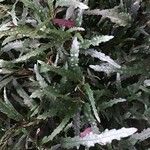
Calathea rufibarba
Furry feather calathea · Fuzzy feather calathea · Velvet Calathea
Description
Source: leafsnapCalathea rufibarba, commonly known as the Velvet Calathea or Furry Feather Calathea, is a tropical plant native to Brazil. Belonging to the Marantaceae family, it is renowned for its striking foliage. The large, oval-shaped leaves exhibit a deep green color on the top and burgundy undersides, giving the plant a distinctive look. The name "Velvet Calathea" comes from the soft, velvety texture of its leaves. This plant thrives in warm, humid environments with indirect light. It prefers well-draining soil that is kept consistently moist but not waterlogged. When mature, Calathea rufibarba can reach heights and widths of 2-3 feet. Beyond its visual appeal, Calathea rufibarba has air-purifying properties, making it an excellent choice for indoor spaces like homes or offices. Overall, this tropical beauty is a fantastic addition to any indoor garden or houseplant collection, thanks to its unique appearance and easy care requirements.
🌳 The Furry Feather Calathea's wide leaves, marked by a distinctive red underside, offer more than visual appeal and could also serve as inspiration for organic paint pigments. While this idea remains theoretical, it suggests a sustainable approach to producing color from the sheen of its foliage.
🎭 Heavenly beings, ascent, breeze
Care Guide
💧 Water Every 7 days
Velvet Calathea is a moisture-loving plant. It will do well with watering once every week. Depending on your climate, you may need to water your plant multiple times per week.
☀️ Light Partial sun
Furry Feather Calathea grows best in spots with moderate sunlight, though it can tolerate lower-light environments. Originating from areas with dense foliage cover, Furry Feather Calathea has adapted to do well even when light is limited. Excessively strong sunlight can cause its leaves to fade, while too little light may hinder its growth.
🌡️ Temperature 20–37.8°C
Furry Feather Calathea favors a warm, humid environment, similar to its native habitat. It performs best in temperatures of 68 to 100 ℉ (20 to 38 ℃). In winter, keep the plant away from cold drafts and maintain temperatures between 60 and 75 ℉ (15 to 24 ℃) to encourage growth.
💨 Humidity high (>60%)
This plant needs special care because it loves high humidity levels of 60-80% or more. The best way to achieve this is by placing a humidifier near the plant. Daily misting is also essential! Make sure the room has good ventilation.
🪴 Soil 5-6
🌱 Fertilizer
The Furry Feather Calathea needs the most fertilizer during its period of active growth, which is mainly in spring, summer, and early fall. Fertilization supplies essential nutrients that the soil might lack, supporting healthy root and stem growth and maintaining the attractive foliage that is a distinctive feature of this particular plant.
🪴 Pot & Repot 3-4 years
When repotting a Furry Feather Calathea, pick a container slightly larger than the previous one that provides good drainage. Repot during spring or fall, using a well-draining potting mix. Plant it at the same depth as before. Water thoroughly after repotting and place the plant in a warm area with bright, indirect light. Avoid overwatering to prevent root rot.
✂️ Pruning
Velvet Calathea does not require much pruning. You can trim the dried or damaged leaves to keep them healthy and neat. Pruning will also help refocus the plant’s energy into sprouting new growth.
🌿 Propagating
🐛 Diseases & pets
☠️ Toxicity
The ASPCA lists all Calathea plants as non-toxic to cats, dogs, and horses. They are also non-toxic to humans. Having said all that, they are not meant to be ingested and may still cause stomach upset.
Characteristics
- Plant Type
- Herb
- Life Cycle
- Perennial
- Genus
- Calathea
- Family
- Marantaceae
- Hardiness Zone
- 10-12
- Mature Height
- 61 cm to 91 cm
- Mature Spread
- 30 cm to 46 cm
- Leaf Color
- Green, Purple
- Leaf Type
- Evergreen
- Flower Color
- White
- Flower Size
- 2.03 cm to 3.05 cm
- Bloom Time
- Summer, Early fall
- Planting Time
- Spring
- Harvest Time
- Late summer, Fall
- Native Area
- Brazil