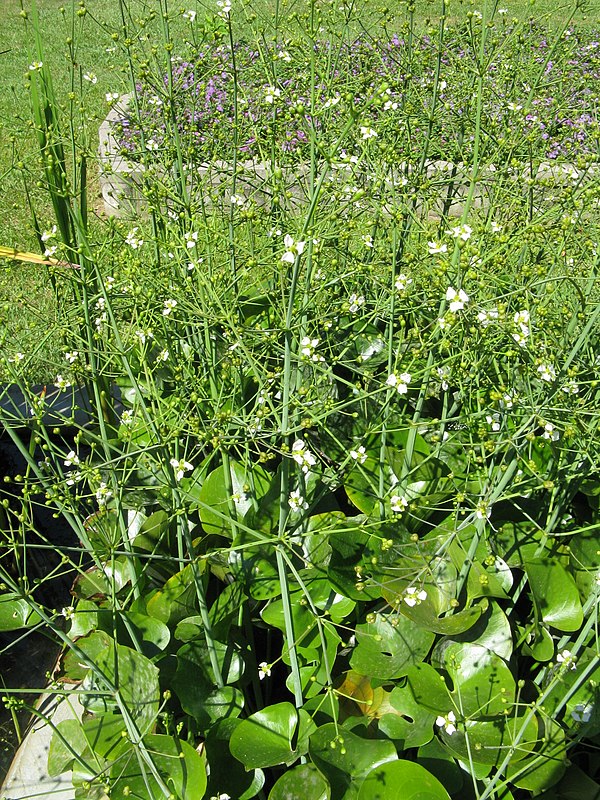
Caldesia parnassifolia
Parnassus-leaved Water Plantain · Parnassus-leaf caldesia · Caldesia
Description
Source: leafsnapCaldesia parnassifolia, is an aquatic species in the Alismataceae. It is found in slow-moving fresh water.
Care Guide
💧 Water
The Parnassus-leaved water-plantain thrives in wetland habitats, where it prefers constant moisture but can tolerate short periods of dryness. It needs to be watered weekly and grows best outdoors near water bodies, which help keep it hydrated. Consistent hydration is crucial for its lush foliage and robust growth during the growing season.
☀️ Light Full sun
Parnassus-leaved water-plantain is native to habitats with abundant sunlight, for example the shallow margins of ponds and lakes. It favors full sun but can also tolerate partial sun.
What are the sunlight requirements for Parnassus-leaved water-plantain?
Parnassus-leaved water-plantain requires full sun, which means it needs above 6 hours of sunlight, but it can also tolerate partial sun conditions, approximately 3-6 hours of sunlight. It's crucial to observe the movement of sunlight through your garden to choose the best spots that offer a balance of light and shade, ensuring the plants receive the right amount of sunlight for optimal growth.
How does artificial lighting support plant growth?
When natural sunlight is not sufficient, especially during winter or in less sunny indoor spaces, artificial lighting becomes essential for plant growth. LED lights are recommended due to their ability to be customized to specific light wavelengths needed by plants. Full sun plants require 30-50W/sq ft, partial sun plants need 20-30W/sq ft, and full shade plants need 10-20W/sq ft of artificial light. The light source should be placed 12-36 inches above the plant to mimic natural sunlight's intensity, and the duration should replicate natural daylight hours, typically 8-12 hours per day for most plants.
What are the symptoms of light deficiency in Parnassus-leaved water-plantain?
Symptoms of light deficiency include smaller new leaves, leggy or sparse growth, faster leaf drop, slower or halted new growth, lighter-colored new leaves, and signs of chlorosis or sunscald. These symptoms indicate insufficient sunlight or excessive sunlight exposure, affecting the plant's ability to photosynthesize and maintain healthy growth. Leaf curling, wilting, and leaf scorching are also common symptoms that manifest under extreme sunlight conditions.
How can I address insufficient sunlight for my Parnassus-leaved water-plantain?
To correct insufficient sunlight exposure, gradually move your plant to a location where it can receive at least 6 hours of direct sunlight daily. Use a south-facing window for indoor plants and keep curtains open during the day. Artificial lights, such as desk, ceiling lamps, or professional grow lights, can provide additional light for at least 8 hours daily. For outdoor plants, finding the best sunlight spot is crucial, and for those grounded, reducing obstructions like pruning trees or transplanting during dormant periods to more sunlit locations can greatly benefit the plant. Remember, newly adjusted growth will be healthy, but parts affected by previous low light may not recover.
🌡️ Temperature 15–35°C
Parnassus-leaved water-plantain can tolerate a wide range of temperatures, but its distribution may still be restricted by particular combinations of moisture and heat. It performs best in warm summers with sufficient rainfall or watering. Long periods of cloudy, rainy weather, as well as extended high temperatures, can make the plant more likely to die. In winter, adequate protection from cold can improve its survival rate.
💨 Humidity
🪴 Soil
🌱 Fertilizer
🪴 Pot & Repot
✂️ Pruning
To help Parnassus-leaved water-plantain thrive, prune it from early to late spring. This encourages growth and prevents overcrowding. Focus on removing dead leaves and improving water circulation to promote better health and flowering. Always sanitize your tools before use to prevent disease, and pay close attention to the plant's water environment needs.
🌿 Propagating
🐛 Diseases & pets
☠️ Toxicity
Characteristics
- Plant Type
- Herb
- Life Cycle
- Perennial
- Genus
- Caldesia
- Family
- Alismataceae
- Hardiness Zone
- 7-10
- Mature Height
- 49 cm
- Mature Spread
- 20 cm to 40 cm
- Leaf Color
- Green
- Leaf Type
- Deciduous
- Flower Color
- White
- Flower Size
- 20.32 cm to 33.53 cm
- Bloom Time
- Summer
- Planting Time
- Autumn
- Harvest Time
- Late summer, Early fall, Mid fall
- Native Area
- India, Austria, Angola, Madagascar, Rwanda, Pakistan, Nigeria, Slovenia, Croatia, Kenya, Uganda, Tanzania, Zimbabwe, Russia, Belarus, Benin, Germany, Indonesia, Cameroon, Burundi, Romania, Botswana, France, Nepal, Malawi, Congo, Zambia, Sudan, Bulgaria, Poland, Bangladesh, Guinea, Ukraine, Serbia, China, Lithuania, Italy, Switzerland, Vietnam, Myanmar, Japan, Senegal, Albania, Hungary, Thailand