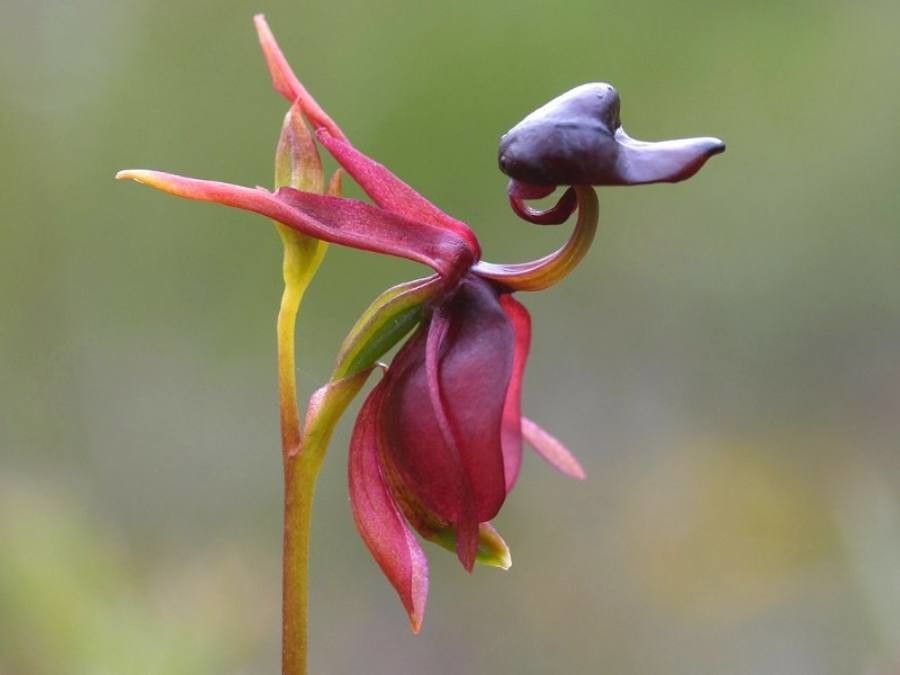
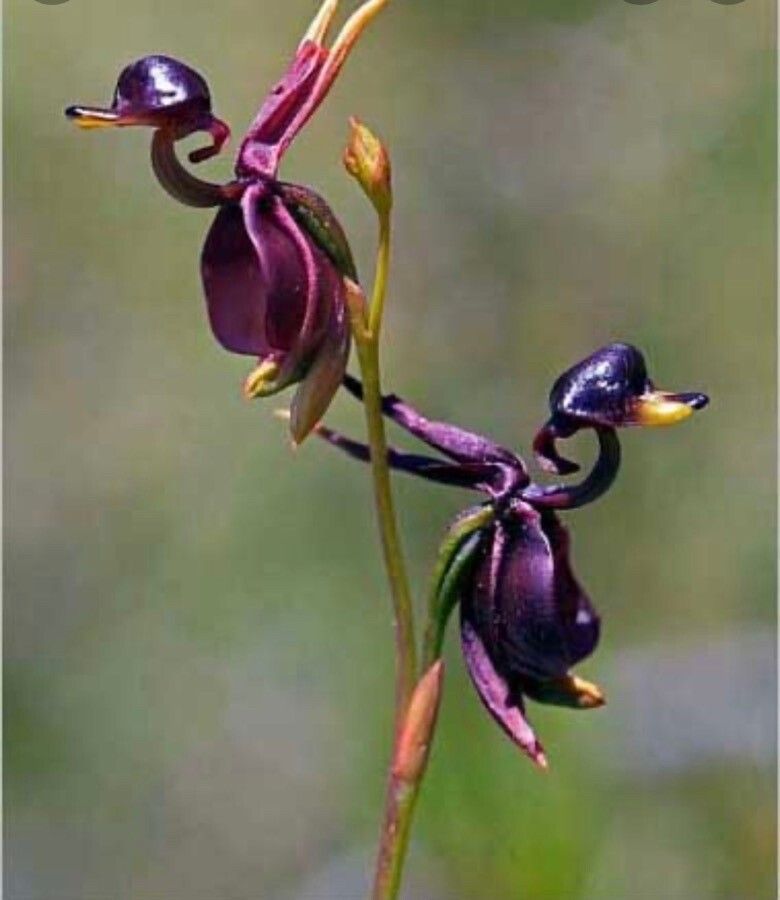
Caleana major, commonly known as the large duck orchid, is a small orchid found in eastern and southern Australia. This terrestrial plant features a remarkable flower, resembling a duck in flight. The flower is an attractant to insects, such as male sawflies which pollinate the flower in a process known as pseudocopulation. In 1986 this orchid was featured on an Australian postage stamp.
The Large flying duck orchid usually shows strong disease resistance and is affected by relatively few insect pests. Its care is regarded as difficult because it needs high humidity while also having good air circulation and minimal harmful pathogens. Overwatering can cause the roots to rot. Although anyone can grow the Large flying duck orchid, keeping it healthy and getting it to bloom again demands greater cultivation experience.
How to keep Caleana Major.
Light
The big flying duck orchid typically thrives in the full sunlight but can also prosper in filtered sun exposure. It flourishes in its original environment where there is plenty of sunlight. Excessive or insufficient exposure to light may impede the vigorous growth of the plant, impacting its health.
Water
The large flying duck orchid thrives in humid environments and requires consistent moisture. It prefers to be watered weekly, ensuring it doesn't become waterlogged. While it has moderate drought tolerance, it is best cultivated outdoors. The orchid benefits significantly from rainwater, especially in regions where precipitation aligns with its natural growing season.
Temperature
The Large flying duck orchid possesses the capability to withstand diverse temperature ranges, although various mixtures of heat and water conditions might still restrict its dispersion. It flourishes optimally in warm weather during summer when there's an abundant supply of rainfall or irrigation. Extended durations of overcast and wet conditions, along with prolonged high temperatures, can heighten the probability of the Large flying duck orchid perishing. During winter, appropriate shielding against the cold can enhance the plant's chances of survival.
Fertilizer
The optimal time to fertilize the Large flying duck orchid is in the early spring when the flowers are developing. The appropriate fertilizer promotes improved blossoms and enables the Large flying duck orchid to generate beautiful flowers. Fertilization in the early spring guarantees superior flowers throughout the season and supplies energy for dormant growth stages.
Pruning
To help your large flying duck orchid thrive, follow these care tips: - Prune any dead or damaged stems in early to late spring. This encourages growth and boosts bloom production. - Handle the plant with care, as it has a delicate structure—avoid heavy pruning. - Remove spent flowers through deadheading. This practice extends the blooming period, reduces the risk of disease, and helps maintain a vigorous shape. - Always use clean, sharp tools for pruning to ensure healthy cuts.
Botanical profile.
- Plant Type
- Herb
- Life Cycle
- Perennial
- Genus
- Caleana
- Family
- Orchidaceae
- Hardiness Zone
- 9-11
- Mature Height
- 20 cm to 52 cm
- Mature Spread
- 5 cm to 10 cm
- Leaf Color
- Green
- Leaf Type
- Deciduous
- Flower Color
- Yellow, Green, Purple
- Flower Size
- 2.54 cm
- Bloom Time
- Mid winter, Late winter, Early spring
- Planting Time
- Spring
- Harvest Time
- Spring
Other names.
Reader questions.
What are the sunlight requirements for the Large flying duck orchid?
The Large flying duck orchid thrives under full sun conditions, requiring more than 6 hours of direct sunlight daily, but can also flourish in partial sun, which is about 3-6 hours of sunlight. It's important to observe the movement of sunlight through your garden to ensure you're providing the right balance of light and shade for the plant's optimal growth. Despite thriving in clear sunlit conditions in its native habitat, overexposure or insufficient light can affect its health negatively.
What is the Large flying duck orchid?
The Large flying duck orchid, known scientifically as Caleana major, is a unique orchid species. It does not have detailed information provided in the essentials or symptoms sections, indicating that the main focus is on its name and botanical classification.
How does artificial lighting aid in the growth of indoor plants?
When natural sunlight is insufficient, especially during winter or in spaces that don't receive enough sun, artificial lighting becomes crucial for indoor plant growth, including the Large flying duck orchid. LED lights are recommended because they can be tailored to supply specific light wavelengths needed by plants. For full sun plants, 30-50W/sq ft of artificial light is needed, for partial sun plants, 20-30W/sq ft, and for full shade plants, 10-20W/sq ft. The light source should be placed 12-36 inches above the plant and kept on for 8-12 hours per day to mimic natural sunlight conditions.
What are the symptoms of light deficiency in the Large flying duck orchid?
Symptoms of light deficiency in the Large flying duck orchid include smaller new leaves, leggy or sparse growth, faster leaf drop, slower or no new growth, lighter-colored new leaves, and several issues related to excessive sunlight like chlorosis, sunscald, leaf curling, wilting, and leaf scorching. These symptoms indicate that the plant either isn't receiving enough sunlight or is getting too much direct exposure.
What solutions can mitigate light-related issues for the Large flying duck orchid?
To address light-related issues in the Large flying duck orchid, gradually move the plant to a sunnier location to ensure it receives at least 6 hours of direct sunlight daily. For indoor plants, use south-facing windows or artificial lighting like desk or ceiling lamps for at least 8 hours a day. Outdoors, carefully transition your plants to sunnier spots while avoiding sudden changes to prevent sunburn. If sunlight is obstructed, consider pruning trees or transplanting the plant to a more sunlit spot with ample sunlight and good drainage. Note that parts of the plant already affected by insufficient sunlight may not recover, but increasing light exposure can promote healthy new growth.