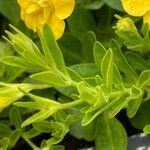
Calibrachoa parviflora
اطلسی کنار دریا · Seaside petunia · Million bells · Superbell · Wild petunia
Description
Source: leafsnapCalibrachoa parviflora, commonly known as Million Bells, is a popular ornamental plant from the Solanaceae family. This low-growing perennial produces an abundance of small, trumpet-shaped flowers in various shades of pink, purple, yellow, and white. With a trailing habit, it can reach up to 30 cm in height and spread up to 60 cm wide. Native to South America, Million Bells has gained worldwide popularity due to its attractive flowers and easy-to-grow nature. It thrives in full sun or partial shade and prefers well-draining soil that is kept moist but not waterlogged. For optimal growth and flowering, Calibrachoa parviflora requires regular fertilization with a balanced fertilizer. Deadheading, or removing spent blooms, will encourage the production of new flowers throughout the growing season. Depending on the climate zone, Calibrachoa parviflora can be grown as an annual or perennial. In regions where frost occurs during winter months, it is best grown as an annual, while in warmer regions, it can be grown year-round. Overall, Calibrachoa parviflora makes a beautiful addition to any garden or container planting. Its vibrant colors and easy-to-grow nature make it perfect for both novice and experienced gardeners alike!
🎭 Bitterness, Ire, Your presence calms me.
Care Guide
💧 Water Every 7 days
The seaside petunia flourishes in coastal areas, where it favors moderate humidity and the occasional sea mist. It needs consistent moisture without becoming waterlogged, benefiting from weekly watering. Being an evergreen plant, regular irrigation is essential to support its vibrant growth and maintain healthy foliage year-round, allowing it to adapt well to seasonal changes.
How should I water my Seaside petunia plant?
To water Seaside petunia, there are various watering tools you can use such as a garden hose with a spray nozzle or a watering can. Seaside petunia is not particularly selective about the type of water it receives, as it can thrive with rainwater, tap water, or filtered water. However, it is generally recommended to avoid watering this plant from above, as it can harm the leaves and flowers and potentially lead to disease. A drip irrigation system is often the best watering method for Seaside petunia as it distributes water evenly and directly to the soil. If you have a Seaside petunia growing in a container, you can still use a similar approach while using tools like a cup, watering can, or tap water to water the plant directly at the soil level.
What should I do if I give my Seaside petunia too much or too little water?
The solution for underwatering Seaside petunia is pretty straightforward. When you realize your plant needs more water, simply start watering it more regularly. On the other hand, overwatering can be much more serious, especially if you don't catch it early. When Seaside petunia is overwatered, it can develop diseases that can cause it to decline and die. To prevent this, it's important to choose a suitable growing spot that gets enough sunlight to dry out the soil and has good drainage to prevent water from pooling and making the soil waterlogged. If your potted Seaside petunia is overwatered, you may need to transfer it to a new pot. The previous container might not have had proper drainage or enough drainage holes. When repotting the overwatered plant, use loose soil and make sure to choose a pot that drains efficiently.
How often do I need to water my Seaside petunia?
To properly care for your Seaside petunia, you need to provide it with regular watering. In the spring, watering once a week is sufficient. However, as the season progresses and temperatures rise, you may need to water two to three times a week. Be careful not to exceed this rate as it can harm the plant. It's important to keep the soil moist, but not wet, regardless of how often you water. When it comes to potted Seaside petunias, the watering needs are slightly different. The soil in pots tends to heat up and dry out faster, so you'll need to water them more frequently. In most cases, plan to water your potted Seaside petunia a few times a week, compared to just once a week for those planted in the ground.
How much water does my Seaside petunia require?
Determining how much water to give your Seaside petunia can be done in several ways. Some gardeners prefer to gauge the moisture level of the soil by feeling it. This method suggests watering until the top six inches of soil feel moist. Another approach is to have a set measurement for watering. In general, Seaside petunias should receive about two gallons of water per week, depending on factors like temperature and soil dryness. However, following this guideline rigidly can result in overwatering if the plant requires less water for some reason. For Seaside petunias grown in containers, a different method is needed. The goal is to moisten all layers of dry soil, which can be verified by sticking a finger into the soil. Another sign is when a slight trickle of excess water emerges from the pot's drainage holes.
How do I know if I am giving enough water to my Seaside petunia?
Taking care of your Seaside petunia can be a bit tricky when it comes to watering. On one hand, these plants have deep roots, so moistening the soil once a week is necessary. However, Seaside petunias are highly vulnerable to root rot, a condition that can be caused by overwatering. Overwatering can also lead to browning of the plant. Underwatering is less likely to be a problem, as Seaside petunias can survive without additional watering for some time. However, if you wait too long to water them, they may start to wilt and the leaves may become dry.
☀️ Light Full sun
Native to areas with abundant sunlight, the seaside petunia naturally requires substantial light. This tendency has a strong effect on its growth. However, too much light can harm the plant, while too little can negatively affect its development. At every stage of growth it needs ample light.
What are the sunlight requirements for Seaside petunia?
Seaside petunia thrives in environments that offer abundant sunshine, needing above 6 hours of sunlight daily to ensure its growth is robust. However, it is crucial to observe your garden's sunlight movement carefully to select locations that provide the perfect balance of light and shade, ensuring your plants' happiness. Overexposure to sunlight can damage the plant, while insufficient light can negatively impact its growth at any stage.
How can artificial lighting support the growth of indoor Seaside petunia plants?
For indoor Seaside petunia plants, when natural sunlight is insufficient, artificial lighting becomes an essential growth support, especially during winter or in less sunny spaces. Optimal growth under artificial light can be achieved by adhering to specific guidelines: selecting the right artificial light type like LED lights for their ability to provide specific wavelengths, ensuring the light intensity is suitable for the plant's needs (30-50W/sq ft for full sun plants), placing the light source 12-36 inches above the plant to mimic natural sunlight, and ensuring plants receive 8-12 hours of light per day to simulate natural daylight hours.
What are the symptoms of insufficient or excessive light exposure in Seaside petunia?
Seaside petunia shows several symptoms when exposed to insufficient or excessive light. Insufficient light may result in smaller new leaves, leggy or sparse growth, faster leaf drop, slower or no new growth, and lighter-colored new leaves. Excessive light exposure can lead to chlorosis, sunscald, leaf curling, wilting, and leaf scorching. These symptoms help in identifying whether the plant needs more light or is suffering from overexposure.
What solutions can help improve light conditions for Seaside petunia?
To improve light conditions for Seaside petunia, consider these solutions: Indoors, gradually move plants to a sunnier location to receive at least 6 hours of direct sunlight daily, or use artificial lighting, like a desk or ceiling lamp for at least 8 hours daily. Outdoors, gradually adapt plants to sunnier spots to avoid sunburn. Reduce obstructions by pruning trees that block sunlight or transplant smaller plants to a sunnier location with ample sunlight and good drainage. While certain parts of the plant affected by insufficient light may not recover, new growth following increased light exposure will be healthy.
🌡️ Temperature 15–35°C
Seaside petunia comes from temperate areas and prefers a comfortable climate with temperatures between 68 and 95 °F (20 to 35 ℃). Extra care is needed during colder seasons, and it is recommended to move the plant or add insulation to keep appropriate warmth.
What is the ideal climate for Seaside Petunia?
Seaside petunia, scientifically known as Calibrachoa parviflora, thrives in temperate regions. It prefers a comfortable climate with temperatures ranging between 68 to 95°F (20 to 35°C). Even though it has strong cold resistance and special frost protection measures are not usually necessary, care must be taken in colder seasons. Repositioning the plant or using insulation to maintain heat levels is advised. In places where winter temperatures can drop below -15°C, providing cold protection by covering the plant with soil or straw is important. Additionally, watering the plant abundantly before the first freeze in autumn to ensure the soil remains moist can help prevent drought and water scarcity during winter and early spring.
How does Seaside Petunia react to low temperatures?
Seaside petunia is cold-tolerant and fares best when the temperature remains above 20°C. It should be kept above 0°C during the winter. If temperatures fall below -15°C, there might not be noticeable changes during the winter, but there can be a decrease in sprouting, or the plant may not sprout at all during springtime. To manage this, in spring, remove any parts of the plant that have failed to sprout.
What should I do if the Seaside Petunia experiences high temperatures?
Seaside petunia should ideally be kept below 35°C during summer to prevent heat stress. If temperatures exceed 38°C, the leaves can become lighter in color, curl up, and the plant may suffer from sunburn. In severe cases, the entire plant could wilt and dry up. To mitigate this, trim away the sunburned and dried-up parts. Move the plant to a location that offers shelter from the midday and afternoon sun, or use a shade cloth for protection. It's also beneficial to water the plant in the morning and evening to keep the soil moist and facilitate cooling.
💨 Humidity
🪴 Soil 6-6
🌱 Fertilizer
When most Seaside petunia blooms have fully opened, resume fertilizing. During the period of peak flowering, apply fertilizer every three to four weeks, weather permitting. When the Seaside petunia begins producing fewer new blooms, stop fertilizing; there's no need to feed it if it can no longer form additional flowers.
Why should I use fertilizer on my Seaside petunia?
Plants, including Seaside petunias, need nutrients to survive. It is well known among gardeners, whether experienced or not, that providing the right type and amount of nutrients is crucial for the plant's success. Without food, Seaside petunias will die out soon after pollination. Fertilizer plays a vital role in helping Seaside petunias develop a strong and healthy root system. This is particularly important as the plant naturally has a thin and easily damaged root system. By fertilizing at planting, Seaside petunias are able to establish a solid foundation that not only adds stability to the plant but also sets the stage for a magnificent blooming season. When timed correctly, fertilization can significantly extend the duration of Seaside petunia's flowering period.
When should I give my Seaside petunia fertilizer?
Seaside petunia experiences rapid growth once the last frost is no longer a threat. This is the best time to fertilize the plant, preferably during planting. Apply fertilizer when first planting the petunia, whether in the ground or in planters. This will be the sole fertilizing session until later in the year when the plant is in full bloom. Once the season is in full swing and the Seaside petunia has bloomed at its full size, it's time to resume fertilizing. Begin fertilizing every three to four weeks, depending on the weather, when the blooms are at their peak output. When the petunia starts producing fewer new blooms, stop fertilizing as there is no need to continue when the plant can't produce more blooms.
When should I not put fertilizer on my Seaside petunia?
Regular fertilizing is important for Seaside petunia, but it can be applied at the wrong time. There are certain situations where it's better to hold back on fertilizer. These situations are usually related to the climate, but they can also be caused by other factors that we can control. When there's something wrong with the plant, the soil, or the climate, it's best to wait until things improve and the plant has recovered before applying fertilizer. For example, if there are sudden severe weather changes, like a cold snap in the middle of summer, it's better to wait until it's warm again to start fertilizing. The same goes for when the soil is too dry or compacted, as the fertilizer would just go straight to the roots instead of being absorbed by the soil first. This is not ideal for the roots of Seaside petunia. It's also not recommended to apply fertilizer during the hottest parts of the day, when temperatures are in the 90-degree Fahrenheit range. This is because the heat can break down the fertilizer too quickly. Lastly, any pests or diseases should be treated and cleared up before reapplying fertilizer.
What kind of fertilizer does my Seaside petunia require?
Most types of Seaside petunia require a specific balance of nutrients, which can be provided by a fertilizer formulated for high-yield blooming plants. The best option is a fertilizer with a higher phosphorus level, indicated by a higher P number in its NPK number (e.g. 10-30-10). Thankfully, there are several fertilizer brands that sell products perfect for blooming plants like Seaside petunia, making it easy to provide the necessary nutrients. However, if opting for a pre-mixed fertilizer, it is important to follow the package instructions to avoid over or under fertilizing the Seaside petunia, as these can both negatively impact the plant's growth and even cause wilting.
How do I make my Seaside petunia grow better?
When it comes to fertilizing Seaside petunia, the instructions may vary depending on the type of fertilizer you have. However, there are some general tips to follow. When you initially plant the Seaside petunia, it is recommended to mix the appropriate amount of fertilizer into the soil before planting and then water the petunia. For subsequent fertilizing, the process may be slightly different depending on the type of fertilizer. If you are using pellet fertilizers, you can simply mix the pellets into the top inch of soil around the outer edge of the plant where the roots are. Make sure to water them thoroughly initially and then water regularly afterwards. For other fertilizers, you can mix them into a watering can and apply them like regular watering. It is important to follow any instructions on the fertilizer packaging for consistency. If you prefer a regular schedule, aim to fertilize every three to four weeks.
🪴 Pot & Repot
✂️ Pruning
The seaside petunia is known for its vibrant flowers and benefits greatly from regular pruning. Light pruning in early spring helps remove any damage and shapes the plant. In contrast, a more substantial pruning later in the season controls its size and promotes denser growth. Additionally, regular deadheading enhances blooms by preventing legginess and encouraging healthy growth.
🌿 Propagating
🐛 Diseases & pets
☠️ Toxicity
Characteristics
- Plant Type
- Herb
- Life Cycle
- Annual, Perennial
- Genus
- Calibrachoa
- Family
- Solanaceae
- Hardiness Zone
- 7-9
- Mature Height
- 40 cm
- Mature Spread
- 91 cm
- Leaf Color
- Green, Blue
- Leaf Type
- Semi-evergreen
- Flower Color
- Pink, Purple, White
- Flower Size
- 2.54 cm to 5.08 cm
- Bloom Time
- Mid spring, Late spring, Summer, Fall
- Planting Time
- Spring
- Harvest Time
- Late spring, Summer, Fall, Early winter
- Native Area
- Mexico