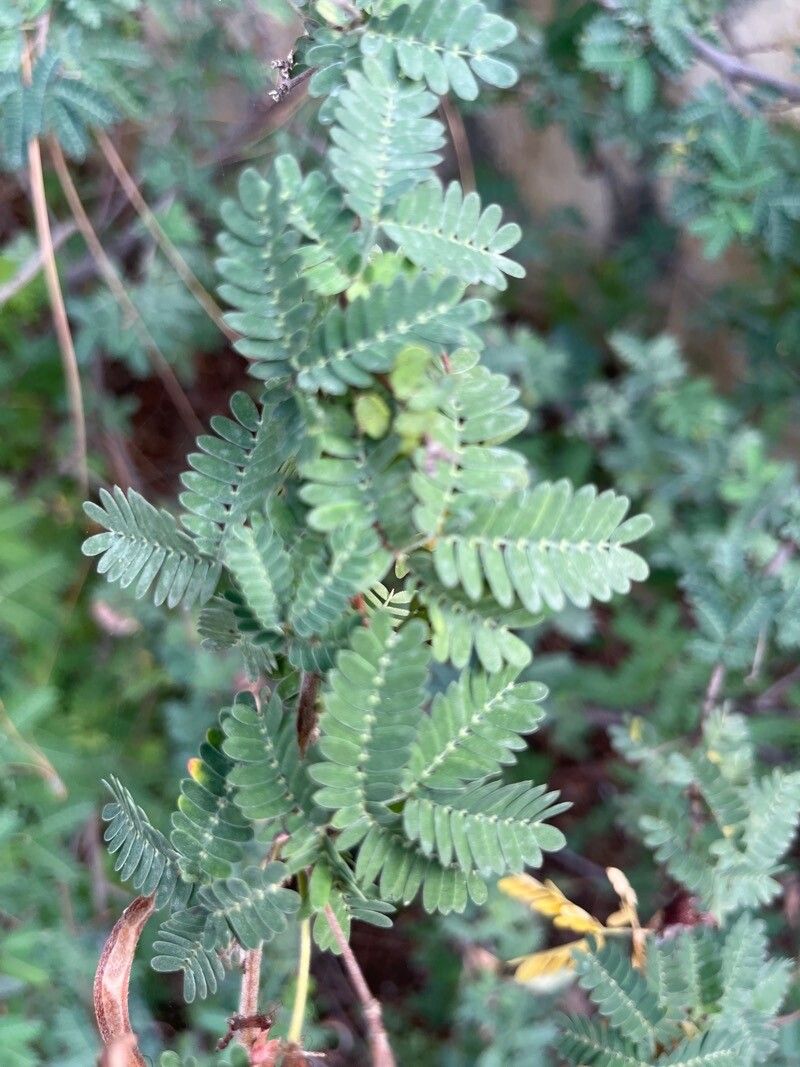
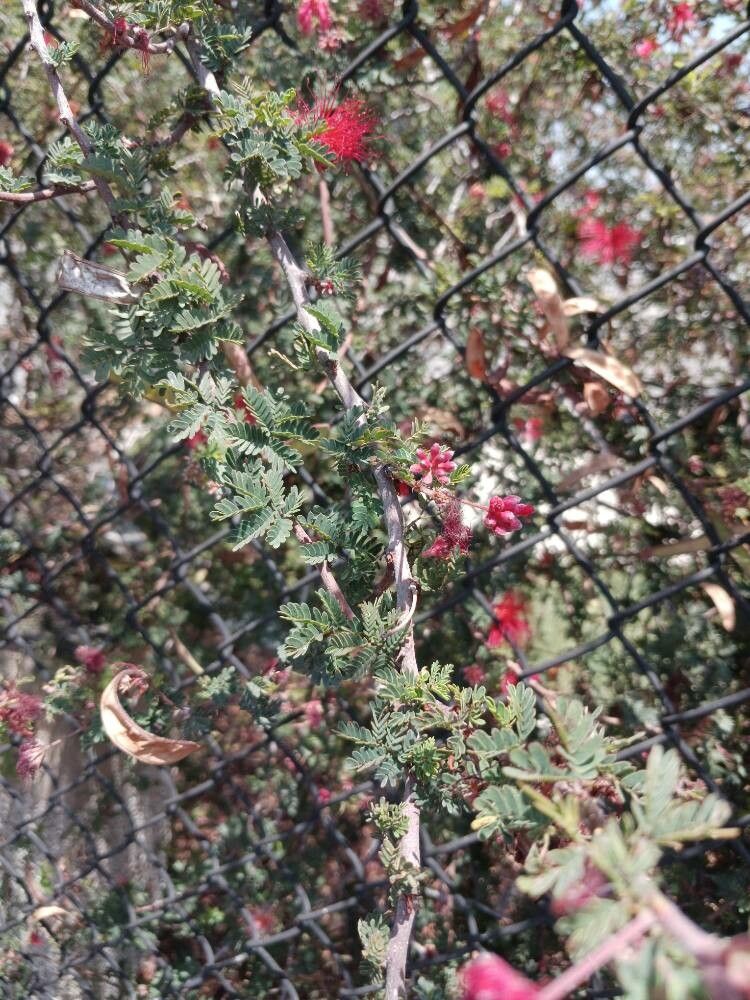
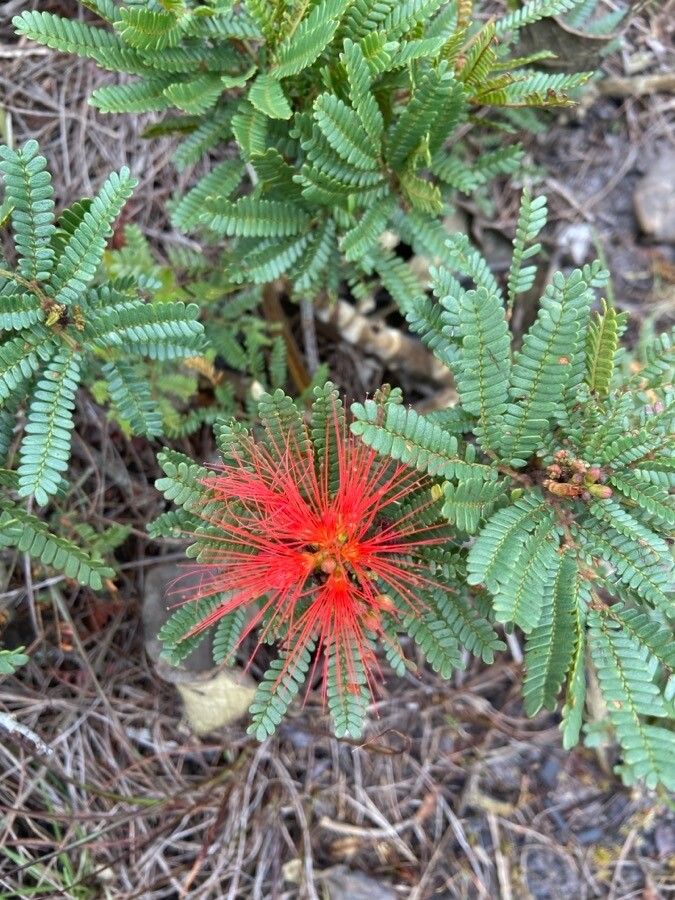
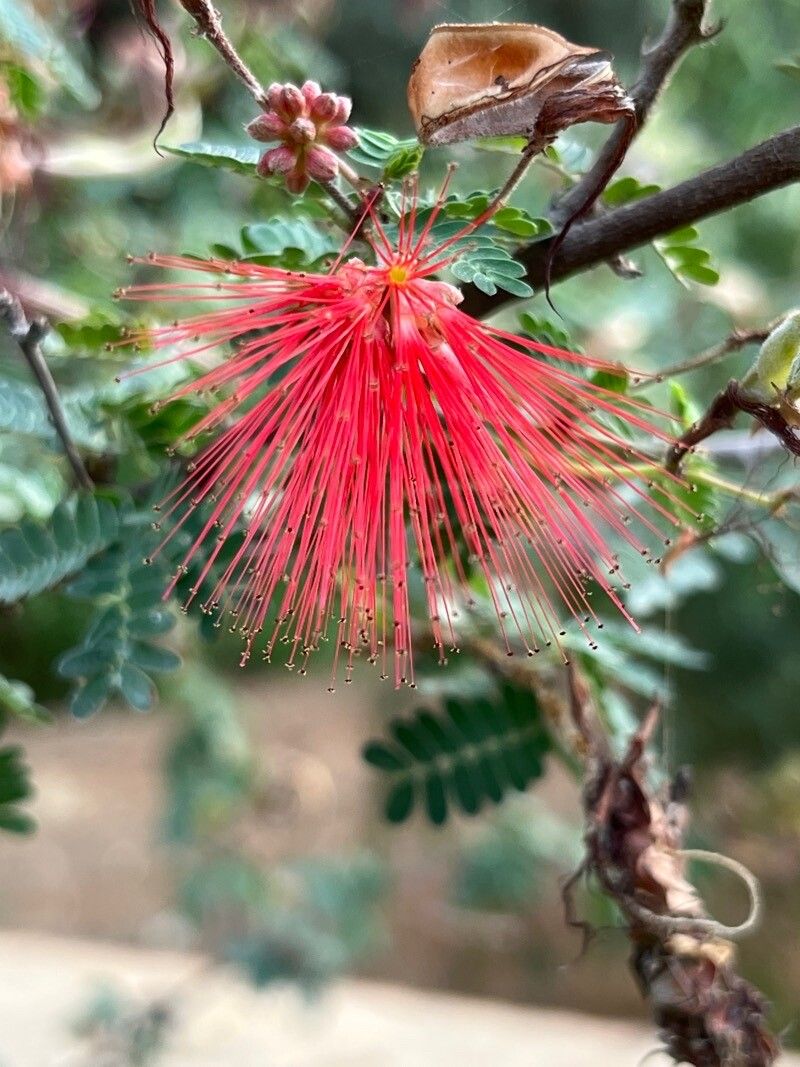
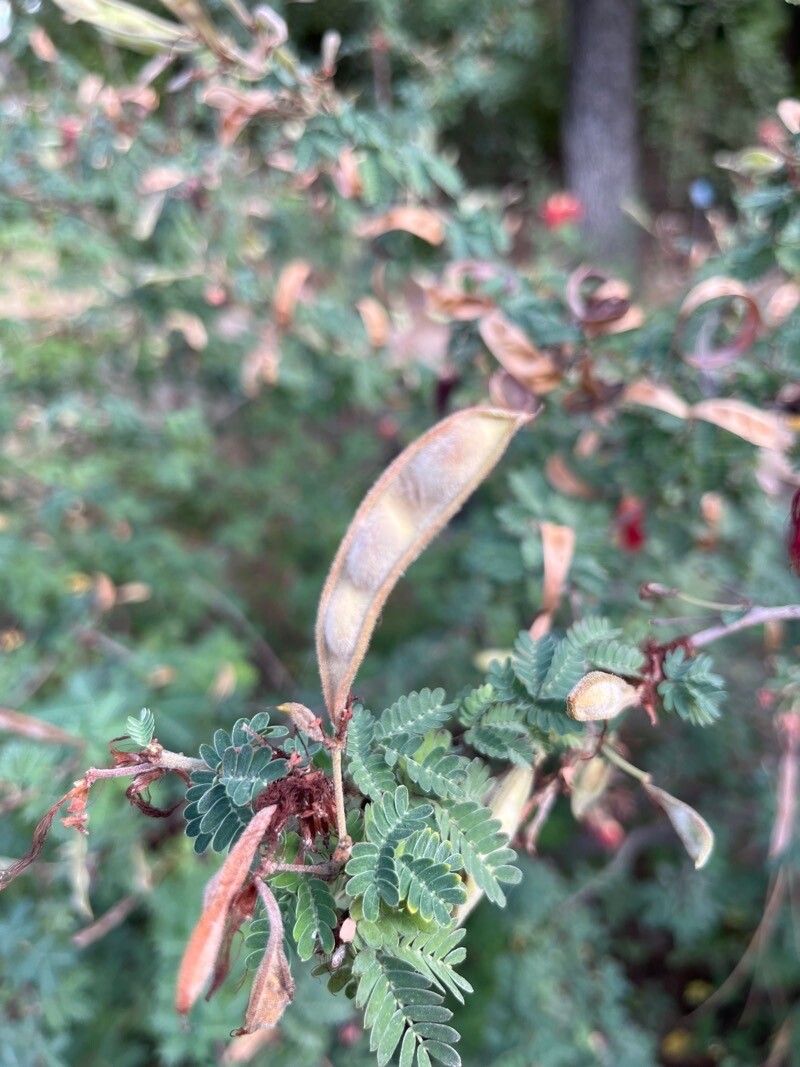
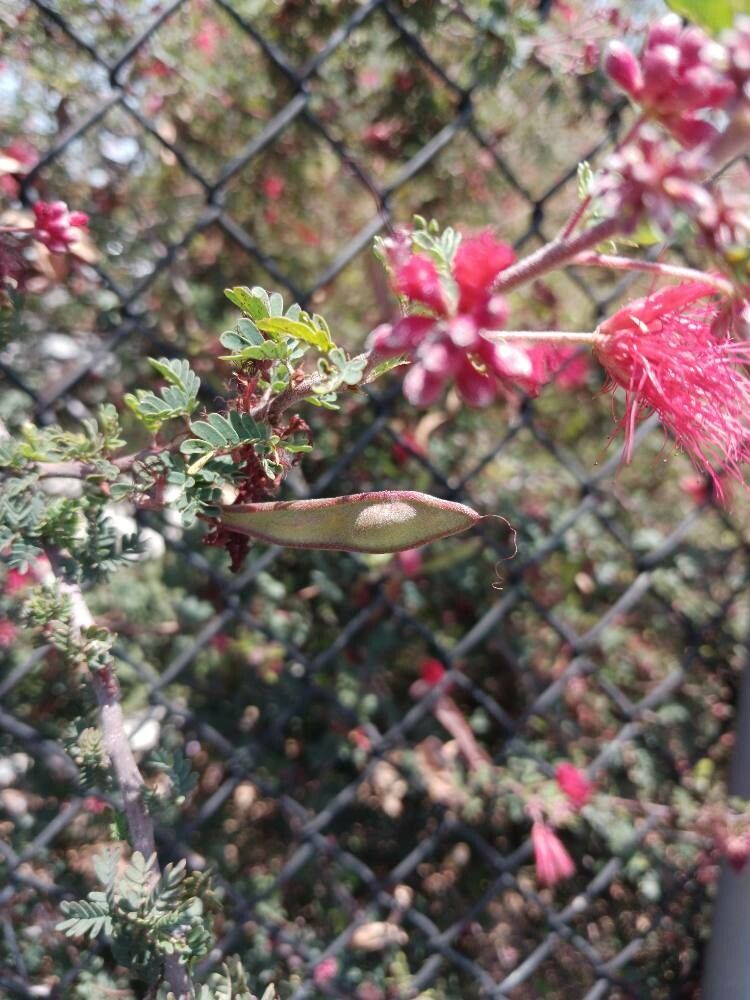
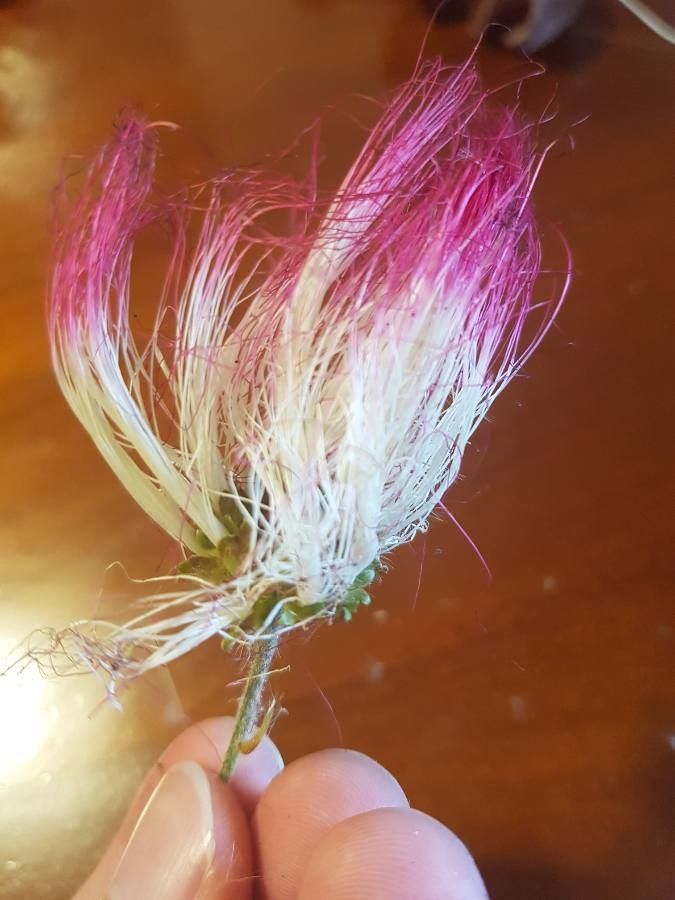
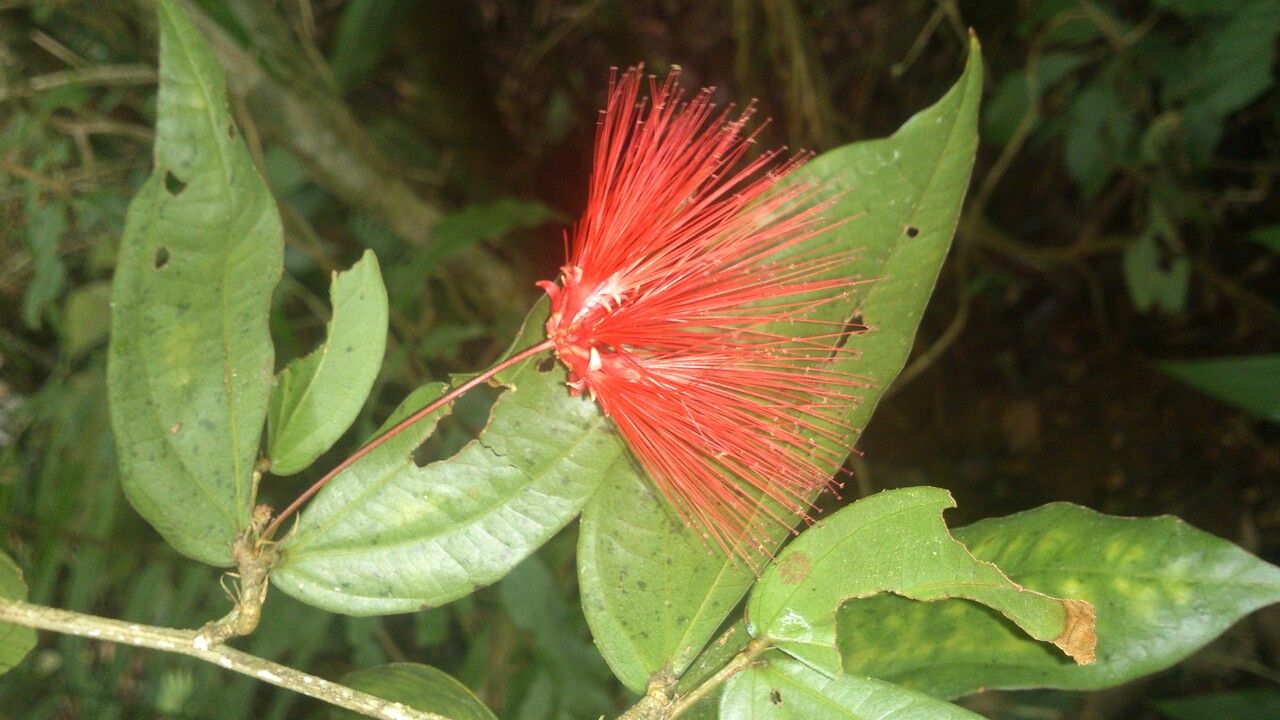
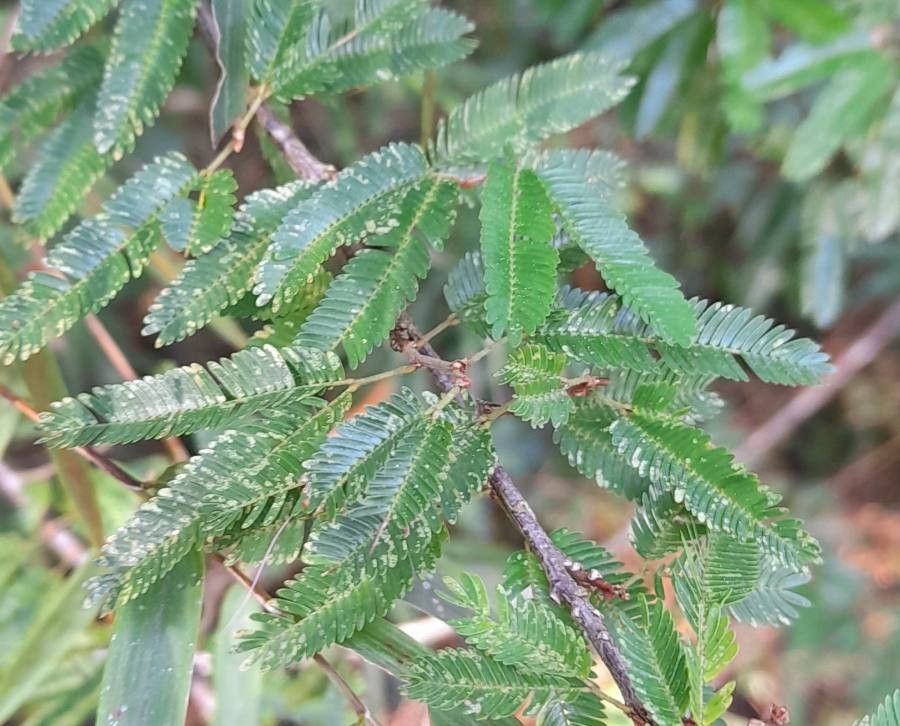
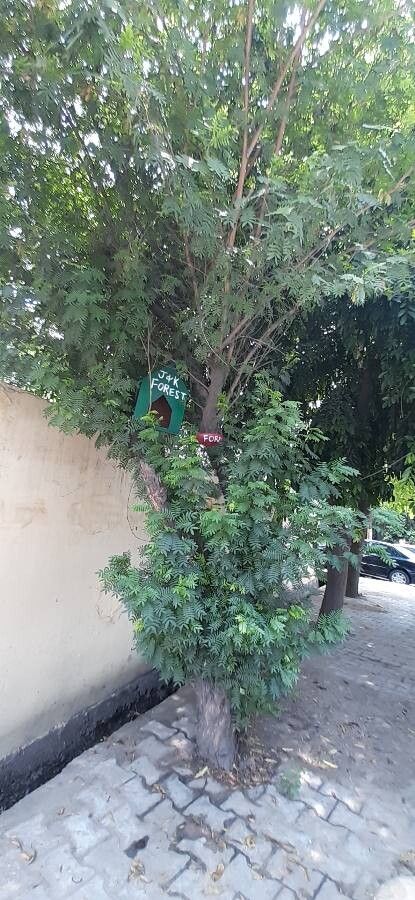
Calliandra californica, commonly known as Baja fairy duster, is a shrub native to California and Baja California. It belongs to the pea family and can grow up to 6 feet tall and wide. The plant features small, feathery green-gray leaves and produces bright red flowers that bloom in the spring and fall. The flowers, which resemble puffballs with long stamens protruding from the center, attract hummingbirds for pollination.
Once established, Calliandra californica is drought-tolerant, though it prefers well-drained soil with regular watering during its growing season. Due to its attractive foliage and showy flowers, it is commonly used as an ornamental plant in gardens, adding vibrant color to any landscape design.
Tabardillo has strong resistance to disease and is typically not susceptible to illnesses. As for care, this plant is fairly low-maintenance. When grown outdoors it needs little watering, and larger plants generally do not require pruning. Smaller plants, however, should be pruned after they finish blooming. Tabardillot is appropriate for anyone with an outdoor area, such as a garden or deck, and does not demand much prior plant-care experience.
How to keep Calliandra Californica.
Light
Tabardillo thrives when it receives abundant sunlight. In its native habitat it is used to plenty of light. If it lacks sufficient sun, it can experience stunted growth and weak flowering. Conversely, too much exposure can cause leaf burn.
Water
Tabardillo thrives in arid environments with minimal water, showing a strong tolerance to drought. It requires watering only once every two weeks and prefers dry soil. Well-suited for outdoor growth and xeriscaping, tabardillo is both resilient and low-maintenance, making it an ideal choice for landscapes that require less irrigation.
Temperature
Tabardillo is fairly adaptable to temperature, tolerating high heat and considerable temperature fluctuations. In hot weather, attention should be given to watering and providing suitable shade to avoid sunburn. Conversely, Tabardillo is relatively intolerant of low temperatures. It can handle some cold, but very cold conditions may cause frost damage.
Fertilizer
The timing of fertilization is important for Tabardillo. Apply fertilizer in early spring and continue monthly until early summer. Fertilizer encourages lovely blooms and supplies energy during both dormant and active growth phases.
Pruning
Tabardillo is known for its vibrant red flowers and fern-like foliage. For the best results, it’s important to carefully prune the plant in late spring after it has finished blooming. Key pruning techniques include selectively thinning the plant and removing any dead or crossed branches. This helps improve air circulation and light penetration, promoting healthier growth and more abundant blooms.
Pot & Repot
Repot Tabardillo every 2 to 3 years in the spring to encourage growth. Choose a larger pot that offers good drainage, and water the plant moderately to keep the soil moist without overwatering. After repotting, place Tabardillo in bright, indirect light to help it recover successfully.
Botanical profile.
- Plant Type
- Shrub
- Life Cycle
- Perennial
- Genus
- Calliandra
- Family
- Fabaceae
- Hardiness Zone
- 9-11
- Mature Height
- 1.52 m
- Mature Spread
- 1.52 m
- Leaf Color
- Green
- Leaf Type
- Evergreen
- Flower Color
- Red
- Flower Size
- 2.54 cm to 5.08 cm
- Bloom Time
- All year round
- Planting Time
- Spring, Summer, Autumn
- Harvest Time
- All year round
- Native Area
- Mexico
Other names.
Reader questions.
What are the sunlight requirements for Tabardillo (Calliandra californica)?
Tabardillo (Calliandra californica) thrives best when exposed to full sun, which means it requires more than 6 hours of direct sunlight daily. However, it can also tolerate partial sun conditions, getting about 3-6 hours of sunlight. It's crucial to observe the movement of sunlight through your garden to identify spots that offer the right balance of light and shade, ensuring the plant's health and happiness. In its natural habitat, Tabardillo is accustomed to basking in ample sunlight, and without sufficient exposure, it may experience stunted growth and poor blooming. Conversely, too much direct sunlight can lead to foliage burn.
What is Tabardillo?
Tabardillo, known botanically as Calliandra californica, is a species with a specific focus or significance, though the details on its essentials or symptoms are not provided in the available information. Further research might be needed to fully understand its characteristics or applications.
How can I supplement sunlight for Tabardillo indoors with artificial lighting?
For Tabardillo plants grown indoors where natural sunlight is inadequate, especially during winter or in less sunny spaces, artificial lighting can be a crucial solution. Optimal growth is achieved by adopting artificial lights that promote faster, healthier growth. LED lights are recommended because they can provide specific wavelengths needed by your plants. Full sun plants require 30-50W/sq ft, partial sun plants need 20-30W/sq ft, and full shade plants require 10-20W/sq ft of artificial light. The artificial light should be placed 12-36 inches above the plant, emulating natural sunlight. Additionally, to mimic natural daylight hours, most plants will need between 8-12 hours of artificial light each day.
What are the signs of insufficient or excessive sunlight in Tabardillo?
Tabardillo shows various symptoms when it gets too little or too much sunlight. Insufficient sunlight can lead to smaller new leaves, leggy or sparse growth, faster leaf drop, halted growth, lighter-colored leaves, and chlorosis. On the other hand, excessive sunlight exposure can cause sunscald, leaf curling, wilting, and leaf scorching, demonstrating the delicate balance Tabardillo needs between enough light for growth and too much light, leading to damage. It's essential to monitor these signs to adjust the plant's exposure to sunlight or shade accordingly.
How can I address issues with sunlight exposure for my Tabardillo?
For indoor Tabardillo plants, gradually move them to sunnier locations each week until they receive at least 6 hours of sunlight daily. Utilize a south-facing window and keep curtains open for maximum exposure. If your plant is large or not easily movable, consider using artificial light, keeping a desk or ceiling lamp on for at least 8 hours daily or investing in professional plant grow lights. Outdoors, adjust your Tabardillo's spot for better sunlight gradually to avoid sunburn. If shadows from trees block sunlight, prune obstructing branches. For smaller plants, consider transplanting them during their dormant period to a sunnier location with good drainage. Remember, while parts of the plant that suffered from insufficient sunlight may not recover, new growth will be healthy with improved light conditions.