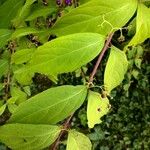
Callicarpa americana
American beautyberry · American beauty-berry · Beauty-berry · French-mulberry · Turkey berry
Description
Source: leafsnapCallicarpa americana, commonly known as American beautyberry, is a deciduous shrub native to the southeastern United States. Typically reaching a height of 3 to 6 feet, it has an upright growth habit. The plant is renowned for its striking clusters of bright purple berries that appear in the fall and persist into winter. Its leaves are simple, opposite, ovate in shape, and have serrated edges. Beyond its ornamental appeal, American beautyberry has a long history of medicinal use by Native Americans. The leaves were traditionally brewed into a tea to treat fever and rheumatism, while the roots were used as an emetic or purgative agent. Today, extracts from the plant are being studied for their potential in treating cancer due to their high levels of antioxidants called flavonoids, which have shown anti-inflammatory properties that may help prevent cancer cells from forming or spreading. Overall, Callicarpa americana is not only an attractive shrub with ornamental value but also one with potential medicinal benefits, making it a popular choice among gardeners seeking both beauty and functionality in their landscaping.
🌳 American beautyberry is an important food source for pollinators, offering nectar-rich flowers that attract bees and butterflies. Additionally, the plant’s vivid berries can be turned into a natural dye, highlighting its usefulness in crafts. This largely underexplored use has potential for sustainable, eco-friendly textile coloring, linking traditional knowledge with modern ecological awareness.
🎭 Insight, readiness, decorum, gravity, grief
Care Guide
💧 Water Every 7 days
The American beautyberry, native to the humid southeastern United States, thrives in environments with consistent moisture but can tolerate moderate drought. To maintain its health and vibrant berries and foliage, water the plant every 1-2 weeks. Additionally, apply mulch to help retain moisture during dry periods, especially during its growing season.
When should I water my American Beautyberry?
Proper and timely watering of the American Beautyberry is vital for its growth, vibrant flower production, and disease resistance. You should monitor the soil's moisture level by inserting your finger about 1 to 2 inches into the soil near the plant's base. If it feels dry, it's time to water. Look for signs such as wilting leaves, changes in leaf color to yellow or brown, and a lack of new growth. These indicators suggest the plant needs water. During extreme heat and drought conditions, the watering frequency should be increased. However, be cautious of over-watering as it can lead to risks like fungal diseases and root rot, while delayed watering can cause wilting or even plant death. Understanding these signs will help you manage your watering schedule to ensure the health and longevity of your American Beautyberry.
How should I water my American Beautyberry?
The American Beautyberry, or Callicarpa americana, thrives in moist but well-drained soil. It's susceptible to root rot and water-borne diseases if water stagnates. Therefore, the best watering method is using a watering can with a long spout to target the base without wetting the foliage, which could lead to fungal diseases. Using a moisture meter can help determine the right moisture level, ensuring the plant is adequately watered without overdoing it. Focus on watering the base of the plant while avoiding the berries and foliage to minimize the risk of fungal diseases.
How much water does American Beautyberry really need?
The American Beautyberry, native to the humid regions of the southeastern United States, requires a specific quantity of water that mimics its natural habitat's heavy, but consistent rainfall. For potted plants, thorough watering until the top inch of soil is moist usually suffices. The plant's leaves should appear vibrant and springy if properly hydrated. Failure to meet these needs can lead to signs of stress, such as wilted or yellowing leaves from under-watering, or potential root rot from over-watering. The goal is to replicate the environment it naturally thrives in, based on guidelines from reliable sources.
What kind of water is best for American Beautyberry?
Rainwater is the best option for watering American Beautyberry due to its natural purity and ideal acid level for the plant's slightly acidic soil preference. Distilled or filtered water serves as an acceptable alternative. The plant can tolerate moderate chlorine levels but is best served with water that has had time for chlorine to evaporate. While not specifically sensitive to fluoride, it's advisable to use purified water to avoid potential toxicity. The plant does show sensitivity to hard water with high calcium and magnesium content, so dechlorinated, room-temperature water is recommended to avoid shocking the roots.
How do American Beautyberry's watering needs change with the seasons?
The American Beautyberry's watering needs vary throughout the year, adapting to its growth cycle and environmental conditions. In spring, as the plant exits dormancy and initiates new growth, maintain a consistent moisture level to support development. Summer demands increased watering to counter higher transpiration rates and evaporation. By autumn, reduce watering frequency as the plant slows growth in preparation for dormancy. In winter, minimal watering is required to prevent root rot, focusing on keeping the soil slightly moist without becoming waterlogged.
☀️ Light Full sun
The american beautyberry flourishes in locations where sunlight reaches it directly, although it can also tolerate sites with a moderate amount of light. This characteristic allows it to grow healthily. A substantial decrease or increase in light can affect its health, diverging from the light conditions of its original habitat.
What are the sunlight requirements for American beautyberry?
The American beautyberry, botanically known as Callicarpa americana, flourishes under conditions where it can receive ample sunlight, necessitating above 6 hours of sunlight daily for optimal growth, classified as 'Full sun'. It also performs well in 'Partial sun' conditions, requiring about 3-6 hours of sunlight. However, it is vital to observe how sunlight navigates through your garden, selecting areas that provide a balanced mix of light and shade, which ensures the plant remains healthy and happy.
What essentials should be considered for the growth of the American beautyberry?
To ensure healthy growth of the American beautyberry, it's crucial that the plant is positioned where it can receive sufficient sunlight, although it can withstand moderate sunlight exposure. Any significant deviations from its natural sunlight preferences could adversely affect its health. In situations where natural light is scarce, particularly during winter or in less sunny locations, artificial lighting becomes essential. Indoor plants benefit from artificial lighting, promoting faster and healthier growth. LED lights are commonly recommended, as they can provide specific wavelengths necessary for plant growth. The intensity and duration of artificial lights should be tailored to mimic natural sunlight as closely as possible to meet the plant's needs.
What symptoms indicate light deficiency in American beautyberry?
When the American beautyberry experiences insufficient light, several symptoms can manifest. These include smaller new leaves, indicative of light deficiency; a leggy or sparse growth pattern, where stems extend with excessive spacing; premature leaf drop as a resource conservation measure; reduced or halted growth, signaling survival mode; paler new leaves due to chlorophyll and nutrient deficiencies; and chlorosis, leading to yellowing leaves. Additionally, excessive sunlight can lead to sunscald, leaf curling as a water loss minimization strategy, wilting from dehydration, and leaf scorching, characterized by dry, crispy leaf edges.
How can light conditions be optimized for American beautyberry indoors and outdoors?
Optimizing light conditions for American beautyberry involves strategies tailored to indoor and outdoor environments. Indoors, gradually increasing direct sunlight exposure to at least 6 hours daily or utilizing artificial lighting such as desk or grow lights for a minimum of 8 hours can prove beneficial. Outdoors, the gradual relocation of plants to sunnier spots over weeks is advisable to prevent sunburn. Additionally, reducing obstructions like pruning tree branches can enhance sunlight access. For ground-level solutions, transplanting during the plant's dormant period to a sunny location with good drainage might be necessary. It's important to note that parts of the plant impacted by previous insufficient light might not recover, although new growth following improved light conditions will be healthier.
🌡️ Temperature 10–37.8°C
The American beautyberry is indigenous to the southeastern United States and grows well in a temperate climate. It does best in temperatures between 50 to 100℉ (10 to 38℃) and is able to tolerate seasonal changes. In winter, to cope with colder temperatures it drops its leaves and remains dormant until spring.
What is the native region and preferred climate for the American Beautyberry?
The American Beautyberry, scientifically known as Callicarpa americana, is native to the southeastern United States. It thrives in a temperate climate, preferring temperatures that range from 50 to 100°F (10 to 38°C). This plant is well-adapted to seasonal changes, entering dormancy and shedding its leaves in winter to cope with colder temperatures. Generally, it has strong cold resistance and does not require special frost protection measures unless winter temperatures are expected to drop significantly below its cold tolerance threshold.
How should the American Beautyberry be cared for during winter?
During winter, special care for the American Beautyberry includes ensuring the plant is well-watered before the first freeze of autumn. This helps keep the soil moist and prevents drought and water scarcity through winter and the early spring months. While the plant has strong cold resistance, if temperatures are expected to plummet below its tolerance limit, providing cold protection by wrapping the trunk and branches with non-woven fabric or cloth can be beneficial. This is primarily a precautionary measure to guard against extreme cold.
What are the symptoms of the American Beautyberry being exposed to temperatures below its tolerance, and what are the solutions?
If the American Beautyberry experiences temperatures below its cold tolerance threshold, there might not be any noticeable changes during the winter. However, come spring, the branches might become brittle and dry, failing to produce new shoots. The recommended solution for this issue is to prune away any dead branches that have failed to regenerate in the spring, encouraging healthy new growth.
How does the American Beautyberry react to high temperatures, and how can these issues be mitigated?
In the case of high temperatures, particularly above the beautyberry's maximum tolerance, the plant may show signs of stress such as lighter colored leaves, dry and withered tips, and an increased susceptibility to sunburn. To mitigate these issues, it's advisable to trim away the sunburned and dried-up parts of the plant. Moving the plant to a shadier location or using a shade cloth can provide protection from the harsh midday and afternoon sun. Additionally, watering the plant during the cooler morning and evening hours can help maintain a moist soil environment, which is beneficial for the plant's health.
💨 Humidity
🪴 Soil 5-6
🌱 Fertilizer
Fertilize your American beautyberry in early spring to encourage healthy growth. Regular feeding improves the plant’s overall health, producing vigorous growth, increased tolerance of harsh conditions, and enhanced resistance to pests and diseases. Follow a consistent fertilization schedule for your American beautyberry to maintain vibrant, deeply colored foliage and a lush appearance.
Why should I use fertilizer on my American beautyberry?
Regular fertilization is essential for all types of American beautyberry plants. It helps promote overall plant health by providing the necessary nutrients for robust growth. This, in turn, makes the plant more resilient to challenging growing conditions and better equipped to fight off diseases and pests. Since the foliage of the American beautyberry is one of its most attractive features, it's important to maintain its integrity. To achieve this, it is recommended to establish a consistent fertilization schedule tailored to your specific American beautyberry. This will result in vibrant and lush leaves with a deep color, enhancing the overall appearance of the plant.
When should I put fertilizer on my American beautyberry plant?
To ensure healthy growth, fertilize your American beautyberry during late winter or early spring. This provides necessary nutrients for growth when the weather warms up. Additionally, if you live in a warm climate, it's beneficial to fertilize again during early fall. This not only adds nutrients for the next growing season but also helps the plant survive winter without foliage damage. By fertilizing earlier, new branches will have enough time to grow and withstand the cold.
When is the wrong time to fertilize my American beautyberry?
There are a few specific periods when you should not fertilize your American beautyberry plant. The first is in the early and mid-winter months when the plant is dormant and does not require any feeding. Additionally, it is not recommended to fertilize the plant in the late spring and throughout the summer. These seasons tend to be hotter and drier, which can have a negative impact on the plant if fertilized. To prevent any issues, it is best to follow a fertilization schedule that involves feeding only in the early spring and early fall.
What kind of fertilizer is best for my American beautyberry plant?
In most cases, nitrogen is the most important nutrient for an American beautyberry. However, phosphorus and potassium are still important. It is recommended to provide a balanced fertilizer with a ratio like 10-10-10, as this can meet the plant's needs for all three nutrients. Nevertheless, a more precise nutrient ratio, particularly one with a slightly higher amount of nitrogen, can promote optimal growth for an American beautyberry. A ratio of 10-6-4, for instance, is known to work well. You can choose between granular or liquid-based fertilizers for application.
How should I add nutrients to my American beautyberry plant?
To fertilize your American beautyberry using a granular fertilizer, simply sprinkle it on the soil at the appropriate time. The nutrients in the granular fertilizer will be slowly released into the soil over time. It's generally a good idea to lightly water your American beautyberry before applying the fertilizer. Another option is to use a liquid fertilizer, although this is less common. To do this, mix the fertilizer with water and pour it around the base of your American beautyberry. Occasionally, it's helpful to conduct a soil test before fertilizing to determine if any pH adjustments are necessary.
🪴 Pot & Repot 2-3 years
When repotting American beautyberry, select a pot 1-2 inches (2.5–5.1 cm) larger with good drainage. Use a well-draining potting mix. Repot in spring or fall, making sure the root ball sits slightly below the rim of the flower pot. Water thoroughly after repotting and place the plant in a warm spot with indirect sunlight.
✂️ Pruning
The American beautyberry is known for its vibrant purple berries and arching branches. To maintain its health and appearance, it should be pruned in early spring. Trim back one-third of the oldest stems to encourage fuller growth and better berry production. Additionally, remove any dead wood to maintain the plant's size and shape. Always use clean tools to prevent the spread of disease. For more detailed information, consult horticultural guides.
🌿 Propagating
🐛 Diseases & pets
☠️ Toxicity
Purple beautyberry shrub is not poisonous to people or pets. Its berries are a common food source for animals and can even be harvested for use in jams.
Characteristics
- Plant Type
- Shrub
- Life Cycle
- Perennial
- Genus
- Callicarpa
- Family
- Lamiaceae
- Hardiness Zone
- 6-11
- Mature Height
- 0.91 m to 1.83 m
- Mature Spread
- 0.91 m to 1.83 m
- Leaf Color
- Green, Bronze
- Leaf Type
- Deciduous
- Flower Color
- Lavender, Pink
- Flower Size
- 2.54 cm
- Bloom Time
- Early summer, Mid summer
- Planting Time
- Spring, Autumn
- Harvest Time
- Mid summer, Late summer
- Native Area
- Bahamas, Cuba