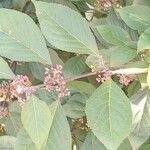
Callicarpa bodinieri
Beauty berry · Bodinier's beautyberry
Description
Source: leafsnapCallicarpa bodinieri, commonly known as Bodinier's Beautyberry, is a deciduous shrub from the Lamiaceae family, native to China. This plant can reach up to 6 feet in height and width. It features an upright growth habit with arching branches adorned with dark green, serrated leaves. In the fall, it blooms with clusters of small pinkish-purple flowers, which are followed by vibrant purple berries in late summer or early fall. The berries of Callicarpa bodinieri are its most distinctive feature, making it a popular choice for ornamental gardening and landscaping. These striking berries remain on the shrub well into winter, providing an eye-catching contrast against the bare branches or snow-covered backdrop. Callicarpa bodinieri thrives in full sun to partial shade and prefers well-drained soil with moderate moisture. While it is relatively low-maintenance, it benefits from regular pruning in late winter or early spring to encourage healthy growth. In traditional Chinese medicine, Callicarpa bodinieri is used to treat various ailments such as rheumatism, fever, sore throats, and coughs, thanks to its anti-inflammatory properties. Overall, Callicarpa bodinieri is an attractive ornamental shrub that adds color and interest throughout the year. Its medicinal properties further enhance its value, making it an excellent addition to any garden or landscape design project.
🌳 Although bodinier's beautyberry is frequently admired for its ornamental qualities, it also has an intriguing use as a natural dye. The plant's vivid purple berries, when crushed, produce a pigment suitable for dyeing fabrics, providing a sustainable and environmentally friendly alternative to synthetic dyes. This use corresponds with the growing interest in organic and eco-conscious fashion practices, emphasizing bodinier's beautyberry's potential role in the textile industry.
Care Guide
💧 Water Every 7 days
Bodinier's beautyberry originates from regions with distinct wet and dry seasons, giving it a moderate tolerance to drought. To thrive, it needs balanced watering every 1-2 weeks, and applying mulch can help retain moisture during its growth phase. This plant is commonly cultivated outdoors for its attractive ornamental berries.
How should I water my Bodinier's beautyberry plant in the best way?
To ensure excellent root development, place a garden hose at the base of the plant instead of directly spraying the leaves. If the plant is outdoors in direct sunlight, the leaves will need more water. You can use bubblers to moisten the roots individually, as well as soaker hoses to cover the entire garden or bed when adding or removing plants. After watering, drain excess water and allow the soil to dry before watering again. Watering at ground level helps prevent diseases. On a sunny day, it may be beneficial to spray the entire bush with water. Whether potted or in-ground, remember that Bodinier's beautyberry prefers deep watering rather than light sprinkling.
What should I do if I give Bodinier's beautyberry plant too much or too little water?
If you overwater your Bodinier's beautyberry, the leaves will turn yellow, drop off, and wilt. The plant will also look unhealthy with mushy stems. If you notice these signs, adjust your watering schedule accordingly. On the other hand, wilting can also indicate under watering, which causes crispy and dry leaves. When the soil is dry, a thorough watering is necessary. However, even with enough water, the damaged root system may still result in dry, yellow leaves a few days later. Once the plant returns to normal, the yellowing will stop. Indoors, be mindful of moisture levels and avoid overwatering. Look out for black spots, and if present, allow the soil to dry for a few days before watering again. Overwatering can lead to root rot. If you observe discolored and slimy roots, consider transferring the plant to a different pot. It's important to prevent root rot by avoiding overly soggy soil. When planting the Bodinier's beautyberry outdoors, check the soil moisture with your fingers. If it feels too dry, it may be underwatered, so make sure to provide adequate watering to help the plant recover.
How frequently should I water my Bodinier's beautyberry?
The Bodinier's beautyberry thrives with deep and infrequent watering. If planted in pots, it is important to soak them with a gallon of water each time. Potted plants have limited water storage, causing the soil to dry out faster. In colder regions, watering is needed every 3 to 5 days. It is best to water the plant early in the morning when the soil is dry, both outdoors and indoors. You can determine if watering is necessary by checking the soil. When the top 2-3 inches of soil are dry, it's time for a full watering. During hot days, it is recommended to check the moisture daily as the heat can quickly dry out the pot's soil. If you have a garden, it is also important to irrigate the soil. In hot climates, watering once a week is usually sufficient. Only water the plants when you notice that the top 2-3 inches of soil have become too dry indoors or outdoors. Take into consideration the amount of rainfall and avoid overwatering to prevent root rot. In general, Bodinier's beautyberry grows during spring and fall. Adding 3 to 4 inches of mulch when the plants are outdoors helps conserve water. Sandy soil drains faster, so more frequent watering is necessary. However, clay soil retains water better, so it requires less frequent watering, allowing for 2-3 days of drying the plant without risking root rot. To keep track of watering, mark the date on the calendar and observe if the leaves start to droop, which may indicate that watering is needed a day earlier.
How much water should I give my Bodinier's beautyberry?
The Bodinier's beautyberry typically requires about one gallon of water on a regular basis. For potted plants, it is recommended to water them thoroughly until you observe water dripping from the bottom of the pot. Allow the soil to dry before watering again. You can use a water calculator or moisture meter to determine the amount of water given to the plant each week. During the flowering period, provide ample water but allow the moisture to evaporate afterward to prevent root rot. If the Bodinier's beautyberry is planted outdoors with sufficient rainfall, it may not need additional watering. However, when the plant is young or newly planted, ensure it receives 1-2 inches of rain per week. As the Bodinier's beautyberry matures, it can rely solely on rainfall. Only in hot weather or prolonged periods without rain for 2-3 weeks should you consider giving the plant a thorough watering during cooler times of the day to prevent heat damage. Additional watering is necessary during extended dry spells.
Should I change how often I water my Bodinier's beautyberry based on the seasons or different weather conditions?
The Bodinier's beautyberry needs outdoor watering primarily from rain, but additional watering may be necessary during prolonged dry periods. During the spring and fall, it is important to keep the soil consistently moist but not overly saturated, as alternating between dry and moist soil conditions promotes healthy growth. In the summer, hot weather can cause water to evaporate quickly, so more frequent watering, along with extra moisture, may be required if rainfall is insufficient. During winter, the Bodinier's beautyberry requires less water as it enters its dormant phase. To facilitate quicker water evaporation, it can be planted in well-draining soil mixtures like terracotta. Once it begins to leaf out and go dormant again in the fall, watering can be skipped, as the beautyberry can typically rely on natural rainfall during the dormant period. To promote growth and blooming in warmer temperatures, cultivate the beautyberry after spring. Adequate drainage is crucial throughout the year, especially during winter, to prevent waterlogging or drought, as the plant dislikes both conditions when flowering. When planted in pots, the beautyberry's root growth is limited, so ensure they are well-watered, especially in summer. Avoid shallow sprinkles that reach only the leaves, as they encourage fungal growth and do not penetrate deep into the roots. Even during dormancy, do not let the beautyberry dry out completely in fall or winter. It should not be left sitting in water for too long, as this can lead to winter damage. Applying mulch whenever possible helps reduce stress, conserve water, and promote healthy blooms.
☀️ Light Full sun
Bodinier's beautyberry grows best in conditions similar to its native habitat, with plenty of sunlight. It is considerably adaptable and can also grow in areas with less sun exposure. Either too much or too little sunlight can harm its growth, showing up as paler leaves or slowed growth.
What are the sunlight requirements for Bodinier's beautyberry?
Bodinier's beautyberry thrives when exposed to full sun, which means above 6 hours of sunlight daily, but it can also adapt to partial sun, getting about 3-6 hours of sunlight. It's crucial to observe how sunlight moves through your garden to choose spots providing a balance of light and shade, ensuring your plants stay healthy and happy. Although Bodinier's beautyberry originates in locations abundant in sunlight, it can still manage in less sunny spots. Adequate sunlight is essential as too much or too little can affect the plant's growth, showing symptoms like paler leaves or slowed growth.
How can artificial lighting support Bodinier's beautyberry indoor growth?
Indoor Bodinier's beautyberry plants require sufficient lighting for optimal growth, especially when natural sunlight is inadequate, like in winter or less sunny spaces. Artificial lights can be a vital solution for promoting healthier growth. LED lights are suggested because they can be customized to provide specific light wavelengths needed by your plants. Requirements include 30-50W/sq ft of artificial light for full sun plants, 20-30W/sq ft for partial sun plants, and 10-20W/sq ft for full shade plants. The artificial light source should be placed 12-36 inches above the plant, mimicking natural sunlight, and most plants will need 8-12 hours of light per day.
What are the signs of insufficient sunlight in Bodinier's beautyberry?
Signs of insufficient sunlight in Bodinier's beautyberry include small or lighter-colored new leaves, indicating poor chlorophyll production and essential nutrients lack. The plant may also show leggy or sparse growth, faster leaf drop, or stop growing entirely. Chlorosis, where leaves turn yellow due to chlorophyll breakdown, sunscald indicated by pale or necrotic areas from intense sunlight, leaf curling as a defense against excessive light, wilting from loss of hydration, and leaf scorching characterized by brown, dry edges on leaves are signs of either too much sunlight or inadequate light.
What solutions can help Bodinier's beautyberry thrive in optimal light conditions?
To ensure Bodinier's beautyberry thrives in optimal light conditions, gradually move plants to sunnier locations to get at least 6 hours of direct sunlight daily. Indoors, use south-facing windows or consider artificial lighting for plants that aren't easily movable, ensuring at least 8 hours of light exposure daily. Outdoors, it's crucial to adjust plants gradually to avoid sunburn. For plants in the ground, reduce light obstructions by pruning or transplant small plants during their dormant period to sunnier spots with adequate drainage. It's important to note that parts of the plant affected by insufficient sunlight may not recover, but new growth should be healthy after adjusting light exposure.
🌡️ Temperature 5–32.2°C
Bodinier's beautyberry is a plant that does well in its native growing environment when temperatures stay between 41 and 90 °F (5 to 32 ℃). It favors temperate climates. Seasonal temperature adjustments should be made to keep it within that range.
What are the ideal growing conditions for Bodinier's Beautyberry?
Bodinier's Beautyberry, scientifically known as Callicarpa bodinieri, thrives in temperate climates and prefers a temperature range of 41 to 90 °F (5 to 32 °C). Its native growth environment supports its strong cold resistance, reducing the need for special frost protection measures in winter. However, if temperatures are expected to fall below -25°C, it's essential to protect the plant by wrapping the trunk and branches with materials like non-woven fabric or cloth. Additionally, it is recommended to water the plant abundantly before the onset of the first freeze in autumn to ensure the soil remains moist, thereby helping to prevent drought and water scarcity during winter and early spring.
How does low temperature affect Bodinier's Beautyberry, and what solutions are recommended?
Bodinier's Beautyberry is cold-tolerant and prospers best when the temperature stays above 5°C. During winter, it's crucial to keep the temperature above -20°C. If the temperature drops below -25°C, the plant might not show immediate distress, but its branches may become brittle and dry by spring, failing to produce new shoots. To remedy this, any dead branches that have failed to produce new leaves should be pruned away in spring.
What are the effects of high temperature on Bodinier's Beautyberry and the recommended solutions?
In the summer, it's essential to keep Bodinier's Beautyberry below 32°C to avoid stress from high temperatures. When temperatures exceed 35°C, the plant's leaves may lighten in color, and the tips can become dry and withered, increasing the risk of sunburn. To mitigate these effects, trim away the sunburned and dried parts of the plant. You should also consider moving the plant to an area with shade during the midday and afternoon sun or use a shade cloth for protection. Ensuring the soil remains moist by watering the plant in the morning and evening is also beneficial.
💨 Humidity
🪴 Soil 6-7
🌱 Fertilizer
The timing of fertilizing Bodinier's beautyberry is important. Apply fertilizer in early spring and continue once a month until early summer. Fertilizer supports the production of attractive blooms and supplies energy during dormancy and periods of active growth.
Why should I add fertilizer to my Bodinier's beautyberry plant?
Regular fertilization is important for the overall health of your Bodinier's beautyberry, regardless of the type you have. Providing the right nutrients will help your plant grow stronger and better withstand difficult growing conditions, as well as combat diseases and pests. The foliage of the beautyberry is one of its appealing features, so it is important to maintain it. This involves following a specific fertilization schedule for your beautyberry, which will result in vibrant-colored leaves and an overall lush appearance.
When should I fertilize my Bodinier's beautyberry?
To ensure healthy growth of your Bodinier's beautyberry, it is recommended to fertilize it in late winter or early spring. This provides the necessary nutrients for the plant to thrive once the weather warms up. If you live in a warm climate region, an additional fertilizer feeding in early fall is beneficial. This adds nutrients for the following growing season and helps the plant withstand winter cold without foliage damage. Early fertilization allows new branches to grow sufficiently to withstand the cold winter.
When should I not put fertilizer on my Bodinier's beautyberry?
There are a few times during the year when it is not recommended to fertilize your Bodinier's beautyberry plant. The first time is in the early and mid-winter months when the plant is dormant and does not require any feeding. It is also not advisable to fertilize the plant in late spring and throughout the summer. During this period, the weather is usually hotter and drier, which can have a negative impact on the plant if it is fertilized. To prevent any issues, it is best to stick to a fertilization schedule that involves feeding only in early spring and early fall.
What kind of fertilizer does my Bodinier's beautyberry plant need?
Bodinier's beautyberry primarily needs nitrogen, but phosphorus and potassium are still important. A balanced fertilizer like 10-10-10 can be effective, but a more nuanced ratio may lead to better growth. Fertilizers higher in nitrogen, like 10-6-4, often work well. Granular or liquid-based fertilizers can both be used.
How should I fertilize my Bodinier's beautyberry?
To fertilize your Bodinier's beautyberry, there are two options: using a granular fertilizer or a liquid fertilizer. For the granular fertilizer method, simply sprinkle the fertilizer on the soil at the appropriate time. This type of fertilizer releases nutrients slowly over time, so it will gradually nourish the plant. Before applying the granular fertilizer, it is recommended to lightly water the beautyberry. In the less common liquid fertilizer method, you will need to mix the fertilizer with water and then pour the solution around the base of the beautyberry plant. This approach provides nutrients directly to the soil. In some cases, it is helpful to perform a soil test before fertilizing to determine if any adjustments to the pH are needed.
🪴 Pot & Repot
✂️ Pruning
Bodinier's beautyberry showcases vibrant purple berries and lush foliage. For optimal growth and shape maintenance, prune the plant in early spring. Be sure to remove any damaged branches and thin out old canes to improve air circulation. Pruning before the growing season will also encourage better blooming and berry production, enhancing the overall vitality of the plant.
🌿 Propagating
🐛 Diseases & pets
☠️ Toxicity
Characteristics
- Plant Type
- Shrub
- Life Cycle
- Perennial
- Genus
- Callicarpa
- Family
- Lamiaceae
- Hardiness Zone
- 5-8
- Mature Height
- 2.13 m
- Mature Spread
- 2.44 m
- Leaf Color
- Green, Purple, Yellow
- Leaf Type
- Deciduous
- Flower Color
- Pink, Purple
- Flower Size
- 3.05 cm to 4.57 cm
- Bloom Time
- Early summer, Mid summer
- Planting Time
- Spring, Autumn
- Harvest Time
- Mid summer, Late summer
- Native Area
- Cambodia, Vietnam, Laos, Thailand, China