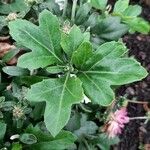
Callistephus chinensis
مینا چینی · China Aster · Annual-aster · Chinese Aster · Garden aster
Description
Source: leafsnapCallistephus chinensis, commonly known as China aster or annual aster, is a popular ornamental plant belonging to the Asteraceae family. Native to China, it has been cultivated for centuries for its strikingly beautiful and colorful flowers. The plant can grow up to 2 feet tall and produces large, showy flowers that come in a wide range of colors, including pink, purple, red, white, and blue. China aster is an annual plant that blooms from mid-summer until the first frost. It prefers full sun exposure but can also tolerate partial shade. The soil should be well-drained and kept at moderate moisture levels. Regular watering during dry periods is essential, but care should be taken not to overwater, as this can lead to root rot. Applying a balanced fertilizer every two weeks during the growing season will promote healthy growth. China aster is often used in flower beds or borders due to its attractive appearance and long-lasting blooms. It also makes an excellent cut flower for floral arrangements thanks to its vibrant colors and long vase life. Overall, Callistephus chinensis is an easy-to-grow ornamental plant that adds color and beauty to any garden or landscape with minimal care requirements. It is a wonderful choice for both gardeners and landscapers alike.
🌳 Apart from their decorative value in gardens and floral arrangements, china aster fulfills an important ecological role by providing nectar to a range of pollinators, including bees, butterflies, and other beneficial insects. This service supports ecosystem biodiversity and helps preserve the balance needed for the pollination of many plants, highlighting the interconnectedness of china aster with surrounding flora and fauna.
🎭 Seeking dependable love, patience, and charm
Care Guide
💧 Water Every 3 days
China aster naturally grows in humid environments and thrives with consistent moisture. It prefers regular watering but can tolerate short periods of dryness. For lush growth, especially during its active growing season when vibrant blooms are desired, watering the plant twice a week is ideal.
When Should I Water My China Aster?
Watering your China Aster is key to its health, focusing on its vibrant blooms and overall vitality while avoiding over- or under-watering. You should water when the top 1-2 inches of soil are dry, leaves begin to droop, or if the leaf color fades. Slow growth can also be a sign that China Aster needs more water. Be mindful of the risks of overwatering, such as root rot, which can be as harmful as underwatering, indicated by dry, brittle leaves and reduced blooming.
How Should I Water My China Aster?
For optimal hydration of your China Aster, water at the plant's base to avoid wet foliage and potential fungal diseases. No special equipment is needed, but a moisture meter can help determine the soil’s moisture level. It’s important to keep the soil consistently moist but not waterlogged, allowing the top inch of soil to dry slightly before the next watering. Adjust the watering frequency based on temperature, humidity, and soil type, focusing on thorough watering to reach the root zone.
How Much Water Does China Aster Really Need?
China Aster requires a moderate amount of water. The optimal watering quantity maintains consistent moisture around its shallow root system, generally soaking the soil to a depth of 1 to 2 inches. Signs of a properly hydrated plant include bright green leaves and firm stems. Be vigilant for signs of over or underwatering, adjusting your watering schedule based on soil moisture. Utilizing well-draining potting mix and ensuring good drainage in the pot are crucial for avoiding waterlogged conditions.
What Kind of Water is Best for China Aster?
China Aster thrives best on rainwater due to its balanced pH and lack of chemicals. Distilled and filtered water are good alternatives, while tap water should be used cautiously because of its chlorine content, which China Aster is sensitive to. To reduce chlorination effects, let tap water sit for 24 hours before watering. Moderately warm tap water, close to room temperature, is preferred to avoid shocking the plant.
How Do China Aster's Watering Needs Change with the Seasons?
Watering needs for China Aster vary throughout the year. In spring, consistent moisture supports germination and growth, preventing soil dryness without causing waterlogging. Summer demands increased vigilance to keep the soil moist due to higher evaporation rates. Watering can be scaled back in autumn as the plant prepares for dormancy, avoiding excess water. Winter care requires minimal watering, just enough to prevent the soil from completely drying out, especially for plants overwintered indoors.
☀️ Light Full sun
China aster grows best in full sun, though it can tolerate some shade. Coming from areas with abundant sunlight, it shows its healthiest growth under those conditions. A lack of light can hinder its development, while too much light generally does not harm the plant.
What are the sunlight requirements for China aster?
China aster thrives in conditions that offer extensive exposure to sunlight, ideally flourishing under full sun which is above 6 hours of sunlight daily, but it can also tolerate partial sun, receiving about 3-6 hours of sunlight. Observing how sunlight moves through your garden can help in choosing the best spots that provide a blend of light and shade, ensuring your plants grow happily and healthily.
How essential is sunlight for the growth of China aster?
Sunlight is crucial for the optimal growth of China aster, as it originates from environments with substantial sunlight exposure. Its healthiest growth is observed under these full sun conditions, although it can manage with some shade. Lack of sufficient sunlight may impede its development, but it generally remains resilient against overexposure.
Can artificial lighting be used for growing China aster indoors?
Yes, artificial lighting is an effective solution for growing China aster indoors, especially in scenarios where natural sunlight is scarce such as during winter or in less sunny locations. Optimal growth can be achieved through the use of artificial lights, such as LED lights, which can be customized to provide specific wavelengths needed by plants. For full sun plants, 30-50W per square foot is recommended, 20-30W for partial sun plants, and 10-20W for full shade plants. The light source should be placed about 12-36 inches above the plant and should mimic natural daylight hours, typically providing 8-12 hours of light per day.
What are the symptoms of light deficiency in China aster when grown indoors?
China aster may exhibit various symptoms when it doesn't receive adequate light indoors, such as smaller new leaves, leggy or sparse growth, rapid leaf drop, halted growth, paler new leaves, and in severe cases, chlorosis, sunscald, leaf curling, wilting, and leaf scorching. These symptoms indicate the plant's struggle with insufficient sunlight, signaling the need to adjust the lighting conditions.
What solutions can improve the light conditions for China aster?
To optimize light conditions for China aster, gradually introduce the plant to more sunlight, aiming for at least 6 hours of direct sunlight daily, particularly by utilizing a south-facing window for indoor plants. If moving the plant isn't feasible, consider artificial lighting options, keeping them on for at least 8 hours a day. For outdoor plants, ensure a gradual transition to sunnier spots to prevent sunburn. Reducing obstructions such as tree branches can also help increase sun exposure. In cases where plants are small enough, consider transplanting during their dormant period to a location with better sunlight and drainage.
🌡️ Temperature 0–37.8°C
China aster is native to temperate climates, preferring temperatures between 68 to 100 °F (20 to 38 ℃). As the seasons change, small adjustments may be necessary for optimum growth.
What is the native climate for the China aster?
The China aster, native to temperate climates, thrives in temperatures ranging from 68 to 100°F (20 to 38°C). With changing seasons, minor adjustments in care might be necessary to maintain optimal growth conditions.
How does the China aster handle cold temperatures?
China aster possesses strong cold resistance and typically does not require special frost protection measures during winter. However, if temperatures are expected to drop below -40°C, it's important to protect the plant using materials like soil or straw. Additionally, watering the plant abundantly before the first freeze of autumn ensures the soil stays moist and freezes, which helps prevent drought and water scarcity during winter and early spring.
What are the signs and solutions for low temperature effects on China aster?
China aster is cold-tolerant, thriving best above 20°C and should remain above 0°C in winter. At temperatures below -40°C, although the plant might not show noticeable changes during winter, there could be a decrease in sprouting or even no sprouting in spring. The solution for affected plants in spring is to remove any parts that have failed to sprout.
What are the signs and solutions for high temperature effects on China aster?
During summer, it's vital to keep the China aster below 38°C. Temperatures exceeding 43°C may cause the leaves to become lighter in color, curl, become prone to sunburn, and in severe cases, the entire plant may wilt and dry. To mitigate these issues, trim away sunburned and dried-up parts. Moving the plant to a shaded location or using a shade cloth to protect it from midday and afternoon sun is advisable. Watering the plant in the morning and evening helps keep the soil moist.
💨 Humidity normal (40-60%)
This plant will thrive in moderate humidity, which is probably the level in your home. However, misting it a few times a week can be very beneficial. Make sure the room has good ventilation.
🪴 Soil 5-7
🌱 Fertilizer
After most of a China aster's blooms have opened to full size, resume fertilizing. When the flowers are at their peak production, apply fertilizer every three to four weeks, weather permitting. Then, once the China aster begins producing fewer new blooms, stop fertilizing; there's no need to feed the plant when it can no longer produce more flowers.
Why should I add fertilizer to my China aster?
Plants, including China aster, need nutrients to survive. Most gardeners are aware of this fact, regardless of their experience level. Without food, the China aster plant will die shortly after the first pollination. To ensure the plant thrives and produces large, beautiful flowers throughout the blooming season, it is important to provide the right type and amount of nutrients. Fertilizer plays a vital role in helping China aster develop a strong root system. This is particularly crucial for China aster because its root system is thin and prone to damage. By fertilizing at planting, China aster can establish a solid root structure that not only provides stability, but also sets the stage for an impressive flowering display. When the timing of fertilization is done correctly, it can significantly prolong China aster's flowering period.
What is the best time to add plant food to my China aster?
China aster experiences significant growth early in the growing season, after the last frost. It is recommended to fertilize China aster during this time, specifically during planting. Apply fertilizer when the plant is first placed in the ground or in planters. This will be the only time to fertilize until later in the year when the blooms are at their fullest. Once the season is in full swing and most of the China aster blooms are fully open, it is time to resume fertilizing. Start fertilizing again every three to four weeks, as long as the weather permits, around the time when the blooms are at their peak. Once China aster starts producing fewer new blooms, stop fertilizing as there is no need to continue when the plant cannot produce more blooms.
When is the best time to not fertilize my China aster?
Regular fertilizing is important for China aster, but it is crucial to apply it at the right time. In some situations, it is best to hold back on fertilizing. These situations are typically related to climate, but controllable factors also play a role. When there is something wrong with the plant, soil, or climate, it is advisable to be patient and wait for things to improve before resuming fertilization. For example, if there are severe or unexpected weather changes, such as a sudden cold snap in the middle of summer, it is better to wait until the weather becomes warm again before applying fertilizer. Similarly, if the soil becomes excessively dry or compacted, it is not beneficial to fertilize as the nutrients will not be properly absorbed by the roots. During the hottest parts of the day when temperatures reach 90 degrees Fahrenheit, it is advised not to apply fertilizer. This is because high temperatures can cause rapid breakdown of the fertilizer, which may not be beneficial for the plant. Additionally, it is important to address and resolve any pest or disease issues before resuming fertilization.
What kind of plant food does my China aster need?
Most types of China aster require the same balanced nutrients from fertilizer. It is recommended to use a fertilizer specifically designed for high-yield blooming plants, with a higher level of phosphorus (such as 10-30-10). There are several fertilizer brands that offer suitable options for blooming plants like China aster. Using a pre-mixed fertilizer is an easy and hassle-free way to provide the necessary nutrients. However, it is important to follow the package instructions to avoid over or under fertilizing the China aster, as this can lead to poor growth or wilting.
How do I give my China aster plant the nutrients it needs?
Applying fertilizer to China aster can vary depending on the type of fertilizer you have. However, there are some general tips to follow. When you first plant China aster, mix the recommended amount of fertilizer into the soil before planting and water it in. For subsequent fertilizing, the process may be different. If you're using pellet fertilizers, simply mix them into the top inch of soil around the outer edge of the plant, where the roots are. Make sure to water them in well at first, then water regularly afterwards. Other fertilizers can be mixed into a watering can and applied like regular watering. Follow any instructions on the fertilizer packaging for consistency. If you prefer a regular schedule, aim for fertilizing every three to four weeks.
🪴 Pot & Repot
When repotting China aster, choose a pot that is 1–2 inches (2.5–5.1 cm) larger in diameter and provides good drainage. Use a well-draining potting mix and consider adding perlite for extra drainage. Repot in spring or early summer, water thoroughly afterward, and keep it in a shady spot at first.
✂️ Pruning
To help China aster thrive, it's best to prune them from early to late spring. This includes pinching back young growth to encourage bushiness and removing spent flowers to prolong blooming. Pruning should be aligned with the plant's growth cycles, avoiding heavy cuts during dormancy to maintain vigor and aesthetic appeal. Always use clean, sharp tools to prevent damage and disease.
🌿 Propagating
🐛 Diseases & pets
☠️ Toxicity
The Moonstone China Aster is a non-toxic plant that is safe to cultivate around children and pets. In fact, this aster plant is considered edible in its indigenous regions.
Characteristics
- Plant Type
- Herb
- Life Cycle
- Annual, Perennial
- Genus
- Callistephus
- Family
- Asteraceae
- Hardiness Zone
- 2-11
- Mature Height
- 15 cm to 91 cm
- Mature Spread
- 30 cm to 46 cm
- Leaf Color
- Green
- Leaf Type
- Deciduous
- Flower Color
- Pink, Purple, White, Yellow
- Flower Size
- 2.03 cm to 5.08 cm
- Bloom Time
- Early summer, Mid summer
- Planting Time
- Spring, Summer
- Harvest Time
- Mid summer
- Native Area
- Russia, United Kingdom, China