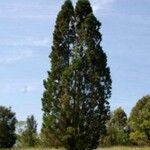
Callitris columellaris
Bribie Island-pine · Murray River-pine · Murray-pine · White cypress pine · Coast cypress-pine
Description
Source: leafsnapCallitris columellaris, commonly known as the White Cypress Pine, is a coniferous tree species native to Australia. Belonging to the family Cupressaceae, this tree can reach heights of up to 20 meters. Its growth pattern is narrow and conical, featuring a dense crown of blue-green foliage that emits an aromatic scent when crushed. The White Cypress Pine plays a significant role in Australia's forestry industry, primarily due to its durable timber. This timber is frequently used for construction purposes such as flooring, fencing, and furniture making. Additionally, the tree holds cultural importance for Indigenous Australians, who utilize its resin for medicinal purposes. This tree thrives in the dry and arid regions of Australia, where it can withstand extreme temperatures ranging from -7°C to 45°C. It prefers well-drained soils with low fertility but is also capable of growing on sandy or rocky terrains. Despite being classified as a vulnerable species due to habitat loss from land clearing activities, Callitris columellaris remains a crucial element of the Australian ecosystem. It provides habitat for various wildlife, including birds and insects, and contributes significantly to carbon sequestration efforts by storing carbon dioxide within its timber.
Care Guide
💧 Water Every 7 days
The White Cypress-pine is well-suited to arid conditions, displaying excellent drought tolerance and needing only occasional watering every one to two weeks. As an evergreen, this tree retains its foliage throughout the year and requires less water during the cooler months because of reduced evapotranspiration rates. It is typically grown outdoors and is ideal for larger spaces.
☀️ Light Full sun
White Cypress-pine comes from open habitats, such as sunlit meadows and forest margins, where plenty of light is available. It does best in full sun but can also tolerate partial sun, adapting well to a range of light conditions.
What are the sunlight requirements for White Cypress-pine?
White Cypress-pine thrives in environments that offer full sun, meaning it requires above 6 hours of sunlight daily to grow optimally. However, it can also tolerate partial sun, adapting well to various sunlight conditions. This plant originates from open environments, like sunny meadows and forest edges, which provide ample light. It's important to watch how sunlight moves through your garden and choose spots that strike the right balance of light and shade, ensuring the plants' happiness and avoiding issues like sunscald or insufficient light exposure.
How can artificial lighting be used for White Cypress-pine indoors?
Indoor White Cypress-pine plants require adequate lighting for optimal growth, especially when natural sunlight is insufficient. Artificial lights, such as LED lights, provide a vital solution by promoting faster, healthier growth. These lights should be customized to offer specific wavelengths needed by your plants. For full sun plants, 30-50W/sq ft of artificial light is needed; for partial sun plants, 20-30W/sq ft; and for full shade plants, 10-20W/sq ft. The artificial light source should be placed 12-36 inches above the plant to mimic natural sunlight and be kept on for 8-12 hours daily to simulate the length of natural daylight hours.
What are the symptoms of insufficient light in White Cypress-pine?
When White Cypress-pine doesn't receive enough sunlight, it may display several symptoms including small or lighter-colored new leaves, leggy or sparse growth, faster leaf drop, and a halt in new growth, indicating it has entered survival mode. These symptoms stem from the plant's inability to photosynthesize efficiently under low light conditions. Chlorosis, sunscald, leaf curling, wilting, and leaf scorching might also occur due to inappropriate light exposure, either too little or too much, affecting the plant's overall health.
What solutions can improve light conditions for White Cypress-pine?
To improve light conditions for White Cypress-pine, gradual exposure to more sunlight is key. For indoor plants, moving them to a sunnier location or using artificial light like desk or ceiling lamps for at least 8 hours daily can be helpful. Outdoor plants should be moved to brighter spots cautiously to avoid sunburn. Reducing obstructions such as pruning trees or transplanting smaller plants during their dormant period can also ensure better sunlight exposure. It's essential to ensure that plants affected by insufficient light receive the needed care to foster new, healthy growth.
🌡️ Temperature 20–37.8°C
White Cypress-pine comes from tropical areas where the climate is generally warm and humid. Consequently, it is suited to high temperatures and moisture. It does not tolerate sudden temperature shifts and prefers a consistent thermal environment, so avoiding temperature fluctuations indoors is important. It typically cannot withstand cold and needs warmer conditions to grow. If the surrounding temperature falls too low, the plant may stop growing or even die.
💨 Humidity
🪴 Soil 6-8
🌱 Fertilizer
White Cypress-pine has particular nutrient needs and does not require heavy fertilization. Spring is the best time to apply fertilizer for optimal growth. Providing nutrients strengthens its health, raises its resistance to pests and diseases, and helps maintain its long lifespan.
🪴 Pot & Repot
✂️ Pruning
The White Cypress-pine is a hardy plant characterized by its needle-like foliage. For best results, lightly prune this tree between early and late winter to shape it and remove any damaged branches. Be sure to use clean tools during pruning. Proper pruning encourages denser growth, improves air circulation, and enhances both the health and appearance of the tree without disturbing its natural form.
🌿 Propagating
🐛 Diseases & pets
☠️ Toxicity
Characteristics
- Plant Type
- Tree
- Life Cycle
- Perennial
- Genus
- Callitris
- Family
- Cupressaceae
- Hardiness Zone
- 9-11
- Mature Height
- 3.96 m to 11.89 m
- Mature Spread
- 2.13 m to 3.96 m
- Leaf Color
- Dark Green
- Leaf Type
- Evergreen
- Bloom Time
- Late summer, Early fall, Mid fall
- Planting Time
- Spring, Autumn
- Harvest Time
- Late fall, Early winter, Mid winter