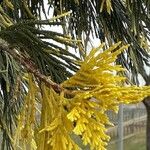
Calocedrus decurrens
California incense-cedar · California post-cedar · Bastard-cedar · Incense-cedar · Californian Incense-cedar
Description
Source: leafsnapCalocedrus decurrens, commonly known as incense cedar, is a coniferous tree native to western North America. This tall, narrow tree can reach up to 60 meters in height and 2 meters in diameter. Its reddish-brown, fibrous bark and scale-like leaves, arranged in opposite pairs along the branches, are distinctive features. The incense cedar produces small cones approximately 2-3 centimeters long. These cones have woody scales that open up when mature to release small seeds. The wood of Calocedrus decurrens is highly valued for its durability, resistance to decay, and pleasant aroma. It has been used for various purposes, including building materials, furniture making, and pencil production, among others. In its natural habitat, Calocedrus decurrens thrives best in moist soils with good drainage at elevations between 300 and 2,400 meters above sea level. It can tolerate both full sun exposure and partial shade but prefers cooler temperatures. Overall, Calocedrus decurrens holds significant ecological importance as it provides habitat for various wildlife species, such as birds and mammals, while also being an important source of timber products for human use.
🌳 Besides its ornamental and lumber uses, incense cedar serves a distinct role in cultural symbolism and aromatherapy. Native American tribes have long used its durable, fragrant wood to carve elaborate totems and ceremonial items. In modern times, the pleasant aroma of the heartwood is placed in closets and chests as a natural moth repellent, taking advantage of its aromatic essential oils.
🎭 Persistence, everlasting life, undying existence
Care Guide
💧 Water Every 7 days
Incense cedar thrives in dry mountainous areas and has a moderate tolerance for drought. It prefers soil with balanced moisture. Water the plant once every 1 to 2 weeks, but be aware that it needs less water while dormant. Incense cedar is often grown outdoors and is resilient across various climate zones.
How should I water my Incense cedar?
Watering your Incense cedar tree is a simple task. The easiest method is to use a garden hose to slowly soak the soil. This is especially useful for larger trees that require a lot of water. However, if you have a smaller tree, a watering can or another smaller tool may be sufficient. It's important to avoid watering the leaves too much, as this can cause disease, especially in young trees.
What do I need to do if I give my Incense cedar too much or too little water?
Overwatering can sometimes occur when the soil is not able to effectively drain water. If this happens to your Incense cedar, the plant may start to deteriorate. To fix this, you can either improve the soil drainage or move the plant to a better location. If you have your Incense cedar in a pot, you may need to use looser soil and a container that allows for better drainage. Overwatered plants can also develop diseases, so it's important to treat them promptly. On the other hand, if your Incense cedar is underwatered, you simply need to water it more frequently and it will recover. To determine if you've overwatered your Incense cedar, look at the foliage, particularly the new growth. If it appears discolored or susceptible to breakage, that's a sign of excess moisture. You can also check if there is standing water or slow drainage in the plant's growing area. Underwatered Incense cedars will have sparse, brown leaves. Consider whether there has been excessive rainfall or consistently high temperatures if you notice these symptoms.
How often do I need to water my Incense cedar?
A mature Incense cedar is quite resilient to drought and can survive on rainfall alone. During the hottest months, watering once a week is sufficient, but other seasons may not require any additional watering. However, if you have recently planted a tree, regular watering is necessary to establish the roots. It is crucial to avoid overwatering the Incense cedar as it does not tolerate standing water. When unsure, it's better to be cautious and refrain from watering excessively.
How much water does my Incense cedar tree need?
During the height of summer, it's necessary to water your Incense cedar. Normally, this plant needs about one inch of water weekly. However, the amount may vary based on the rainfall. If it has rained one inch or more in a week, you can skip watering your Incense cedar. On the other hand, newly planted Incense cedar requires more water during the establishment period. Generally, you should water it once every one to two weeks for the first few growing seasons.
How should I water my Incense cedar throughout the year?
The Incense cedar tree's water needs are highest during the summer when it's hottest. Water it about once a week if there's no rain. In other seasons, it can often survive without water. In spring and fall, you might need to water it a bit if it's exceptionally hot, but this is rare. Unlike other plants, the Incense cedar keeps growing during winter and doesn't fully enter dormancy. However, it still requires less water in winter due to cool temperatures and slower soil drying.
☀️ Light Full sun
The incense cedar has a strong preference for abundant sunlight, yet it can tolerate and prosper in moderate light levels. Native to areas with ample sun, it has evolved to use solar energy effectively for healthy development. Both excessive and insufficient sunlight can negatively impact its condition, changing its growth patterns and overall health.
What are the sunlight requirements for incense cedar?
Incense cedar thrives best in full sun, requiring more than 6 hours of sunlight daily, but it can also adapt to partial sun conditions, which is about 3-6 hours of sunlight. Originating from sun-rich environments, these trees are well-adapted to utilize sunlight efficiently for their growth. However, the right balance of light and shade is crucial for optimal plant health, as both excessive and insufficient sunlight can adversely affect its growth and condition.
How does artificial lighting support indoor plants?
For indoor plants, especially during winter or in less sunny spots, artificial lighting can be essential for their growth. LED lights are a popular choice because they offer the specific wavelengths plants need. Full sun plants require 30-50W/sq ft, partial sun plants need 20-30W/sq ft, and full shade plants need 10-20W/sq ft of artificial light. The light source should be placed 12-36 inches above the plant, mimicking natural sunlight conditions. Additionally, most plants need 8-12 hours of light per day, which can be adjusted based on the plant's specific needs.
What symptoms indicate that incense cedar is receiving insufficient light?
Symptoms of insufficient light in incense cedar include smaller new leaves, leggy or sparse growth, faster leaf drop, delayed or halted growth, lighter-colored or irregularly pigmented new leaves, and chlorosis. These signs suggest that the plant is not receiving enough sunlight to sustain its normal growth processes and health.
What symptoms show that incense cedar is affected by too much sunlight?
Excessive sunlight exposure can lead to sunscald, leaf curling, wilting, and leaf scorching in incense cedar. These symptoms, such as pale or necrotic areas on plant tissue, curled or twisted leaves, drooping stems, and brown or crispy leaf edges, indicate that the plant is receiving more sunlight than it can handle, affecting its overall health and ability to photosynthesize.
How can I manage light exposure for incense cedar both indoors and outdoors?
To manage light exposure for an incense cedar, gradually move the plant to a sunnier location if indoors, ensuring at least 6 hours of direct sunlight made by using a south-facing window or artificial lights. Outdoors, also move the plant to sunnier spots gradually to avoid sunburn. For plants in the ground, reduce obstructions such as overhanging branches to ensure sufficient sunlight, or consider transplanting to a better location during the plant's dormant period. It's crucial to make these changes gradually to allow the plant to adapt without stress.
🌡️ Temperature 5–35°C
The native growth environment of incense cedar indicates it favors cooler temperatures, typically between 41 and 95 ℉ (5 to 35 ℃). In winter it can tolerate temperatures as low as 14 ℉ (-10 ℃), and in summer it can withstand temperatures up to 95 ℉ (35 ℃). Providing some shade during hot summer afternoons is recommended to prevent leaf scorch.
What are the ideal growing conditions for Incense Cedar?
Incense Cedar (Calocedrus decurrens) flourishes in cooler temperatures, preferring a range of 41 to 95°F (5 to 35°C). During winter, it can withstand lows down to 14°F (-10°C), and in the summer, it can handle highs up to 95°F (35°C). Providing some shade during hot summer afternoons helps prevent leaf scorch. Despite its strong cold resistance, if winter temperatures are expected to drop below -25°C, cold protection measures should be taken by wrapping the trunk and branches with non-woven fabric or cloth. Additionally, watering the plant abundantly before the first freeze in autumn to keep the soil moist can help prevent drought and water scarcity during the winter and early spring.
How does low temperature affect Incense Cedar, and what are the remedies?
Incense Cedar is cold-tolerant, thriving best when temperatures remain above 5°C and should ideally stay above -20°C during winter. Temperatures falling below -25°C may not show immediate damage, but by spring, branches might become brittle, dry, and fail to produce new shoots. To combat these effects, it's recommended to prune away any dead branches in the spring that haven't produced new leaves, encouraging healthier growth.
What are the effects of high temperature on Incense Cedar and how can they be mitigated?
High temperatures can be challenging for Incense Cedar, especially when they exceed 35°C. Symptoms of heat stress include lighter leaf color, dry and withered tips, and increased susceptibility to sunburn. To mitigate these effects, it is advisable to trim away sunburned and dried-up parts, move the plant to a shaded location particularly during midday and afternoon, or use a shade cloth. Keeping the soil moist by watering in the morning and evening can also help manage the stress from high temperatures.
💨 Humidity normal (40-60%)
This plant will thrive in moderate humidity, which is probably the level in your home. However, misting it a few times a week can be very beneficial. Make sure the room has good ventilation.
🪴 Soil 6-7
🌱 Fertilizer
Incense cedar has specific nutrient needs and does not require heavy fertilization. Spring is the best time to apply fertilizer for optimal growth. Providing nutrients improves its health, increases its resistance to pests and diseases, and helps sustain its long lifespan.
Why should I put fertilizer on my Incense cedar?
To promote healthy growth of Incense cedar, it is recommended to fertilize in the spring. This evergreen plant has a long lifespan and requires support. Adding nutrients to the soil not only enhances the plant's overall health but also boosts its ability to withstand common pests and diseases, which otherwise hinder growth and longevity.
When should I fertilize my Incense cedar tree?
Not all growing mediums provide enough nutrients for healthy growth, but Incense cedar is an exception. Unlike garden annuals and perennials, Incense cedar doesn't require a significant amount of additional nutrients. The ideal time to fertilize it is in the spring, right before new growth starts to appear.
When is the best time to not put fertilizer on my Incense cedar?
While some plants benefit from regular fertilization on a monthly or weekly basis, it's important to note that Incense cedar does not require large amounts of extra nutrients. In fact, too much fertilizer can actually cause it to decline. For optimal growth, it is recommended to only apply fertilizer in the spring and avoid doing so during the summer, fall, and winter seasons. Additionally, refrain from adding any fertilizer or organic matter to the soil during these times.
Which fertilizer should I use for my Incense cedar?
The age of your plant affects the type of fertilizer it needs. However, Incense cedar doesn't need a lot of additional nutrients. To support healthy root development and growth, look for a balanced plant food. Avoid fertilizers with high nitrogen contents.
How can I make my Incense cedar grow better?
To ensure the proper fertilization of Incense cedar, it is important to consider the timing and method. In the spring, apply the fertilizer at the base of the plant, making sure to avoid contact with the trunk. If using granulated fertilizer, cover the pellets with a thin layer of soil to aid absorption into the soil.
🪴 Pot & Repot 2-3 years
When repotting Incense cedar, select a pot 1-2 inches (2.5–5.1 cm) larger that has adequate drainage. Use a well-draining potting mix. Repot in spring or fall, making sure the root ball is positioned slightly below the rim of the flower pot. Water thoroughly after repotting and keep it in a warm spot with indirect sunlight.
✂️ Pruning
The incense cedar, known for its aromatic leaves and cone-like shape, should be pruned seasonally from early to late winter. During pruning, concentrate on removing any dead branches and thinning out dense areas to improve air circulation and encourage healthy growth. Avoid making heavy cuts, and refer to horticultural guides for specific advice.
🌿 Propagating
🐛 Diseases & pets
☠️ Toxicity
Characteristics
- Plant Type
- Tree
- Life Cycle
- Perennial
- Genus
- Calocedrus
- Family
- Cupressaceae
- Hardiness Zone
- 5-9
- Mature Height
- 9.14 m to 21.34 m
- Mature Spread
- 2.44 m to 3.66 m
- Leaf Color
- Green, Yellow
- Leaf Type
- Evergreen
- Flower Color
- Yellow, Green, Red, Brown
- Flower Size
- 2.54 cm
- Bloom Time
- Late spring, Early summer, Mid summer
- Planting Time
- Spring, Autumn
- Harvest Time
- Mid summer, Late summer, Early fall
- Native Area
- Mexico