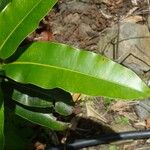
Calophyllum inophyllum
Indian-laurel · Balltree · Beautyleaf · Satin touriga · Beach calophyllum
Description
Source: leafsnapCalophyllum inophyllum, commonly known as Alexandrian laurel or beach calophyllum, is a tropical evergreen tree from the Clusiaceae family. It is native to regions around the Indian and Pacific Oceans, including countries such as India, Sri Lanka, Malaysia, Indonesia, and Australia. This tree can grow up to 20 meters tall, with a trunk diameter reaching up to 80 cm. Its glossy green leaves are arranged in opposite pairs along the stem. The tree produces small white flowers with five petals, which bloom from May through August. The fruit of Calophyllum inophyllum is a green drupe that turns yellow when ripe. Each fruit contains one or two seeds, surrounded by an oily pulp known for its medicinal properties. For centuries, traditional healers have utilized Calophyllum inophyllum for its medicinal benefits, particularly in treating skin diseases such as eczema and psoriasis due to its anti-inflammatory properties. Beyond its medicinal uses, Calophyllum inophyllum has commercial value as well. The seeds' high oil content makes them suitable for producing products like soap and candles. In summary, Calophyllum inophyllum is a significant plant species with both traditional medicinal benefits and commercial applications, making it culturally significant and economically valuable.
Care Guide
💧 Water Every 7 days
Tamanu plants flourish in high-humidity environments and prefer consistent moisture, requiring watering every two weeks. This evergreen plant features waxy leaves that help retain water, enabling it to withstand brief droughts and manage moisture efficiently during hot growing seasons.
How should I water my Tamanu plant?
Your Tamanu plant isn't too particular about how you water it. You can use any common watering tool, such as watering cans, hoses, or even cups, to moisten the soil. Regardless of the tool you choose, make sure to apply the water directly to the soil. It's important to moisten all areas of the soil evenly, so that every part of the root system gets the water it needs. Using filtered water is recommended, as tap water can have harmful particles. It's also best to use water that is at or slightly above room temperature, as very hot or cold water can shock the plant. However, the Tamanu plant usually responds well to any type of water you provide.
What should I do if I give my Tamanu plant too much water or too little water?
Outdoor plants, especially newly planted ones or seedlings, can easily suffer from lack of watering. When the tree is small or newly planted, make sure to provide sufficient water for a few months. Once the roots are established, the Tamanu plant can rely on rainwater most of the time. In the case of potted Tamanu plants, overwatering is more likely to happen. If you accidentally overwater your Tamanu, take immediate action to resolve the situation. Firstly, stop watering the plant right away to minimize the impact of overwatering. Then, carefully remove the Tamanu from its pot to examine its roots. If there are no signs of root rot, you can return the plant to its container. However, if root rot is present, trim off the affected roots and consider using a fungicide to prevent further damage. Finally, repot the Tamanu in well-draining soil. On the other hand, underwatering is a simpler issue to address. If you notice the Tamanu's leaves drooping, drying out, and falling off, it means the plant is not getting enough water. Simply increase the frequency of watering, and you will soon see the leaves return to their fullness. It's important to adjust your watering schedule as soon as you notice underwatering occurring.
How often do I need to water my Tamanu plant?
If your area receives sufficient rainfall, most outdoor plants can grow naturally without additional watering. However, if you experience low rainfall, it's important to water your plants adequately every 2 weeks in the spring and fall. In the summer, plants require more frequent watering, while in the winter, when growth slows down, you should water them less frequently or not at all. Young or newly planted Tamanu plants may require more frequent watering to help them establish and become more resistant to drought. For potted plants, there are two main approaches to determine watering frequency for your Tamanu. One option is to follow a set schedule, such as watering once a week or every other week. However, this method may not always be suitable as it doesn't consider the specific growing conditions of your Tamanu. Alternatively, you can adjust the watering frequency based on the moisture of the soil. It's generally best to wait until the top two to four inches of soil, approximately one-third to one-half of the pot's depth, have completely dried out before watering again. Keep in mind that during summer, when the plant's water requirements are highest, a predetermined watering schedule may not be sufficient.
How much water does my Tamanu plant need?
When watering your Tamanu, you may be surprised to learn that it doesn't always require a large amount of water. Instead, if only a few inches of soil have dried since the last watering, giving it about five to ten ounces of water each time will support healthy growth. You can also determine the water volume by checking the soil moisture. To ensure your Tamanu receives sufficient moisture, water enough to moisten all the layers of dry soil since the last watering. If more than half of the soil is dry, consider giving more water until you see excess water draining from the pot's holes. If your Tamanu is planted in a location that receives adequate rain, additional watering may not be necessary. For young or newly established Tamanu plants, aim for 1-2 inches of rain per week. As the plant grows and becomes established, it can survive solely on rainwater. Only when there is no rainfall for 2-3 weeks during hot weather should you consider giving it a full watering to prevent stress.
How do I know if I'm giving enough water to my Tamanu plant?
Overwatering is a common problem for the Tamanu plant. There are several signs to look for if this happens. Typically, the leaves of an overwatered Tamanu will turn yellow and may fall off. Overwatering can also cause the plant to shrink and promote root rot. On the other hand, an underwatered Tamanu will start to wilt and may have brown or brittle leaves. If you notice signs of overwatering or underwatering, it's important to intervene and restore the plant's health.
☀️ Light Full sun
Tamanu does best with substantial sunlight, reflecting its natural habitat. Prolonged daily sun exposure yields the most favorable growth and development. It can persist in partial shade, though not as well. Too much or too little sunlight can result in unhealthy growth and development.
What are the sunlight requirements for Tamanu plants?
Tamanu plants thrive in environments that mimic their natural habitat, which includes considerable exposure to sunlight. They achieve optimal growth and development when they receive prolonged sun exposure each day. These plants can also sustain in half-shadow conditions, but the growth and well-being might not be as favorable. It is essential to provide Tamanu plants with at least 6 hours of direct sunlight (full sun) or about 3-6 hours (partial sun) to ensure their health. The balance of light and shade is crucial, as too much or too little sun exposure can lead to unhealthy growth. Keep an eye on how sunlight moves through your garden to select ideal spots that cater to the needs of your plants.
How can artificial lighting be used for indoor Tamanu plants?
For Tamanu plants grown indoors, especially in conditions where natural sunlight is insufficient, artificial lighting serves as a vital solution to promote healthy growth. It's particularly useful during winter or in less sunny spaces. Choose LED lights, which can be customized to provide specific wavelengths of light, ensuring that your plants receive the precise type of light they need for photosynthesis. Full sun plants require 30-50W per square foot of artificial light, partial sun plants need 20-30W per square foot, and full shade plants require 10-20W per square foot. The light source should be placed 12-36 inches above the plant, mimicking natural sunlight, and provided for 8-12 hours per day to simulate the length of natural daylight hours.
What are the symptoms of inadequate sunlight exposure in Tamanu plants?
Tamanu plants may exhibit several symptoms when they do not receive sufficient sunlight, especially when cultivated indoors during winter with inadequate lighting. These symptoms include smaller new leaves, leggy or sparse growth, faster leaf drop, slower or halted growth, lighter-colored new leaves, chlorosis (leaf yellowing), sunscald, leaf curling, wilting, and leaf scorching. These signs indicate a plant struggling due to poor light conditions or excessive sunlight, affecting its ability to photosynthesize and maintain healthy growth.
How can I ensure my Tamanu plant gets enough sunlight?
To optimize your Tamanu plant's sunlight absorption, gradually move it to a sunnier location, aiming for at least 6 hours of direct sunlight daily. For indoor plants, utilize a south-facing window and keep curtains open during daylight hours for maximum sunlight and nutrient accumulation. If moving the plant isn't feasible, consider using artificial lighting, such as a desk or ceiling lamp for at least 8 hours daily, or invest in professional plant grow lights. For outdoor plants, avoid abrupt changes in light intensity to prevent sunburn, and for plants on the ground, prune any branches obstructing sunlight or transplant smaller plants during their dormant period to better-lit locations with good drainage. Note that parts of the plant affected by insufficient sunlight may not recover, but new growth should be healthy with improved light exposure.
🌡️ Temperature 20–37.8°C
Tamanu is native to areas where temperatures generally range between 68 and 100.4 °F (20 and 38 ℃). It prospers in these moderate to warm conditions. For best growth, maintain tamanu within this temperature range year-round. If necessary, make adjustments for seasonal changes.
What is the optimal temperature range for growing Tamanu?
Tamanu, known botanically as Calophyllum inophyllum, flourishes in moderate to warm conditions, thriving best in regions where temperatures range between 68 to 100.4 °F (20 to 38 °C). To ensure the optimal growth of Tamanu, it's important to maintain this temperature range throughout the year, making adjustments as necessary to accommodate for seasonal changes. During colder months, particularly in autumn, it's advisable to move outdoor Tamanu plants indoors and place them near a bright window, while also ensuring they are kept at a safe distance from heaters. Keeping the temperature above 20°C during winter benefits the plant's growth, with any temperatures nearing 5°C being harmful.
How should I care for Tamanu in low temperatures?
Tamanu plants prefer warm temperatures and do not tolerate low temperatures well. They thrive when the temperature is consistently above 20°C and should be kept above 5°C during the winter season. Exposure to temperatures below 1°C can cause the leaves to lighten in color, and following frost damage, they may turn brown or black. Wilting and drooping are also common symptoms of cold stress. To care for Tamanu in low temperatures, trim off the frost-damaged parts and move the plant indoors to a warmer environment immediately for protection against the cold. Placing the plant near a south-facing window can ensure it receives ample sunlight. Additionally, avoid positioning the plant near heaters or air conditioning vents, as this can lead to excessively dry air and further stress the plant.
What should I do if my Tamanu is exposed to high temperatures?
During the summer months, it's important to ensure that Tamanu plants are kept below 38°C to avoid heat stress. Should temperatures exceed 43°C, the plant's leaves may lighten in color, indicating a susceptibility to sunburn. In such cases, trim away the sunburned and dried-up parts of the plant. Move the plant to a location that offers some shade during the midday and afternoon sun, which can help mitigate further damage. Additionally, watering the plant in the morning and evening can keep the soil adequately moist, assisting in cooling the plant and promoting its health during periods of high heat.
💨 Humidity dry (<40%)
This plant prefers dry conditions, so don't mist it. However, watering it less often can also thrive in higher humidity.
🪴 Soil 6-7
🌱 Fertilizer
The best time to fertilize a Tamanu is in early spring as it breaks dormancy. This encourages overall growth and supports flower development. Fertilizing improves the foliage, stems, and branches, while fostering large, vibrant, and long-lasting blooms. It helps transfer nutrients from the roots to the flowers and boosts the plant’s health and resistance to disease.
Why should I put fertilizer on my Tamanu plant?
Fertilization plays a crucial role in maintaining the overall health and well-being of a Tamanu. By providing the necessary energy and nutrients, it promotes the growth of lush foliage and strong branches. Gardeners particularly value the flowers of a Tamanu, and fortunately, fertilization enhances their quality. It makes the flowers larger, vibrant, and long-lasting by facilitating the efficient transfer of nutrients from the roots to the flowers. Additionally, proper fertilization also improves the plant's general health, enabling it to resist diseases more effectively.
When should I fertilize my Tamanu tree?
Tamanu plants should be fertilized primarily during early spring as they transition from dormancy to bud growth. This feeding provides the energy needed for overall growth and flower development. While this is the optimal time to fertilize, it is not the only opportunity. Another feeding during the fall months can also be beneficial, though it should be smaller than the initial spring feeding. Some gardeners choose to fertilize Tamanu plants during planting, but this is not always necessary.
When should I not put fertilizer on my Tamanu plant?
Like many plants, Tamanu doesn't require fertilizer in winter because it's in a dormant phase and doesn't need much energy to grow. Fertilizing during this time can lead to negative consequences from overfertilization. The best times to feed a Tamanu are early spring and fall. Therefore, during most of spring and summer, fertilizer is unnecessary. It's also advisable to withhold feedings if the Tamanu is facing excessively hot or dry conditions.
What kind of fertilizer does my Tamanu tree need?
When fertilizing Tamanu plants, it is generally recommended to use a specific type of fertilizer rather than a general-purpose one with equal amounts of nitrogen, phosphorus, and potassium. For Tamanu plants, nitrogen and phosphorus are the most important nutrients. Therefore, it is best to use a fertilizer with higher levels of nitrogen and phosphorus compared to potassium. A fertilizer with an N-P-K ratio of 10-10-8 or similar should work well. Additionally, for one of the annual feedings, applying organic materials like compost can also be beneficial. When using fertilizer, it is most common to use granular fertilizer for Tamanu plants.
How can I make my Tamanu plant grow better?
Applying fertilizer to your Tamanu is an easy task that even beginner gardeners can do. To use granular fertilizer, simply sprinkle it on the soil after wetting it with water. Another option is to improve your Tamanu plant's soil by adding organic material like compost or manure. If you choose this method, place the material on top of the soil and gently mix it into the first few inches without disrupting the roots, using a hand rake.
🪴 Pot & Repot Every 12 months
✂️ Pruning
Tamanu is a tropical tree prized for its glossy leaves and fragrant white flowers. To maintain its health and beauty, prune the tree between early and late winter. Focus on removing dead or crossing branches to improve air circulation and encourage blooming. Always use sterilized tools to make clean cuts, which helps prevent disease and reduce pest infestations.
🌿 Propagating
🐛 Diseases & pets
☠️ Toxicity
Characteristics
- Plant Type
- Tree
- Life Cycle
- Perennial
- Genus
- Calophyllum
- Family
- Calophyllaceae
- Hardiness Zone
- 10-11
- Mature Height
- 10.67 m to 15.24 m
- Mature Spread
- 9.14 m to 14.94 m
- Leaf Color
- Green
- Leaf Type
- Evergreen
- Flower Color
- White
- Flower Size
- 2.54 cm
- Bloom Time
- Mid summer, Late summer, Early fall
- Planting Time
- Spring, Autumn
- Harvest Time
- Spring, Late summer, Fall, Winter
- Native Area
- Sri Lanka, India, Malaysia, Philippines, Madagascar, Bangladesh, Laos, Fiji, Kenya, Tanzania, Indonesia, Cambodia, Vietnam, Mozambique, Myanmar, Singapore, Thailand