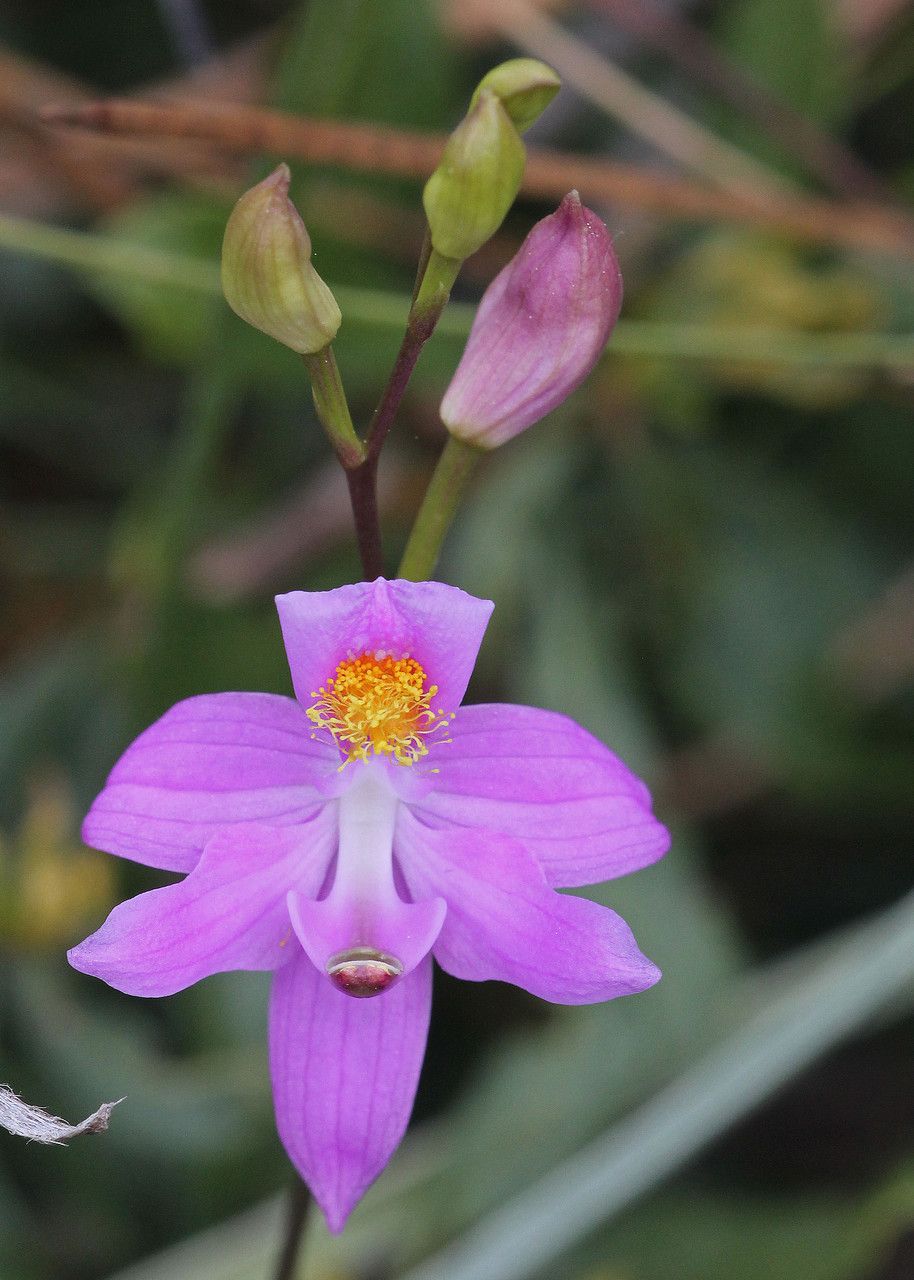
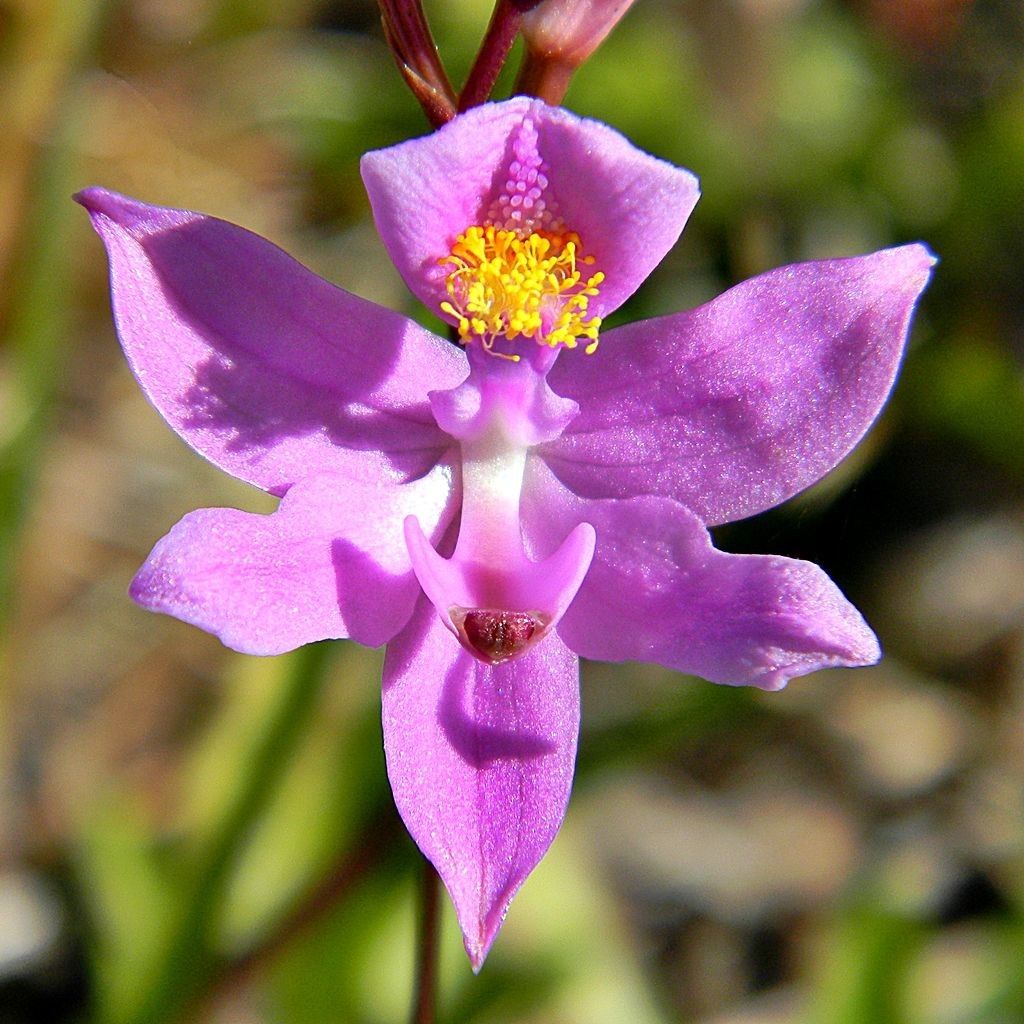
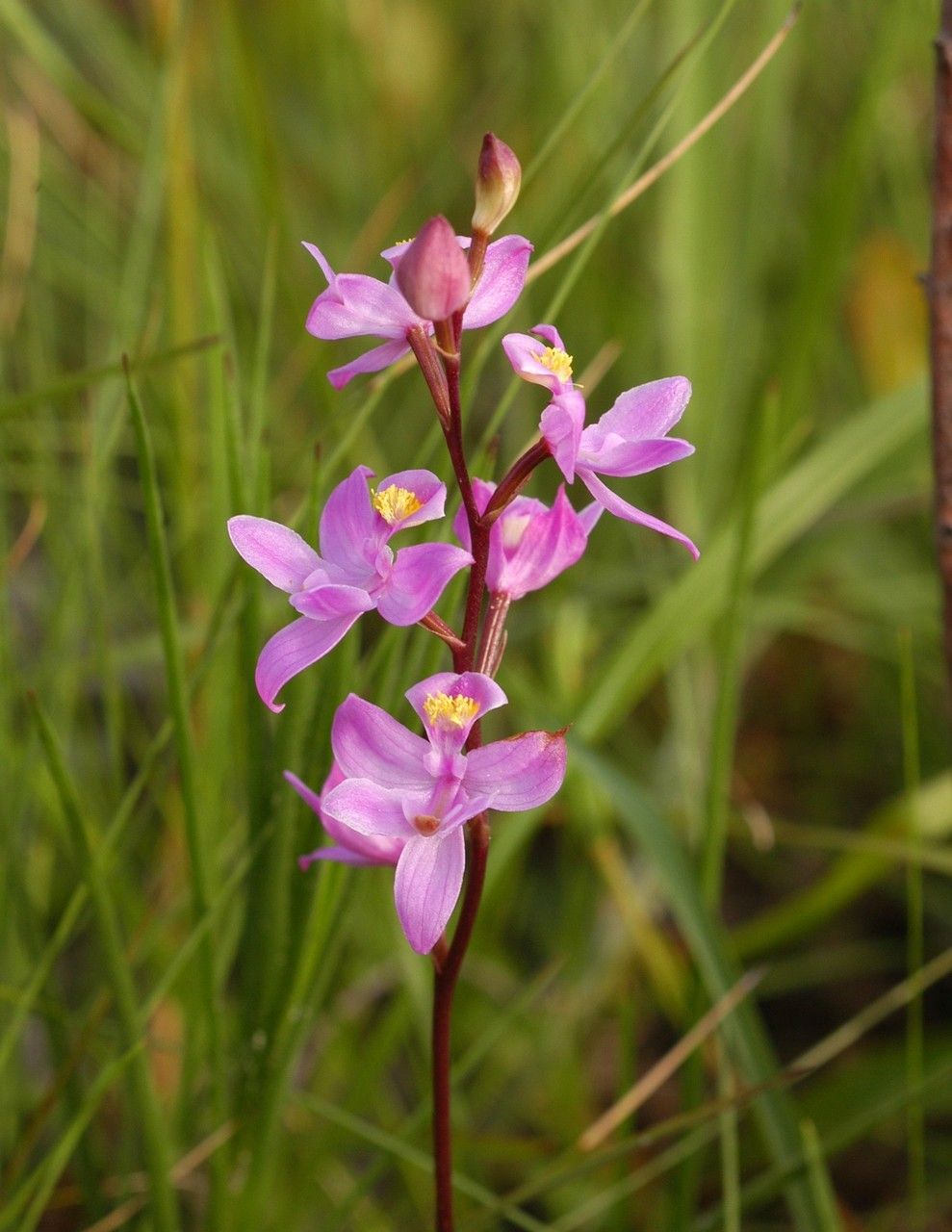
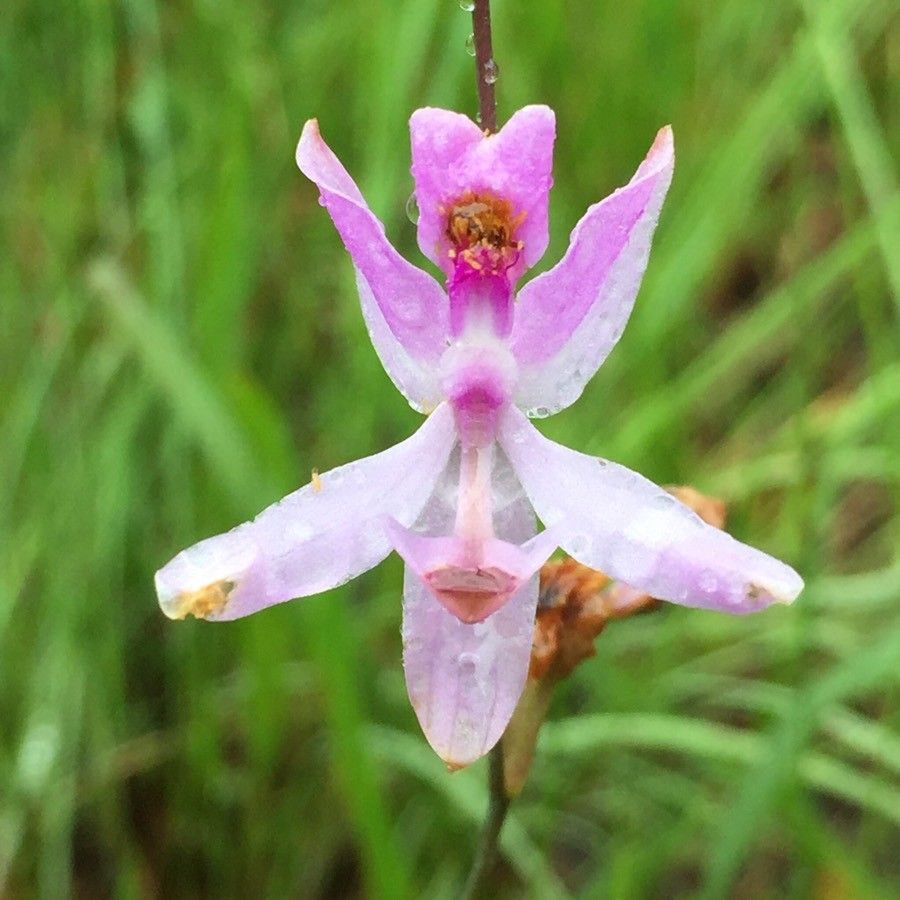
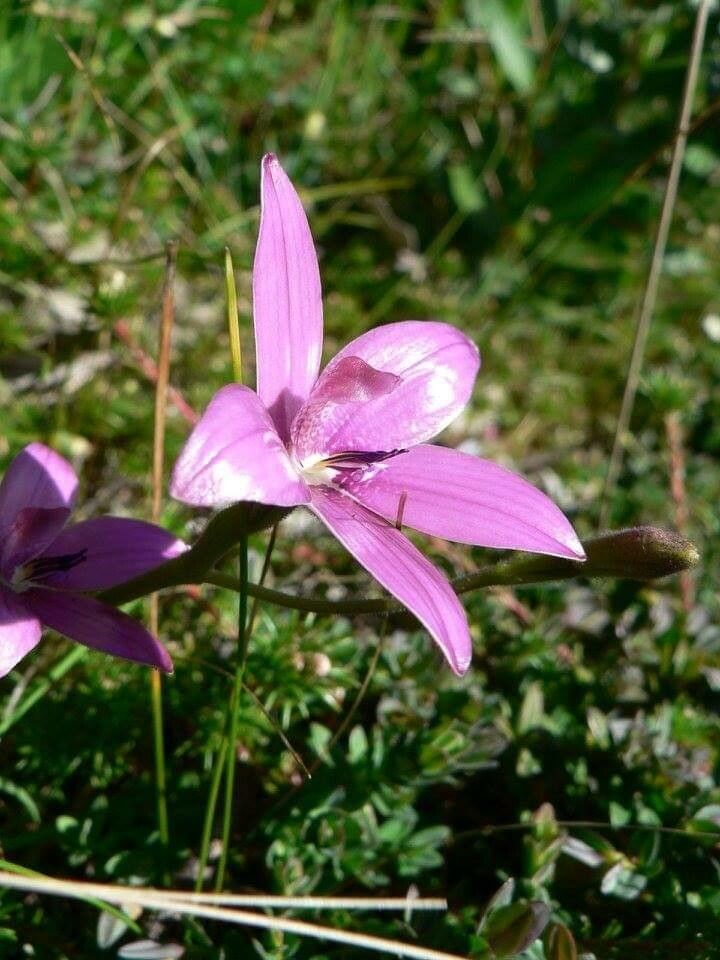
Calopogon barbatus, the bearded grass-pink, is a species of orchid native to the southeastern United States, from Louisiana to North Carolina.
Bearded grasspink is generally resistant to disease and is affected by relatively few insect pests. Its care is considered difficult, since it needs a very humid yet well-ventilated environment with minimal harmful pathogens. Overwatering can cause root rot. While anyone can cultivate Bearded grasspink, keeping it healthy and achieving repeat flowering requires more growing experience.
How to keep Calopogon Barbatus.
Light
Bearded grasspink grows naturally in habitats such as forest understories or rocky areas, where it receives natural shade. It prefers partial sun but can adapt to both full sun and full shade, reflecting its versatile and hardy nature.
Water
The bearded grasspink thrives with adequate moisture but can withstand occasional drought. During the summer, water it weekly, then taper off to every 10 days in the fall and winter. To maintain humidity, regularly mist the plant, particularly in dry conditions. Use water with a neutral pH; you can neutralize tap or rainwater by letting it sit before use.
Temperature
Bearded grasspink can tolerate a wide range of temperatures, though its distribution may still be restricted by various combinations of moisture and heat. It grows best in warm summer climates with sufficient rainfall or irrigation. Extended stretches of cloudy, rainy weather or prolonged high temperatures can raise the likelihood of Bearded grasspink dying. In winter, protecting it from cold can increase the plant's survival rate.
Fertilizer
The best time to fertilize a Bearded grasspink is in early spring, when it is coming out of dormancy and starting active growth. Fertilizing supplies essential nutrients needed for healthy development. Although Bearded grasspink has fairly low fertilizer requirements, applying fertilizer annually can improve its survival and encourage better, longer-lasting blooms.
Pruning
The Bearded Grasspink is known for its vibrant pink flowers and grassy foliage. To encourage healthy growth, it's best to prune this plant from early to late spring. During this time, remove any dead leaves. Be careful not to cut the flowering stems until the blooms have faded. Regular pruning not only promotes growth but also enhances the plant’s ornamental value. For detailed care instructions, consider consulting resources such as the American Orchid Society.
Botanical profile.
- Plant Type
- Herb
- Life Cycle
- Perennial
- Genus
- Calopogon
- Family
- Orchidaceae
- Hardiness Zone
- 8-10
- Mature Height
- 30 cm to 61 cm
- Mature Spread
- 10 cm to 20 cm
- Leaf Color
- Green
- Leaf Type
- Deciduous
- Flower Color
- Pink
- Flower Size
- 2.03 cm to 3.05 cm
- Bloom Time
- Early spring, Mid spring
- Planting Time
- Spring, Summer, Autumn
- Harvest Time
- Late spring, Early summer
Other names.
Reader questions.
What is the common name of Calopogon barbatus?
The common name of Calopogon barbatus is Bearded grasspink.
What is the botanical name of Bearded grasspink?
The botanical name of Bearded grasspink is Calopogon barbatus.