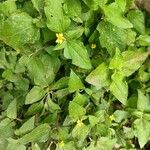
Calyptocarpus vialis
Creeping Cinderella-weed · Horseherb · Straggler daisy · Sprawling Horseweed · Creeping cinderellaweed
Description
Source: leafsnapCalyptocarpus vialis, commonly known as Horseherb or Straggler Daisy, is a low-growing perennial plant that belongs to the Asteraceae family. Native to the southern United States and Mexico, it thrives in various habitats, including prairies, woodlands, and disturbed areas. This plant features small yellow flowers that bloom from spring to fall and can reach a height of up to 12 inches. Its bright green, glossy leaves are arranged in opposite pairs along the stem. Horseherb is an excellent ground cover due to its rapid spread through rhizomes or underground stems. Additionally, it is drought-tolerant, requiring minimal water. Historically, Native Americans have used Horseherb for medicinal purposes to treat ailments such as fever, coughs, colds, and headaches. Overall, Calyptocarpus vialis is an attractive ornamental ground cover with numerous benefits, making it an excellent addition to any garden or landscape project.
🌳 The straggler daisy challenges typical ideas about a plant's usefulness. Frequently ignored in gardening circles, it excels at creating dense ground cover, particularly in shaded areas where grass won't establish. Gardeners appreciate how it turns bare, shady patches into rich, natural carpets. While it isn't used to produce exotic oils or beverages, the straggler daisy stands out for its plainness and the soft feel it provides underfoot.
🎭 Faithful affection, Tenderness, Purity
Care Guide
💧 Water Every 7 days
Straggler daisy thrives in environments with high humidity and consistent moisture, similar to its native tropical habitat. It should be watered weekly to avoid waterlogging. As an evergreen, it requires careful attention, especially during the growing season, which makes cultivating it indoors particularly beneficial.
How should I water my Straggler daisy?
To properly water the Straggler daisy, it is recommended to use filtered water at room temperature. Tap water may contain harmful particles for this plant, so it's best to avoid it. Considering the origins of the Straggler daisy, it prefers warmer water as cold water can be a shock to its system. Additionally, overhead watering should be avoided to prevent issues with the foliage. Instead, simply apply filtered room temperature water directly to the soil until it is fully soaked. This soaking technique benefits the plant by moisturizing the roots and facilitating their spread through the soil to gather necessary nutrients.
What should I do if I give my Straggler daisy too much or too little water?
Both overwatering and underwatering can harm your Straggler daisy, but overwatering is a more common issue. When this plant gets too much water, its stems and leaves may wilt and turn yellow. Overwatering for a long time can also cause diseases like root rot, mold, and mildew, which can kill your plant. Underwatering is less likely, as the Straggler daisy is somewhat tolerant of drought. However, it can still happen, and when it does, the leaves may become brittle and brown. It's important to notice the signs of overwatering early when caring for your Straggler daisy. Some of the diseases caused by overwatering, like root rot, can't be fixed if you wait too long. If you see early signs of overwatering, reduce your watering schedule immediately. Also, check the quality of the soil. If it doesn't drain well, replace it with loose, well-draining potting mix. On the other hand, if you notice signs of underwatering, simply water the plant more regularly until the signs go away.
How many times should I give my Straggler daisy some water?
If your Straggler daisy is in a pot, the best way to check if it needs water is by sticking your finger in the soil. If the top two to three inches of soil are dry, it's time to water it. If you're growing the Straggler daisy outdoors in the ground, you can use a similar method to test the soil. Once again, if the top few inches of soil have dried out, it's time to water. Usually, during spring and early fall, watering once a week is sufficient. However, during extremely hot weather, consider watering about twice or more per week. It's important to note that mature, well-established Straggler daisies have a good ability to withstand drought.
How much water does my Straggler daisy require?
Watering your Straggler daisy requires sufficient watering to ensure the soil is soaked entirely. When the top two to three inches of soil are dry, it's time to water. Be generous with the amount of water you give, enough to cause excess water to flow through the drainage holes at the bottom of the pot. If you don't see any excess water draining, it means you haven't watered enough. However, be careful not to let water accumulate inside the soil, as it can be dangerous for the plant. Similarly, if water doesn't drain through the pot, it suggests poorly draining soils, which should be avoided. For outdoor plants, approximately 1 inch of rain per week is sufficient.
How do I water my Straggler daisy at different times when it is growing?
The water requirements for the Straggler daisy vary depending on its growth stage. In the first few years of its life or when the daisy is newly transplanted, more water will be needed. During these stages, the daisy focuses on developing new roots to support its future growth. These young roots require additional moisture compared to more mature phases. As the daisy gets older, it will require less water. Additionally, during the bloom period, the daisy will require more water. This is because the development of flowers utilizes a significant amount of moisture.
☀️ Light Full sun
Straggler daisy predominantly does best in abundant sunlight but can also tolerate reduced light or complete shade. Its native habitat consists of areas with ample sun. Both excessive and insufficient light can cause sluggish growth or a withered appearance.
What are the sunlight requirements for Straggler Daisy?
Straggler Daisy thrives best with extensive exposure to sunlight, ideally above 6 hours of direct sunlight for full sun conditions, and can adapt to about 3-6 hours of sunlight for partial sun to full shade conditions. Its native habitat involves areas having generous sunlight, indicating its preference for sunnier locations to ensure healthy growth. Additionally, it's important to monitor how sunlight moves through your garden to find spots that offer the perfect balance of light and shade, ensuring the plant's well-being.
What are the essential considerations for growing Straggler Daisy indoors and outdoors?
Indoors, Straggler Daisy requires adequate lighting to maintain optimal growth. When natural sunlight is insufficient, artificial lighting provides a vital solution. LED lights are recommended for being customizable to the specific wavelengths needed by plants. Depending on the plant's needs, 10-50W/sq ft of artificial light should be aimed at the plant, with the light source placed 12-36 inches above it for 8-12 hours per day. Outdoors, the plant thrives in full sun but displays tolerance for varying light conditions, showcasing flexibility in both sun-exposed and shaded environments. This adaptability highlights its ease of cultivation in diverse settings.
What symptoms indicate Straggler Daisy is receiving inadequate sunlight?
Symptoms of inadequate sunlight in Straggler Daisy include smaller new leaves, leggy or sparse growth, faster leaf drop, and slower or halted new growth. These symptoms suggest the plant is conserving resources due to low light. Additionally, leaf color changes such as lighter-colored new leaves, chlorosis, or sunscald indicate either insufficient or excessive light. Leaf curling, wilting, and leaf scorching are defense mechanisms or damage responses to inappropriate sunlight levels, signaling the need for immediate adjustments in light exposure.
How can I address sunlight-related issues in Straggler Daisy for better growth?
To address sunlight-related issues, gradually adjust the plant's exposure to sunlight. For indoor plants, move them weekly towards a sunnier spot until they receive at least 6 hours of direct sunlight daily, utilizing a south-facing window or artificial lighting for at least 8 hours daily. For outdoor plants, also gradually adjust their location to avoid shock. If necessary, prune surrounding foliage to reduce shade. For plants with irreversible damage from inadequate light, focus on encouraging healthy new growth by optimizing light conditions, while realizing already damaged parts might not recover fully.
🌡️ Temperature 20–37.8°C
In its native habitat, the straggler daisy commonly grows in places where temperatures range from 20 to 38 ℃ (68 to 100.4 ℉). It favors warmer conditions and tolerates high heat, but can have trouble during extended spells of severe cold. In winter, it may do better if kept in slightly warmer indoor surroundings or covered on frosty evenings.
What are the ideal growing conditions for Straggler daisy?
Straggler daisy thrives in environments with temperatures ranging from 20°C to 38°C (68°F to 100.4°F). It is a heat-loving plant that prefers warmer temperatures and can tolerate high heat. However, it may struggle during prolonged periods of extreme cold. In regions experiencing cold winters, it is advisable to keep the plant indoors in warmer conditions or to cover it during frosty nights to protect it from the cold. Furthermore, maintaining indoor temperatures above 20°C during the winter months is beneficial for the plant's growth. It is also recommended to keep the plant near a bright window while ensuring it is not placed too close to heaters to avoid harm.
How does low temperature affect Straggler daisy and what are the solutions?
Straggler daisy prefers warm temperatures and does not tolerate low temperatures well. It performs best when temperatures remain above 20°C. During winter, it should be kept in conditions above 0°C to remain healthy. Exposure to temperatures below -5°C can cause the leaves to lighten in color, eventually turning brown or black following frost damage. Symptoms of distress may include wilting and drooping. To mitigate these effects, frost-damaged parts of the plant should be trimmed off. The plant should then be moved indoors to a warm environment, ideally near a south-facing window to ensure it receives ample sunlight. It is also important to avoid placing the plant near heaters or air conditioning vents to prevent the air around it from becoming excessively dry.
How does high temperature affect Straggler daisy and what are the recommended precautions?
During the summer months, it's crucial to ensure that Straggler daisy is not exposed to temperatures exceeding 38°C. If the temperature rises above 43°C, the plant's leaves may start to lighten, increasing its susceptibility to sunburn. To address these issues, it's advisable to trim away any sunburned or dried-up parts of the plant. Moving the plant to a shaded location, especially during the midday and afternoon sun, can help protect it. Additionally, watering the plant in the morning and evening can help maintain soil moisture, which is crucial for its health during high-temperature conditions.
💨 Humidity dry (<40%)
This plant prefers dry conditions, so don't mist it. However, watering it less often can also thrive in higher humidity.
🪴 Soil 6-7
🌱 Fertilizer
Straggler daisy needs the most fertilizer during its active growth period, which occurs mainly in spring, summer, and early fall. Fertilization supplies essential nutrients that the soil may lack, encouraging healthy root and stem growth and producing attractive foliage, a notable trait of this plant.
🪴 Pot & Repot Every 12 months
✂️ Pruning
🌿 Propagating
🐛 Diseases & pets
☠️ Toxicity
Characteristics
- Plant Type
- Herb
- Life Cycle
- Perennial, Annual, Biennial
- Genus
- Calyptocarpus
- Family
- Asteraceae
- Hardiness Zone
- 9-11
- Mature Height
- 15 cm to 30 cm
- Mature Spread
- 15 cm to 30 cm
- Leaf Color
- Green
- Leaf Type
- Semi-evergreen
- Flower Color
- Yellow
- Flower Size
- 0.51 cm to 0.76 cm
- Bloom Time
- All year round
- Planting Time
- Autumn
- Harvest Time
- All year round
- Native Area
- Bahamas, Mexico, Cuba, Venezuela