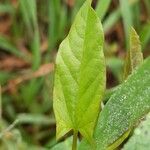
Calystegia sepium
Wild Morning-Glory · Bindweed · Bearbind · Hedge Bindweed · Devil's Guts
Description
Source: leafsnapCalystegia sepium (hedge bindweed, Rutland beauty, bugle vine, heavenly trumpets, bellbind, granny-pop-out-of-bed and many others) is a species of flowering plant in the family Convolvulaceae. It has a subcosmopolitan distribution throughout temperate regions of the North and South hemispheres.
🌳 Hedge bindweed has been put to uncommon uses, for example being woven into coarse textiles and baskets using its long, vine-like stems. It also functions as a bioindicator of soil health, since its abundant growth in nitrogen-rich soils reveals the fertility of the land.
🎭 Cleanness, spiritual awareness, modesty, guiltlessness
Care Guide
💧 Water
Hedge bindweed originally grows in moist meadows and thrives in environments with consistent moisture, preferring to be watered weekly. Although it can withstand short periods of dryness, natural rainfall significantly aids its growth. This robust climber greatly benefits from regular watering during its active growing season.
When Should I Water My Hedge Bindweed?
Watering your hedge bindweed is essential for its health and blooming. Check the top 1-2 inches of the soil; if it feels dry, it's time to water. Look out for wilting leaves which might indicate under-watering, and ensure the plant doesn’t look stressed or dull. During hotter and windier conditions, your hedge bindweed may require more frequent watering. Be cautious of over- or under-watering as this can lead to root rot or a stressed plant, respectively.
How Should I Water My Hedge Bindweed?
Hedge bindweed thrives with consistent moisture but dislikes waterlogged conditions. Water directly at the base using a watering can to ensure the roots receive moisture without overly wetting the foliage, which can increase disease risk. Bottom-watering is a beneficial method that minimizes foliage moisture. Use a moisture meter to gauge when the soil starts drying out and water accordingly. Always aim to keep the soil well-moistened but avoid wetting the plant’s leaves heavily.
How Much Water Does Hedge Bindweed Really Need?
The exact amount of water for hedge bindweed may vary based on pot size, plant size, and root depth. However, deep watering is key, ensuring that the entire root system is moistened, usually around 1 to 2 liters per session for a mature plant. Proper hydration is indicated by green, vibrant leaves and a sturdy stance. Be wary of overwatering signs, such as yellow leaves or mold presence. Balanced watering promotes healthy growth without the risks of root rot or fungal diseases.
What Kind of Water is Best for Hedge Bindweed?
Hedge bindweed prefers rainwater due to its natural purity and lack of chemicals. Distilled and filtered water are good alternatives. While tap water is acceptable, it might contain chlorine and fluoride that can affect the plant’s health. Removing chlorine by letting tap water sit for 24 hours before use and filtering to reduce fluoride levels is advised. Hedge bindweed enjoys moderately acidic to neutral pH water at room temperature, and it's crucial to avoid water types loaded with harmful minerals.
How Do Hedge Bindweed's Watering Needs Change with the Seasons?
Seasonal changes affect hedge bindweed’s watering needs. Spring marks a growth phase requiring regular moisture. Summer prompts the flowering stage, needing deep but less frequent watering. Autumn signals a preparation for dormancy with reduced watering needs while ensuring light moisture. Winter invites a dormancy period, where watering should be minimal to prevent root rot from over-saturation. Adjust watering frequency to match these seasonal needs for optimal health.
☀️ Light Full sun
Hedge bindweed performs best in full, direct sunlight, though it can tolerate light shade. Its natural habitat favors plentiful sun exposure. Too little light can lead to weak, spindly growth, while too much sun may cause stress, visible as scorched leaves.
What are the sunlight requirements for hedge bindweed?
Hedge bindweed thrives in full sun, requiring more than 6 hours of sunlight daily, but it can also adapt to partial sun conditions with about 3-6 hours of sunlight. It's important to observe the movement of sunlight through your garden to find the ideal spot that provides a balance of light and shade, ensuring the plant's wellbeing. In environments where natural sunlight is insufficient, especially during winter or in less sunny spaces, artificial lighting such as LED lights can be a valuable alternative. For optimal growth under artificial lights, full sun plants need 30-50W/sq ft, partial sun plants require 20-30W/sq ft, and full shade plants should have 10-20W/sq ft. The light source should be 12-36 inches above the plant, mimicking natural sunlight conditions for 8-12 hours per day.
What are the symptoms of incorrect lighting for hedge bindweed?
Hedge bindweed shows several symptoms when the lighting conditions are not adequate. In low light, you may notice smaller new leaves, leggy or sparse growth, faster leaf drop, slower or no new growth, and lighter-colored leaves which signal insufficient sunlight. On the other hand, symptoms of too much sunlight include chlorosis, where the leaves turn yellow; sunscald, with pale or necrotic areas on leaves; leaf curling as a defense against excess sunlight; wilting due to increased water loss; and leaf scorching, indicated by brown, crispy edges on leaves. These symptoms alert you to adjust the plant's light exposure to its needs.
How can you improve lighting conditions for indoor and outdoor hedge bindweed?
To improve lighting conditions for hedge bindweed, gradually increase light exposure to ensure at least 6 hours of direct sunlight daily for outdoor plants. This can be done by incrementally moving the plants to sunnier locations each week to prevent sunburn. For indoor plants, moving them to a south-facing window or using artificial light such as desk lamps or professional grow lights for at least 8 hours a day can significantly benefit their growth. If your plants are ground-planted and blocked by obstructions, consider pruning overhanging branches or relocating smaller plants to sunnier spots. Remember that parts of the plant affected by previous inadequate light may not recover, but new growth will be healthy with improved light conditions.
🌡️ Temperature 5–32.2°C
Hedge bindweed is a temperate climbing plant that grows in a range of conditions. Its native growth environment is linked to its temperature requirements, favoring temperatures between 41 and 89.6 ℉ (5 and 32 ℃). In summer it can tolerate higher temperatures and requires slightly less water.
What is hedge bindweed and where does it naturally grow?
Hedge bindweed, scientifically known as Calystegia sepium, is a temperate climbing plant that thrives in a variety of conditions. Its ideal growth environment is strongly influenced by temperature, with a preference for ranges between 41 to 89.6°F (5 to 32°C). This plant demonstrates strong cold resistance and can generally tolerate the summer heat, making it versatile in its native environments.
How does hedge bindweed handle cold weather, and what are the recommended winter care practices?
Hedge bindweed exhibits significant cold resistance, eliminating the need for special frost protection in most cases. However, if temperatures are forecasted to plummet below -30°C, it becomes crucial to safeguard the plant by wrapping its trunk and branches with protective materials such as non-woven fabric. Additionally, a thorough watering before the first autumn freeze helps ensure the soil remains moist into the frozen state, aiding the plant in avoiding drought and water scarcity during the late winter and early spring seasons.
What symptoms should I look for in hedge bindweed during low and high temperatures, and how can I address them?
During colder weather, if temperatures drop below -30°C, you might not observe immediate issues, but come spring, the branches may turn brittle and fail to produce new shoots. In such cases, pruning the dead branches is advisable. In contrast, high temperatures above 35°C can cause the leaves to lighten in color, tips to dry out, and increase the risk of sunburn. To combat this, trim away the damaged sections, relocate the plant to a shaded area or introduce a shade cloth, ensuring you water the plant during cooler times of the day to keep the soil adequately moist.
💨 Humidity normal (40-60%)
This plant will thrive in moderate humidity, which is probably the level in your home. However, misting it a few times a week can be very beneficial. Make sure the room has good ventilation.
🪴 Soil 6-7
🌱 Fertilizer
A single fertilizer application in spring is generally enough for Hedge bindweed, though multiple feedings can maximize growth. Feed once every month to a month and a half. Fertilizing improves leaf appearance and function, encouraging uniform color and a healthy texture. It also promotes root development and nutrient uptake for long-term plant health.
🪴 Pot & Repot 2-3 years
Repot Hedge bindweed in early spring, selecting a pot only slightly bigger than the current one that has good drainage. Use a well-draining potting mix and place the root ball at the same level as before. Gently loosen any root-bound roots. After repotting, water thoroughly and set the plant in a warm, shady spot. Regular pruning keeps its size in check and encourages new growth.
✂️ Pruning
🌿 Propagating
🐛 Diseases & pets
☠️ Toxicity
Characteristics
- Plant Type
- Vine, Herb
- Life Cycle
- Perennial
- Genus
- Calystegia
- Family
- Convolvulaceae
- Hardiness Zone
- 4-8
- Mature Height
- 2.13 m to 3.96 m
- Mature Spread
- 91 cm
- Leaf Color
- Green
- Leaf Type
- Deciduous
- Flower Color
- White, Pink
- Flower Size
- 3.05 cm to 6.35 cm
- Bloom Time
- Early summer, Mid summer
- Planting Time
- Summer
- Harvest Time
- Mid summer, Late summer
- Native Area
- Eurasia