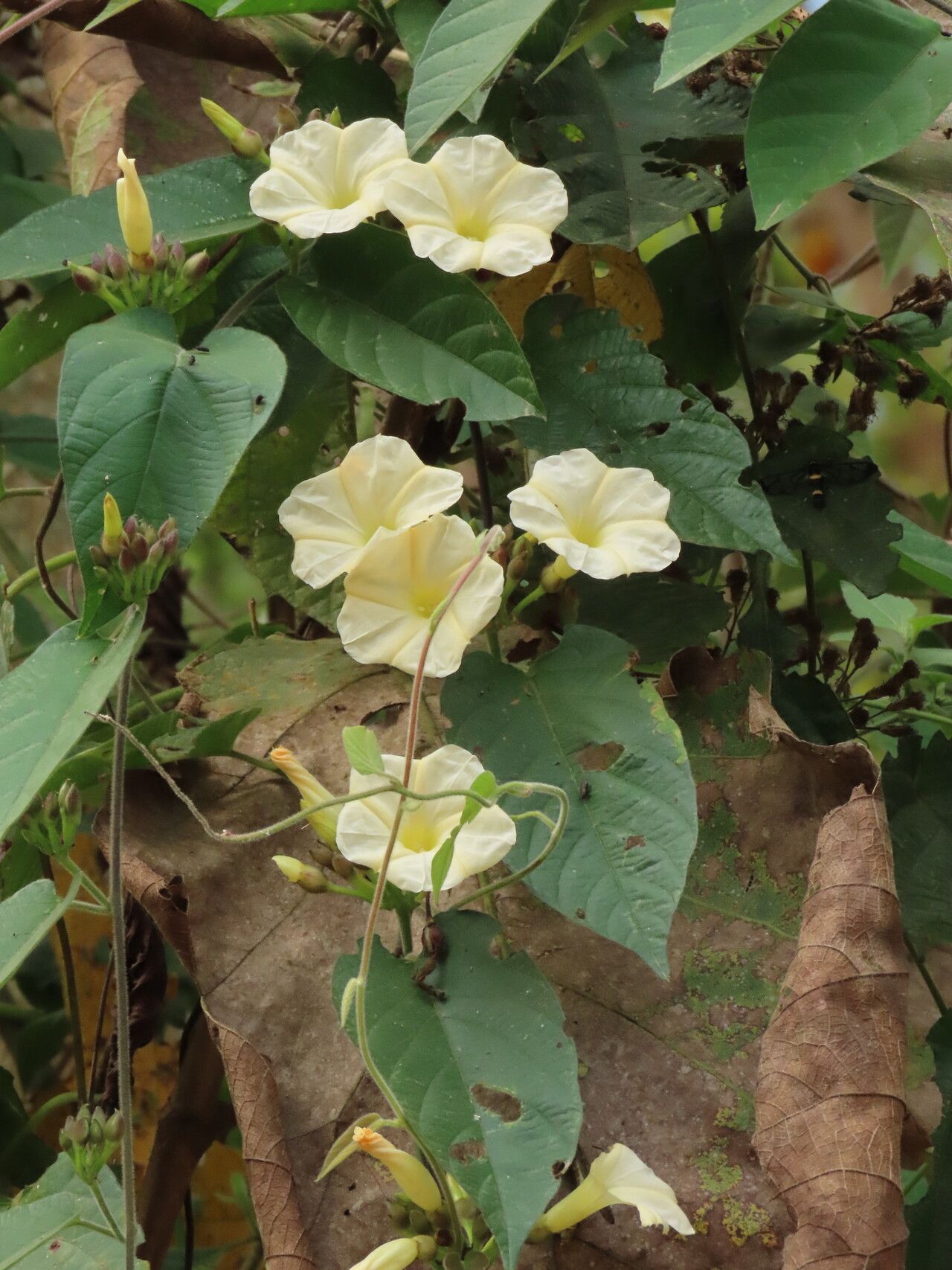
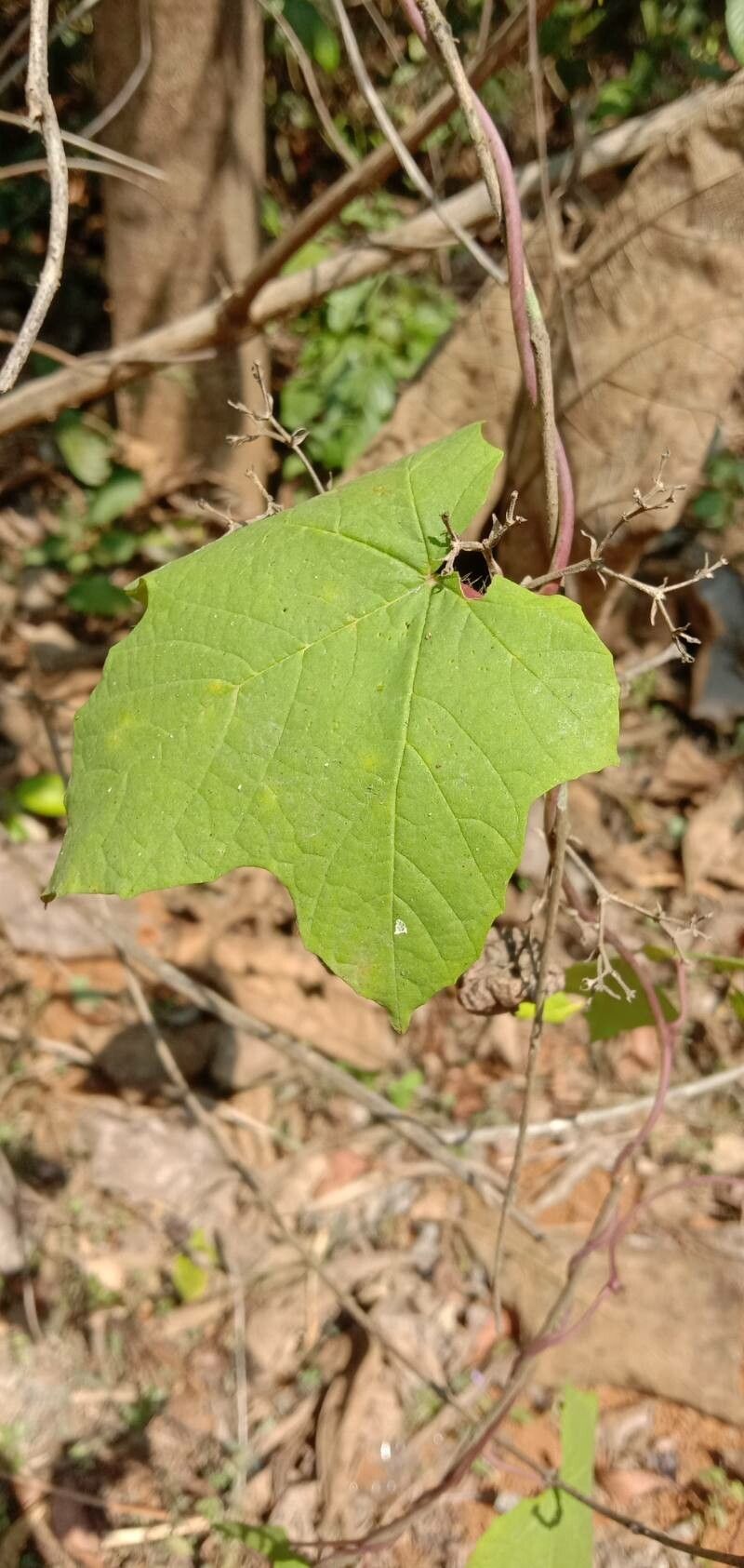
Camonea umbellata, commonly known as hogvine, yellow merremia, and yellow wood rose, is a thin vine growing to a maximum thickness of 2 cm (0.79 in). It has many uses in Indian traditional medicines. The flowers attract bees, butterflies and birds.
Hogvine has strong resistance to disease and is generally not very prone to illnesses. Still, it can be affected by pests and diseases present in its environment, although these problems are usually minor. For care, this plant needs moderate maintenance. It should be pruned on a regular basis to keep a neat appearance and support healthy growth. Fertilizing can also encourage more flowering. Hogvine is suitable for people who have outdoor space, such as a garden or patio, and does not demand extensive horticultural experience. It may need extra attention when cultivated indoors.
How to keep Camonea Umbellata.
Light
Hogvine is native to habitats like forest understories or rocky sites, where it grows in natural shade. It prefers partial sun but can tolerate full sun or full shade, showing its adaptable, hardy nature.
Water
Hogvine flourishes in environments with high humidity and consistent moisture. For lush growth, it requires watering every week. When grown indoors, maintaining increased humidity levels is beneficial. It's important to ensure proper drainage in containers to prevent waterlogging, as hogvine prefers soil that is moist but well-drained.
Temperature
Hogvine comes from tropical areas, where the climate is generally warm and humid. As a result, it is adapted to high temperatures and humidity. It does not tolerate sudden temperature changes and prefers a stable thermal environment, so avoiding temperature fluctuations indoors is important. It usually cannot withstand cold temperatures and needs warmer conditions to grow. If the surrounding temperature falls too low, the plant may stop growing or even die.
Fertilizer
Appropriate fertilization is essential for Hogvine’s health and appearance. Fertilize Hogvine during summer, repeating the treatment monthly throughout the season. The nutrients support growth and help maintain the plant’s parts. Fertilizing also improves Hogvine’s flowering, ensuring the best blooms.
Pruning
Hogvine is a robust climbing plant that benefits from pruning between early and late spring to promote healthy growth and flowering. To improve air circulation, prune by removing dead stems and thinning out crowded areas. Use clean, sharp tools to minimize the risk of disease, and refer to local guidelines for the best care practices.
Botanical profile.
- Plant Type
- Herb
- Life Cycle
- Perennial
- Genus
- Camonea
- Family
- Convolvulaceae
- Hardiness Zone
- 9-11
- Mature Height
- 2.13 m
- Mature Spread
- 0.91 m to 3.05 m
- Leaf Color
- Green, Dark Green
- Leaf Type
- Semi-evergreen
- Flower Color
- White, Yellow
- Flower Size
- 3.05 cm
- Bloom Time
- Summer, Early fall, Mid fall
- Planting Time
- Spring, Summer, Autumn
- Harvest Time
- Late summer, Fall, Early winter
- Native Area
- Burkina Faso, Belize, Honduras, Mexico, Peru, Nigeria, Guinea, Gambia, Panama, Jamaica, Benin, Mali, Colombia, Cuba, Sierra Leone, Cameroon, Liberia, Bolivia, Venezuela, Togo, El Salvador, Ghana, Nicaragua, Guyana, Ecuador, Côte d'Ivoire, Costa Rica
Other names.
Reader questions.
How should I water my Hogvine?
To properly water the Hogvine, it is important to follow a few guidelines. First, use filtered water that is at room temperature. Tap water may contain harmful particles that can affect the plant's health. Second, keep the water at room temperature or slightly warmer to prevent shocking the Hogvine, which is used to warm environments. Avoid overhead watering, as it can lead to foliage issues. Instead, evenly apply filtered room temperature water to the soil until it is completely soaked. This helps moisten the roots and supports their growth and nutrient collection in the soil.
What should I do if I give my Hogvine too much or too little water?
It's important to be mindful of the watering needs of your Hogvine to ensure its health. Overwatering is a common issue that can cause wilting, yellowing of leaves, and even diseases like root rot, mold, and mildew. Underwatering is less common since the Hogvine has good drought tolerance, but it can still happen and result in brittle, brown leaves. To prevent overwatering, it's crucial to recognize the early signs and reduce watering immediately. Checking the soil's drainage is also important, and if it's poor, replacing it with a well-draining potting mix can help. If underwatering is the issue, simply increase watering until the signs improve.
How often should I give water to my Hogvine?
If your Hogvine plant is in a pot, the most accurate way to determine if it needs water is by checking the soil with your finger. If the top two to three inches of soil feel dry, it's time to water it. The same method can be used if you have planted your Hogvine outdoors in the ground. Once you notice the first few inches of soil drying out, it's time to give it some water. Usually, during the spring and early fall, watering once a week is sufficient. However, during hot weather, you may need to water it twice or even more per week. Nevertheless, mature and well-established Hogvine plants have a great ability to handle drought.
How much water does my Hogvine plant need?
When watering your Hogvine, don't hold back on the amount of water you give. Make sure the first two to three inches of soil are dry before watering, and then give it a good, thorough soaking. You want the water to completely saturate the soil and flow out of the drainage holes in the bottom of the pot. If you don't see any excess water draining, you've probably not given enough water. However, be careful not to let water accumulate inside the soil, as this is dangerous for the plant. If water isn't draining properly, it could be a sign of poorly draining soil, which is not good for the health of the plant. If the Hogvine is outside, 1 inch of rain per week should be enough.
How should I water my Hogvine as it grows?
The water needs of the Hogvine can vary depending on different growth stages. For instance, during the first few years of its life or when it has been recently transplanted, you will need to give it more water than usual. During these stages, the Hogvine focuses a lot of energy on developing new roots, which will support its future growth. To ensure these roots perform well, they require a bit more moisture compared to when the plant is more mature. As the Hogvine progresses after a few seasons, it will require less water. Additionally, another growth stage that may necessitate more water is during the blooming period. During this time, the development of flowers requires a significant amount of moisture, meaning you may need to increase the amount of water you give to your Hogvine.
How do I water my Hogvine throughout the year?
The Hogvine has different water needs throughout the year. During the hottest months, it requires more water, and you may need to water it more than once a week if the soil dries out quickly. On the other hand, in winter, the Hogvine enters a dormant phase and needs much less water. In fact, you may not need to water it at all during this time. If you do decide to water it during winter, make sure to do so no more than once a month to avoid the risk of disease.
What's the difference between watering my Hogvine inside and outside?
The Hogvine is commonly grown indoors for gardeners who live in temperate and tropical regions. If you're growing it in a container, keep in mind that the soil can dry out faster compared to ground soil. Air conditioning units and similar drying elements can also increase watering needs if the plant is grown outside. However, in such conditions, you may not need to water your Hogvine frequently, especially if you receive regular rainfall. On the other hand, if you're growing the plant indoors, you'll need to water it more often as rainwater won't be able to soak the soil.