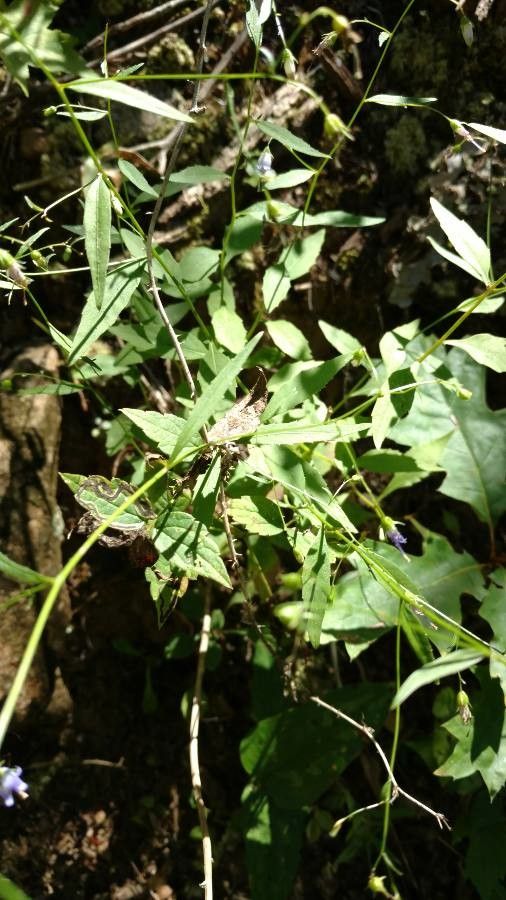
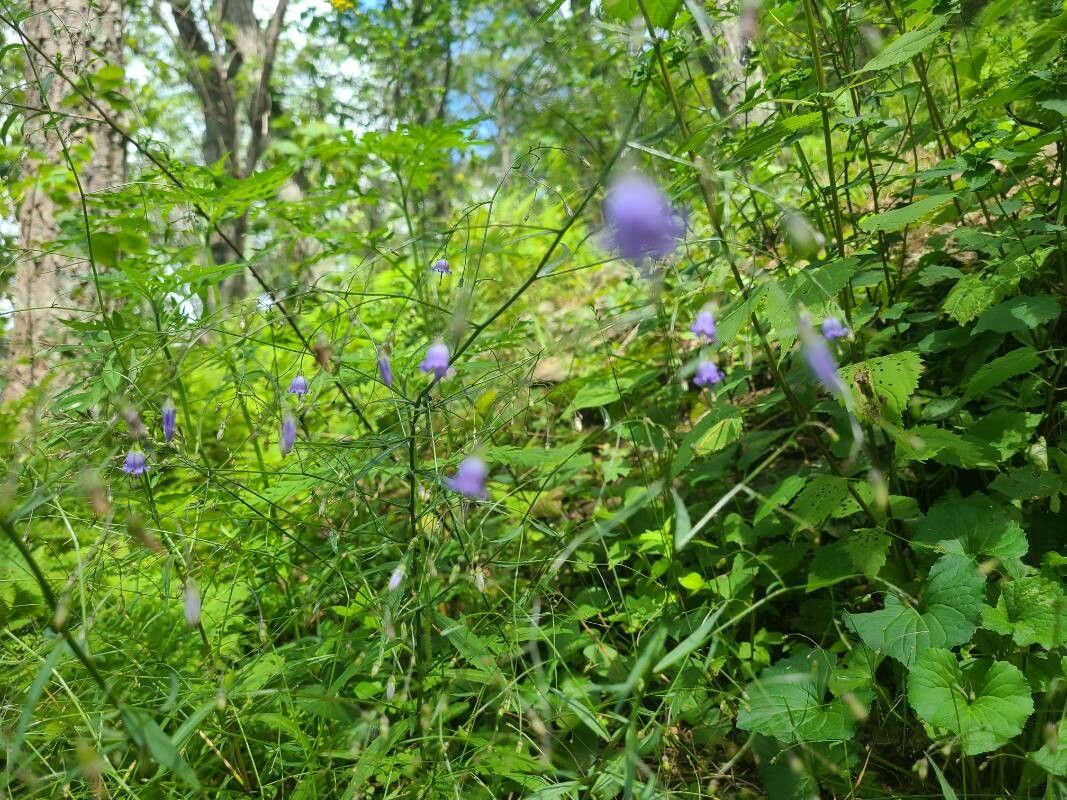
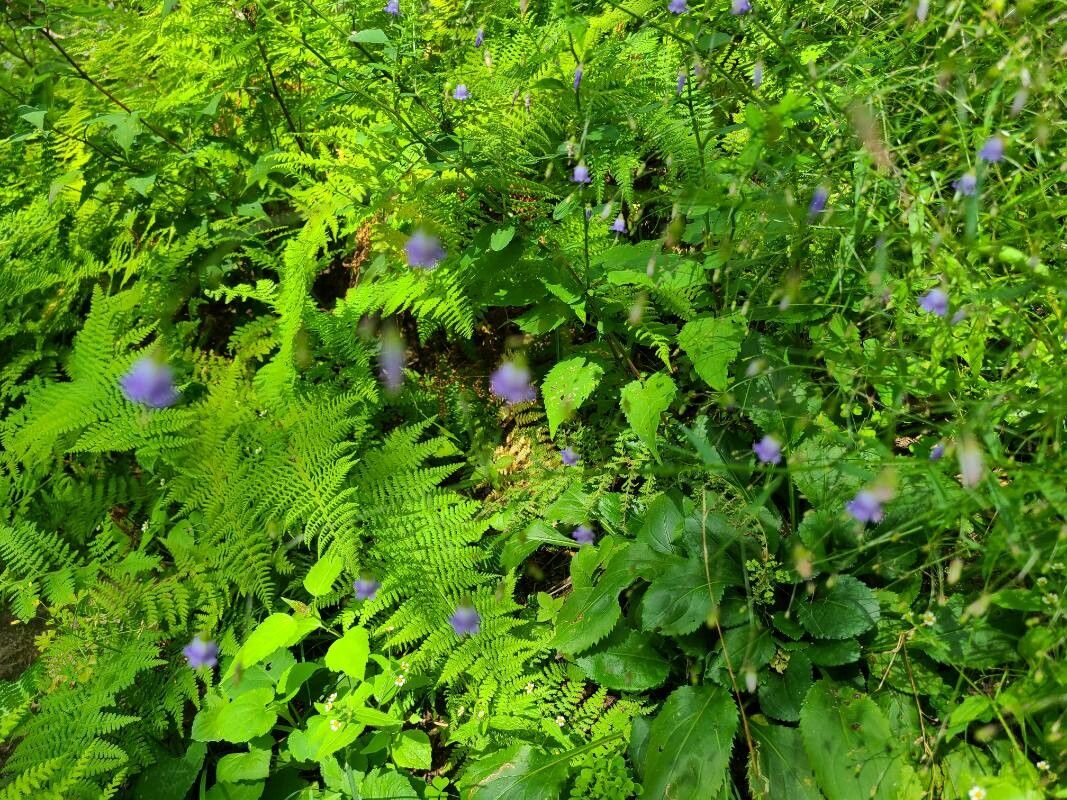
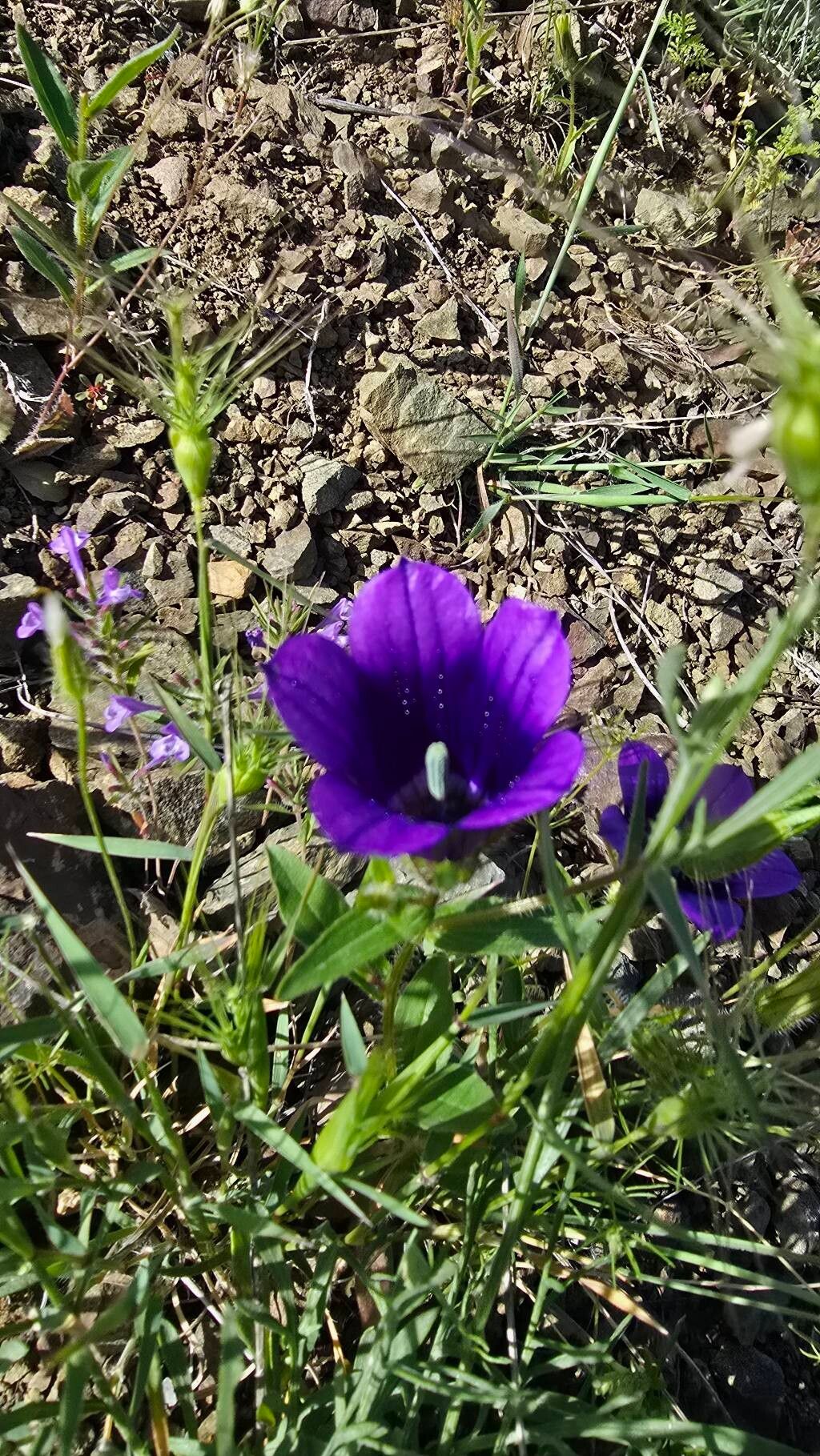
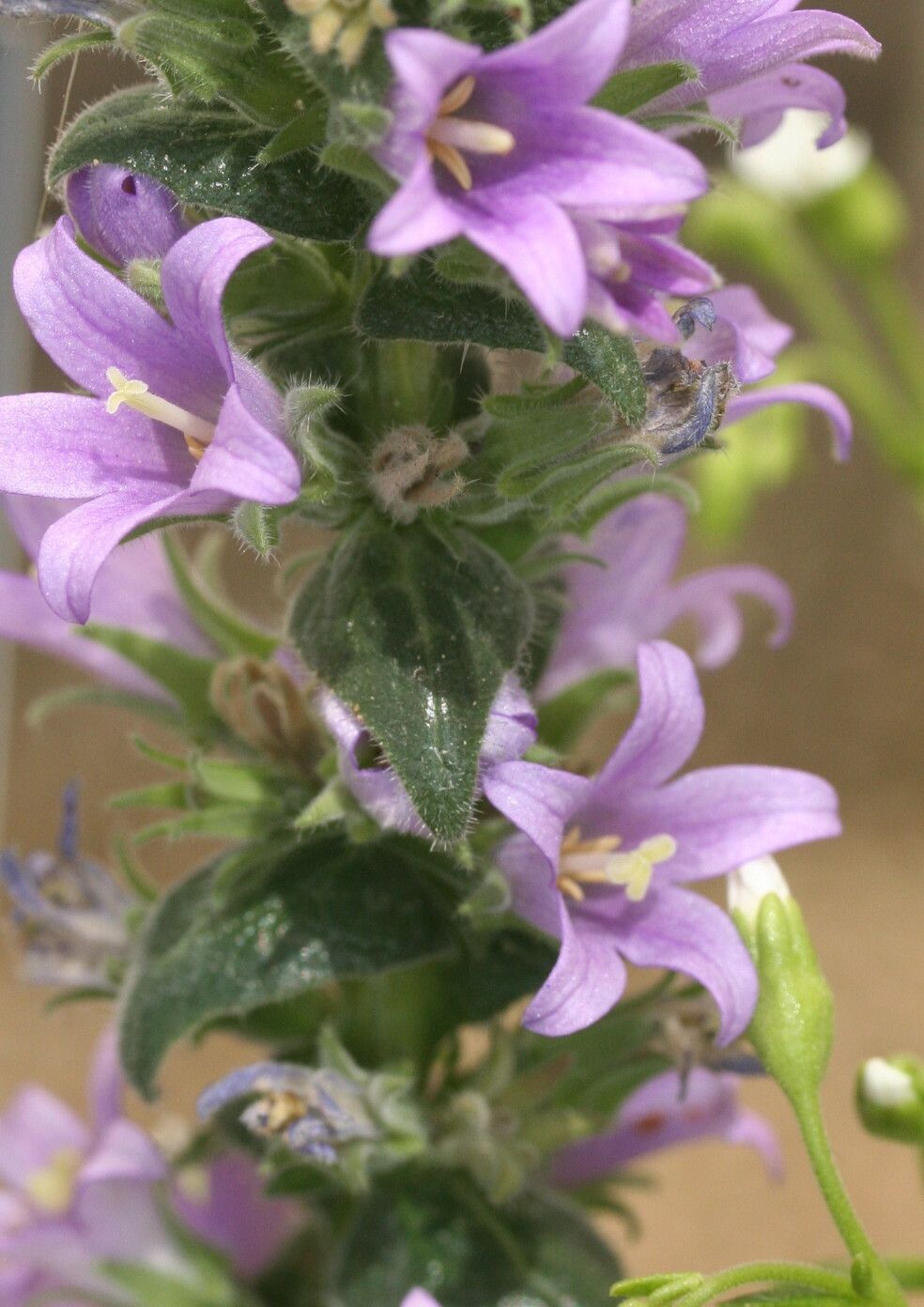
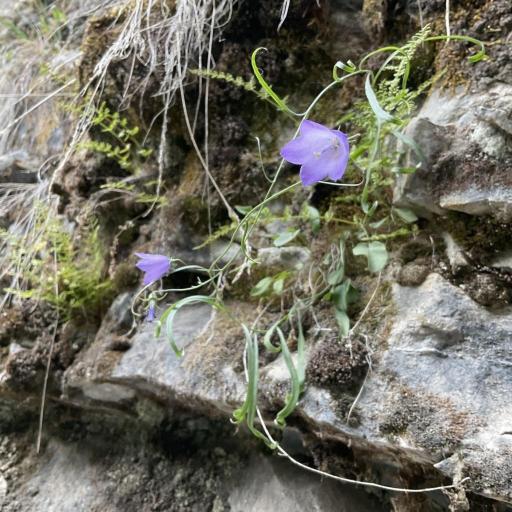
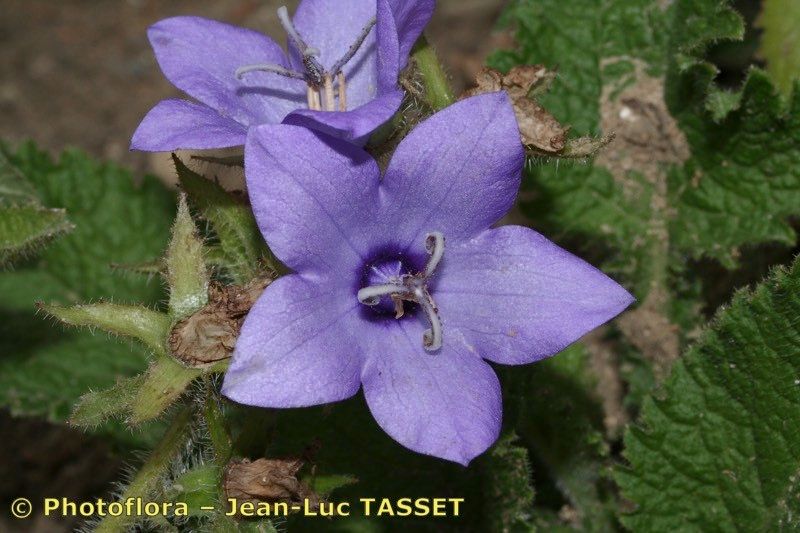
Campanula divaricata, commonly known as the spreading bellflower, is a perennial flowering plant in the Campanulaceae family. Native to Europe and Asia, this plant thrives in meadows, woodlands, and rocky areas. It typically reaches heights of 30-60 cm and has a spread of 30-45 cm. The spreading bellflower features heart-shaped, toothed leaves. Its bell-shaped flowers, each with five petals, vary in color from blue-violet to white. Blooming from late spring through summer, these flowers attract bees and butterflies. This plant prefers moist soil conditions but can tolerate some drought once established. While it grows best in partial shade, it can also thrive in full sun if provided with sufficient moisture. Cultivated for its attractive flowers and foliage, Campanula divaricata is a popular ornamental plant. Additionally, it contains compounds with anti-inflammatory properties, offering potential medicinal benefits. Overall, Campanula divaricata is a beautiful perennial that not only adds vibrant color to any garden or landscape but also provides potential health benefits through its medicinal properties and the honey produced by bees attracted to its nectar-rich blooms.
The small bonny bellflower is fairly disease-resistant and usually does not fall ill easily. However, it can be affected by pests and diseases present in its environment. Such infections are typically mild. As for care, the plant requires moderate maintenance. It should be pruned regularly to keep a neat appearance and support healthy growth. Applying fertilizer can also encourage blooming. The small bonny bellflower is suitable for anyone who has outdoor space like a garden or patio and does not demand extensive care experience. It may need extra attention if grown indoors.
How to keep Campanula Divaricata.
Light
The small bonny bellflower grows best in soft sunlight, favoring dappled light instead of very strong sun. It can tolerate brighter light, but should be handled with care. Its native habitat corresponds to these light needs. With too little light the plant may struggle to thrive, while too much can burn its leaves.
Water
Small bonny bellflower thrives in moist woodland environments where there is high humidity and consistent moisture. For optimal growth, it should be watered weekly, taking care not to overwater or cause waterlogging. As a resilient herbaceous perennial, the small bonny bellflower can efficiently utilize its stored water to endure periods of irregular rainfall during the growing season.
Temperature
The small bonny bellflower is native to areas where temperatures range from 32 to 90°F (0 to 32°C). It prefers that range and therefore can thrive through different seasons. When temperatures fall outside that range, appropriate adjustments and monitoring of temperature are necessary.
Fertilizer
Early spring, when the Small bonny bellflower is coming out of dormancy and beginning active growth, is the best time to fertilize it. Fertilization supplies essential nutrients for healthy growth. Although the Small bonny bellflower has relatively low fertilizer needs, applying fertilizer annually can improve its survival and encourage better, longer-lasting flowers.
Pruning
The small, charming bellflower is known for its delicate blue blossoms and spreading growth habit. To maintain its health, it's important to prune it early in the spring to remove any winter damage. Later in the season, additional pruning helps to shape the plant and stimulate further blooming. Using clean tools is essential to prevent disease, and proper pruning also improves airflow and light penetration, leading to a more vigorous appearance.
Botanical profile.
- Plant Type
- Herb
- Life Cycle
- Perennial
- Genus
- Campanula
- Family
- Campanulaceae
- Hardiness Zone
- 3-8
- Mature Height
- 23 cm to 30 cm
- Mature Spread
- 30 cm to 46 cm
- Leaf Color
- Green
- Leaf Type
- Deciduous
- Flower Color
- Lavender
- Flower Size
- 2.54 cm
- Bloom Time
- Mid summer, Late summer, Early fall
- Planting Time
- Spring, Summer, Autumn
- Harvest Time
- Early fall, Mid fall
Other names.
Reader questions.
What are the sunlight requirements for a Small bonny bellflower?
The Small bonny bellflower requires different amounts of sunlight depending on the plant's stage and specific needs. It thrives in partial sun, meaning about 3-6 hours of sunlight per day, and can also grow well in full sun, which is above 6 hours of sunlight daily. However, it's essential to watch how sunlight moves through your garden, choosing spots that offer a balance of light and shade for your plants, ensuring their health and happiness.
What is the native climate for Small Bonny Bellflower?
Small bonny bellflower, with its botanic name Campanula divaricata, is native to climates where temperatures range from 32 to 90°F (0 to 32°C). This range suggests that the plant can thrive in varying seasonal conditions. However, specific temperature adjustments and careful monitoring are necessary when conditions fall outside this preferred range.
What are the essentials for growing Small bonny bellflower?
To ensure the Small bonny bellflower thrives, it's crucial to provide the right light conditions which mimic its natural habitat. This plant prefers filtered light and can tolerate more intense solar exposure with caution. Inadequate light might result in struggle and scorched leaves due to excessive sunlight. For indoor plants, artificial lighting becomes necessary when natural sunlight is insufficient, especially during winter. Using the right type and amount of artificial light, such as LED lights at proper distances for 8-12 hours a day, can foster healthier growth.
Does Small Bonny Bellflower need frost protection in winter?
Due to its strong cold resistance, Small bonny bellflower generally does not require special frost protection measures during winter. Nonetheless, if winter temperatures are anticipated to plummet below -35°C, it is crucial to provide cold protection. This can be effectively done by insulating the plant with materials like soil or straw. Additionally, watering the plant abundantly before the first freeze in autumn to ensure the soil is moist can aid in preventing drought and water scarcity through the winter and into early spring.
What are the important symptoms of inadequate or excessive light in Small bonny bellflower?
Symptoms of inadequate light in Small bonny bellflower include smaller new leaves, leggy or sparse growth, faster leaf drop, slower or no new growth, and lighter-colored new leaves indicating a lack of chlorophyll. Excessive sunlight can cause issues like chlorosis, sunscald, leaf curling, wilting, and leaf scorching. These symptoms reflect the plant's difficulty in adapting to inappropriate light conditions, affecting its health and growth.
How does extreme cold affect Small Bonny Bellflower?
Small bonny bellflower is cold-tolerant and usually fares well in temperatures above 0°C. Yet, during the winter, it’s vital to keep temperatures above -30°C. Exposure to temperatures below -35°C might not show immediate changes during winter, but could result in a decline in sprouting or even a complete lack of sprouting come springtime. The recommended solution in spring is to remove any parts of the plant that have failed to sprout, ensuring the health of the remaining parts.
What solutions can address light-related issues for Small bonny bellflower?
For light-related issues, adapting the Small bonny bellflower's environment is key. Indoors, gradually increasing sunlight exposure or using artificial light can help, ensuring about 3-6 hours of direct sunlight daily or using grow lights for ample light coverage. Outdoors, gradually moving the plant to sunnier locations each week helps prevent sunburn. Minimizing obstructions such as pruning trees or transplanting to spots with better sunlight and drainage can significantly improve the plant's light absorption, promoting healthy growth and recovery from any light deficiency symptoms.
How does extreme heat affect Small Bonny Bellflower?
In the summer months, it's important to maintain temperatures below 32°C for Small bonny bellflower. Should temperatures exceed 35°C, the plant may show signs of distress such as lighter leaf coloration, leaf curling, susceptibility to sunburn, and in severe cases, wilting and drying out of the entire plant. To counteract these effects, it is advisable to trim away the sunburned and dried parts. Relocating the plant to a shaded area or using a shade cloth can protect it from the harsh midday and afternoon sun. Ensuring the soil is kept moist with watering in the morning and evening will also help alleviate stress from high temperatures.