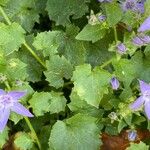
Campanula garganica
Adriatic bellflower · Adria bellflower
Description
Source: leafsnapCampanula garganica, the Adriatic bellflower, syn. C. elatines var. garganica, is a species of flowering plant in the bellflower family Campanulaceae, native to Southern Europe. It is a small, spreading herbaceous perennial growing to 5 cm (2 in). Basal rosettes of leaves bear a profusion of star-shaped blue flowers in summer.Cultivars include 'Dickson's Gold', with gold-coloured foliage, and 'W.H. Paine', with white-centred, lilac coloured flowers. The latter has gained the Royal Horticultural Society's Award of Garden Merit, along with the species.
Care Guide
💧 Water
The Adriatic bellflower, which is native to the rocky areas of the Mediterranean, flourishes best with moderate moisture and occasional dry spells. To ensure optimal growth, water it weekly. As an evergreen plant, it requires consistently moist soil to maintain its foliage throughout the year, making it an excellent choice for rock gardens or as ground cover.
How should I water my Adriatic bellflower plant?
To keep your Adriatic bellflower healthy, it is best to water it with filtered water at room temperature. Tap water may contain harmful particles, so filtered water is preferred. Also, make sure the water is not too cold, as the bellflower is used to warm environments and cold water can be a shock. Avoid watering from above to prevent issues with the leaves. Instead, gently pour the filtered room temperature water directly onto the soil until it is completely soaked. This will help to keep the roots moist and allow them to spread and absorb nutrients from the soil.
What should I do if I give my Adriatic bellflower too much or too little water?
Overwatering is a more common issue than underwatering for the health of your Adriatic bellflower. When overwatered, the stems and leaves may wilt and turn yellow. Over time, it can also lead to diseases like root rot, mold, and mildew, which can be fatal. Although underwatering is less common, the leaves may become brittle and brown. It is important to recognize the signs of overwatering early to prevent irreversible damage. Reduce watering if you notice these signs and consider replacing poorly draining soil with a loose, well-draining potting mix. On the other hand, if your Adriatic bellflower lacks water, increase your watering schedule until the signs improve.
How often do I need to water my Adriatic bellflower plant?
To determine if your Adriatic bellflower needs water, check the soil by sticking your finger into it. If the top two to three inches are dry, it's time to water. The same method can be used for bellflowers planted outdoors. In spring and early fall, watering once a week is usually sufficient. However, during hot weather, you may need to water twice a week or more. Keep in mind that mature bellflowers have a strong drought tolerance.
How much water does my Adriatic bellflower require?
When watering your Adriatic bellflower, make sure to give it enough water. Check if the top two to three inches of soil are dry. If they are, give the plant a long and thorough watering, making sure to soak the soil entirely. The amount of water you add should be enough to see excess water flowing out of the drainage holes at the bottom of the pot. If you don't see excess water draining, it means you haven't watered enough. However, be careful not to let water accumulate in the soil, as it can harm the plant. On the other hand, if water doesn't drain properly, it could indicate that the soil is not draining well, which is not good for the plant. Lastly, if the plant is outside, 1 inch of rain per week is sufficient.
How do I water my Adriatic bellflower as it grows?
The water requirements of the Adriatic bellflower can vary depending on its growth stages. When your bellflower is young or recently transplanted, it needs more water than usual. During these stages, the plant focuses on developing new roots to support future growth, which requires more moisture. As the bellflower matures, it will require less water. Another stage that may require increased watering is during the bloom period when flower development requires extra moisture.
☀️ Light Full sun
Adriatic bellflower is a sun-loving perennial herbaceous plant that comes from open habitats, commonly growing in meadows and grasslands. It prefers full sun but can also tolerate partial sun.
What are the sunlight requirements for Adriatic bellflower?
The Adriatic bellflower thrives best in full sun, requiring above 6 hours of sunlight daily, but it can also tolerate partial sun conditions, which means about 3-6 hours of sunlight. To ensure the happiness of your plants, observe how sunlight moves through your garden over the day and select locations that offer an ideal mix of light and shade. This perennial herbaceous plant, native to open habitats like meadows and grasslands, is well-adapted to thrive in conditions where it receives ample sunlight.
What should I do if my Adriatic bellflower isn't getting enough natural light?
If your Adriatic bellflower isn't receiving sufficient natural sunlight, especially during winter or in less sunny spaces, using artificial lighting can be a viable solution. Optimizing growth with artificial lights involves selecting the right type of lights, such as LEDs, which can provide the wavelengths of light your plant needs. Full sun plants generally require 30-50W/sq ft, partial sun plants 20-30W/sq ft, and full shade plants 10-20W/sq ft of light. Position the light source 12-36 inches above the plant for 8-12 hours per day to mimic natural daylight conditions.
How can I identify if my Adriatic bellflower is suffering from inadequate lighting?
Signs of light deficiency in Adriatic bellflowers may include the development of smaller, new leaves, leggy or sparse growth, faster leaf drop, stalled growth, paler new leaves, chlorosis, sunscald, leaf curling, wilting, and leaf scorching. These symptoms indicate the plant's struggle to adapt to inadequate light conditions, leading to poor health and reduced ability to photosynthesize efficiently.
What are the solutions for Adriatic bellflower light deficiency?
To address light deficiency in Adriatic bellflowers, consider gradually moving your plant to a location with at least 6 hours of direct sunlight daily, using a south-facing window for indoor plants, or employing artificial light sources for at least 8 hours daily. Outdoors, gradually acclimate your plants to more sunlight to prevent sunburn. Removing obstructions that block sunlight and, if necessary, transplanting smaller plants during their dormant period to a sunnier location with good drainage can also help improve light exposure. Remember, parts of the plant that were previously affected may not recover, but new growth should be healthy with increased light exposure.
🌡️ Temperature 5–35°C
Adriatic bellflower can tolerate a wide range of temperatures, but its distribution may still be constrained by different combinations of moisture and heat. It performs best in warm summer conditions with sufficient rainfall or watering. Long stretches of cloudy, rainy weather, as well as extended high temperatures, increase the likelihood of the plant dying. In winter, protecting it properly from cold improves its chances of survival.
What is the botanical name of the Adriatic bellflower?
The botanical name of the Adriatic bellflower is Campanula garganica. This species, known for its distinctive appearance, belongs to the family of plants commonly known as bellflowers.
💨 Humidity
🪴 Soil 6-8
🌱 Fertilizer
The best time to fertilize Adriatic bellflower is in early spring, when the flowers are beginning to form. A suitable fertilizer promotes improved blooms and helps the Adriatic bellflower produce attractive flowers. Fertilizing at this early-spring stage ensures strong flowering throughout the season and provides energy for its dormant growth phases.
Why should I put fertilizer on my Adriatic bellflower plant?
The Adriatic bellflower primarily consists of leaves, and fertilization is a key factor in maintaining their appearance and function. By properly fertilizing, you can ensure that the leaves maintain a consistent color and healthy texture. Furthermore, fertilization also aids in root development and maintenance, improving the plant's ability to absorb nutrients from the soil both now and in the future.
When should I fertilize my Adriatic bellflower plant for the best results?
If you grow your Adriatic bellflower outdoors, it will send new growth in early spring which is a sign that it's time to start fertilizing. Usually, one application of fertilizer is enough for the plant to do well. However, if you want to maximize its growth, you can fertilize it multiple times from spring to early summer, about once every month to a month and a half.
When should I not put fertilizer on my Adriatic bellflower?
During late fall and winter, your Adriatic bellflower will go into a dormant phase and stop producing new growth. It is not recommended to fertilize your bellflower during this time. In spring and summer, if you choose to fertilize multiple times, start reducing the frequency as summer approaches, since the growth rate of the bellflower will slow down. Avoid fertilizing your Adriatic bellflower when the weather is unusually hot or the soil is extremely dry, as it can cause stress and lead to the premature death of the plant.
What kind of fertilizer does my Adriatic bellflower require?
Choosing the best fertilizer for an Adriatic bellflower is actually quite simple. These plants thrive on a general-purpose garden fertilizer that contains equal parts of nitrogen, phosphorus, and potassium. A fertilizer with a ratio of 10-10-10 or something similar works well. Avoid fertilizers with high nitrogen levels if you're unsure. Granular fertilizers are the most effective for Adriatic bellflowers and should be slow-release for easy application. Additionally, feeding with organic soil amendments like compost can be beneficial.
How can I give my Adriatic bellflower plant some plant food?
To ensure optimal growth for your Adriatic bellflower, wait until the first leaves appear in early spring. Then, apply a granular slow-release fertilizer with a balanced formula to the soil surrounding the base of the plant. You can repeat this process later in the season if desired. When reapplying fertilizer, remember to apply it to the soil at the base of the plant, not directly on the plant itself. Occasionally, you may need to move some leaves to access the soil around the roots. Additionally, it is recommended to water your Adriatic bellflower before and after fertilizing for best results.
🪴 Pot & Repot Every 12 months
✂️ Pruning
The Adriatic bellflower is a low-growing perennial known for its vibrant, bell-shaped flowers. To encourage growth and maintain its shape, prune the plant in early spring. Trim away spent blooms to promote continuous flowering. Careful pruning also improves airflow, reducing the risk of disease. However, be cautious not to over-prune, as this can stress the plant. By following these steps, you can ensure a healthy and thriving Adriatic bellflower.
🌿 Propagating
🐛 Diseases & pets
☠️ Toxicity
Characteristics
- Plant Type
- Herb
- Life Cycle
- Perennial
- Genus
- Campanula
- Family
- Campanulaceae
- Hardiness Zone
- 5-9
- Mature Height
- 10 cm
- Mature Spread
- 20 cm
- Leaf Color
- Green, Yellow
- Leaf Type
- Deciduous
- Flower Color
- Lavender
- Flower Size
- 1.52 cm to 2.03 cm
- Bloom Time
- Late spring, Early summer, Mid summer
- Planting Time
- Spring, Summer, Autumn
- Harvest Time
- Mid summer, Late summer