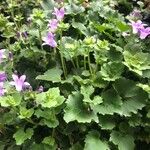
Campanula portenschlagiana
Adria bellflower · Dalmatian bellflower · Wall harebell · Peach-leaf Bellflower · Trailing Bellflower
Description
Source: leafsnapCampanula portenschlagiana, commonly known as the wall bellflower or Dalmatian bellflower, is a low-growing perennial plant native to the Dalmatian Mountains in Croatia. Belonging to the Campanulaceae family, this plant is a favorite among gardeners for its attractive blue-violet flowers and adaptability to various growing conditions. Typically growing up to 15 cm tall and spreading up to 50 cm wide, Campanula portenschlagiana features small, glossy green leaves that are oval-shaped with serrated edges. Its star-shaped flowers, each with five petals, bloom from late spring through summer. The plant prefers well-drained soil with moderate moisture levels but can tolerate dry conditions once established. It thrives in full sun or partial shade, although it prefers cooler temperatures. Often used as ground cover due to its low-growing habit, Campanula portenschlagiana is ideal for rock gardens or garden borders. It also attracts pollinators such as bees and butterflies. Overall, Campanula portenschlagiana is an easy-to-grow perennial that brings beauty and interest to any garden setting while requiring minimal maintenance once established.
Care Guide
💧 Water Every 7 days
The wall bellflower, originally from Croatia's Dalmatian mountains, is well-suited to dry, rocky environments. It requires very little watering—ideally just once a week—and is perfect for outdoor growth where it can benefit from natural rainfall. As an evergreen plant, the wall bellflower offers year-round visual appeal with minimal maintenance.
How should I water my Wall bellflower to keep it healthy?
For optimal care of the Wall bellflower, there are a few key points to consider. Firstly, it is recommended to use filtered water rather than tap water, as tap water may contain harmful particles. Additionally, the water used should be at room temperature or slightly warmer to avoid shocking the plant's system, as the Wall bellflower is native to warm environments. It is important to avoid overhead watering, as this can lead to complications with the foliage. Instead, the best approach is to apply the filtered, room temperature water directly to the soil, ensuring the soil is thoroughly soaked. This method benefits the plant by moistening the roots and aiding in their spread through the soil to collect necessary nutrients.
What should I do if I give my Wall bellflower too much or too little water?
Overwatering is a more common issue than underwatering when it comes to the health of your Wall bellflower. Too much water can cause wilting and yellowing of the stems and leaves, as well as diseases like root rot, mold, and mildew. Underwatering is less likely, but it can still happen and result in brittle and brown leaves. It's important to notice and address signs of overwatering early to prevent irreversible damage. Reduce your watering schedule if you see early signs of overwatering and consider replacing poorly draining soil with a loose, well-draining potting mix. If your Wall bellflower is not receiving enough water, simply increase your watering frequency until the signs of underwatering disappear.
How many times a week should I water my Wall bellflower?
If your Wall bellflower is in a pot, you can determine if it needs water by sticking your finger into the soil. If the top two to three inches of soil are dry, it's time to water it. If you grow your Wall bellflower in the ground, you can use the same method. When the top few inches of soil are dry, it needs water. Usually, during the spring and early fall, watering once a week is sufficient. However, in extremely hot weather, you may need to water it twice or more per week. Nevertheless, mature and well-established Wall bellflowers can tolerate drought well.
How much water does the Wall bellflower plant need?
When watering your Wall bellflower, it's important to be generous with the amount of water you give. Make sure the top two to three inches of soil are dry before watering. Give the plant a good, thorough watering so that the soil is completely soaked. You want to add enough water so that it flows through the drainage holes at the bottom of the pot. If you don't see excess water draining out, you likely haven't watered enough. However, be careful not to overwater and let the water accumulate in the soil, as this can harm the plant. On the other hand, if water is not draining properly, it could indicate poorly draining soil, which is not good for the plant's health. Lastly, if the plant is outside, 1 inch of rain per week will be enough.
How do I water my Wall bellflower as it grows?
The water needs of the Wall bellflower are influenced by its growth stages. In the first few years and after being transplanted, more water is necessary. During this time, energy is focused on developing new roots for future growth, requiring increased moisture. As it matures, less water is needed. Additionally, during the bloom period, extra water may be necessary due to the high moisture demand of flower development.
☀️ Light Full sun
Wall bellflower prefers plentiful sunlight and is not bothered by only moderate shade. It thrives with the abundant sun typical of its natural habitat. The plant is quite hardy and adaptable, though reduced light can affect its flowering; conversely, excessive sun can cause wilting.
What are the sunlight requirements for Wall bellflower?
Wall bellflower thrives in conditions that provide a generous amount of sunlight. It requires full sun, which is defined as more than 6 hours of direct sunlight daily, or partial sun, about 3-6 hours of sunlight a day, to grow optimally. Observing how sunlight moves through your garden helps in finding the perfect spots that offer the right balance of light and shade, ensuring your plants flourish.
How does Wall bellflower react to different light conditions?
Wall bellflower favors environments with abundant solar exposure and can tolerate moderate shade. Its growth and blooming are best with plenty of sunshine, reflecting its natural habitat's conditions. However, a decrease in light can adversely affect its flowering, while excessive sun exposure may lead to wilting. The plant's resilience and adaptability are noteworthy, yet its response to light varies significantly with the amount of exposure.
Can artificial lighting be used for Wall bellflower indoor cultivation?
Yes, artificial lighting can support the growth of Wall bellflower indoors, especially when natural sunlight is insufficient. It's beneficial during winter or in less sunny locations. Optimal growth is achieved by selecting the right type of artificial light, like LED lights, which can be tailored to provide specific wavelengths needed by the plant. Full sun plants require 30-50W/sq ft, partial sun plants 20-30W/sq ft, and full shade plants 10-20W/sq ft of artificial light. The light source should be placed 12-36 inches above the plant for 8-12 hours daily to mimic natural daylight conditions.
What are the symptoms of light deficiency or excess in Wall bellflower?
Symptoms of light deficiency in Wall bellflower include smaller new leaves, leggy or sparse growth, faster leaf drop, halted growth, and lighter-colored or pale new leaves. Chlorosis or the yellowing of leaves, sunscald, leaf curling, wilting, and leaf scorching are indicative of excessive sunlight exposure. These signs highlight the plant's struggle with adapting to improper lighting conditions.
What solutions can be applied to address Wall bellflower's light-related issues?
To optimize Wall bellflower's growth in response to light-related issues, consider the following solutions based on the plant's location: Indoor plants can gradually be moved to sunnier spots to receive at least 6 hours of sunlight or supplemented with artificial lighting for at least 8 hours daily. Conversely, outdoor plants should be transitioned carefully to avoid sunburn. Reducing obstruction, like pruning trees, or transplanting to sunnier locations can also help. Note that parts of the plant damaged by insufficient sunlight may not recover, but new growth post-adjustment will be healthy.
🌡️ Temperature 0–32.2°C
Wall bellflower is native to environments where temperatures range from 32 to 90 °F (0 to 32 ℃). It favors climates within that range. Seasonal temperature adjustments are unnecessary for wall bellflower, as it is relatively tolerant of temperature fluctuations.
What is the ideal temperature range for Wall Bellflower?
Wall Bellflower, or Campanula portenschlagiana, thrives in temperatures ranging between 32 to 90 °F (0 to 32 °C). It is well-adapted to these temperature conditions and does not require seasonal temperature adjustments. Thanks to its high tolerance for temperature changes, Wall Bellflower can grow healthily within this range without needing extra care for temperature variation.
Does Wall Bellflower need frost protection during winter?
Wall Bellflower is highly cold-tolerant and does not require additional frost protection during winter. Despite its tolerance, it is advisable to water the plant generously before the first freeze in autumn. This practice ensures that the soil remains moist when it enters a frozen state, which helps to prevent drought and water scarcity for the plant throughout the winter and early spring seasons.
How does Wall Bellflower react to low winter temperatures?
Wall Bellflower exhibits extreme cold tolerance, capable of withstanding winter temperatures above -35°C. Even if the temperature falls below this threshold, the plant may not show immediate signs of distress during winter. However, such low temperatures could lead to a reduced rate of sprouting, or in some cases, prevent sprouting altogether come spring. The recommended solution for any such issues is to remove parts of the plant that have failed to sprout in spring.
What should I do if Wall Bellflower is exposed to high temperatures?
Wall Bellflower is not tolerant of high temperatures. Exposure to temperatures above 32°C can halt its growth and increase susceptibility to rot. To mitigate heat stress, it's suggested to trim away any sunburned and dried-up parts of the plant. Relocating the plant to a shaded area or using a shade cloth may protect it from the harsh midday and afternoon sun. Moreover, watering the plant in the morning and evening is crucial to maintain soil moisture and support the plant’s well-being during hot periods.
💨 Humidity normal (40-60%)
This plant will thrive in moderate humidity, which is probably the level in your home. However, misting it a few times a week can be very beneficial. Make sure the room has good ventilation.
🪴 Soil 6-7
🌱 Fertilizer
Early spring, when the Wall bellflower is coming out of dormancy and starting active growth, is the best time to fertilize it. Fertilization supplies essential nutrients for healthy growth. Although Wall bellflower has relatively low fertilizer requirements, applying fertilizer annually can improve its survival and encourage better, longer-lasting flowers.
Why should I put fertilizer on my Wall bellflower plant?
Fertilization is important for the Wall bellflower for a few reasons. It provides vital nutrients for both above and below ground growth. While the Wall bellflower has relatively low fertilization needs and can survive without it, annual fertilization can greatly benefit the plant. It helps the plant stay alive and can even enhance the quality and longevity of its flowers. So, those who want their Wall bellflower to thrive should remember to fertilize it annually.
When should I fertilize my Wall bellflower plant?
The best time to fertilize a Wall bellflower is in late winter or early spring, when it is coming out of its dormant phase and starting to grow actively. Fertilizing at this time will help promote healthy growth for the upcoming season. It is also possible to fertilize in the fall, although it is generally most beneficial in the early spring. However, it is not recommended to feed the plant during summer or winter.
When should I not put fertilizer on my Wall bellflower?
To properly care for your Wall bellflower, it is important to know when to fertilize. Avoid fertilizing this plant during spring, summer, and fall, as this can easily lead to overfertilization and its associated problems. Late winter and early spring are the only appropriate times to fertilize, as this plant has low fertilizer needs and a single feeding per year is sufficient. However, if you happened to miss fertilizing in spring, it is acceptable to fertilize in the fall. Additionally, refrain from fertilizing during the winter when the Wall bellflower is in a dormant growth phase and does not produce new growth.
What kind of fertilizer should I use for my Wall bellflower?
For a Wall bellflower, any general-purpose fertilizer with balanced amounts of the main plant nutrients will work well. However, some nutrient blends can be even more beneficial. Many gardeners believe that higher levels of phosphorus result in stronger roots and better flowers. Therefore, applying a phosphorus-rich fertilizer may be the best approach for a flowering plant like the Wall bellflower. It doesn't matter if the fertilizer comes in a granular or liquid form, as long as it provides ample nutrients. Apart from manufactured fertilizers, you can also use organic methods to improve the soil for your Wall bellflower. Compost, manure, and similar materials can greatly contribute to creating a healthy growing medium.
How can I help you fertilize your Wall bellflower plant?
To fertilize a Wall bellflower, the most common method is to use granular or pellet fertilizer applied to the soil around the plant. It's important to do this when the plant is transitioning from its dormant phase to active growth, typically in early spring when shoots start emerging from the soil. Alternatively, some people may prefer to use liquid fertilizer, which should be diluted with water before application. Regardless of the type of fertilizer used, it is essential to moisten the soil before, during, and after applying the fertilizer.
🪴 Pot & Repot 2-3 years
Repot wall bellflowers every 2 to 3 years during late winter or early spring. Choose a slightly larger container with good drainage. After repotting, place the plant in indirect light and keep the soil consistently moist. Handle the wall bellflower gently to ensure its health.
✂️ Pruning
The wall bellflower is a low-growing perennial known for its purple, bell-shaped flowers. It thrives with appropriate pruning. Important techniques include removing spent blooms and trimming foliage. For best results, carry out these tasks from early spring to late winter to control the plant's size, encourage flowering, and improve its overall health.
🌿 Propagating
🐛 Diseases & pets
☠️ Toxicity
Characteristics
- Plant Type
- Herb
- Life Cycle
- Perennial
- Genus
- Campanula
- Family
- Campanulaceae
- Hardiness Zone
- 3-7
- Mature Height
- 15 cm
- Mature Spread
- 49 cm
- Leaf Color
- Green
- Leaf Type
- Evergreen
- Flower Color
- Lavender
- Flower Size
- 2.54 cm
- Bloom Time
- Early summer, Mid summer
- Planting Time
- Spring
- Harvest Time
- Mid summer
- Native Area
- Croatia