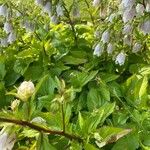
Campanula punctata
Spotted bellflower · Chinese Rampion · Prickklocka (S)
Description
Source: leafsnapCampanula punctata, commonly known as the spotted bellflower, is a herbaceous perennial plant belonging to the Campanulaceae family. Native to Japan and Korea, it has also been introduced and naturalized in various other parts of the world. The plant can grow up to 60 cm tall and features lance-shaped, green leaves that have a slightly hairy texture. The bell-shaped flowers of Campanula punctata, which have five petals, are typically pink or purple with dark spots. They bloom from mid-summer to early fall on tall stems above the foliage. These flowers attract bees, butterflies, and other pollinators. For optimal growth, Campanula punctata prefers well-drained soil and conditions ranging from full sun to partial shade. It can be propagated either by division or from seeds sown in spring or fall. Due to its attractive flowers and foliage, the plant is commonly used as an ornamental garden plant. It can be grown as a border plant, in rock gardens, or in containers. In traditional medicine practices of Japan and Korea, Campanula punctata has been utilized for its anti-inflammatory properties to treat various ailments, such as arthritis pain relief. However, more research is needed on this aspect of the plant's use before it can be recommended for medicinal purposes by modern medical professionals.
💡 If you're interested in buying this attractive garden plant, be aware that Campanula punctata can be quite invasive. It spreads rapidly through its rhizomes, making it a challenge for many gardeners to control the aggressive growth of the spotted bellflower.
🎭 Thankfulness, modesty, appeal and eternal love, demise
Care Guide
💧 Water Every 7 days
The spotted bellflower flourishes in cool, temperate woodlands where there is consistent moisture. It prefers soil that is evenly moist and can withstand short dry spells, but it cannot survive in drought conditions. To keep it well-hydrated, weekly watering is recommended. Additionally, using mulch outdoors during its active growing season helps retain soil moisture.
How should I water my Spotted bellflower in the best way?
To care for the Spotted bellflower, it's best to use filtered water at room temperature. Tap water may have harmful particles, so filtering it is important. The plant prefers warm water to mimic its natural environment, avoiding cold water which can be a shock. Avoid watering from above to prevent issues with the foliage. Instead, thoroughly soak the soil with filtered room temperature water. This will benefit the plant by moisturizing the roots and helping them spread and absorb nutrients from the soil.
What should I do if I give my Spotted bellflower too much water or too little water?
Overwatering and underwatering can harm the health of your Spotted bellflower, but overwatering is more common. If the plant gets too much water, its stems and leaves may wilt and turn yellow. Overwatering for a long time can also cause diseases like root rot, mold, and mildew, which can be fatal. Underwatering is less common because the Spotted bellflower can tolerate drought well. But it can still happen, and in that case, the leaves will become brittle and brown. It's very important to notice signs of overwatering early on. Some diseases caused by overwatering, like root rot, may not be fixable if you wait too long. If you see early signs, reduce the watering immediately and check the quality of the soil. If the soil doesn't drain well, replace it with a loose potting mix that drains better. On the other hand, if you see signs of underwatering, simply water more regularly until the signs disappear.
How much water does my Spotted bellflower need?
If your Spotted bellflower is in a pot, the best way to check if it needs water is to stick your finger into the soil. If the top two to three inches of soil are dry, it's time to water it. If you have the plant in the ground outdoors, you can use the same method. If the top few inches are dry, it's time to water. Typically, in spring and early fall, you'll need to water about once a week using this method. During extremely hot weather, you may need to water two or more times per week. It's worth noting that mature, established Spotted bellflowers can tolerate dry conditions.
How much water does my Spotted bellflower require?
To properly water your Spotted bellflower, you should be generous with the amount of water you give. Wait until the top two to three inches of soil are dry, and then water the plant thoroughly. Make sure to soak the soil completely, adding enough water that it flows out through the drainage holes at the bottom of the pot. If you don't see excess water draining, it means you haven't watered enough. However, be careful not to let the water accumulate in the soil, as this can harm the plant. On the other hand, if water doesn't drain through the pot, it may indicate poor soil drainage, which is bad for the plant's health. If the plant is outdoors, one inch of rain per week should be enough.
How do I water my Spotted bellflower as it grows?
The water needs of the Spotted bellflower vary based on its growth stages. In the first few years of its life or after being transplanted, it requires more water because it is actively developing new roots for future growth. These young roots perform best with a bit more moisture. After a few seasons, the Spotted bellflower requires less water. Additionally, during the bloom period, it may need extra water as flower development utilizes a significant amount of moisture.
☀️ Light Full sun
The spotted bellflower does best with plenty of sunlight during the day, although it can still grow in spots with less light. Too much shade can cause stunted growth and poor flowering, while too much sun may lead to scorching. In its native habitats, the spotted bellflower is found in open areas that receive abundant daylight.
What are the sunlight requirements for Spotted Bellflower?
Spotted Bellflower thrives best with ample sunlight exposure throughout the day. It requires full sun, defined as over 6 hours of sunlight, to grow optimally, though it can still perform well in partial sun, which is about 3-6 hours of sunlight. However, it's important to note that too much shade can result in stunted growth and reduced flower production, while excessive sunlight might cause leaf scorching. The plant is naturally adapted to open spaces where it receives plenty of daylight. Additionally, for indoor plants that can't get enough natural sunlight, artificial lighting is a necessary supplement to promote healthy growth, especially in less sunny spaces or during winter. Proper artificial light setup includes choosing the right type of light, such as LED, setting the correct intensity and distance from the plant, and mimicking natural daylight hours as closely as possible.
How does improper lighting affect Spotted Bellflower, and what can be done?
Inadequate lighting conditions can lead to several symptoms indicating the Spotted Bellflower is not receiving the light it needs for optimal growth. These symptoms include smaller new leaves, leggy or sparse growth, faster leaf drop, stalled growth, pale-colored new leaves, chlorosis (leaves turning yellow), sunscald, leaf curling, wilting, and leaf scorching. To address these issues indoors, gradually increase the plant's exposure to sunlight by moving it to a sunnier location each week until it receives at least 6 hours of direct sunlight daily. Utilize a south-facing window and keep curtains opened during the day for maximum sunlight. If the plant is large or not easily movable, supplemental artificial lighting, such as desk lamps or grow lights, should be considered and kept on for at least 8 hours daily. Outdoors, similar gradual adjustments toward sunnier spots can help the plant adapt without the risk of sunburn. Additionally, minimizing obstructions like overhanging branches can improve sunlight access. For smaller plants, transplanting during the dormant season to a location with better sunlight and drainage might be necessary. It's important to recognize that parts of the plant affected by prior insufficient light might not recover, but new growth should be healthy with improved light conditions.
🌡️ Temperature 5–35°C
Spotted bellflower is native to areas with annual temperatures ranging from 41 to 95 °F (5 to 35 ℃). It prefers mild climates and should be tended during extreme weather, providing protection in colder months and adequate watering in hot seasons.
What is the indigenous environment of the Spotted Bellflower?
The Spotted Bellflower is indigenous to environments where the annual temperatures range between 41 to 95 °F (5 to 35 °C). It thrives best in mild climates and requires specific care during extreme weather periods. During colder months, protective measures should be taken even though the plant has strong cold resistance. In hot seasons, it's crucial to ensure the plant receives adequate watering.
How to protect Spotted Bellflower during very cold winters?
Spotted Bellflower has strong cold resistance and usually does not require special frost protection measures. However, if winter temperatures are expected to drop below -25°C, it's important to provide cold protection by covering the plant with materials such as soil or straw. Also, before the first freeze in autumn, water the plant abundantly to keep the soil moist as it enters a frozen state, which helps prevent water scarcity for the plant during winter and early spring.
What should you do if the Spotted Bellflower experiences temperatures below -25°C?
If the temperature falls below -25°C, the Spotted Bellflower may not show noticeable changes during winter, but there might be a decrease in sprouting or no sprouting at all in spring. In such cases, it is advisable to remove any parts of the plant that have failed to sprout once spring arrives.
How should the Spotted Bellflower be cared for during hot weather?
During summer, the Spotted Bellflower should be kept at temperatures below 35°C. Exposure to temperatures above 38°C can cause the leaves to lighten in color, become prone to curling and sunburn, and in severe cases, the entire plant may wilt and dry out. To mitigate these effects, trim away sunburned and dried-up parts, move the plant to a shaded location, or use a shade cloth to protect it from midday and afternoon sun. Additionally, water the plant in the morning and evening to keep the soil moist.
What is the botanic name of the Spotted Bellflower?
The botanic name of the Spotted Bellflower is Campanula punctata.
💨 Humidity
🪴 Soil 6-7
🌱 Fertilizer
The best time to fertilize a Spotted bellflower is in early spring, as it emerges from dormancy and starts active growth. Fertilizing supplies essential nutrients for healthy development. Although the Spotted bellflower has relatively low fertilizer requirements, applying fertilizer annually can improve its survival and encourage better, longer-lasting blooms.
Why should I use fertilizer on my Spotted bellflower plant?
Fertilization is important for the Spotted bellflower and other plants because it provides key nutrients for growth. However, the Spotted bellflower has relatively low fertilization needs and can survive without it. Annual fertilization, though, can greatly benefit the plant by keeping it alive and promoting more vibrant, longer-lasting flowers. It is recommended to regularly fertilize the Spotted bellflower for the best results in maintaining its appearance.
When should I fertilize my Spotted bellflower plant?
The best time to fertilize a Spotted bellflower is in late winter or early spring when it is coming out of dormancy and starting to grow actively. Fertilizing during this time helps promote healthy growth for the season. Fertilizing in early spring is generally recommended, but it is also okay to fertilize in the fall if desired. Avoid fertilizing in summer and winter as these seasons are not ideal for feeding Spotted bellflowers.
When should I not put fertilizer on my Spotted bellflower?
To ensure optimal growth, it is recommended to fertilize your Spotted bellflower only in late winter and early spring. This plant has low fertilization needs, so a single annual feeding is sufficient. Fertilizing during the rest of the year, including spring, summer, and fall, can result in overfertilization and its associated complications. However, if you missed fertilizing in spring, it is acceptable to feed the plant in the fall. It is important to note that Spotted bellflowers do not require fertilization during the winter months. During this time, the plant is in a dormant growth phase and does not produce new growth, so fertilizing during most of the winter is not recommended.
What kind of fertilizer does my Spotted bellflower need?
When choosing a fertilizer for your Spotted bellflower, any general-purpose fertilizer with a balanced amount of the three main plant nutrients will work well. However, there are specific nutrient blends that can be even more beneficial. Many gardeners believe that higher levels of phosphorus can produce stronger roots and better flowers. Since Spotted bellflower is a flowering plant, applying a phosphorus-rich fertilizer may be the best option. Whether you choose a granular or liquid form, make sure the fertilizer contains plenty of nutrients. Additionally, you can enhance the soil for your Spotted bellflower using organic methods such as compost, manure, and similar materials. These can greatly contribute to creating a healthy growing environment for your Spotted bellflower.
How should I feed my Spotted bellflower?
The most common way to fertilize a Spotted bellflower is by applying a granular or pellet fertilizer to the soil around the plant. It's important to fertilize when the plant is transitioning from winter dormant growth to active growth. In early spring, wait until shoots emerge from the soil before applying fertilizer. If you prefer liquid fertilizer, dilute it with water before applying. Whether using granular or liquid fertilizer, it's best to moisten the soil before, during, and after application.
🪴 Pot & Repot 2-3 years
To encourage healthy growth in your spotted bellflower, repot it every 2 to 3 years during the spring. Use a medium-sized container, ensure it receives partial shade, and keep the soil consistently moist. This promotes quick establishment and encourages the blooming of its beautiful bell-shaped flowers.
✂️ Pruning
To help spotted bellflower thrive, it is beneficial to prune in early to late spring. Focus on removing dead stems and spent flowers to encourage reblooming. This practice promotes growth, improves air circulation, reduces the risk of disease, and maintains the plant's appearance. For detailed pruning techniques, consult horticultural guides.
🌿 Propagating
🐛 Diseases & pets
☠️ Toxicity
Characteristics
- Plant Type
- Herb
- Life Cycle
- Perennial
- Genus
- Campanula
- Family
- Campanulaceae
- Hardiness Zone
- 5-9
- Mature Height
- 30 cm to 91 cm
- Mature Spread
- 46 cm to 76 cm
- Leaf Color
- Green
- Leaf Type
- Deciduous
- Flower Color
- White, Pink, Red, Purple, Blue
- Flower Size
- 2.54 cm to 7.62 cm
- Bloom Time
- Early summer, Mid summer
- Planting Time
- Spring
- Harvest Time
- Mid summer
- Native Area
- Russia, Japan, Mongolia, Koppen, South Korea, China