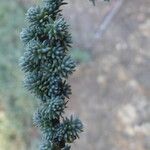
Camphorosma monspeliaca
Camphorfume · Stinking ground-pine · Sticking Ground-pine
Description
Source: leafsnapCamphorosma monspeliaca, commonly known as French camphorweed, is a small herbaceous plant that belongs to the Chenopodiaceae family. Native to the Mediterranean region, this plant thrives in dry and rocky habitats such as hillsides, cliffs, and sandy soils. The plant features a woody base from which numerous branches extend, reaching up to 50 cm in height. Its small, narrow leaves have a gray-green coloration, which aids in water conservation in arid environments. The flowers are tiny and greenish-yellow, with bracts resembling petals, although they lack actual petals. Camphorosma monspeliaca has been used for medicinal purposes for centuries, primarily for its antiseptic properties. It contains camphor oil, which can be used as an insect repellent or anesthetic agent. Ecologically, the plant is significant as it provides food for various insects, including bees, butterflies, and moths, which in turn help pollinate other plants. In summary, Camphorosma monspeliaca is a fascinating herbaceous plant with noteworthy medicinal properties. It also plays an essential role in the ecosystem by supplying sustenance to insects while thriving in the dry, rocky habitats of the Mediterranean region.
Care Guide
💧 Water Every 7 days
Native to arid regions, the sticking ground-pine is highly drought-tolerant and can thrive with very little moisture. It requires watering only every 2 to 3 weeks. To ensure healthy growth, plant it in well-draining soil to prevent root rot.
How should I water my Sticking ground-pine in the best way?
To ensure excellent root development, place a garden hose at the base of your plants. Avoid spraying the leaves directly and keep in mind that outdoor plants in direct sunlight may need more water for their leaves. Use bubblers or soaker hoses to moisten the roots of each plant. When adding or removing plants, use soaker hoses that cover the whole garden or bed to encourage deep root growth. After watering, drain any excess water and allow the soil to dry before watering again. Water at ground level to prevent diseases. On sunny days, it can be helpful to spray the entire bush with water. Whether your plants are in pots or in the ground, remember that Sticking ground-pine prefers deep watering rather than light sprinkling.
What do I do if I give too much or too little water to Sticking ground-pine?
If your Sticking ground-pine is overwatered, you may notice yellowing, dropping, and wilting of the leaves. The plant may also appear dull and unhealthy, with mushy stems. When these signs are present, try adjusting your watering schedule. Wilting can also be a sign of underwatering, which can cause leaves to become crispy and dry. If the soil is dry and simply watering isn't enough, give the plant a thorough watering. While this will help the Sticking ground-pine recover, it may still have dry yellow leaves for a few days due to root damage. Once it returns to normal, the yellowing of the leaves will stop. When caring for a Sticking ground-pine indoors, always check the moisture levels in the pot and avoid overwatering. Look for signs of black spots, and if present, allow the soil to dry out for a few days. Overwatering can lead to root rot, so if you see discolored and slimy roots, consider transferring the plant to a different pot. It's important to prevent root rot by avoiding overly soggy soil. When planting the Sticking ground-pine outdoors, make sure to check the soil moisture by digging a little deeper. If the soil is too dry, it may be underwatered, and adequate watering is necessary for recovery.
How frequently should I water my Sticking ground-pine plant?
The Sticking ground-pine prefers deep and infrequent watering. If you have them in pots, make sure to soak them in a gallon of water each time, as the limited water storage in the pots causes the soil to dry out quickly. In cold regions, water every 3 to 5 days. Water your plants in the morning when the soil is dry, whether they are indoors or outdoors. You can check if watering is needed by examining the soil. If the top 2-3 inches are dry, it's time to water the plant. During hot days, check the moisture daily because the heat can dry out the soil in the pot rapidly. For garden plants, irrigation is also necessary. In hot climates, water once a week when about 2 to 3 inches of soil become dry. Be mindful of rainwater saturation and avoid overwatering to prevent root rot. Sticking ground-pine generally grows in spring and fall. Outdoors, add mulch about 3 to 4 inches deep to retain water. Sandy soil requires more frequent watering, whereas clay soil needs less frequent watering to prevent root rot. To keep track of watering, mark the date on your calendar and pay attention to drooping leaves, which may indicate a delay in watering.
How much water should I give my Sticking ground-pine plant?
The Sticking ground-pine plant should be watered about once a week, with approximately one gallon of water. For potted plants, water them deeply until the water starts to drip out of the bottom of the pot. Allow the soil to dry before watering again. You can use a water calculator or moisture meter to track how much water you've given to your plant each week. During the flowering period, provide plenty of water but allow excess moisture to evaporate to avoid root rot. If the Sticking ground-pine is planted outdoors and receives adequate rainfall, it may not need additional watering. When the plant is young or newly planted, it should receive 1-2 inches of rain per week. As the Sticking ground-pine matures, it can rely on natural rainfall. Only when the weather is extremely hot or there is no rainfall for 2-3 weeks should you give the plant a thorough watering during the cooler part of the day to prevent heat damage. Additional watering will be needed during prolonged dry spells.
Should I change how often I water my Sticking ground-pine based on the time of year or the weather?
The Sticking ground-pine needs rainwater outdoors, but only during persistent dry weather. In the spring and fall, the soil should be kept moist but not soggy. Alternating between dry and moist soil will help the plant grow well. In the summer, hot weather can cause water to evaporate quickly, so if there is a lack of rainfall, you'll need to water more often to keep the soil moist. During winter, the plant needs less water because it drops its leaves and goes dormant. Using a well-draining soil mixture like terracotta can help water evaporate quicker. Once the plant starts leafing out in spring, you can stop watering since it can rely on the fall and winter rains to survive the dormant period. After spring, you can encourage the plant to grow and bloom by cultivating it when the temperature becomes warmer. The plant doesn't like excessive water or drought when flowering, so good drainage is necessary, especially in winter. When planted in pots, the root growth is limited, so they should be well-watered, especially in summer. Shallow sprinkles of water can encourage fungi growth and don't reach deep roots, so a deep soak once or twice a week is best. Even during dormancy, the plant shouldn't dry out completely in fall or winter. Avoid overwatering to prevent the plants from sitting in water for too long, as they can die in winter if not draining well. Applying mulch can reduce stress, conserve water, and promote healthy blooms.
☀️ Light Full sun
Sticking ground-pine prospers in locations with abundant sunlight. The plant's health and growth are closely tied to plentiful sun exposure. Excessive sun should not cause harm, but inadequate sunlight may hinder growth. The plant's native habitat highlights its need for substantial sun exposure.
What are the sunlight requirements for Sticking ground-pine?
Sticking ground-pine requires full sun, which amounts to more than 6 hours of sunlight each day. This ample exposure to the sun is crucial for the plant's health and growth, correlating strongly with its natural habitat needs. Despite its robust nature towards the sun, the plant could suffer in growth if not provided with sufficient sunlight. It's beneficial to observe the movement of sunlight through your garden to identify areas that offer a balance of light and shade, ensuring optimal conditions for your Sticking ground-pine.
How can artificial lighting be used for Sticking ground-pine indoors?
Indoor Sticking ground-pine plants require adequate lighting for optimal growth, especially when natural sunlight is insufficient. Artificial lights, such as LED lights, are advantageous as they can be tailored to provide specific wavelengths needed for plant growth. For full sun plants like the Sticking ground-pine, 30-50W/sq ft of artificial light is recommended. The light source should be placed 12-36 inches above the plant, mimicking natural sunlight, and provided for 8-12 hours per day depending on the plant species' needs. Choosing the right type of artificial light and determining the appropriate distance and duration can promote healthier, faster growth.
What are the symptoms of light deficiency in Sticking ground-pine?
Symptoms of light deficiency in Sticking ground-pine include smaller new leaves, leggy or sparse growth, faster leaf drop, slower or no new growth, and lighter-colored or chlorotic leaves. Excessive sunlight, on the other hand, may lead to symptoms like sunscald, wilting, leaf scorching, leaf curling, and, eventually, chlorosis due to the breakdown of chlorophyll, indicating a significant departure from optimal light conditions. These symptoms highlight the plant's sensitivity to its lighting environment, whether it’s receiving too little or too much light.
How can you counteract light deficiency symptoms in Sticking ground-pine?
To counteract light deficiency symptoms in Sticking ground-pine, a gradual increase in light exposure is recommended. For indoor plants, this can be achieved by moving them closer to a south-facing window or by using artificial lighting, like desk lamps or professional plant grow lights, for at least 8 hours a day. Outdoor plants should be relocated to sunnier spots gradually to prevent shock. Removing obstructions that block sunlight and, if necessary, transplanting to a brighter location can also help. It's important to note that parts of the plant affected by insufficient light might not recover, but new growth will be healthy following the adjustment.
🌡️ Temperature 15–35°C
Sticking ground-pine originates from temperate regions and grows best at temperatures of 59 to 95 °F (15 to 35 ℃). It favors warm conditions. In colder climates, seasonal temperature adjustments may be needed for optimal growth.
What is the ideal temperature range for Sticking ground-pine?
Sticking ground-pine, botanically known as Camphorosma monspeliaca, is native to temperate climates and thrives in temperature ranges between 59 to 95°F (15 to 35°C). It prefers a warm environment and has strong cold resistance. Although special frost protection measures are not usually necessary, in areas where winter temperatures are expected to drop below -15°C, it's important to provide additional cold protection by wrapping the trunk and branches with insulating materials. To prepare for winter, watering the plant abundantly before the first freeze to ensure the soil remains moist can help prevent drought and water scarcity during the colder months.
How does Sticking ground-pine react to low temperatures?
Sticking ground-pine is cold-tolerant and prefers temperatures to remain above 15°C. In winter, it should ideally be kept above -10°C to avoid damage. However, when temperatures fall below -15°C, the plant can survive without noticeable changes during the winter. Yet, come spring, its branches may become brittle and dry, and it might fail to produce new shoots. The solution to this problem is to prune away any dead branches that have not produced new leaves in the spring.
What should be done if Sticking ground-pine experiences high temperatures?
During the summer, it is important to ensure that the temperature stays below 35°C to prevent stress to the Sticking ground-pine. When temperatures exceed 41°C, the plant may show signs of stress such as lighter colored leaves, dry and withered tips, and increased susceptibility to sunburn. In such cases, sunburned and dried-up parts should be trimmed away. Moving the plant to a shaded location or using a shade cloth can protect it from the intense midday and afternoon sun. Additionally, watering the plant in the morning and evening to keep the soil moist can also help mitigate the effects of high temperatures.
💨 Humidity
🪴 Soil 6-8
🌱 Fertilizer
Fertilize your Sticking ground-pine in early spring to encourage healthy growth. Regular feeding boosts its overall health, leading to robust growth, increased resilience to harsh conditions, and improved resistance to diseases and pests. Keep a consistent fertilization routine for your Sticking ground-pine to preserve vibrant, deep-colored foliage and a lush appearance.
🪴 Pot & Repot
✂️ Pruning
The sticking ground-pine is a hardy shrub that benefits from pruning in early spring. To maintain its health and encourage flowering, trim away dead branches, remove excessive suckers, and shape the plant lightly. Be sure to use sharp tools to prevent infection, which will help enhance the shrub's longevity and appearance. Regular maintenance is key to keeping it in top condition.
🌿 Propagating
🐛 Diseases & pets
☠️ Toxicity
Characteristics
- Plant Type
- Shrub
- Life Cycle
- Perennial
- Genus
- Camphorosma
- Family
- Amaranthaceae
- Hardiness Zone
- 7-10
- Mature Height
- 61 cm
- Mature Spread
- 30 cm to 61 cm
- Leaf Color
- Dark Green, Olive Drab
- Leaf Type
- Semi-evergreen
- Flower Color
- Yellow, Green, Red
- Flower Size
- 0.51 cm to 1.02 cm
- Bloom Time
- Late summer, Early fall
- Planting Time
- Spring, Summer
- Harvest Time
- Mid fall, Late fall
- Native Area
- Libya, Turkey, Tunisia, Bulgaria, Pakistan, Greece, Morocco, Ukraine, China, Uzbekistan, Russia, Afghanistan, Italy, Kazakhstan, Mongolia, Iran, Albania, Algeria, Turkmenistan, France