Campsis × tagliabuana
Description
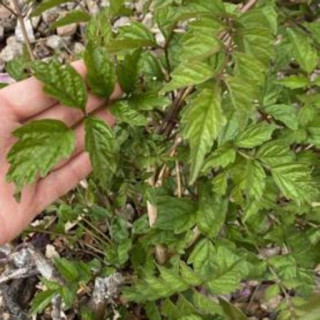
Source: leafsnapCampsis × tagliabuana (Madame Galen) is a mid-19th-century hybrid between Campsis radicans (American trumpet vine) and Campsis grandiflora (Chinese trumpet vine). It produces trumpet-shaped, orange to red flowers up to 3 in (8 cm) long that appear in loose clusters of 6 to 12. It is a woody, clinging, perennial vine that attaches itself to structures and climbs vigorously with aerial roots like those of ivy. It bears dark-green deciduous leaves, 8–12 in (20–30 cm) long. Its flowers are very attractive to bees, butterflies and birds. Like its parents it is hardy but in cooler temperate regions requires the shelter of a sunny wall to produce its spectacular flowers in abundance. The Latin specific epithet tagliabuana commemorates the 19th-century Italian nurserymen, Alberto Linneo and Carlo Ausonio Tagliabue. It has gained the Royal Horticultural Society's Award of Garden Merit.
Care Guide
💧 Water
The hybrid trumpet vine flourishes when it receives a balance of moisture and drainage. To achieve this, water it twice a week. This schedule keeps the soil moist without becoming waterlogged, which helps prevent root rot, particularly during its peak growth period. For optimal growth, plant it in well-draining soil and outdoors, where it shows moderate drought tolerance.
☀️ Light Full sun
The hybrid trumpet vine comes from open habitats, such as sunny meadows and the edges of forests, which supply abundant light. It does best in full sun but can endure partial sun, adapting to a range of light conditions.
🌡️ Temperature 5–35°C
The hybrid trumpet vine is highly adaptable to a range of climates, from hot summers to cold winters. Still, it has a preferred temperature range for healthy growth. If temperatures rise too far, the plant can suffer from heat and humidity stress, which may kill it. In locations where temperatures approach the lower bound of its cold tolerance, providing insulation to protect the plant is important.
💨 Humidity
🪴 Soil 6-8
🌱 Fertilizer
The timing of fertilization is important for Hybrid trumpet vine. Apply fertilizer in early spring and continue monthly until early summer. Fertilizer encourages attractive blooms and supplies energy during both dormant and active growth periods.
🪴 Pot & Repot
✂️ Pruning
The hybrid trumpet vine is a vigorous climber known for its trumpet-shaped flowers. To maintain its size and encourage healthy growth, it's important to prune it in early spring. Focus on removing dead stems and thinning out crowded areas. Trim back last year's growth to the buds to ensure strong blooming. Regular pruning enhances the plant's health and flowering. For best practices, refer to horticultural resources.
🌿 Propagating
🐛 Diseases & pets
☠️ Toxicity
Characteristics
- Plant Type
- Vine
- Life Cycle
- Perennial
- Genus
- Campsis
- Family
- Bignoniaceae
- Hardiness Zone
- 5-9
- Mature Height
- 6.1 m to 9.14 m
- Mature Spread
- 3.05 m to 4.88 m
- Leaf Color
- Dark Green
- Leaf Type
- Deciduous
- Flower Color
- Red
- Flower Size
- 6.35 cm to 7.62 cm
- Bloom Time
- Summer, Early fall
- Planting Time
- Spring, Summer, Autumn, Winter
- Harvest Time
- Fall