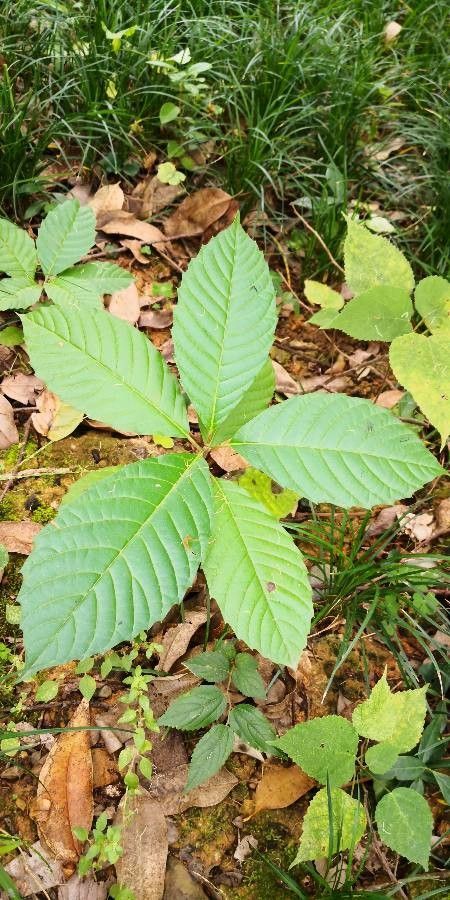
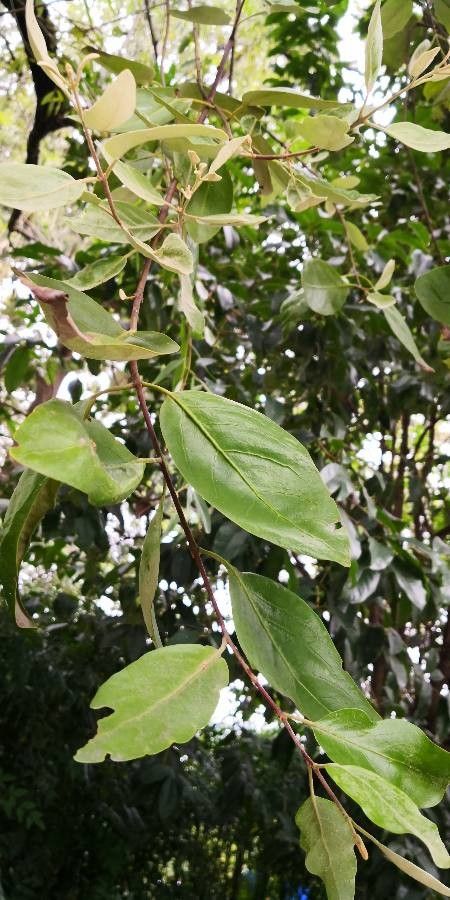
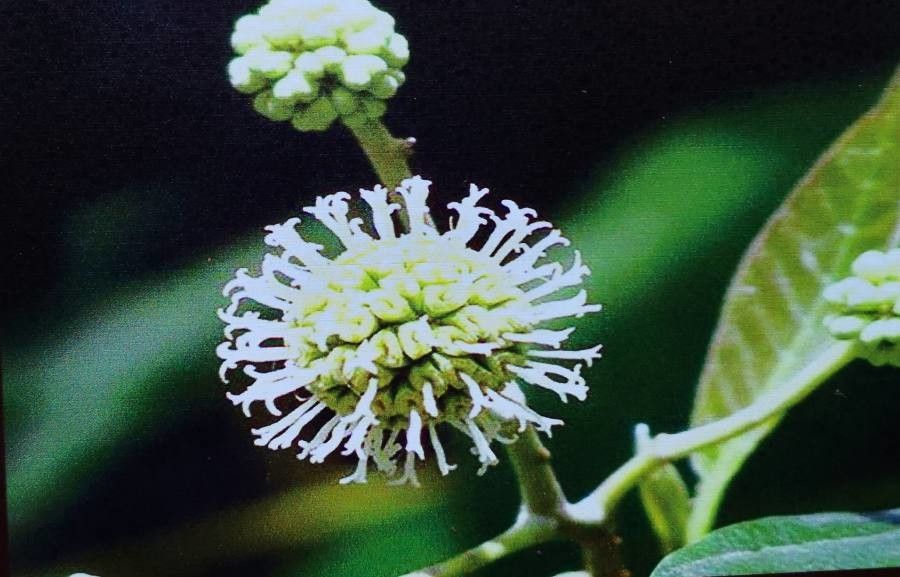
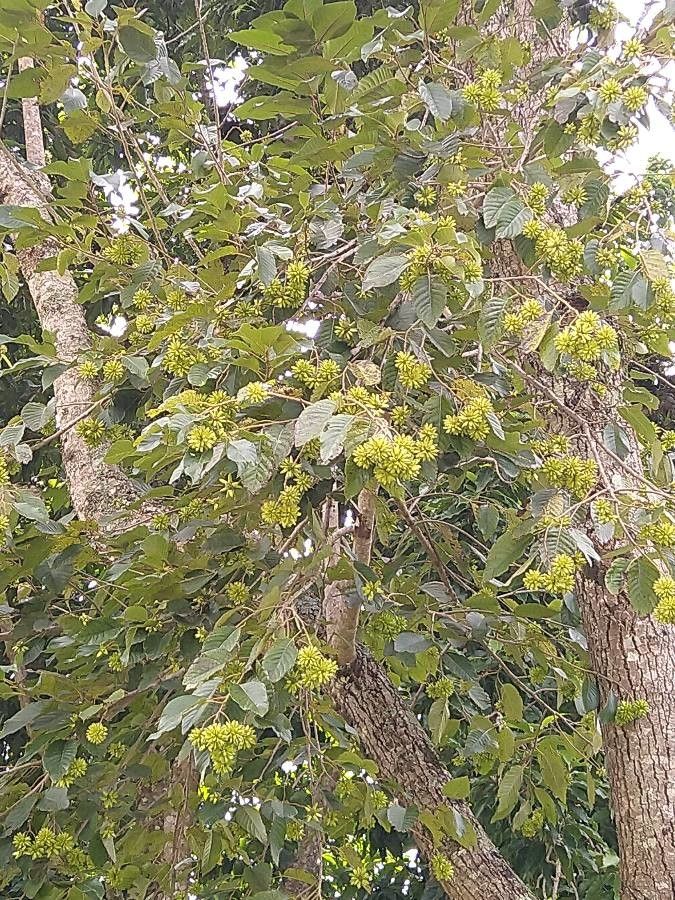
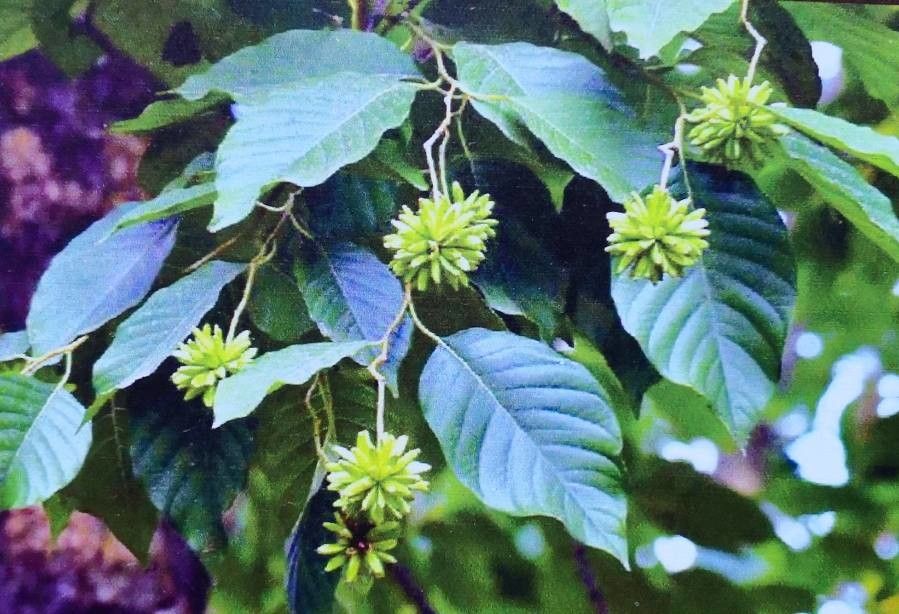
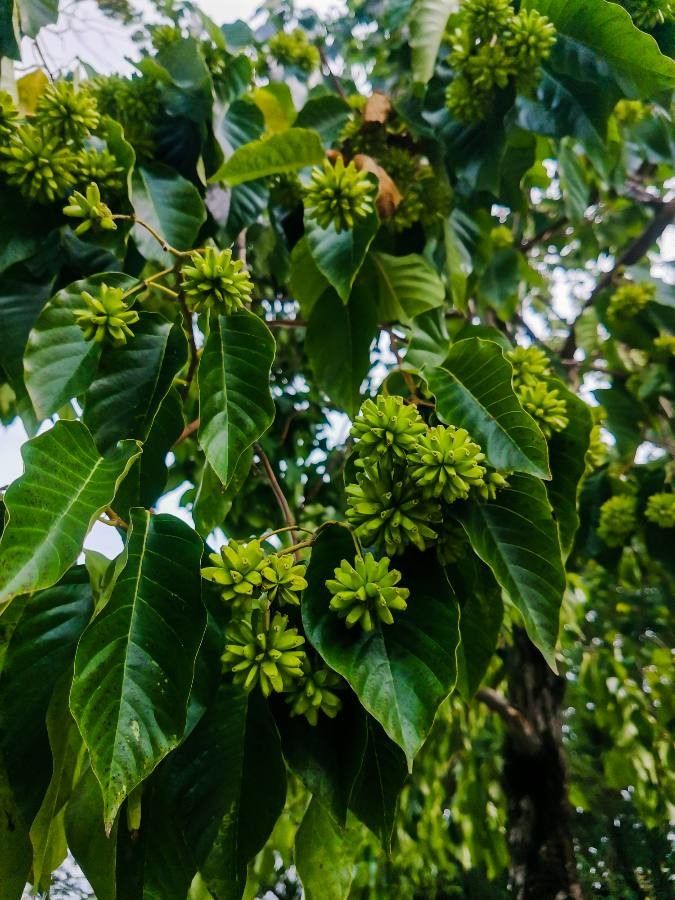
Camptotheca (happy tree, cancer tree, or tree of life) is a genus of medium-sized deciduous trees growing to 20 metres (66 ft) tall, native to southern China and Tibet. The genus is usually included in the tupelo family Nyssaceae, but sometimes included (with the tupelos) in the dogwood family Cornaceae. The name "happy tree" is a direct translation of the Chinese name xǐ shù (Simplified Chinese:喜树). There are two species:
Camptotheca acuminata Decne. Camptotheca lowreyana S.Y.LiThe bark and stems of C. acuminata contain the alkaloid camptothecin. Several chemical derivatives of camptothecin are under investigation for or used as drugs for cancer treatment, including irinotecan, topotecan, rubitecan.C. acuminata also contains the chemical compounds trifolin and hyperoside.
Happy tree has good resistance to disease and is generally not susceptible to illnesses. As for care, this plant is fairly low-maintenance. When planted outdoors it needs little watering, and larger plants usually do not require pruning. Smaller plants, however, should be pruned after they have bloomed. Happy tree is appropriate for anyone with an outdoor area, such as a garden or deck, and does not demand much care experience.
How to keep Camptotheca Acuminata.
Light
Happy tree prefers locations with plenty of sunlight but can tolerate spots with somewhat less light. Its natural habitats—where it flourishes—generally have abundant sunshine. Both too much sun and too little can impede its healthy development. Its need for sunlight remains consistent across its various stages of growth.
Water
The Happy Tree thrives in environments with high humidity and consistent moisture. To prevent overwatering, it's best to water it every three weeks. While the tree has some tolerance for drought, mulching can significantly help retain moisture. This is especially important during the active growing season when its water needs may increase.
Temperature
Happy tree originates from temperate regions and prefers temperatures between 68 and 100 °F (20 to 38 °C). During seasons when temperatures drop below this range, make sure to supply additional heat.
Fertilizer
Fertilizing is essential for the care of the Happy tree. Regular feeding during the growing season maintains the energy needed for its showy leaves and supports overall growth. Neglecting fertilization can lead to unhealthy leaves, reduced ornamental appeal, and stunted or weak growth that is more likely to break.
Pruning
The Happy Tree is known for its unique medicinal properties and vibrant leaves. To encourage growth, prune it in early spring. Focus on removing dead branches and thinning crowded areas to improve airflow. Make sure to use clean tools to prevent disease, and check local guidelines for specific care tips.
Botanical profile.
- Plant Type
- Tree
- Life Cycle
- Perennial
- Genus
- Camptotheca
- Family
- Nyssaceae
- Hardiness Zone
- 10-12
- Mature Height
- 20.12 m
- Mature Spread
- 14.94 m
- Leaf Color
- Green, Bronze
- Leaf Type
- Deciduous
- Flower Color
- White
- Flower Size
- 1.52 cm to 2.03 cm
- Bloom Time
- Summer
- Planting Time
- Spring, Summer
- Harvest Time
- Late summer, Early fall, Mid fall
- Native Area
- China
Other names.
Reader questions.
What are the sunlight requirements for Happy Tree (Camptotheca acuminata)?
The Happy Tree requires full sun exposure, which is above 6 hours of sunlight daily, to thrive optimally. It can also tolerate partial sun conditions, receiving about 3-6 hours of sunlight. However, the plant has a natural affinity for areas with generous sun exposure and could show slower growth or health issues if it doesn’t receive adequate sunlight. During its various growth phases, the Happy Tree constantly needs a substantial amount of sun to maintain its health.
What is the preferred temperature range for the Happy tree?
The Happy tree, or Camptotheca acuminata, flourishes in temperate environments with a preferred temperature range between 68 to 100 °F (20 to 38 °C). It is extremely heat-loving, and exposure to cold temperatures can be damaging. During seasons when temperatures drop below these preferred values, it is crucial to provide additional heat to ensure the plant's health and growth. Specifically, maintaining temperatures above 20°C during winter benefits the tree, while temperatures nearing 5°C can be harmful.
What should I do if natural sunlight is not sufficient for my Happy Tree?
If your Happy Tree is not receiving enough natural sunlight, especially during winter or in less sunny indoor spaces, artificial lighting can be a vital solution for promoting faster, healthier growth. Indoor plants benefit significantly from the right type of artificial light, with LED lights being a popular choice for their ability to provide specific wavelengths needed by plants. Full sun plants need 30-50W/sq ft, partial sun plants require 20-30W/sq ft, and full shade plants need 10-20W/sq ft of artificial light. The light source should be placed 12-36 inches above the plant, mimicking natural sunlight conditions for 8-12 hours per day.
How should you care for your Happy tree during winter?
In the autumn and continuing into winter, when temperatures typically decrease, it is recommended to move outdoor-grown Happy trees indoors to protect them from the cold. Placing them near a bright window helps ensure they receive sufficient light; however, care should be taken to keep them at a distance from heaters to avoid drying out the air around them too much. Keeping the indoor environment above 20°C is beneficial for the Happy tree's growth during colder months, preventing the adverse effects of low temperatures.
What are the symptoms of light deficiency in Happy Tree?
Symptoms of light deficiency in Happy Tree include smaller new leaves, leggy or sparse growth, faster leaf drop, slower or no new growth, lighter-colored new leaves, chlorosis, sunscald, leaf curling, wilting, and leaf scorching. These symptoms indicate a lack of sufficient sunlight, which affects the plant's ability to photosynthesize and maintain its overall health. It's crucial to identify these signs early to correct the light exposure and avoid further damage to the plant.
What are the signs of low temperature stress in Happy trees, and how can you mitigate them?
Happy trees show clear signs of stress when exposed to temperatures below their comfort range. Indications of low temperature stress include a lightening of leaf color when temperatures drop below 1°C, followed by a change to brown or black as frost damage ensues, along with wilting and drooping. To remediate this, frost-damaged parts should be trimmed off, and the plant should be moved to a warmer indoor environment immediately. Placing the tree near a south-facing window can ensure it receives enough sunlight, but avoid placing it too close to heaters or air conditioning vents to prevent air dryness.
How can I address insufficient sunlight for my Happy Tree?
To address insufficient sunlight, gradually move your Happy Tree to a sunnier location each week until it receives at least 6 hours of direct sunlight daily. For indoor plants, use a south-facing window and keep curtains open during the day, or provide additional light with a desk or ceiling lamp for at least 8 hours daily. Outdoor plants should be moved gradually to avoid sunburn. If the plant is large, consider using artificial light for ample exposure. It's also helpful to reduce obstructions like pruning tree branches, or for smaller plants, consider transplanting them during their dormant period to a location with ample sunlight and good drainage. Note that parts of the plant affected by insufficient sunlight may not recover, but new growth should be healthy with improved light conditions.
How do high temperatures affect Happy trees, and what actions should be taken?
During the summer, it's important to ensure the Happy tree's environment does not exceed 38°C since temperatures above 43°C can cause the leaves to lighten and increase susceptibility to sunburn. If such high temperature exposure occurs, the affected sunburned and dried parts of the plant should be trimmed away. Relocating the plant to a shaded area during the intense midday and afternoon sun, along with watering it in the morning and evening, helps to manage the heat stress and keep the soil adequately moist.