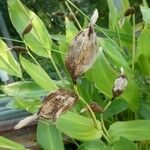
Canna flaccida
Bandana-of-the-Everglades · Golden canna · Bandanna-of-the-Everglades · Bandanna of the Everglades · Canna
Description
Source: leafsnapCanna flaccida, commonly known as the yellow canna or bandanna of the Everglades, is a perennial herbaceous plant belonging to the family Cannaceae. Native to the southeastern United States, it thrives in wetlands, marshes, and swamps. The plant typically grows to a height of 1 to 2 meters, featuring long green leaves arranged alternately along the stem. These broad, lance-shaped leaves boast prominent veins running parallel to their length. In late spring or early summer, Canna flaccida produces bright yellow flowers. These blooms are arranged in clusters on tall stalks, known as inflorescences, that extend above the plant’s foliage. While the plant prefers moist soil conditions, it can endure periods of drought once established. It is also tolerant of saltwater environments, making it a popular choice for coastal gardens. Historically, Native Americans have utilized Canna flaccida for its medicinal properties. The plant contains anti-inflammatory compounds that help alleviate pain and swelling associated with arthritis and other inflammatory conditions. Overall, Canna flaccida is a beautiful ornamental plant that adds vibrant color and texture to any garden, while also offering medicinal benefits.
Care Guide
💧 Water Every 7 days
The Bandana-of-the-Everglades, a plant native to wetlands, thrives in high humidity and requires consistently moist soil, which makes it moderately sensitive to drought. To keep it properly hydrated, water the plant twice a week. While it is typically grown outdoors, it prefers full sun and benefits from natural rainfall during its active growing season.
☀️ Light Full sun
Bandana-of-the-everglades performs best with abundant daylight and can also tolerate moderate sunlight. Native to sunny habitats, it thrives under those conditions. While it can survive in lower light, that may restrict strong growth. Excessive sun, however, can scorch the plant.
What are the sunlight requirements for Bandana-of-the-everglades?
Bandana-of-the-everglades requires full sun, which means it needs above 6 hours of sunlight daily but can tolerate partial sun, about 3-6 hours of sunlight. It's noted that the plant thrives best in conditions that mimic its natural habitat, which includes prolific exposure to daylight and moderate intensity sunlight. However, while it can manage in lesser light, growth may be hindered, and excessive sunlight can cause damage.
How does artificial lighting benefit indoor Bandana-of-the-everglades plants?
Indoor Bandana-of-the-everglades plants can benefit significantly from artificial lighting, especially when natural sunlight is insufficient. Artificial lights, particularly LED lights, can be customized to provide the specific wavelengths needed for optimal growth, mimicking natural sunlight conditions. For full sun plants, 30-50W/sq ft of artificial light is recommended, partial sun plants need 20-30W/sq ft, and full shade plants require 10-20W/sq ft. The light source should be placed 12-36 inches above the plant for 8-12 hours per day to promote faster, healthier growth.
What are the signs of inadequate lighting for Bandana-of-the-everglades?
When Bandana-of-the-everglades receives inadequate lighting, several symptoms may appear. These include smaller new leaves, leggy or sparse growth, faster leaf drop, slower or no new growth, and lighter-colored new leaves. Additionally, excessive sunlight can lead to chlorosis, sunscald, leaf curling, wilting, and leaf scorching. These symptoms highlight the plant's struggle in unsuitable light conditions and the need for appropriate light management.
How can I improve the sunlight exposure for my Bandana-of-the-everglades?
To improve sunlight exposure for Bandana-of-the-everglades, gradually move your plants to sunnier locations, increasing exposure by an hour weekly until achieving at least 6 hours of direct sunlight. For indoor plants, utilize south-facing windows or provide additional artificial light for at least 8 hours daily. Outdoors, adapt plants gradually to avoid sunburn. If obstructions shade your outdoor plants, consider pruning or transplanting to sunnier spots. Remember, parts of the plant that suffered from insufficient light may not recover, but new growth should be healthy with increased light exposure.
🌡️ Temperature 15–35°C
Bandana-of-the-everglades is native to areas with moderate temperatures and does best in the range of 59 to 95°F (15 to 35°C). The plant prefers a warm climate but can tolerate cooler conditions. Adjusting temperatures across seasons to mimic its natural habitat can encourage healthier growth.
What is the optimal temperature range for Bandana-of-the-everglades?
The Bandana-of-the-everglades, with its botanical name Canna flaccida, thrives in environments with moderate temperatures. It prefers a warm climate, ideally within the temperature range of 59 to 95°F (15 to 35°C), though it is capable of tolerating cooler conditions. To promote healthier growth, it's beneficial to adjust temperatures seasonally to mimic the plant's natural habitat.
Does Bandana-of-the-everglades require special frost protection?
Bandana-of-the-everglades has a strong resistance to cold and generally does not require special frost protection measures during winter. However, if temperatures are expected to drop below -15°C, it is important to provide cold protection. This can be achieved by covering the plant with soil or straw. Watering the plant abundantly before the first freeze in autumn helps the soil remain moist and enter a frozen state, thereby preventing drought and water scarcity during winter and early spring.
How does Bandana-of-the-everglades react to temperatures falling below -15°C?
When temperatures fall below -15°C, there may not be immediately noticeable changes to the Bandana-of-the-everglades during winter. However, such low temperatures can lead to a decrease in sprouting or even a complete lack of sprouting during springtime. To address this issue, it is recommended to remove any parts of the plant that have failed to sprout in spring.
What should be done if Bandana-of-the-everglades is subjected to temperatures above 35°C?
During summer, it is advised to keep Bandana-of-the-everglades in conditions below 35°C. Exposure to temperatures above 41°C can cause the leaves to lighten in color, curl, and become prone to sunburn. In severe cases, the plant may wilt and dry up. To mitigate these issues, trim away the sunburned and dried-up parts of the plant. Relocate the plant to a shadier location or use a shade cloth to protect it from midday and afternoon sun. Additionally, water the plant in the morning and evening to maintain soil moisture.
💨 Humidity
🪴 Soil
🌱 Fertilizer
The Bandana-of-the-Everglades thrives when fed with balanced fertilizers containing a 10-10-10 mix of nitrogen, phosphorus, and potassium (NPK), as well as high-phosphorus feeds specifically for promoting blooms. During the growing season, apply fertilizer every 4 to 6 weeks, reducing the frequency in the winter months. Pay attention to how the plant responds; if you observe overly lush growth, it could be a sign of too much nitrogen. You can use either granular or liquid fertilizers, but be sure to integrate them properly into the soil for best results.
🪴 Pot & Repot
The Bandana-of-the-Everglades plant needs excellent drainage in its pots to grow well.
✂️ Pruning
The Bandana-of-the-Everglades flourishes when it is strategically pruned from late winter to early spring. During this time, prune away dead leaves and spent flower stalks. Regularly removing yellowing leaves helps prevent disease and improves both air circulation and sunlight exposure, boosting the plant's overall health. For additional advice, refer to trustworthy horticultural sources.
🌿 Propagating
🐛 Diseases & pets
☠️ Toxicity
Characteristics
- Plant Type
- Herb
- Life Cycle
- Perennial
- Genus
- Canna
- Family
- Cannaceae
- Hardiness Zone
- 7-10
- Mature Height
- 1.52 m
- Mature Spread
- 76 cm
- Leaf Color
- Green
- Leaf Type
- Evergreen
- Flower Color
- Yellow
- Flower Size
- 7.62 cm to 10.16 cm
- Bloom Time
- Summer, Early fall, Mid fall
- Planting Time
- Spring, Autumn
- Harvest Time
- Late summer, Fall, Early winter